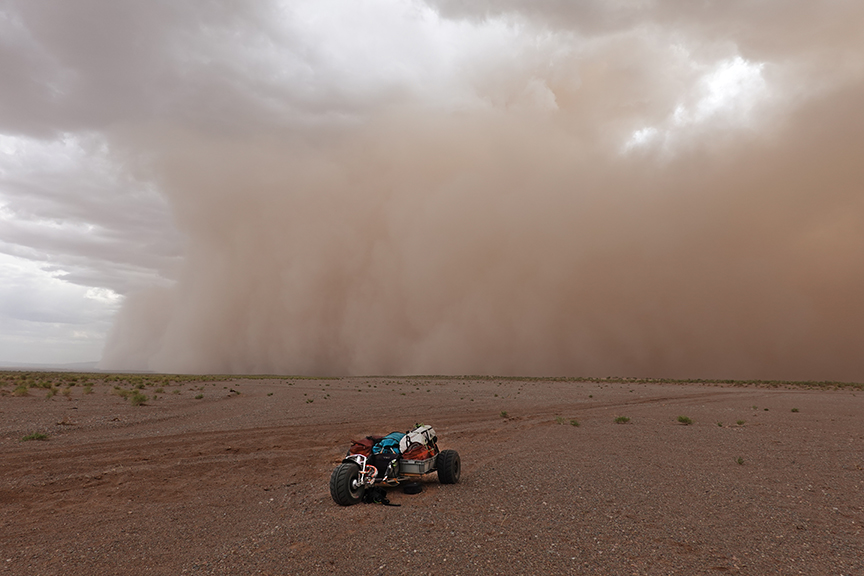
Earlier this month, Branden Joy completed a 1,655km kite buggy crossing of Mongolia in 61 days. The 33-year-old American set off from Ulaangom in northwestern Mongolia on May 5 and finished on July 5 in Gurvansaikhan, a small village south of the capital of Ulan Bator.
Joy traveled self-supported, harnessing wind power to propel a metal-framed buggy with large front and rear wheels.
“The route was deliberately plotted through small towns and villages with enough population to resupply at shops, typically 100–200 miles apart,” he explained.
Joy previously snowkited across Greenland in 2024, from the southeast coast to the northwest coast, with fellow American Eric Gilbertson.
“I’m an experienced kiter but was new to kite buggying,” said Joy. “On snow, you can go essentially wherever you want. I naively assumed flat, open Mongolia would be similar. It isn’t.”
An incomplete route
Joy struggled with the wind and terrain in the Gobi Desert toward the final third of the journey, so he hitched a ride with a vehicle for a section.
“I moved to seek both better wind and better terrain rather than sit through the second half of a roughly 10-day stretch with negligible usable wind,” he explained. “From there, the pattern of poor wind continued through to Gurvansaikhan, where I ended the trip.
“I kept pushing until it wasn’t feasible to continue safely. Ending the trip was a risk-management decision and a choice — not a failure, and not something forced on me by an incident.”
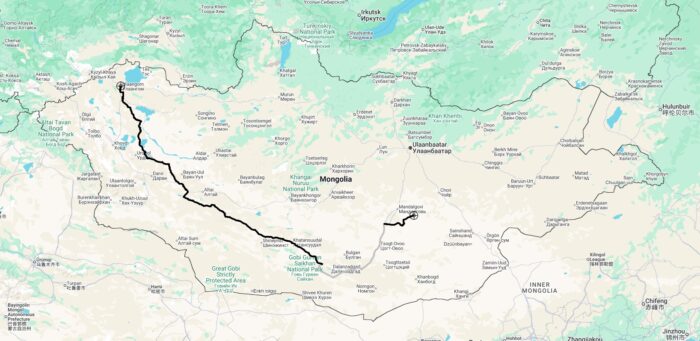
Joy’s route. The grey line indicates where the American caught a lift by vehicle out of the Gobi Desert. Map: Branden Joy
At times, Joy also had to walk and haul the buggy, totaling 128km or 8% of the total distance. Even when harnessing the wind, the American suffered from traveling on the only available terrain — local dirt roads or the valley floor. “I badly underestimated the beating my body would take from both,” he said.
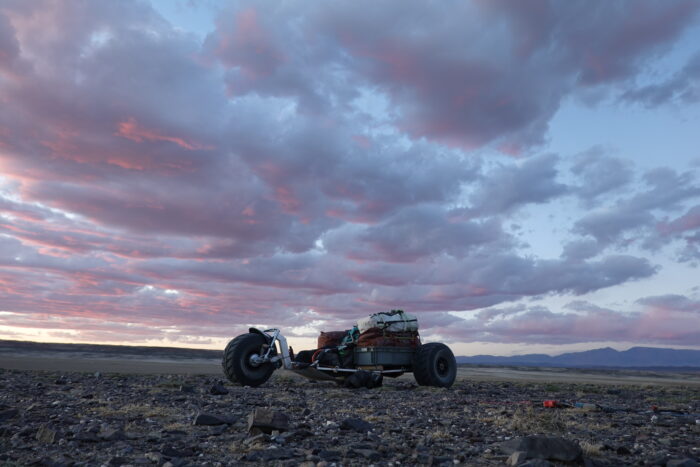
Photo: Branden Joy
“My buggy has no suspension. After a couple of weeks, I developed a pinched nerve in my back, sending shooting pain along my spine.”
The wind is everything
The crux of any kite-based trip is having enough wind to travel. He would ideally have started in early April, but was working a contract in Antarctica, so his mid-May start pushed him almost past the best window for wind, which is April to May.
“Mongolian wind behaves nothing like Greenland’s. In Greenland, it ebbs and flows like tides — gradual up, gradual down,” said Joy.
“In Mongolia, I dealt with what I started calling ‘carousel wind.’ It blows from one direction, stops, then two minutes later blows from another. It could effectively come from every direction inside an hour. Unusable.”
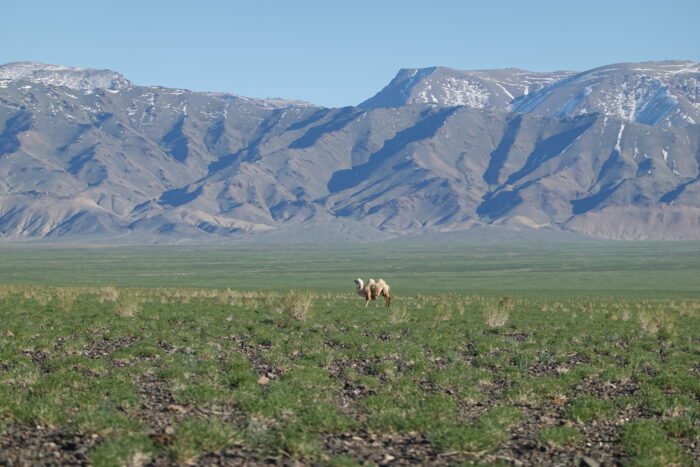
Photo: Branden Joy
Toward the end of the trip, the wind worsened, and he was only getting one day of usable wind per week. Even that was “turbulent and frightening.”
At times, he was hit with snowstorms, sandstorms, dust devils, and thunderstorms. “There was no warm shoulder season — no true spring. It went from cold to boiling with essentially nothing in between,” he recalled.
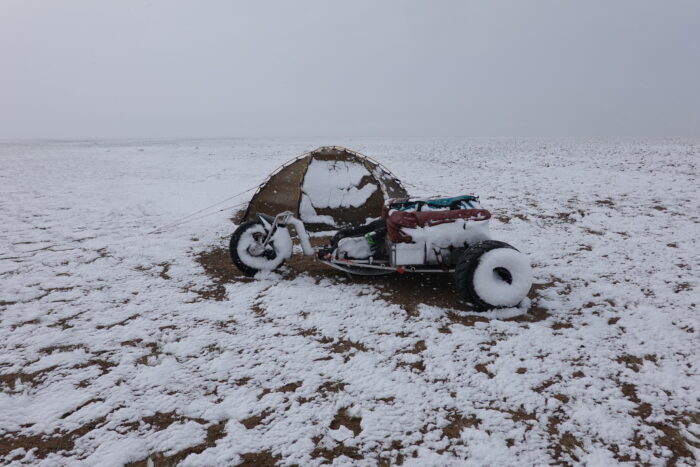
Photo: Branden Joy
Power lines, heat, and a broken buggy
The first valley took Joy 10 days to navigate through, thanks to a mixture of dry streambeds, culverts choked with shrubs, a lack of wind, storms, police, and power lines.
“Mongolia’s power grid has developed to a degree I hadn’t accounted for, and I ended up dealing with dozens of power lines over the course of the trip,” said Joy. “With a kite overhead, a line is a hard stop. It dictates the route whether you planned for it or not.”
As well as manmade obstacles, Joy found the heat challenging at times, particularly in the Gobi Desert. He found few reliable natural water sources outside of town and ran out of water several times before local shepherds shared their supply.
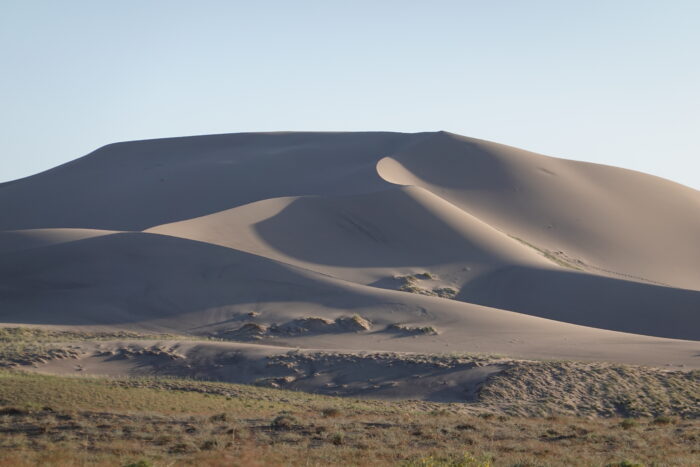
Photo: Branden Joy
“I was running systemic mild heat exhaustion, going seven days at a stretch without usable wind, and for roughly three weeks, I could only manage about 1,000 calories a day due to significant appetite suppression,” he explained.
The desert’s flora also proved to be tricky. Cactus thorns often tore his kites, and he had to repair them several times. Then a rear axle bolt on his buggy failed, triggering a week-long trip back to the capital to find a replacement before he could continue.
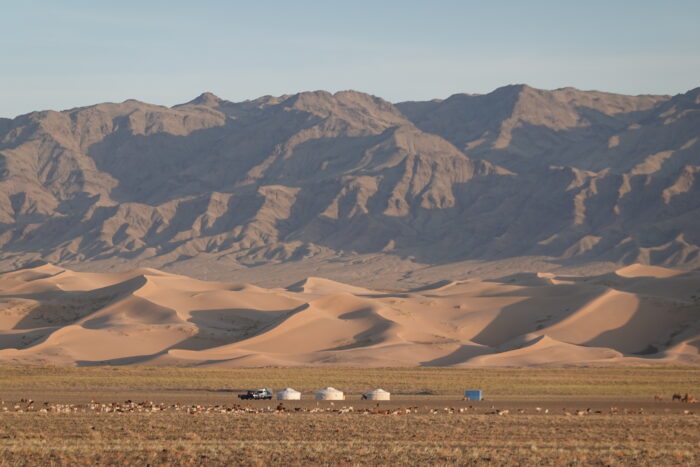
Photo: Branden Joy
Authentic Mongolia
Despite the difficulties, Joy found these misfortunes connected him to the local Mongolians and helped him gain a deeper understanding of how they live.
“The last week, with no wind at all, I was taken in by a shepherd and his family and helped manage their animals,” he said. “I learned enormously just by existing in that space, at that time, around those people.”
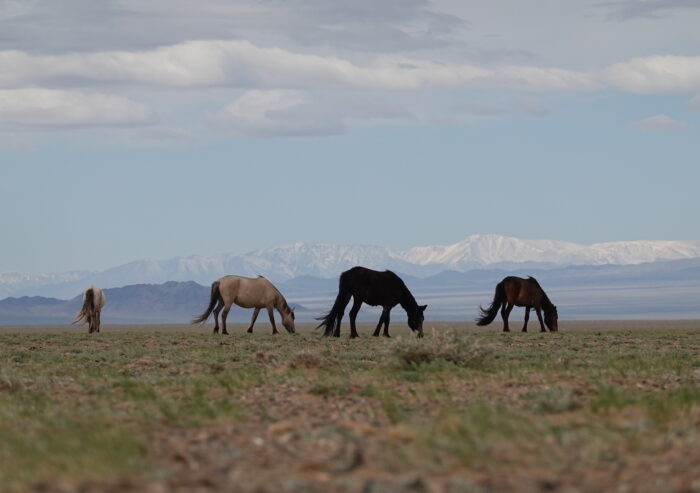
Photo: Branden Joy
He also enjoyed the company of camels, horses, sheep, goats, cows, and yaks throughout the journey. “Herds of 10–30 horses would run alongside the buggy for miles while I was doing 15–20 mph — unprompted, just curious and excited to run.”
And despite the heat of the Gobi, it wasn’t without its beauty. Once, he climbed a 200m dune to watch “sand rip off the ridgeline exactly the way snow blows off ridges in the mountains.”
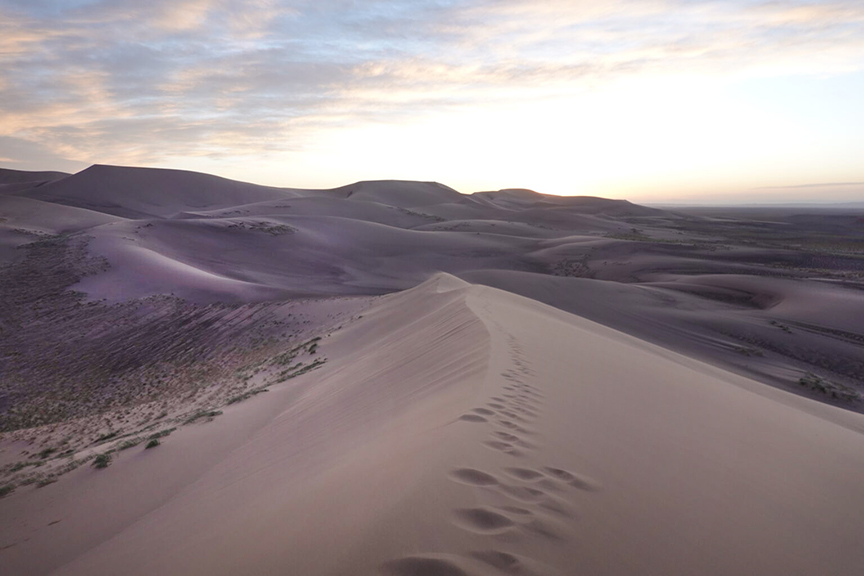
Photo: Branden Joy
The journey also helped him better understand the pros and cons of kiting as a mode of transportation. “After two months in Mongolia’s variable terrain, I feel like I’ve got my black belt in kiting,” he said.