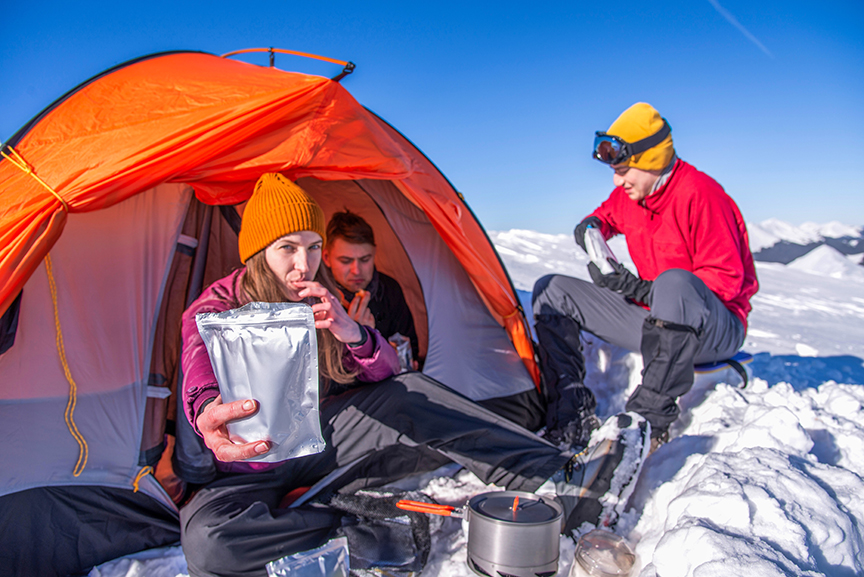
Most writing about expedition food tends to be full of unhelpful generalities. In recent years, I’ve read several times that a typical winter sledding diet requires 1 kg/person-day. To me, that figure comes with so many unspoken asterisks that it is almost useless.
For example, 1 kg/day implies a tacit acceptance that you will be losing weight and will feel colder than necessary. It may require that you put on significant weight before the expedition, as some parties do, then draw on that, camel-like. On a three-month crossing of Antarctica, when weights are at their haulable limit, that may be a necessary evil. But on a one- or two-month journey, it makes more sense to bring the right amount of food.
Several factors affect how much food you should carry:
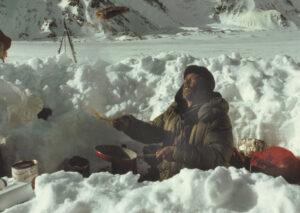
1) Temperature. On the coldest trips, where -40˚ or below is common, you have to consume more calories just to stay warm.
2) Individual metabolism. Some people burn through food faster, and the same person needs more food at age 25 than at 45. An 80kg man needs more than a 55kg woman. Incidentally, this makes the practice of giving everyone the same ration in starvation survival situations patently unfair.
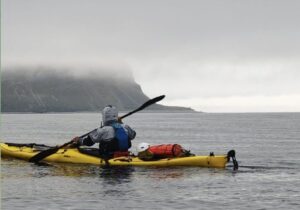
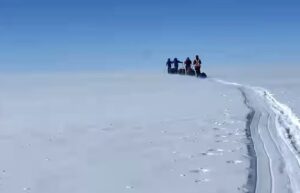
3) Type of activity. Sledding burns more calories than the same number of hours of sea kayaking or backpacking.
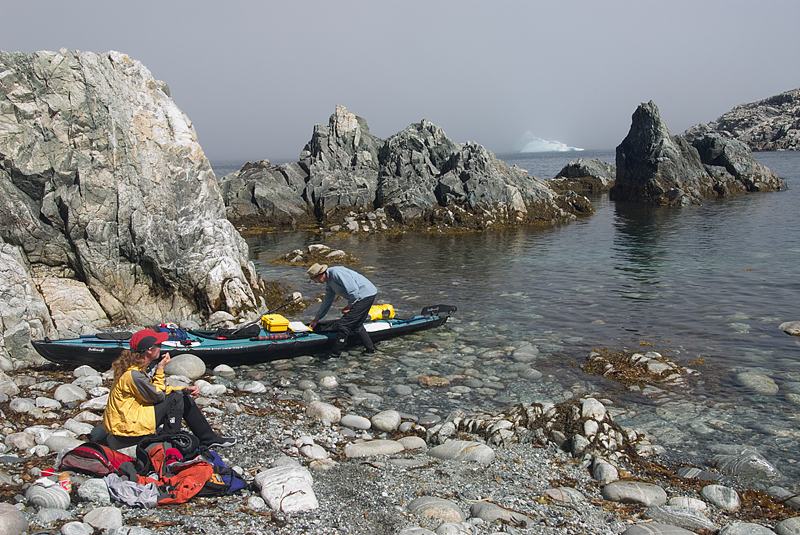
Lunch stop, northern Labrador. Even long kayaking days require far fewer calories than sledding or backpacking. Photo: Jerry Kobalenko
4) Type of food. Fat has over twice as many calories as the equivalent weight in carbohydrates or proteins (9 calories/gram vs 4 calories/gram). Theoretically, then, an expedition should carry nothing but fatty foods. However, the body can’t handle more than a certain percentage of fat in the diet. One expedition — I think it was Will Steger’s Antarctic crossing in the 1990s — consumed so much fat that the group suffered digestive problems — the runs, and so on.
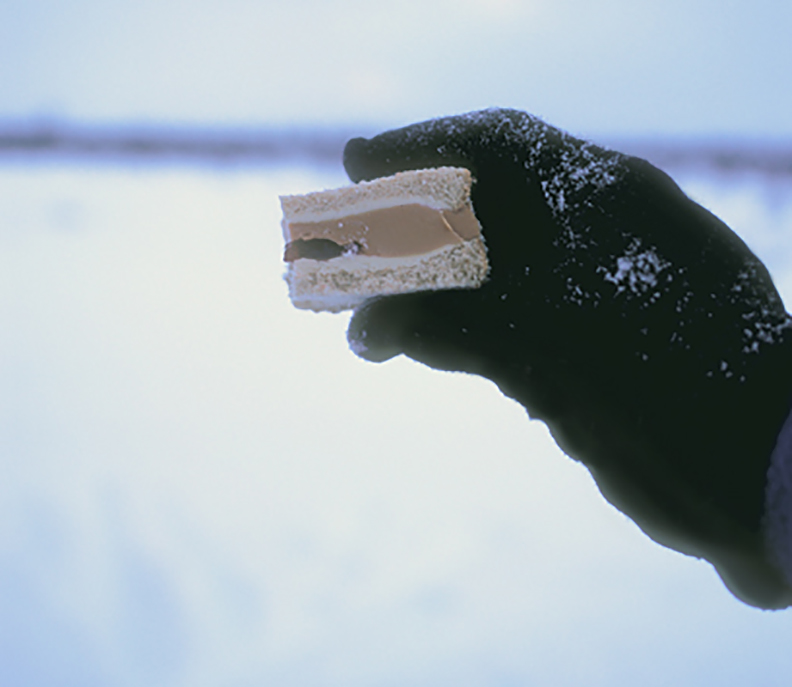
A peanut butter and jam sandwich, with 100gm of peanut butter, 50gm of butter, and a little jam for lubrication. An ideal cold-weather food, although eating 1,000 calories of frozen peanut butter is “like gnawing on a baseball,” according to one partner. He dutifully ate it for the calories but dubbed it The Worst Sandwich in the World.
In general, try to max out on fat without stinting on carbs or proteins. For example, I bring whole milk powder for cereal, dinner mixes, and hot chocolate rather than the more readily available skim milk powder.
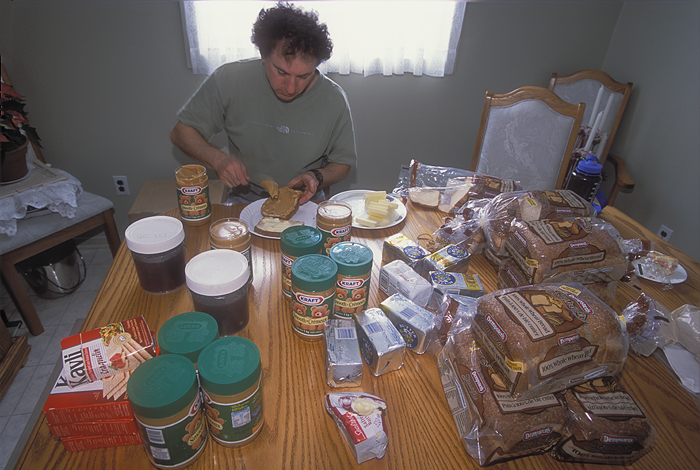
Pre-making 50 PBJs the day before leaving on an expedition. They stay frozen in the cold for weeks. Photo: Jerry Kobalenko
My supper cheese (a raclette) comes from a local deli and is 48% fat; typical grocery store cheeses are 17 to 28% fat. The higher water content in these low-fat cheeses also makes them freeze harder in the cold. Even pre-cut chunks freeze together as if with Krazy Glue, whereas I can separate chunks of fatty raclette, even at -40˚.
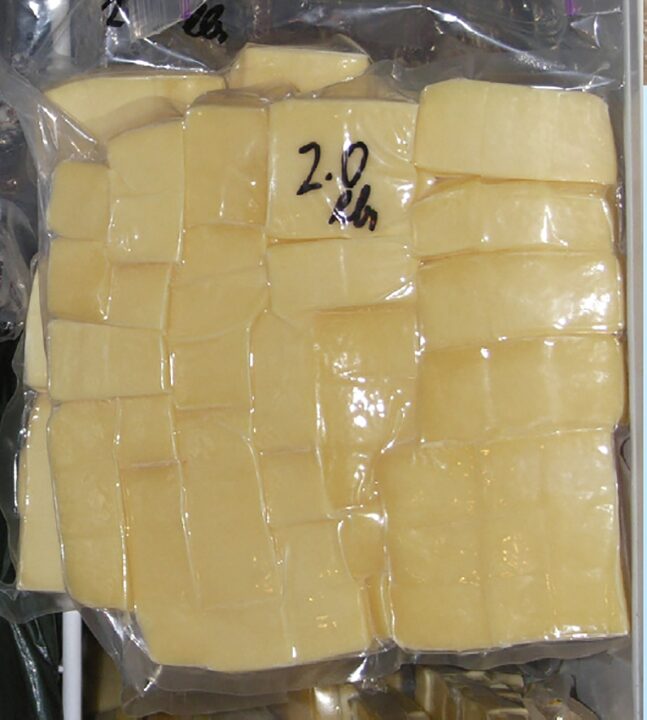
High-fat raclette, pre-cut in cubes and vacuum-packed. Photo: Jerry Kobalenko
After some 40 expeditions, the arithmetic has become second nature: the coldest sledding expeditions, with a lot of -40˚, require 2.6 lbs/day. (25 years ago, I needed 2.9 lbs/day.) This is close to 7,000 calories. Spring sledding trips demand 2.2 lbs/day (formerly, 2.4 lbs), which works out to 4,000-5,000 calories. Summer kayaking expeditions, 1.8 lbs (my wife eats 1.5 lbs/day on these).
This isn’t meant as a guide for everyone; I have a high metabolism, and many others may need less. But the ratios for the various activities would be similar. In general, start by bringing a little more than you think you need. Note how much food remains at the end and adjust accordingly next time.
The above figures are also status quo food amounts. In other words, I never lose much weight on expeditions — only a couple of kilos — and rarely have much food left over. If you want expeditions to double as weight loss clinics, bring less, but remember that food both keeps you warm and gives you the energy to travel hard. On one expedition, a partner brought too little lunch food and always bonked on longer days, despite his exceptional fitness.
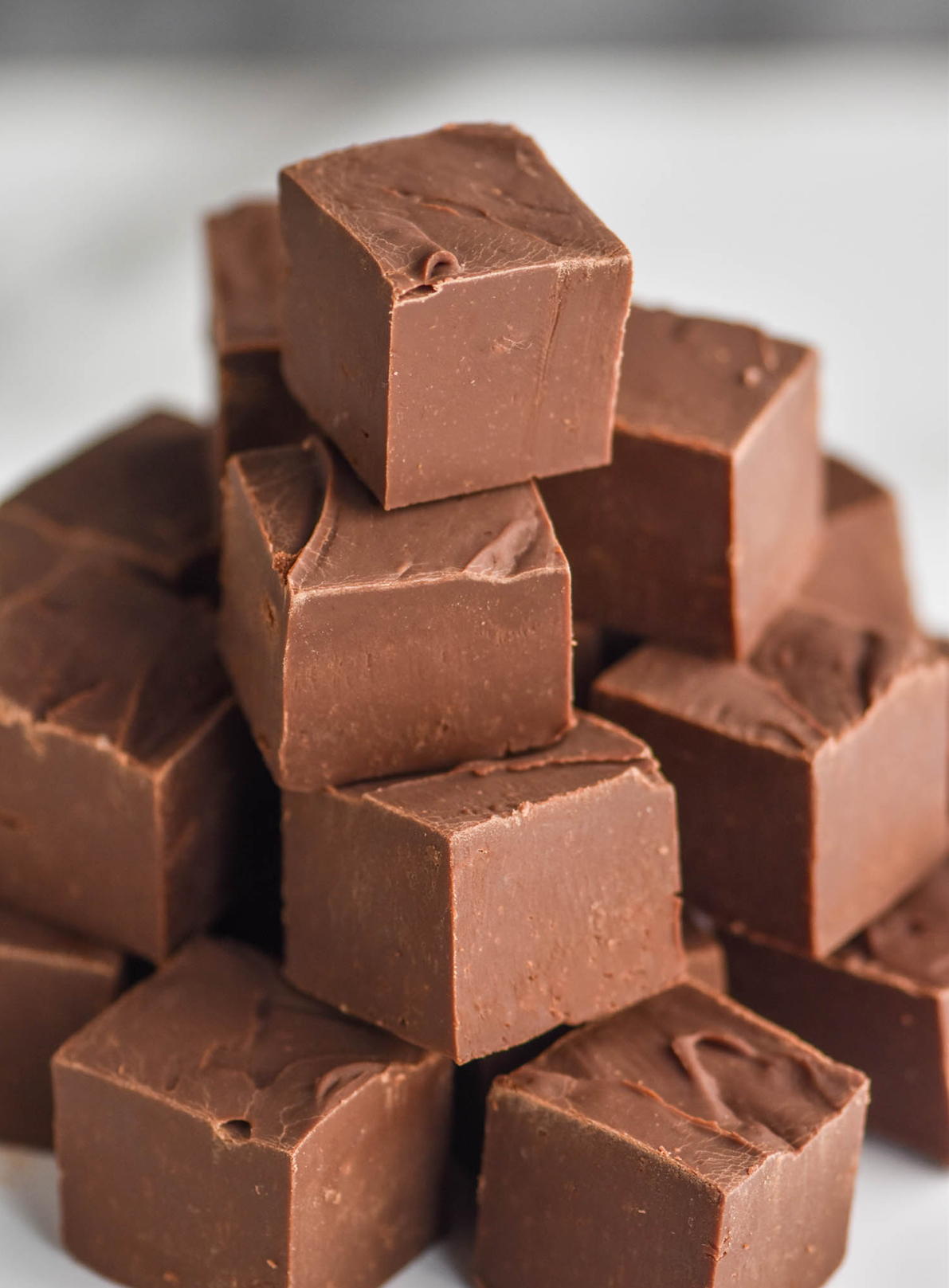
Homemade fudge for snacks. Photo: Jerry Kobalenko
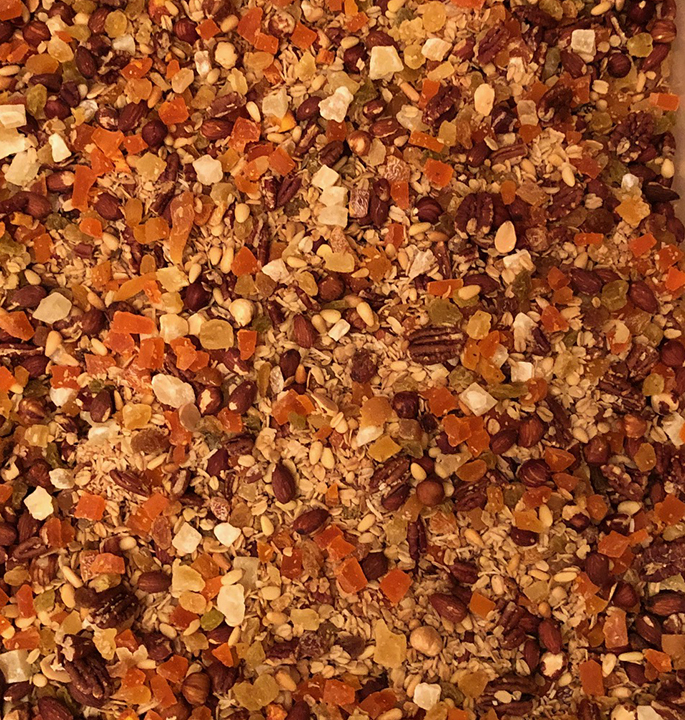
Expedition breakfast: 250gm of homemade granola mixed with whole milk powder and hot water. Photo: Jerry Kobalenko