For the second time in two years, bad conditions have forced Lucien Boucansaud to abort his solo attempt on unclimbed Khangri Shar. The only other confirmed alpine-style expedition in Nepal is a Japanese team, which is acclimatizing near Langtang before attempting a new route on Jarkya Himal, north of Manaslu.
Bad conditions on Khangri Shar
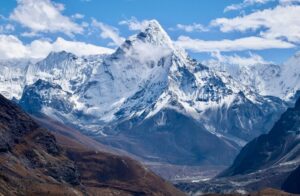
Conditions proved difficult from the beginning for Boucansaud of France, who also tried to solo 6,792m Khangri Shar in 2025. Khangri Shar lies near Pumori at the head of the Khumbu Valley. Boucansaud acclimatized on Kyajo Ri (6,180m), but route conditions didn’t allow him to go higher on the peak than Camp 2.
“The dry winter and the jet stream swept away all of last year’s snow, leaving almost nothing but rock,” he noted.
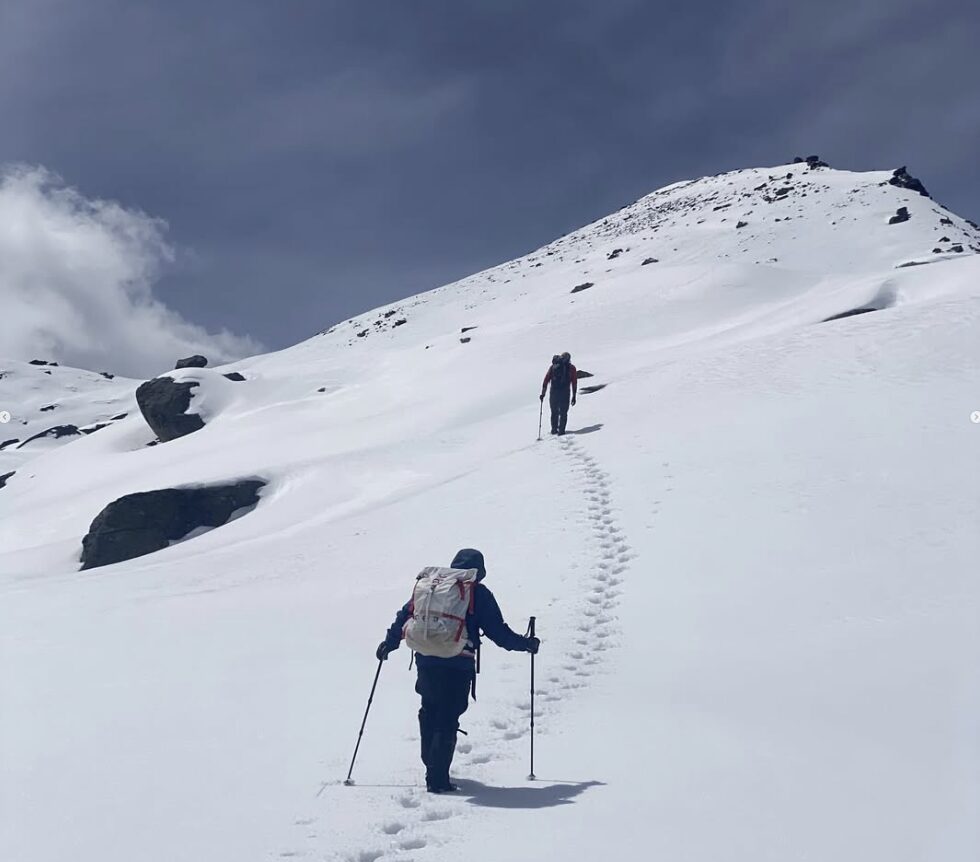
Conditions were different but no better on Khangri Shar. He hoped to scout the mountain before launching a single summit push, but found lots of fresh snow on his approach and a broken glacier on the lower part of the mountain. He described it as “a real labyrinth of ice ledges and crevasses.”
“Higher up,” he added, “it’s dry, swept by the icy winter wind.”
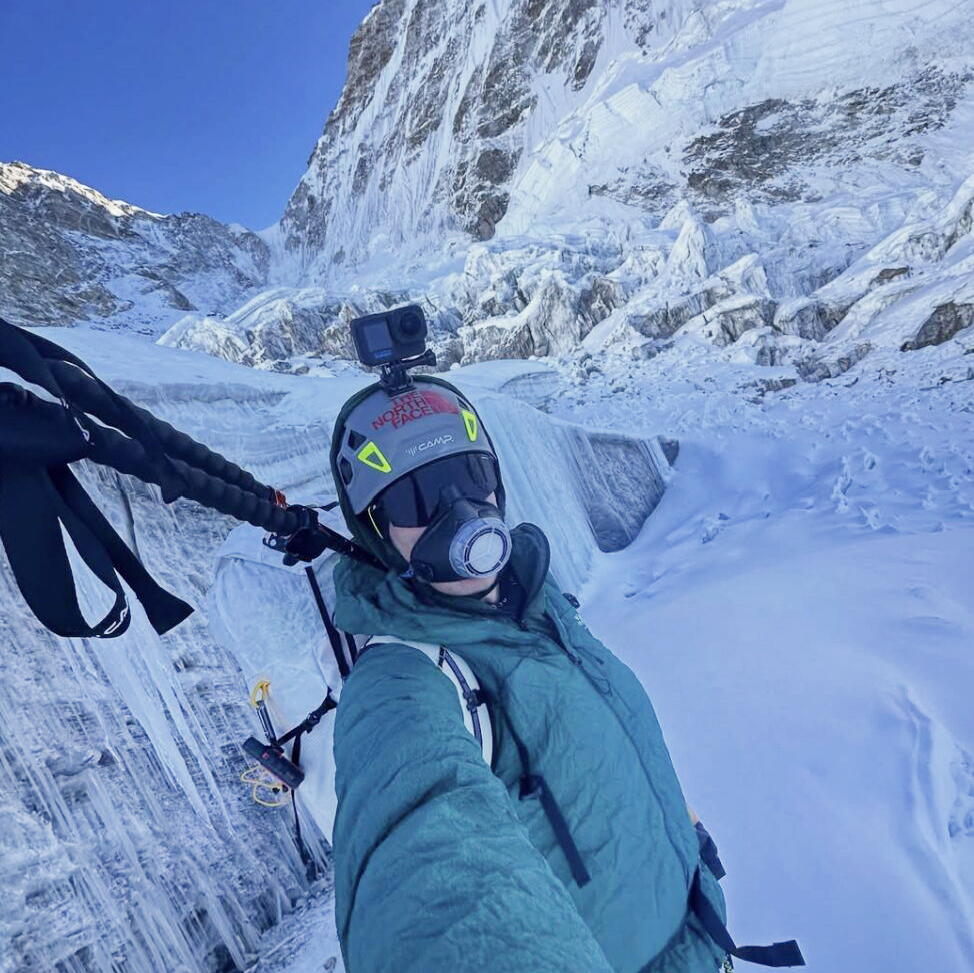
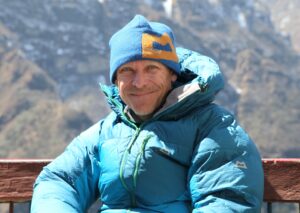
Boucansaud with Khangri Shar behind him. Photo: Lucien Boucansaud
Boucansaud waited, but neither the conditions nor the weather improved. He stopped waiting last week. “Strong winds at altitude, a glacier that was too dry, and above all, daily precipitation made the mission extremely complicated and dangerous,” he said.
Quitting must have been hard for Boucansaud, who says he invested significant time, training, and money in the attempt. Yet he has no regrets.
“Climbing a virgin peak of this magnitude solo is, for me, the ultimate dream,” he said. “But I also know that it’s something very uncertain and that there’s an 80% chance it won’t work.”
Japanese explore Langtang
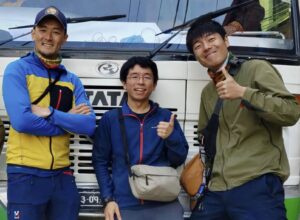
Meanwhile, the Japanese team of Masayuki Takenaka, 36, Tatsuro Sugimoto, 37, and Ryota Nomura, 31, is still acclimatizing while enjoying the travel experience.
They are currently around Gosaikunda Lake, south of Langtang, a place of blue lakes and lonely mountains, yet fairly accessible from Kathmandu. Takenaka, the leader, has posted detailed reports on their performance, including notes on the landscape and even what they eat at the small lodges.
While exploring the area, they summited 5,150m Surya Peak as planned, and also Gosaikunda Ri, a trapezoidal 5,053m mountain that they didn’t know it existed until they saw it. Both 5,000’ers provided great acclimatization just before the current spell of bad weather set in.
There are many 5,000’ers around Surya Peak, and some appear to have been misidentified in past reports. That may raise questions about which can be climbed and which are not yet open. The team also noted that the west face of Surya Peak is a sheer cliff that could provide a challenge for future teams. They instead chose the milder south face for acclimatization. Still, they had to use great care to cross the delicate summit ridge and gave up just 25m from the summit due to loose rock.
Later, they climbed Gosaikunda Ri from the north side.
“[It took] just under 10 hours, and the elevation gain was about 1,200m,” Takenaka wrote. “Looking at the numbers alone, it didn’t seem like a particularly strenuous climb, but I felt as tired as if I’d been hiking for 15 hours in Japan.”
The climbers then returned to Kathmandu before leaving again for their main goal: 6,473m Jarkya Himal, north of Manaslu and close to the Tibetan border.
Interesting acclimatization area
Back in town, Takenaka praised the area as a good place for prompt acclimatization and for trekkers with little time.
“Compared to the Langtang Valley, Gosaikunda is closer to Kathmandu, and the trekking route is shorter but allows greater elevation gain, making it ideal for acclimatization.”
Takenaka went on: “Unlike Kyanjinri and Tsergori in the Langtang Valley, there aren’t any easily climbable peaks around Gosaikunda, which might make it seem less appealing. Perhaps because of this, there seemed to be fewer European and Asian trekkers than in the Langtang Valley.”
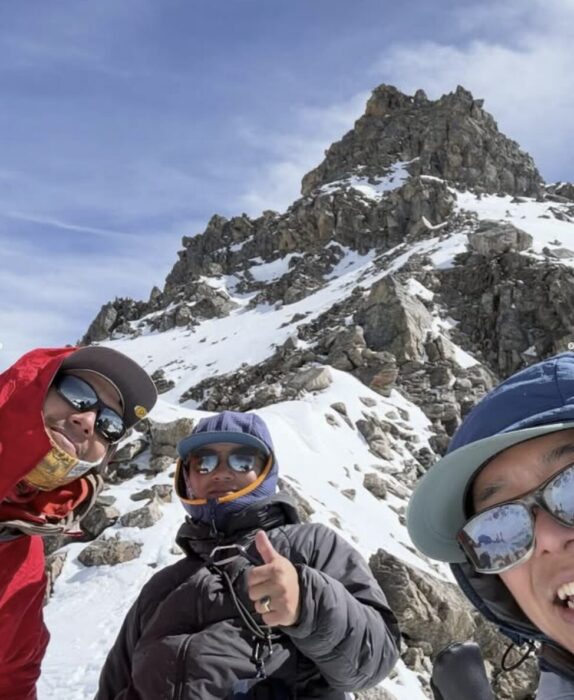
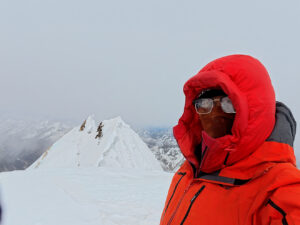
On Surya Peak.Photo: Masayuki Taketaka
“On the other hand, there were many Nepalese trekkers, which might make it a good place to enjoy the atmosphere of a sacred site and interact with them.
“The trekking route is very easy and allows you to ascend naturally, [so] it is less physically demanding than the Langtang Valley.”
No other alpinists
Recently, Peter Hamor of Slovakia confirmed to ExplorersWeb that he has postponed his expedition to unclimbed Mt. Api in western Nepal, after his climbing partner suffered some health issues.
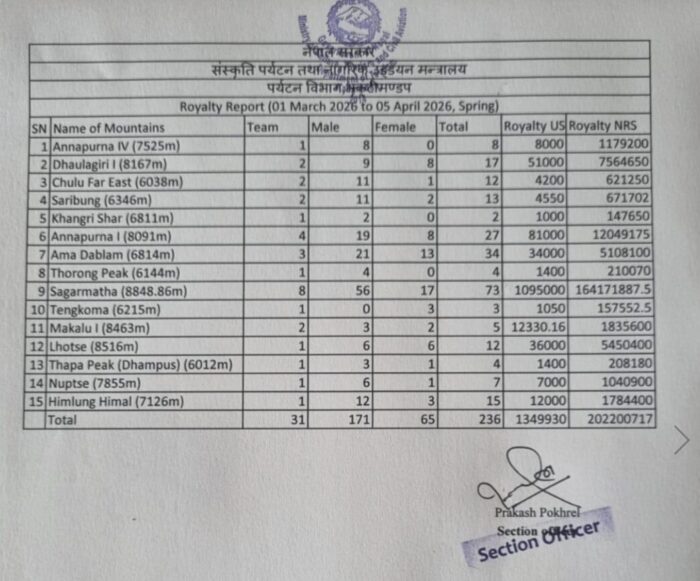
List of climbing permits granted to foreign climbers up to April 5, provided by Nepal’s Department of Tourism.
So far, Nepal’s Department of Tourism has not listed any other expeditions attempting new alpine-style routes, although there’s still time for small teams to show up. Several groups are heading for technical 6,000’ers using a classic expedition approach, but no unclimbed peaks.
7,000’ers not a draw
Interestingly, the 7,000’ers are not a draw this season either, despite a proposed new rule by Nepal’s government that will require Everest climbers to have summited a Nepalese 7,000m peak first. As of April 5, permits have been issued for only two 7,000’ers. The first is Nuptse, which is sometimes done with Everest and Lhotse or applied for as a way to access Everest’s Camp 2. The second is Annapurna IV, which a Seven Summit Treks group attempted at the start of the season. They have reported no summit, as far as we know.
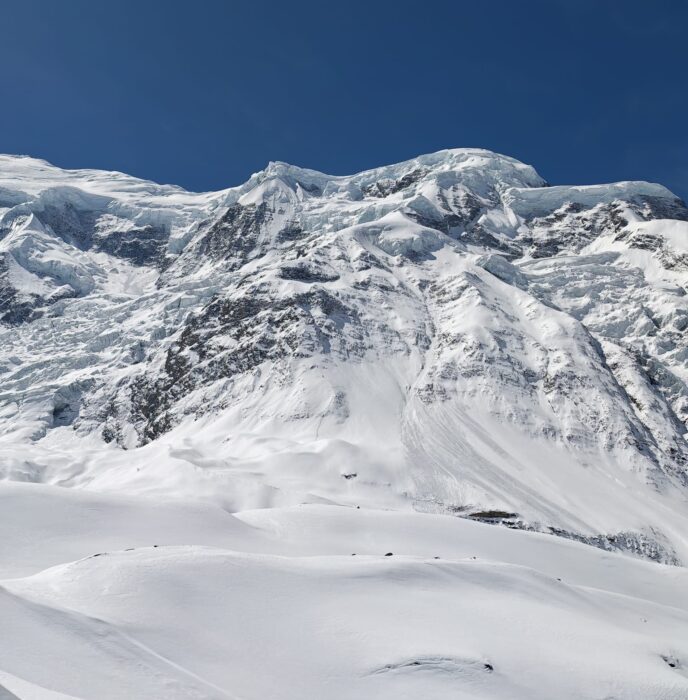
Annapurna IV three weeks ago. Photo: Piotr Krzyzowski
The new Tourism Law, including the 7,000m prerequisite, is still subject to modifications. For now, many climbers planning for Everest train on peaks around the world and then climb a lower 8,000’er, such as Manaslu, or the popular Ama Dablam, which is a technical peak, although “only” 6,812m high.