The flood that began on Langtang Lirung on August 26 and swept into the Kyirong Valley, killing thousands, struck a place steeped in cultural and mountaineering history. The irony is profound: Kyirong, also spelled Gyirong, means “Valley of Happiness” in Tibetan—a name now cruelly at odds with the devastation that has befallen it.
After the flood, Tibetan writer Tsering Woeser wrote that “long before it came to be spoken simply as a ‘border crossing,’ Kyirong had already been a trans-Himalayan corridor of civilization with an extraordinarily long history.” For centuries, kings, traders, pilgrims, and Buddhist teachers used this pass on the southern edge of Tibet.
The sacred statue of Jowo Wati Zangpo, representing the Bodhisattva of Compassion, is tied to the valley. It was the heart of a 13th to 17th-century Tibetan kingdom and a vital Himalayan trade hub. Atisha, a legendary Indian Buddhist master who helped restore Buddhism in Tibet, taught here.
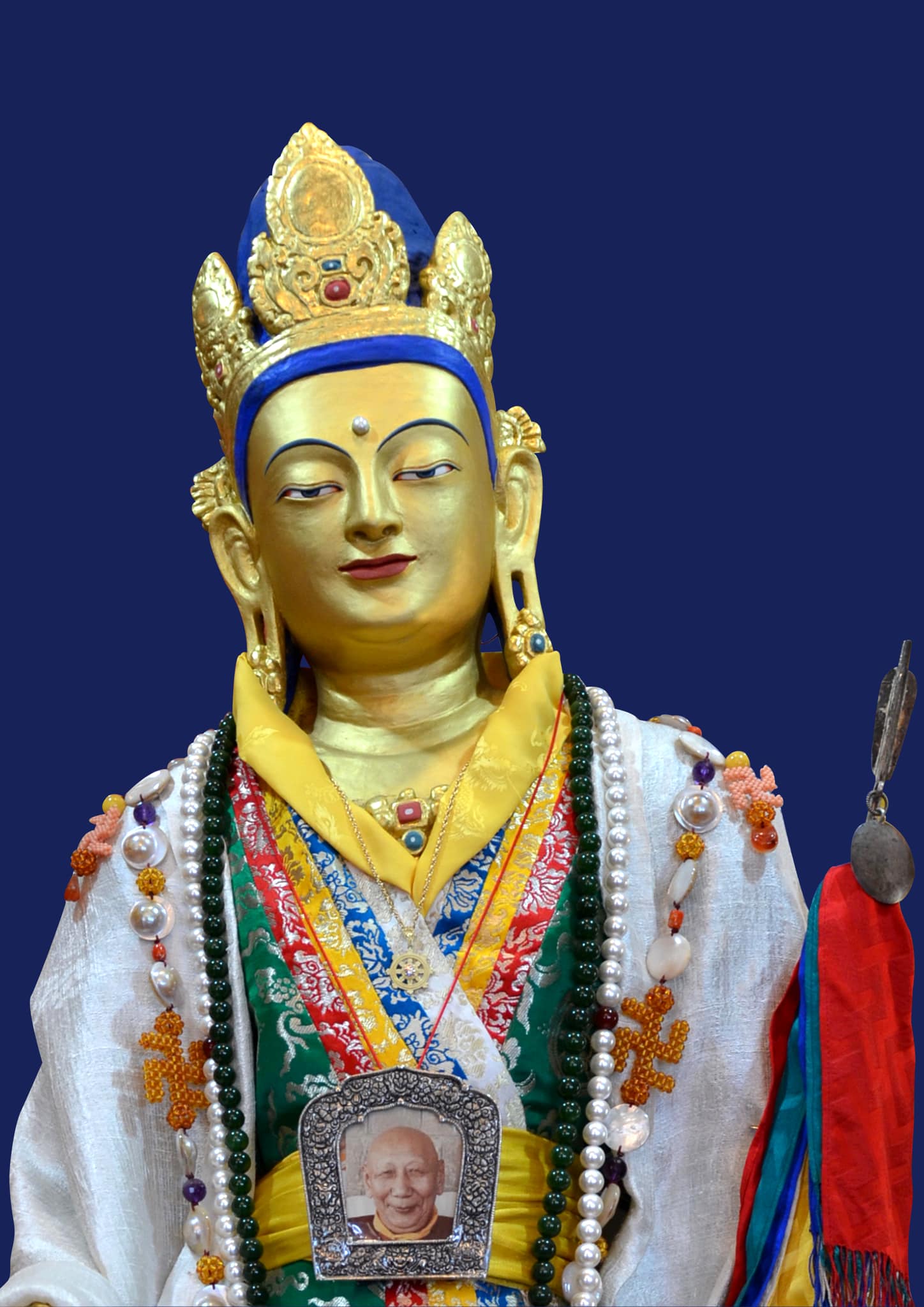
Jowo Wati Zangpo. Monks brought the statue to India during the political upheavals in 1959. Photo: dzongkarchoede.org
In the late 1700s, armies clashed in the same valley. Eventually, in 1961, China opened a customs post here. In the 2010s, it became a major border crossing.
People crossed in both directions. Descendants of Gorkha soldiers lived for generations on the Tibetan side but received Chinese citizenship only in 2003. On the Nepali side, many Langtang families come from Kyirong.
According to Woeser, before modern borders hardened, Kyirong and northern Nepal formed one social world, and people crossed freely and regularly. Only in the last half-century did the place become hard to reach for many Tibetans.
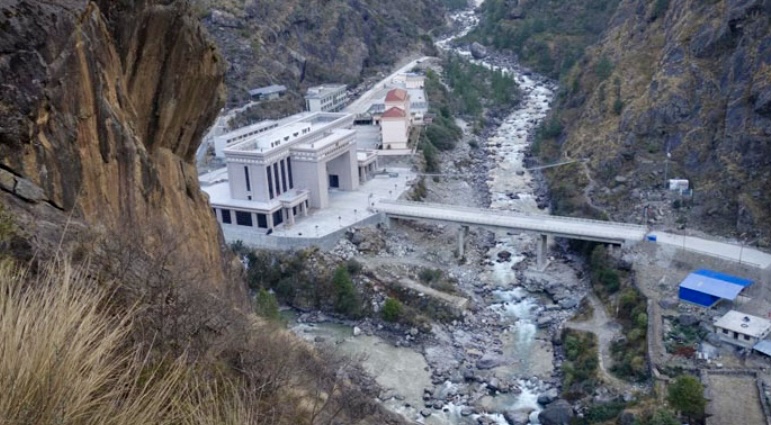
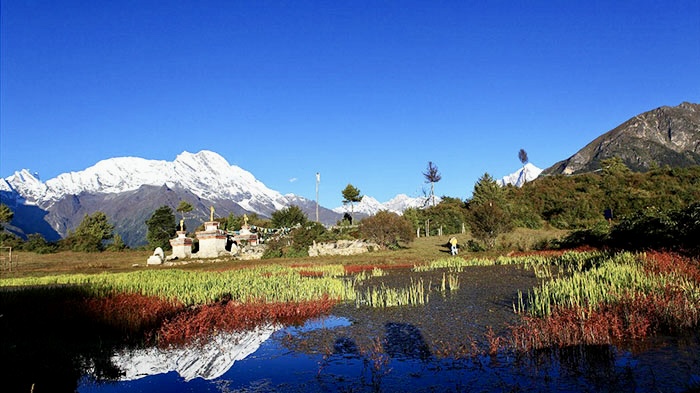
Kyirong before the disaster. It was almost completely destroyed in the August 26 flood. Photo: Tibettravel.org
Harrer and Aufschnaiter
The valley entered Western mountaineering literature less through a first ascent than through a celebrated escape.
In 1939, Austrians Heinrich Harrer and Peter Aufschnaiter were members of a German reconnaissance expedition to Nanga Parbat.
After the war began, Harrer, a climber and skier, and Aufschnaiter, a scientist and cartographer, were interned by the British as enemy aliens. But the two men escaped in 1944, crossed into western Tibet, and finally reached Kyirong in January 1945. Though local officials initially ordered them to leave for Nepal, the duo managed to stay for about 10 months.
In his classic book Seven Years in Tibet, Harrer dedicated an entire chapter to Kyirong, which he called The Village of Happiness. “If I can choose where to pass the evening of my life, it will be in Kyirong,” he wrote.
Meanwhile, Aufschnaiter’s detailed records serve almost as a historic gazetteer of the valley. He documented its roads, population, trade, and place names. In the Kyirong Valley alone, he recorded 26 vibrant monasteries and temples — structures that, as Woeser points out, were later destroyed or severely damaged during the Cultural Revolution.
Though the two men did no climbing while on the run, they spent months looking up at the very same skyline that later generations of mountaineers would approach from Nepal.
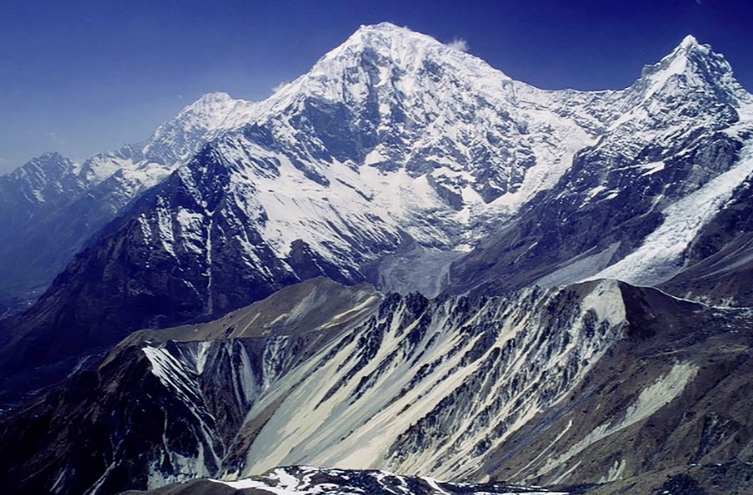
Langtang Lirung from Tsergo Ri. Photo: Ahtih
Mountaineering on Langtang Lirung
Langtang Lirung rises about 5,500m above the Trisuli River in only 16km. Hanging glaciers sit above the Langtang Valley and farther west, above the Kyirong–Rasuwa trench.
In 1949, British explorer H.W. Tilman conducted the first serious European survey of Langtang. He traveled along the south side of Langtang Lirung, then tried to view the peak from Tibet, got lost, crossed the border, and was sent back to Nepal.
After 1950, that northern approach was closed to most Westerners. Later climbs came from Nepal.
Langtang Lirung was first climbed in October 1978 by Seishi Wada and Pemba Tsering Sherpa via the East Ridge. Most later climbs used the south ridges. Polish climbers carried out the first winter ascent in January 1988.
Few expeditions succeeded, and avalanches killed several climbers.
After 2010, nobody reached the summit for 14 years. On October 30, 2024, Marek Holecek of the Czech Republic and Ondrej Huserka of Slovakia made the first ascent of the East Face. Huserka died during the descent the next day after falling into a crevasse.
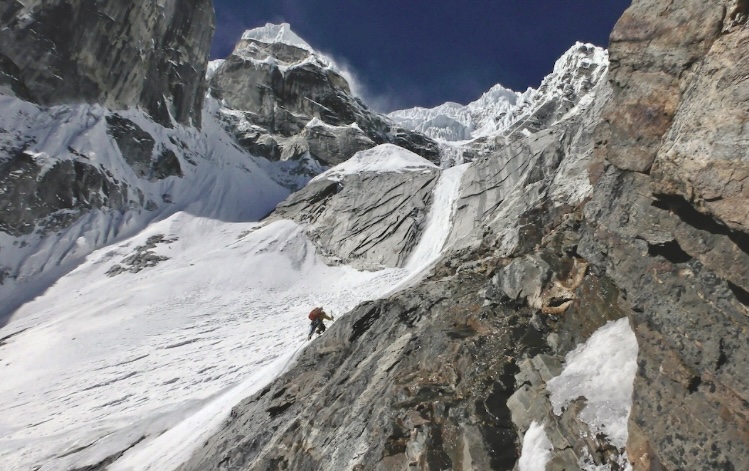
Ondrej Huserka approaches an ice smear on Langtang Lirung’s East Face in 2024. Photo: Marek Holecek
The Langtang Lirung massif has been the source of several fatal disasters in recent history.
In April 2015, the Gorkha earthquake triggered a massive ice and rock avalanche that buried Langtang village, killing between 240 and 300 people in the town and many more across the valley. After 2015, the older Zhangmu border crossing closed, and international mountaineering teams traveling to Shisha Pangma began entering Tibet through Kyirong.