With humans largely out of the picture, wildlife has returned to the once-settled Chernobyl area. Last year, researchers found that the region’s grey wolves have become largely immune to the cancer-causing effect of radiation. But resisting radiation is a far cry from actively feeding off it. But a type of black fungus seems to be doing just that.
Since the 1990s, researchers have found fungus growing and apparently thriving even in the most dangerously radioactive areas of the former power plant. Recent studies have shown that the black fungus growing in Chernobyl has developed an incredible ability to convert radiation into energy.

The scorched and molding walls of the old reactor. Photo: Wikimedia Commons
Meet the mold in Reactor Four
In 1986, the Chernobyl Nuclear Power Plant’s fourth reactor exploded in a catastrophic meltdown. Four years later, a Ukrainian research team led by Nelli N. Zhdanova discovered black mold growing in and around the former plant, including within the ruins of the fourth reactor. There were 37 species of fungus in all, growing in different ranges of radioactivity.
A 2000 study found that particular molds containing melanin, the same pigment-producing molecule that exists in human skin, grew densely in highly irradiated areas. The star of this particular show was Cladosporium sphaerospermum.
Zhdanova’s team took samples of this mold and exposed it to radiation, measuring its growth against various controls. Weirdly, the Chernobyl samples actually grew better when exposed to dangerous ionizing radiation. Researchers now theorize that fungi like C. sphaerospermum are performing “radiosynthesis,” capturing and living off of ionizing radiation, like how photosynthetic organisms use electromagnetic radiation from sunlight.
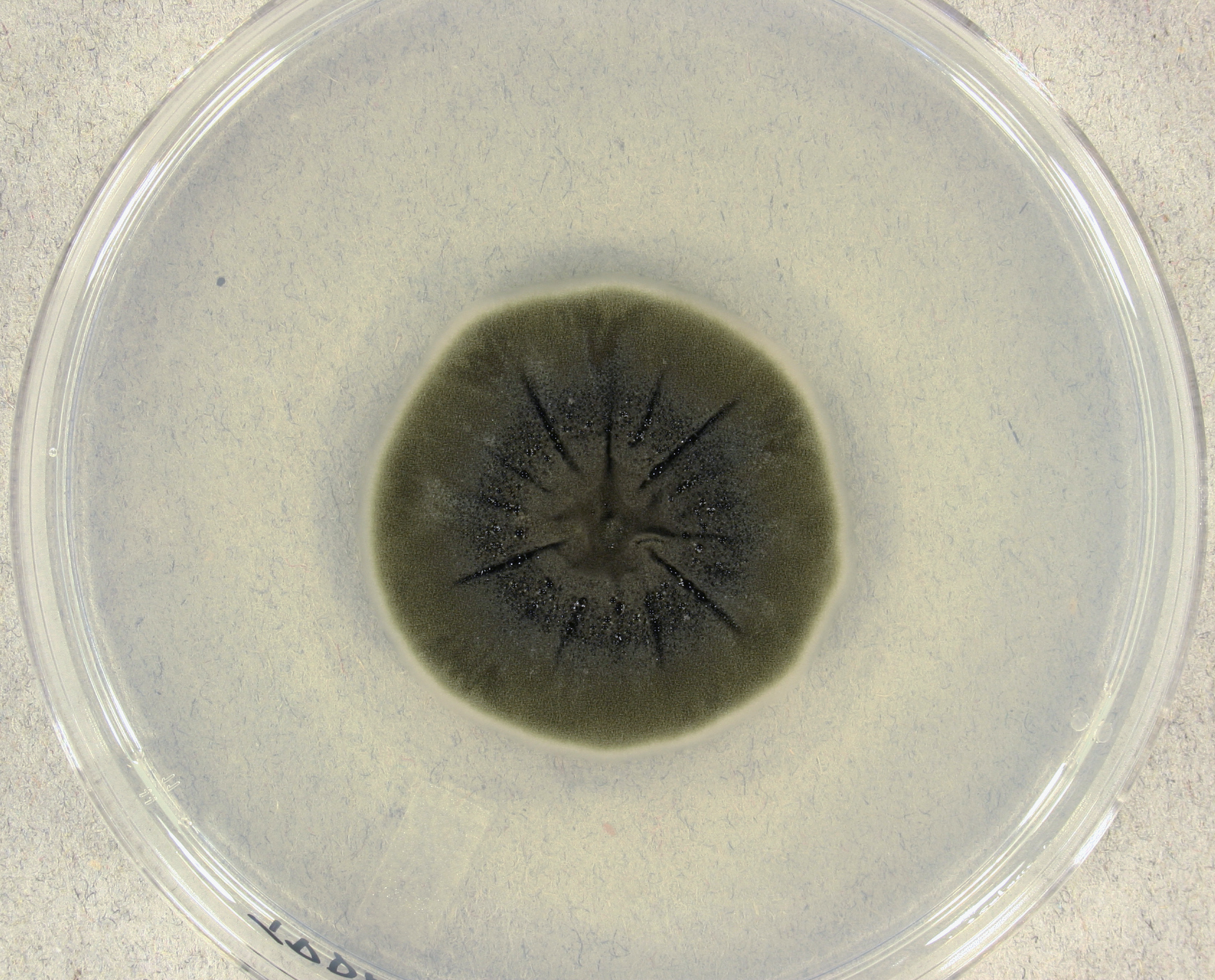
Cladosporium sphaerospermum, the fungus that loves radiation and extreme environments. Photo: Medmyco
Radiotrophic fungus (in space?)
The secret weapon of C. Sphaerospernum likely lies in melanin. Melanin is a type of biomolecule, which serves a number of functions across the animal and fungal kingdoms.
When our skin is exposed to UV radiation in sunlight, our melanin-producing cells start, well, doing that. The dark melanin gives you a tan and, more importantly, absorbs that UV radiation and prevents it from damaging the cell nucleus.
Since we, however, would not thrive inside Reactor Four, it must be assumed that the melanized fungi have more going on. The current theory is that melanin acts like chlorophyll. Like melanin, chlorophyll is a pigment — it’s what makes plants green — and it is a key part of photosynthesis.
The exact mechanism of C. Sphaerospernum‘s radioactive success may not be confirmed yet, but that didn’t stop scientists from sending it to space in 2022. As the resulting study explains, mold that was grown on the outside of the International Space Station actually did better than the control.
This is good news for mold and even better for human astronauts. One of the many health risks of space travel is exposure to radiation. While we are still in the early stages of research, scientists are already looking at radiotrophic fungi as a potential way to shield us from radiation in space.