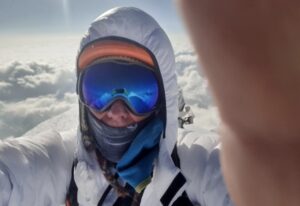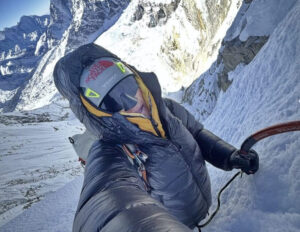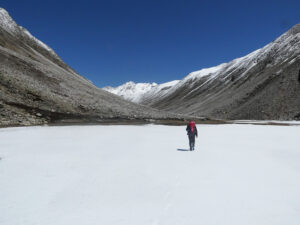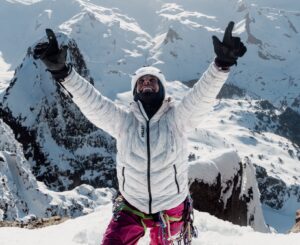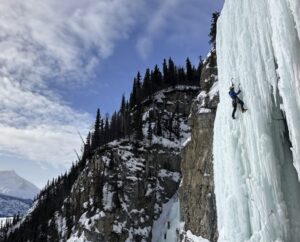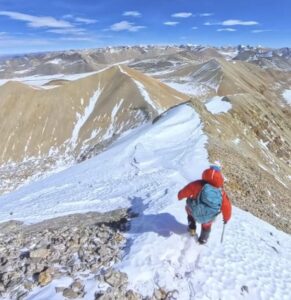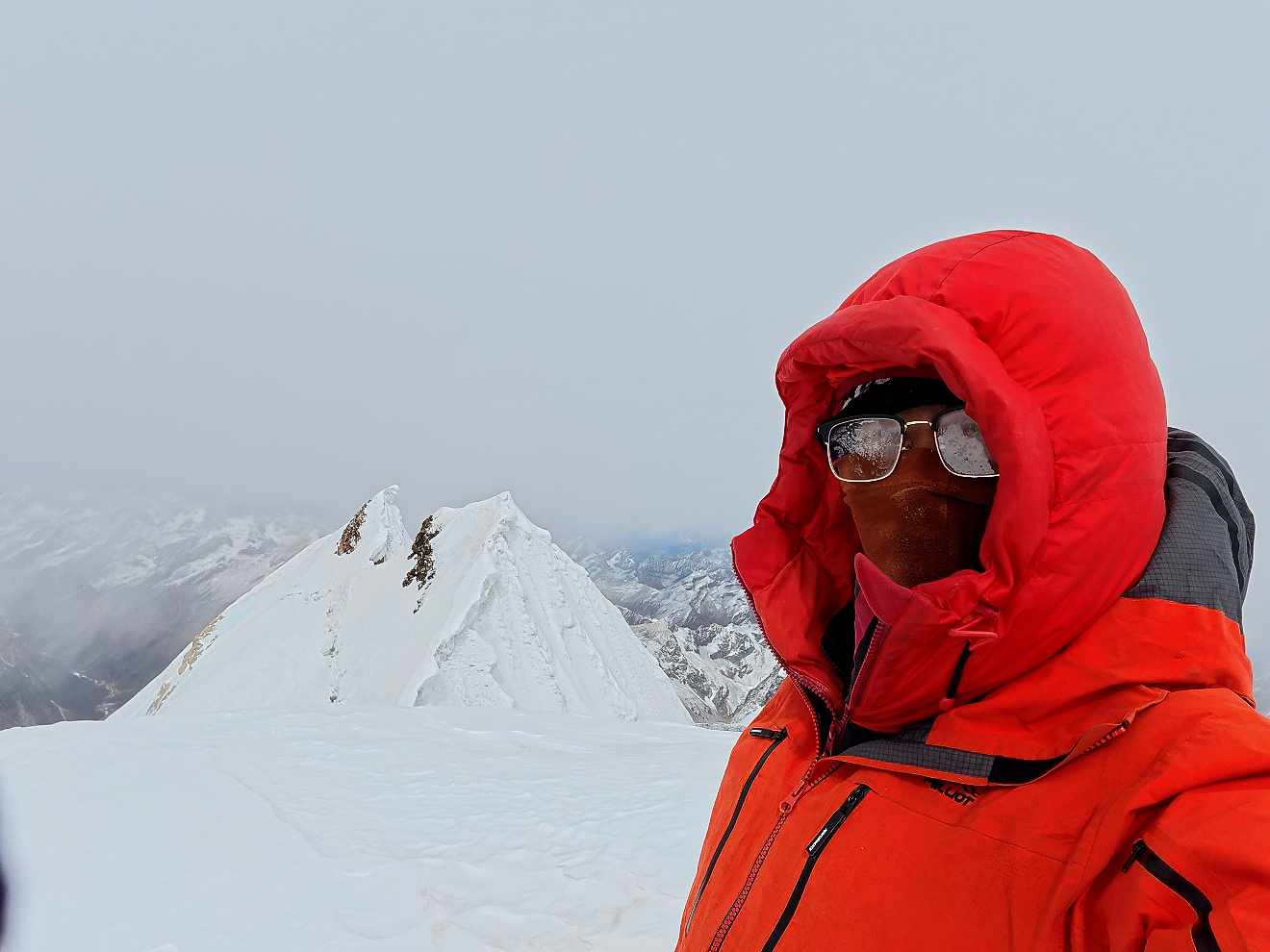
Last month, Chinese climbers Kong Weijie and Xian Lin made the first ascent of one of the most coveted walls in the Western Sichuan mountains. The East Face of Yaomei Feng is scarcely known in the West but is a “hellishly difficult route,” according to local climbers. And the pair did it in winter, with temperatures between -30˚ and -40˚C.
Yaomei Feng (Yaomei Peak) is the highest summit of the four-peak Siguniang massif, one of the most remarkable peaks in Sichuan Province. Depending on the translation, Siguniang means the Four Maidens, the Four Girls, or the Four Sisters.
Chinese climbing forums
Kong and Xian completed their first ascent on February 14, but for weeks, details of the climb didn’t reach beyond China. However, Chinese blogs and forums covered their feat, which is how we learned of it. A Chinese reader shared images from the climbers with ExplorersWeb, as well as a link to a thread on Zhihu, a Q&A forum similar to Reddit.
On Zhihu, revered Chinese climber Ma Jihua, who had climbed the southeast ridge of Yaomei Peak in 2004, discussed their climb. He based his analysis on conversations with the team and his own knowledge of the mountain.
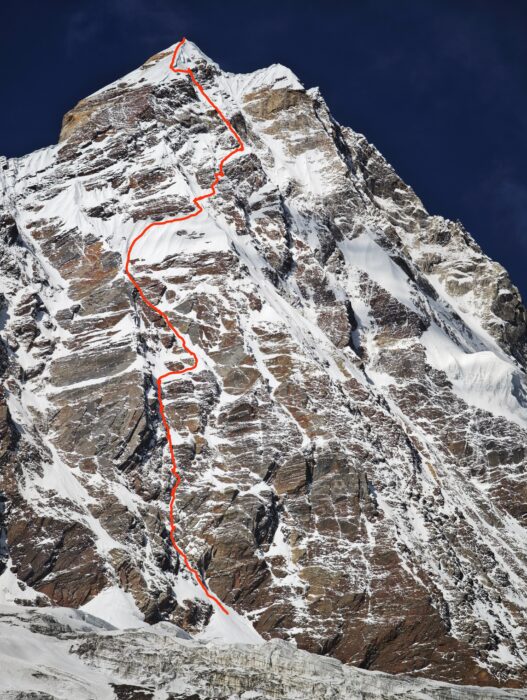
Topo of the new route. Photo: Kong Weijie and Xian Lin
The East Face is the most difficult of the three faces of Yaomei and involves a complex approach across several exposed passages, Ma explained. For that reason, the climbers traversed the mountain, and after reaching the summit, descended the south face.
Steep scree approach
After checking the climbers’ material and reports from previous expeditions, plus extensive footage of the mountain, Ma believes the face may not be as difficult as its reputation suggests. Rather, the real difficulties appear to be on the approach, which features several steep, exposed passages leading to the main gully.
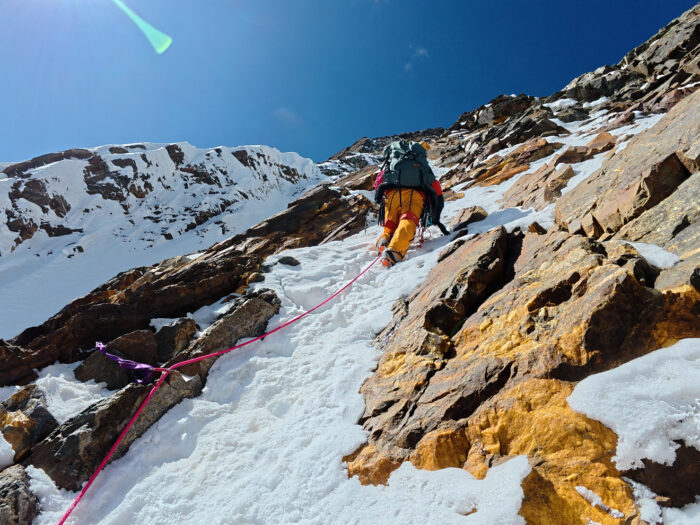
Mixed terrain of unstable rocks. Photo: Kong Weijie and Xian Lin
The pair set up Base Camp in the Changping Valley, then crossed Liuerconggou Pass, a ridge-shaped passage with extremely steep terrain on both sides amid loose scree and rock. In their report, Xian and Kong stated that the pass was a 50m-high, 80° rock face, and that they traversed it without any protection. After viewing some footage of the climb, Ma estimates the slope could have been slightly less steep, around 70º.
Difficulty and hardships
The passage led the two climbers to the eastern headwall.
“The East Face Zheng Gully is a pristine and unexplored area, with no prior reports of any teams stepping on it before,” Ma explained. The climbers said they climbed a “vertical rock face” and provided pictures.
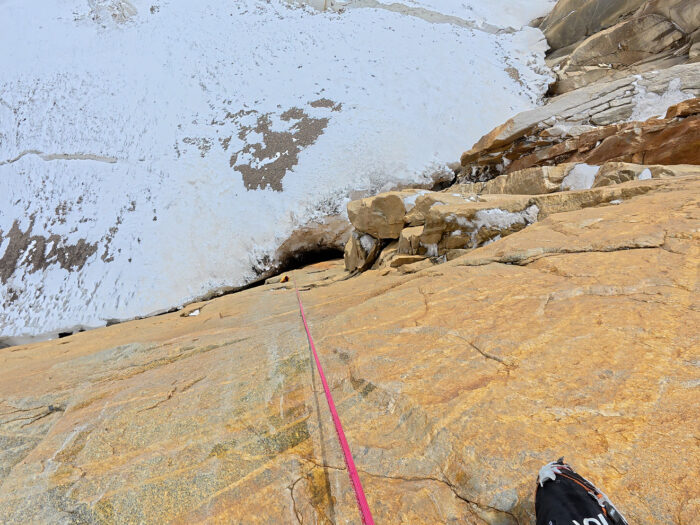
A vertical rock section. Photo: Kong Weijie and Xian Lin
However, continuing his analysis, Ma says that they could have detoured around that section.
“There is no mandatory vertical section,” he explained. “The East Face of Yaomei Peak is essentially a gentle to moderately steep slope, not a vertical wall, and no section requires high-difficulty technical movements.”
The climbers named their route Heartfelt East Face and assigned a grade of TD+ and locally M4, but Ma suggests the objective difficulties might not surpass D or D+.
Ma adds that beyond the technical difficulty, the climb requires skilled route-finding — and lots of stoicism, considering that they did their climb in full winter conditions, with -30ºC in base camp and -40ºC at the summit. The route, he explains, would not be possible in warmer months because the rock is too unstable.
The Youngest Sister
At 6,250m, Yeomei Feng (幺妹峰; “Peak of the Youngest Sister”) is the highest of the four points of Mt. Siguniang, also known as the “Queen of Sichuan’s Peaks”. It is also the second-highest mountain in Sichuan Province and the easternmost 6,000’er on Earth, according to Wikipedia.
The name Siguniang refers to the legend of four sisters who found a demon that had killed their parents and harmed the surrounding villages. The sisters eventually turned into four graceful peaks.
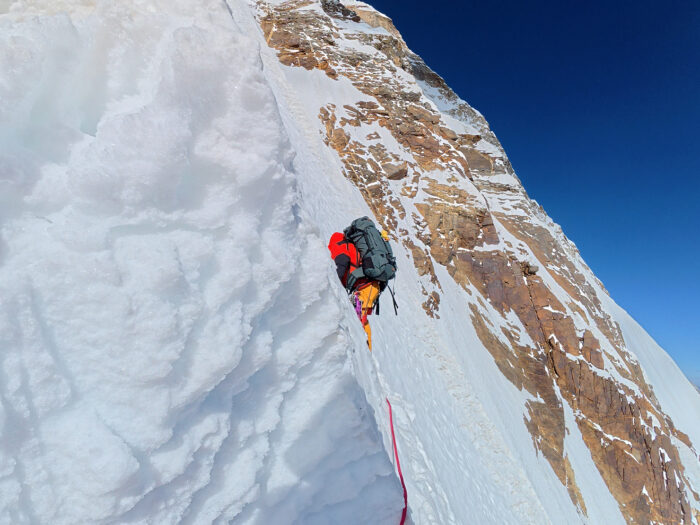
On the upper slopes. Photo: Kong Weijie and Xian Lin
Yeomei Feng is rarely climbed and even less frequently summited. A Japanese team made the first ascent in 1981 via the east ridge in heavy expedition style. A second Japanese group did the second ascent via a parallel line. American Charlie Fowler did the third ascent, soloing a line between the two Japanese routes in three days, Tamotsu Nakamura wrote in the AAJ.
“The first ascent of the north face was made by Mick Fowler and Paul Ramsden over six days in April 2002,” he added. “They descended the unclimbed north ridge in two days.”
Chad Kellogg and Dylan Johnson did the first ascent of the southwest ridge in 2008. Chinese teams opened routes on the south face in 2009 and 2011.
Chinese climbers Zhou Song and Zhang Qingwei established the latest new route to the highest point of Mount Siguniang. They climbed the north ridge, for which they received a Piolet d’Or nomination.
Training young alpinists
Ma Yihua, who analyzed the Yeomei Feng climb, deserves a mention. He is a respected authority among Chinese climbers and has been active in training a new generation of outstanding Chinese alpinists. In 2003, he partnered with American Jon Otto, a resident of China, to establish the first private mountaineering school/company in Chengdu. Under the name Chengdu Blade Ridge Mountaineering Exploration Company, it offered professional mountaineering training, guiding, and expedition services, often filling the gap left by state-run mountaineering associations.
Ma also founded the Arete Alpine Instruction Center. He has done many first ascents and new routes on Sichuan peaks, including the first ascent of Daxuetang (5,364m), the west ridge of Mt. Reddomaine (6,112m), and several climbs on the Siguniang massif.
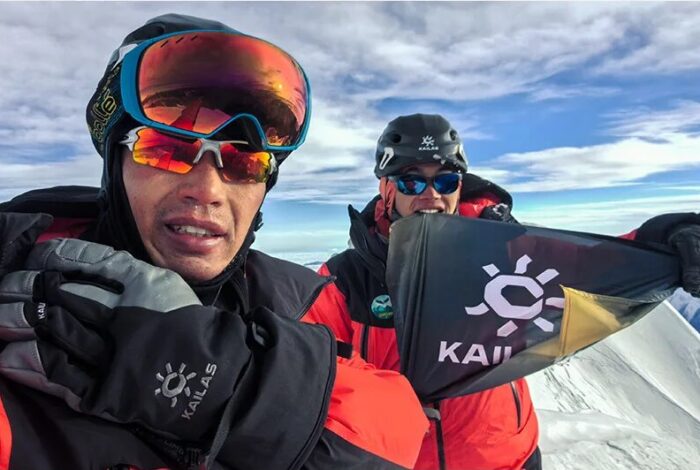
Zhou Song and Zhang Qingwei on the summit of Siguniang in 2024. Photo: Zhou Song and Zhang Qingwei
Piolet d’Or candidates Zhou Song and Zhang Qingwei told ExplorersWeb during last year’s awards ceremony that they had been pupils at Otto and Ma’s school. It was here that they developed their interest in exploratory climbing and alpine-style ascents.