In 2025, Stef Gebbie set out across Canada on horseback, moving east to west. Starting in the Maritimes near New Brunswick, the 26-year-old Australian made it as far as Ontario’s Manitoulin Island before a family tragedy forced her to go home for a time.
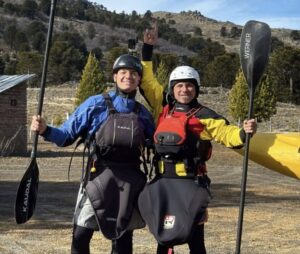
Keen to continue the expedition, Gebbie headed back later that year to kayak from Manitoulin Island to the Manitoba border, passing through Lake Superior, Thunder Bay, and then the Path of the Paddle (a water trail through northwestern Ontario). This year, she has returned to the saddle to complete her unique Canadian crossing.
A team of three
Gebbie isn’t the only one returning to the cross-Canada journey. Her packhorse, Wilson, has accompanied her from New Brunswick and has already covered over 3,500km. Wilson is a rescue with “a very grumpy disposition, but he is also very chill and gets the job done,” Gebbie explains.
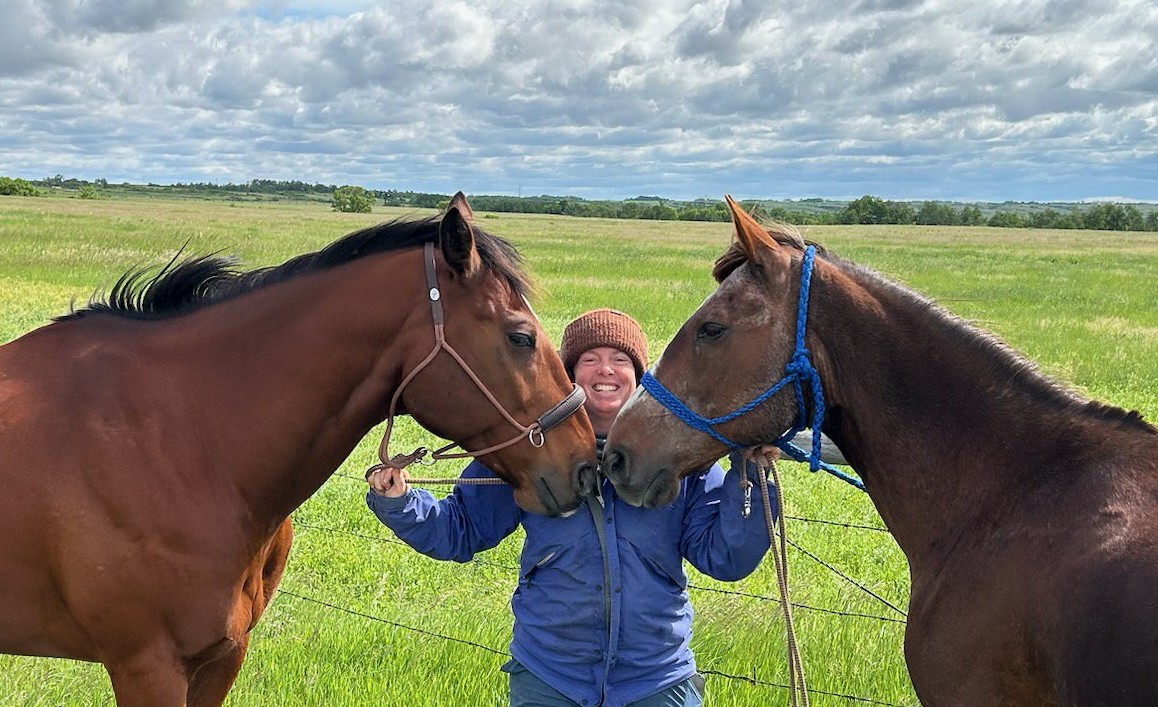
Gebbie with her two horses. Photo: Stef Gebbie
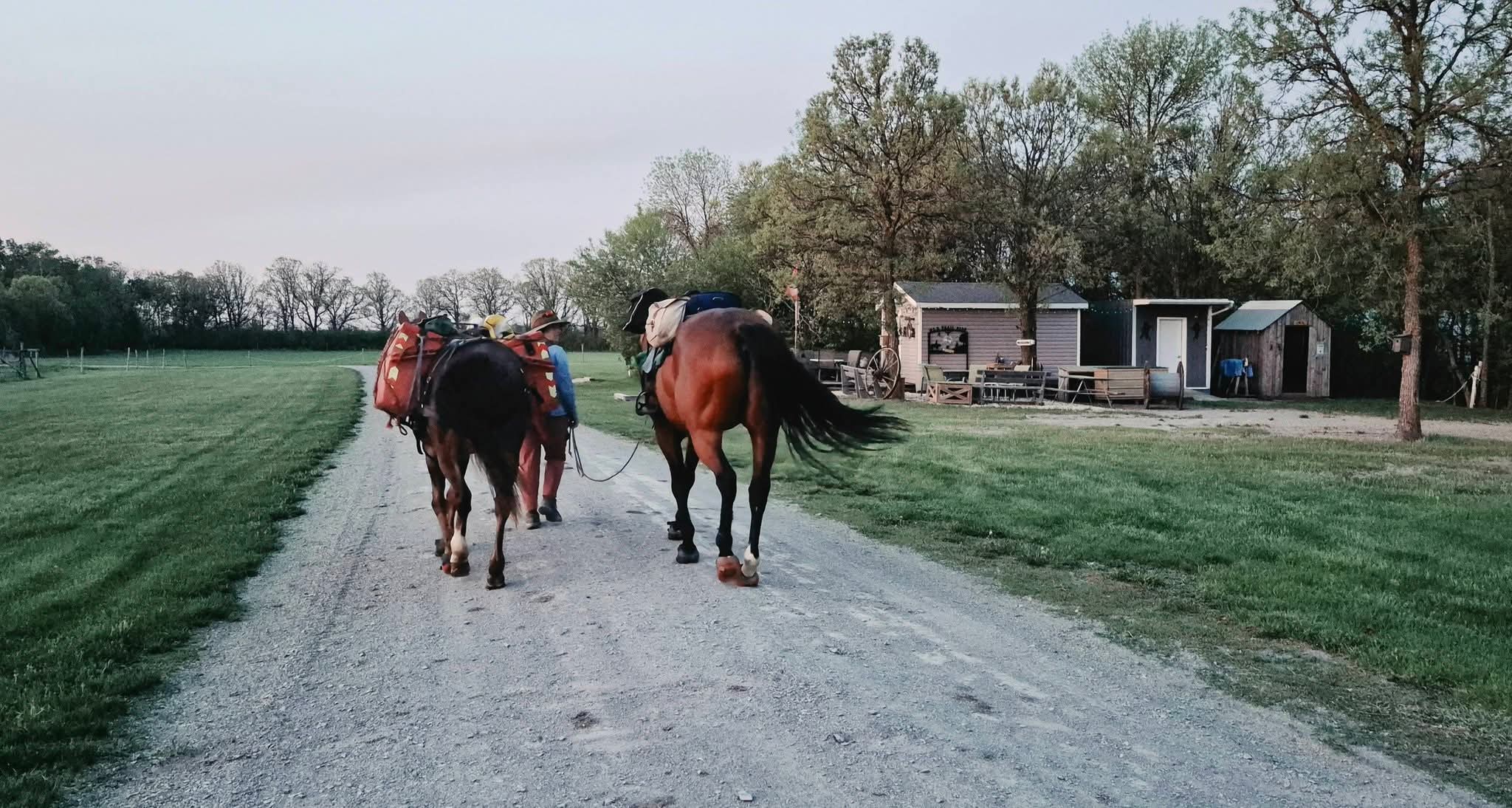
While Wilson carries the majority of the gear, riding horse Gaucho carries Gebbie. She picked Gaucho up in Alberta for this final stage of the crossing, and he has just completed his first 1,000km. Aside from the usual hiking fare, Gebbie (and Wilson) carry a litany of bits and pieces to keep the horses happy and healthy, including supplements, hoof tools, hoof boots, a portable yard, extra feed, and supplementary oils.
The trio left the Ontario/Manitoba border in May and has struck a line close to the U.S. border. “The Eastern Provinces were difficult with traffic and finding safe routes around large cities such as Montreal. However, the Prairies are perfect for horse travel as we follow the gravel grid roads that run almost due west and avoid highways and large towns. Traffic on highways and winding roads is very dangerous. Unfortunately, modern infrastructure is definitely not built for horses anymore,” Gebbie said.
A flexible schedule
Gebbie keeps a fairly flexible schedule, with only a rough overall route plan that she adapts as she travels. At least a week out, she confirms the specifics of the next seven days, carefully planning her route from supply point to supply point. In good weather, they average around 35km per day. The daily schedule depends on the weather. Typically, they set off around 8 am, but start much earlier if the weather looks stormy or unreasonably hot.
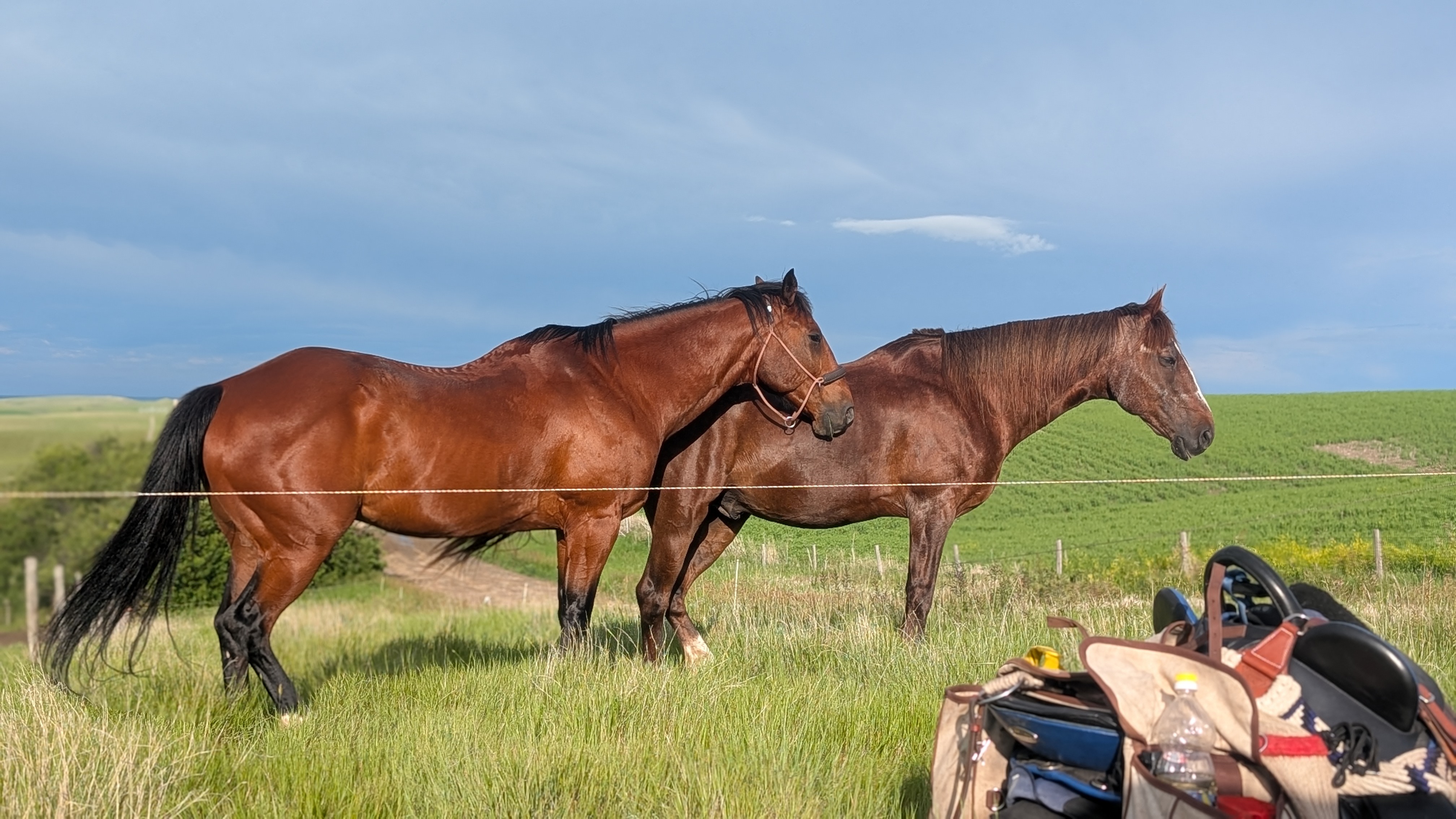
Gebbie needs to find a campsite near water if she doesn’t have a place to stay lined up. Photo: Stef Gebbie
You might assume that traveling by horse would lead to swift progress, but the days are built around the needs of the horses, and pass at a leisurely pace. “I usually walk for about a quarter of the day, alternating an hour or so of walking and then riding. We only go at walking pace due to having the pack saddle, which would be uncomfortable at a faster gait,” Gebbie says. They usually stop by early afternoon to give the horses plenty of time to rest and graze.
Gebbie is currently near Val Marie in Saskatchewan, with a long way still to go to her endpoint on the West Coast, just south of Vancouver. The weather has been tricky, with thunderstorms and tornado warnings.
“It’s taken a while to get used to reading the weather, as the forecast is often not very accurate and the storms can be very localized,” Gebbie says. Despite this, it has been a relatively smooth journey so far, with plenty of grass for the horses and welcome support from the locals.