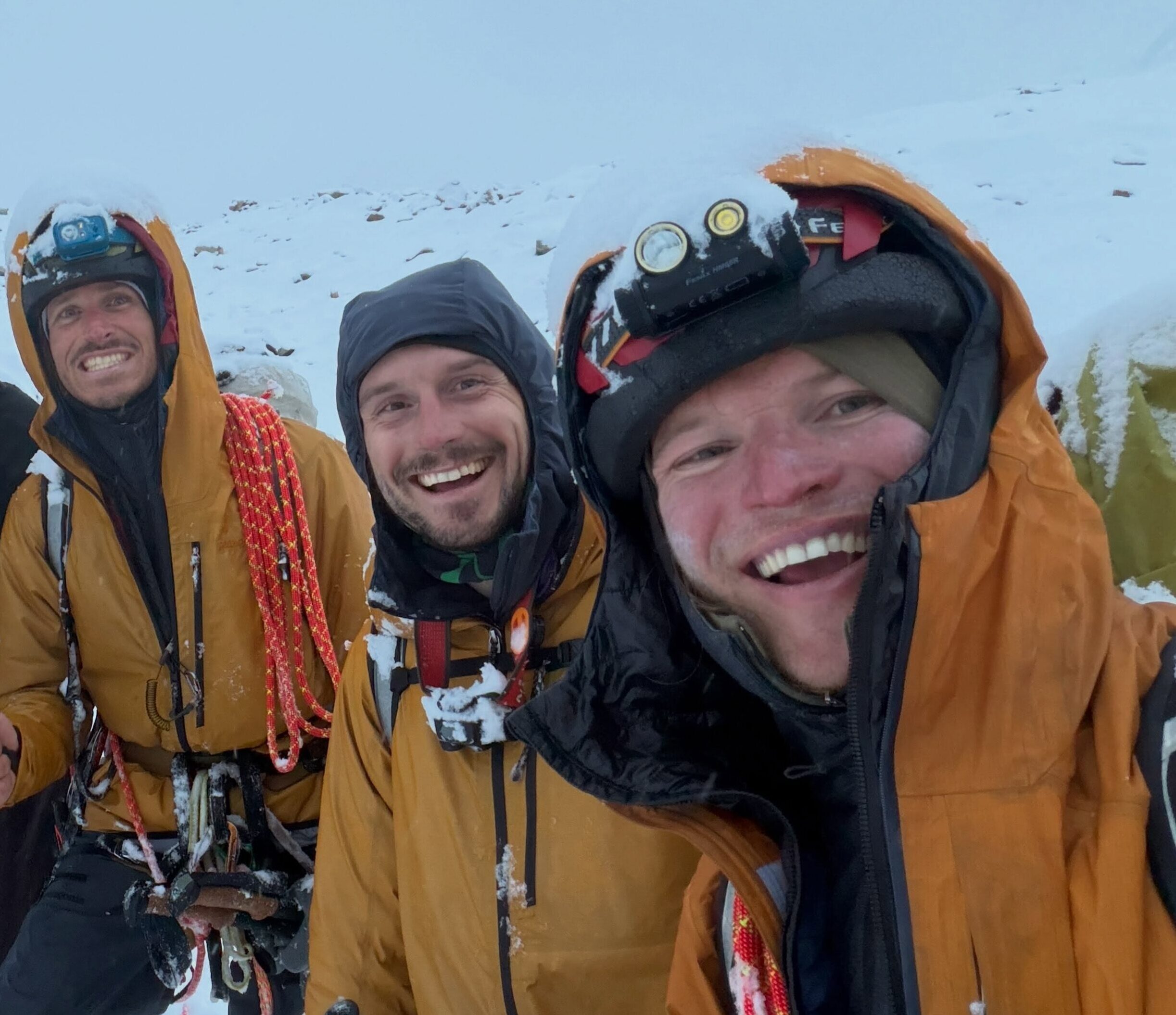
There is much more to an expedition than summit or failure. In this exclusive interview, American climber Dane Steadman explains why his recent new route on Karakoram’s Sosbun Brakk (6,414m) “was much more difficult than the one on Yashkuk Sar, both on and off the mountain.” Strong words, considering that he and his partners were awarded a Piolet d’Or for Yashkuk Sar.
The one factor on the team’s side was the previous experience of Steadman and Cody Winckler. “It was our third trip, so we knew a lot more about climbing there,” Steadman said. Indeed, after Yashkuk Sar, Winckler and Steadman returned to Pakistan in 2025 and climbed two new routes with Blake Berghoff.
Grant Stewart of Canada, the third member of the Sosbun Brakk team, is a skilled climber but was less familiar with the Karakoram. His most remarkable climbs had taken place in Alaska and at home in the Canadian Rockies.
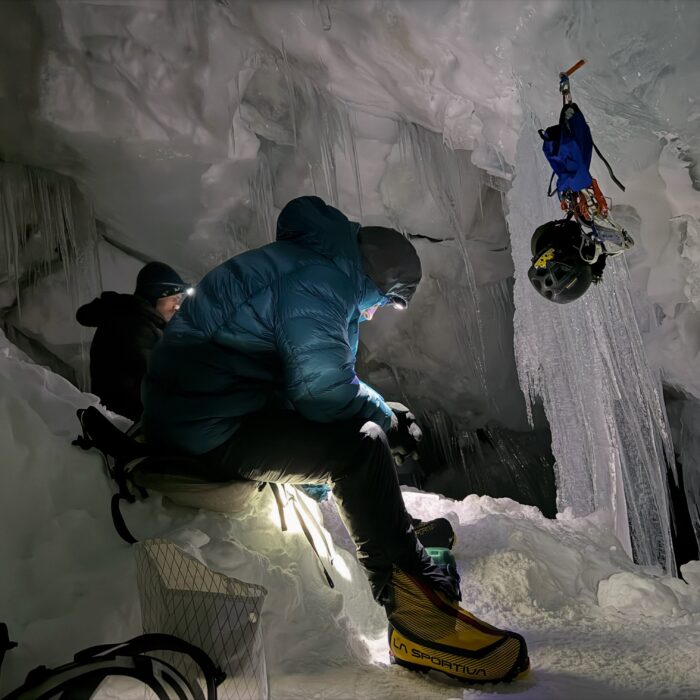
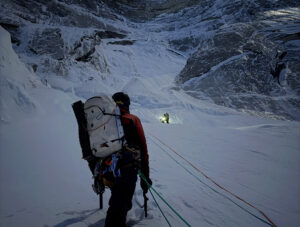
Bivy in an ice cave. Photo Dane Steadman
Two very different climbs
Comparing the two epic climbs, Steadman highlighted the differences.
“The trip to Yashkuk Sar went incredibly smoothly. Getting there and acclimatizing was great. We had an amazing weather window for the climb. Nothing on it was exceptionally hard, and we did it on the first try, and the descent went without a hitch,” he said.
He explained that the hardest parts of that 2024 first ascent were their lack of experience and the uncertainty that came with it. An unexpected mishap also occurred during the climb itself: a snow mushroom collapsed above them, forcing them to change their ascent route halfway up.
“On the other hand,” Steadman went on, “almost everything about the Sosbun Brakk trip was hard: lost bags, sickness acclimatizing, big storms beforehand and while on the mountain, hard climbing and route-finding, and a very difficult descent through terrible weather.”

The unclimbed north face of Sosbun Brakk. Photo: Dane Steadman
“[Overall,] on the Yashkuk trip, I think we felt for most of the time that we would be able to do it with only some moments of doubt here and there,” Steadman admitted. “On Sosbun, we thought much of the time that we wouldn’t be able to do it for all the reasons above. We were quite surprised [to succeed].”
Off-season
One unusual aspect of the Sosbun Brakk expedition was its dates. They went to Pakistan and climbed in early fall, two months later than the Karakoram’s typical July-August climbing season. Yet, Steadman says this was planned to account for the changing climate in the high ranges.

Approaching the face. Photo: Dane Steadman
“First, while the Karakoram doesn’t receive as much of the Indian monsoon as the main Himalaya, it is still a monsoonal climate, and I think (and have heard from many locals now) that the weather tends to be much better in the fall than in the summer,” he explained.
“Second, we were concerned about rockfall and generally unsafe conditions on the face, being relatively low and lacking in buttresses. We thought the colder temperatures would make things safer and increase the odds of finding good ice.
“Third, Grant was able to get time off in October more easily than earlier in September. In a perfect world, we probably would have gone one to two weeks earlier, but we worked with what we had.”
Asked about other expeditions planning to visit the Pakistani mountains in the future, Steadman suggests that October could be a good time for certain climbs, but that September is also great. “This year, the weather was much less stable in September-October than I’ve experienced on my previous trips. Things got much snowier than normal for that time of year, [according to locals], but I think the weather was still better than through most of the summer.”
Changing the route on the go
The team planned a single alpine-style push in the purest style. However, when they started on the route, they encountered an impassable hanging serac. They had to retreat and decide whether to try a totally different line or go home.
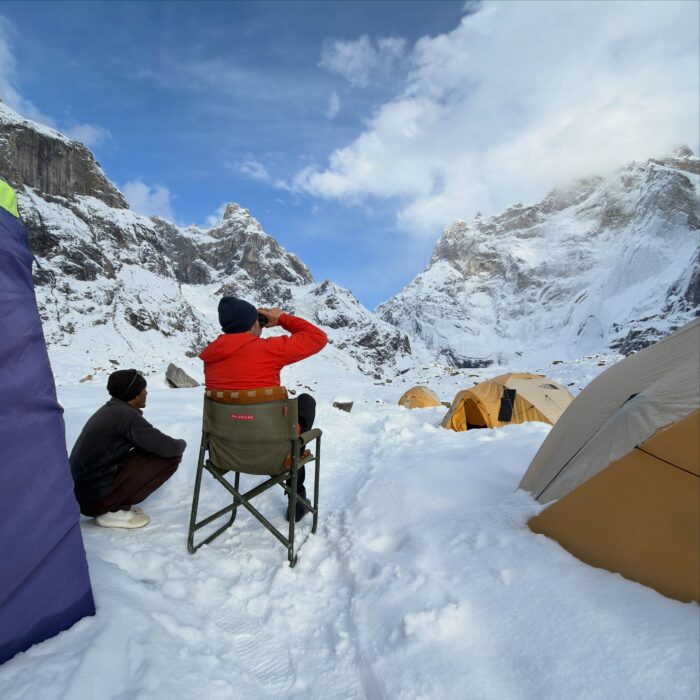
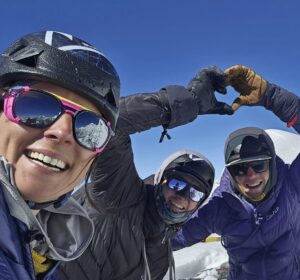
The base camp crew. Photo: Dane Steadman
The team decided to try a route to the right of the originally planned one. But how could they be sure they wouldn’t reach another dead end?
Steadman admitted it was difficult. “The line we ended up climbing was entirely hidden from view at our base camp and where we acclimatized,” he explained. “[It was] an east-facing gash on a north face, which we only saw from the northwest until we tried it. From all the views we had before the first attempt, the central line we first attempted appeared to be the only route that wouldn’t involve climbing huge walls of monolithic gneiss, as it followed ice streaks and sheets for a good amount of it, and only looked to have relatively short cruxes.
At the base, they discovered that a tiny but menacing serac hung over the center of the wall, threatening the lower half. (The upper half appeared protected by an overhanging rock wall above it.)
“So we shifted to a different line to the left, which looked much harder but possible, and planned to rejoin our intended line at mid-height, under the protection of the overhangs.
That attempt didn’t so much dead-end as things compounded, forcing a retreat. “We were tired even on the approach from non-stop efforts to get there and acclimatize. We had some equipment issues, were moving slowly, and most of all, the climbing was damn hard,” he said.
In the end, they chose to rappel down after a two-hour-plus lead climb on a pitch that hadn’t looked hard from below. Dusk was approaching; there was no bivy spot in sight, and they were only 300m up the 1,800m wall.
The alternative
“However, from our position on that attempt, we were able to see the right-trending, east-facing gash on the right side of the face, which was totally hidden by monolithic rock walls from all our previous vantage points,” he said. “So, after bailing, we felt like the central line would require fresh bodies, minds, and a huge weather window, but the right-hand line would be much more feasible.”

Heading up. Photo: Dane Steadman
The climbers rested for three days in base camp and then set off again. “We certainly felt that we could get shut down at any number of points, especially at the steep mushroom-choked chimney on the headwall below the junction with the northwest spur,” Steadman admitted. “But it seemed like there was a good chance we could do it, and, most importantly, we felt like we could bail from anywhere [if necessary].”
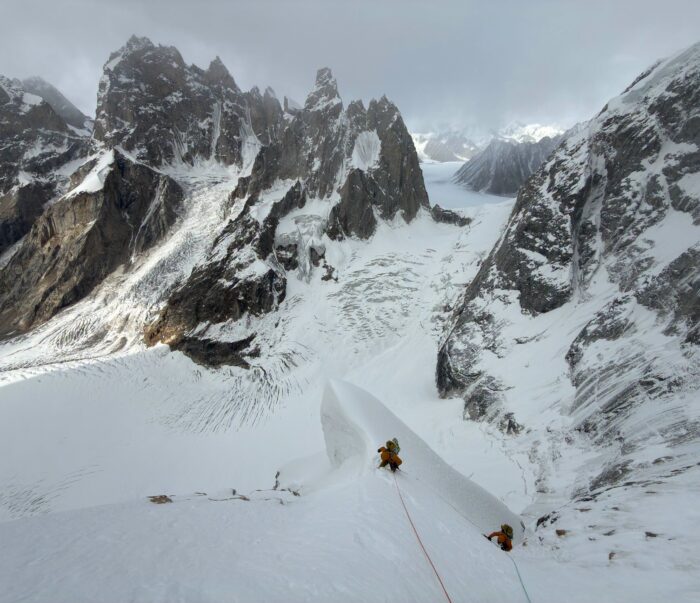
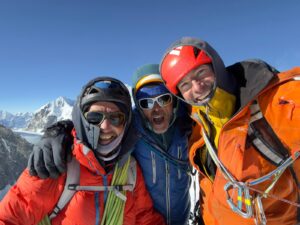
The summit ridge of Sosbun Brakk after many tough decisions. Photo: Dane Steadman
However, bailing would not be easy. “The lower part would involve rappelling off V-threads, he explained, and if they had to turn back below the headwall, they would need to rappel out right to an icefield.

Route topo: line of ascent in red, line of descent in yellow. Photo: Steadman/Stewart
The descent
The trio summited on their fifth day on the wall, at 4 pm. Days were now short, and they still had a long, uncertain descent ahead. The descent began on the line of ascent, but eventually deviated to new terrain.
“We descended the upper half of our route, almost entirely rappelling down the northwest spur, with a little bit of downclimbing/traversing),” Steadman said.
They then reached a point west of their ascent line, where the face was slightly smaller and more covered in permanent ice. “Then we rappelled straight down, diagonaling back left partway down to avoid some serac hazard.”
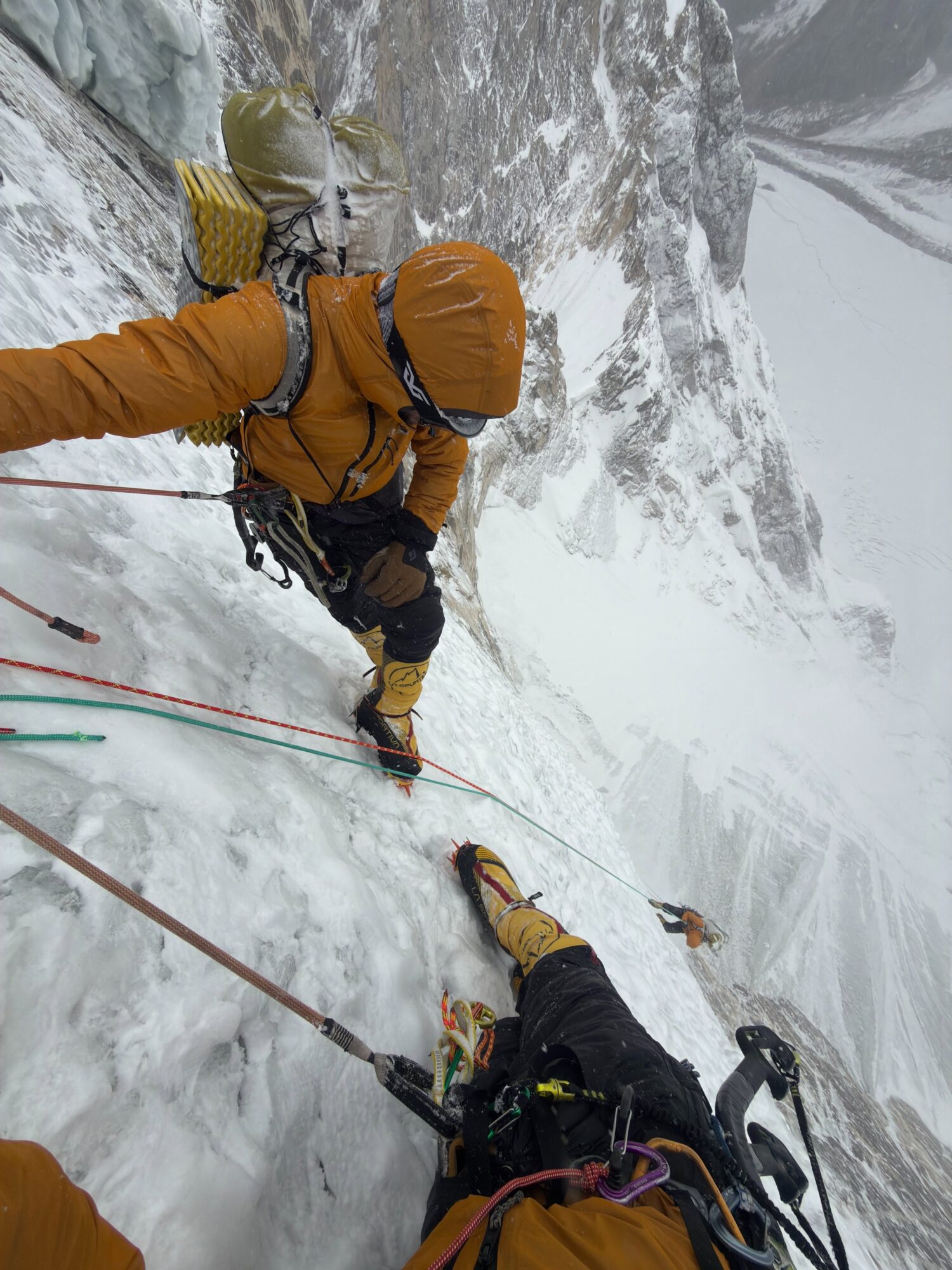
Descending in worsening weather. Photo: Dane Steadman
Dane Steadman and Cody Winckler of the U.S., together with Grant Stewart of Canada, completed the first ascent of the north face of Sosbun Brakk (6,414m) in Pakistan’s Karakoram last month. The peak had been climbed only once before, by a Japanese team in 1981, from a different, milder side. The new 1,800m route includes difficulties of M7, WI5.