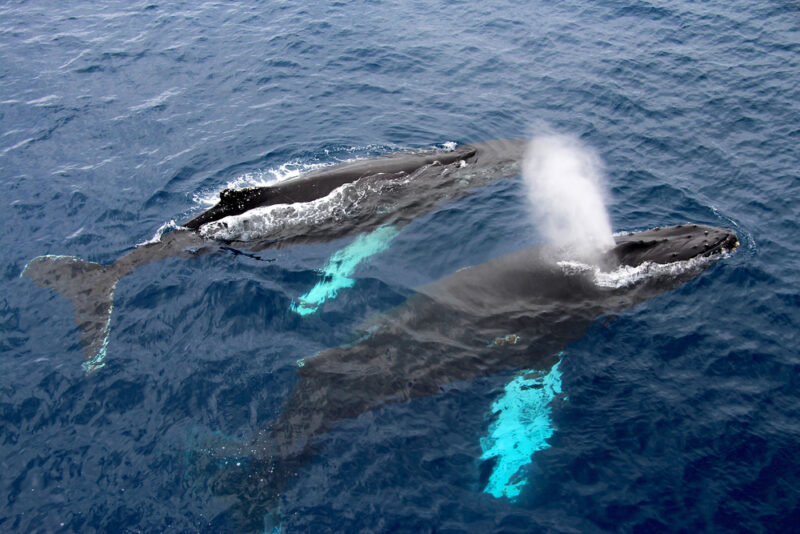
A deadly virus is striking Arctic whales. Humpback whales in Norway, along with one sperm whale and one pilot whale, were found to have cetacean morbillivirus, a deadly disease for whales, porpoises and dolphins. Humpbacks across the Northeast Atlantic also carried herpes viruses.
Detecting health issues in whales and dolphins is incredibly difficult. Until now, researchers usually identified Illnesses after the animal died and washed ashore. Now, using drones from 2016 to 2025, a team has collected samples of whale breath from wild humpback, sperm, and fin whales and screened them for different pathogens.
The off-the-shelf drones carried sterile Petri dishes and hovered over the blowholes of northern whales. As the whales exhaled, droplets of their respiratory fluid landed on the Petri dish and were later sent to the lab for testing.
“Drone blow sampling is a game-changer,” said co-author Professor Terry Dawson. “It allows us to monitor pathogens in live whales without stress or harm.”
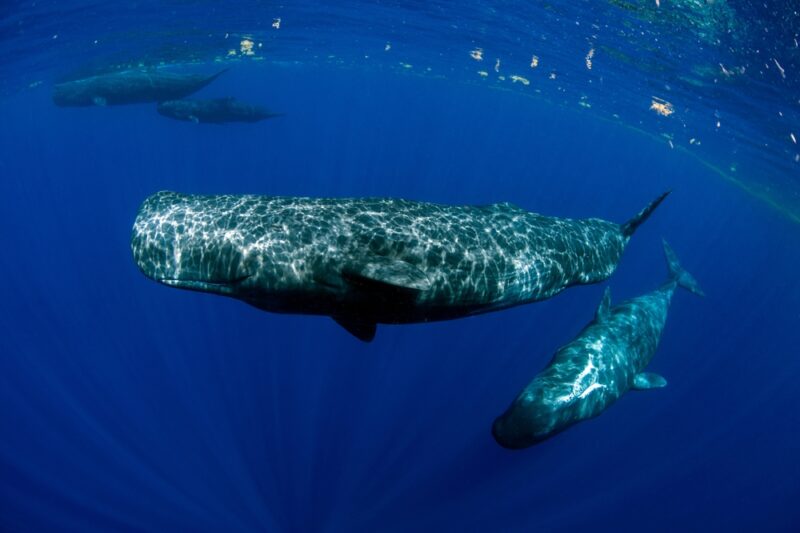
Sperm whales. Photo: Shutterstock
Researchers also used skin biopsies and an organ sample from a deceased whale to learn more about the viruses affecting whales around northern Norway, Iceland, and Cape Verde.
A fatal disease
Researchers are most concerned about cetacean morbillivirus. It was first seen in dolphins in 1987 and can be fatal. The virus damages the marine mammals’ respiratory, neurological, and immune systems and is highly contagious. One species of whale can even pass it to another. Morbillivirus has caused several mass mortality events, particularly in the North Atlantic and the Mediterranean, but this is the first time it has been detected above the Arctic Circle.
Symptoms include difficulty breathing, eye inflammation, muscle tremors, a lack of coordination, skin lesions, and lethargy. All of these are challenging to spot as whales move through the water. Scientists are aware of most of these symptoms in pinnipeds (seals, sea lions, and walruses), which can also contract strains of the virus. The big difference is that pinnipeds come out of the water, where it is easier to observe them.
Researchers hope that long-term surveillance with drones will help them monitor outbreaks of the disease among these northern whales.