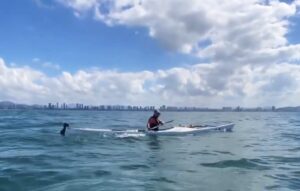
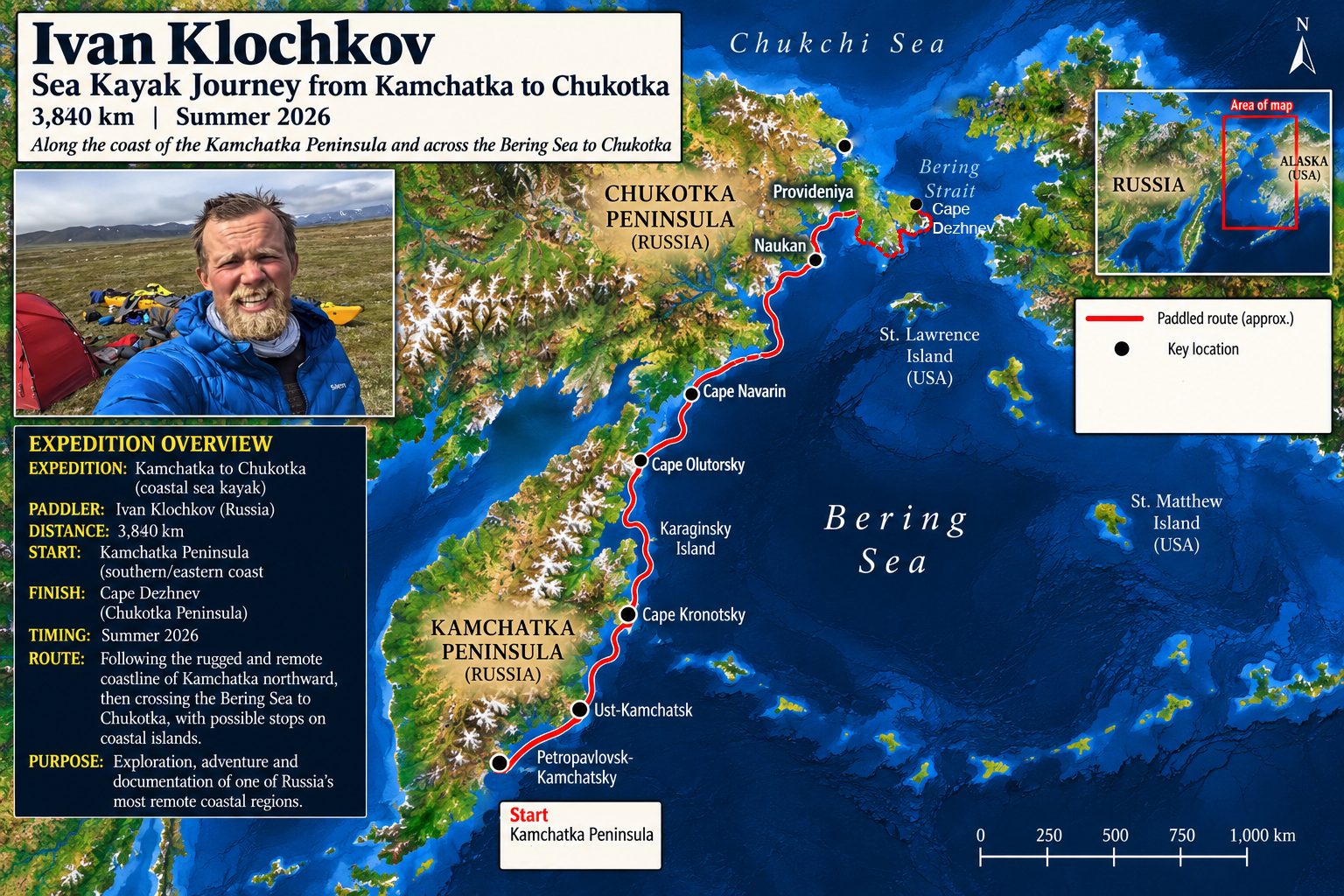
In the most ambitious sea kayak expedition in that area since Jon Turk paddled from Japan to Alaska in 1999-2000, Ivan Klochkov has covered 3,840km along the northeastern coast of Russia from Kamchatka to Chukotka.
Turk’s expedition actually inspired Klochkov’s quest. After a year and a half of preparation, the Russian kayak guide left Petropavlovsk-Kamchatsky, the capital of Kamchatka, on May 24. After 124 days on the water, he pulled into the tiny village of Uelen, Chukotka, on September 1. Uelen lies just past Cape Dezhnev, the easternmost point of Asia, which overlooks the Alaskan side of the Bering Strait.
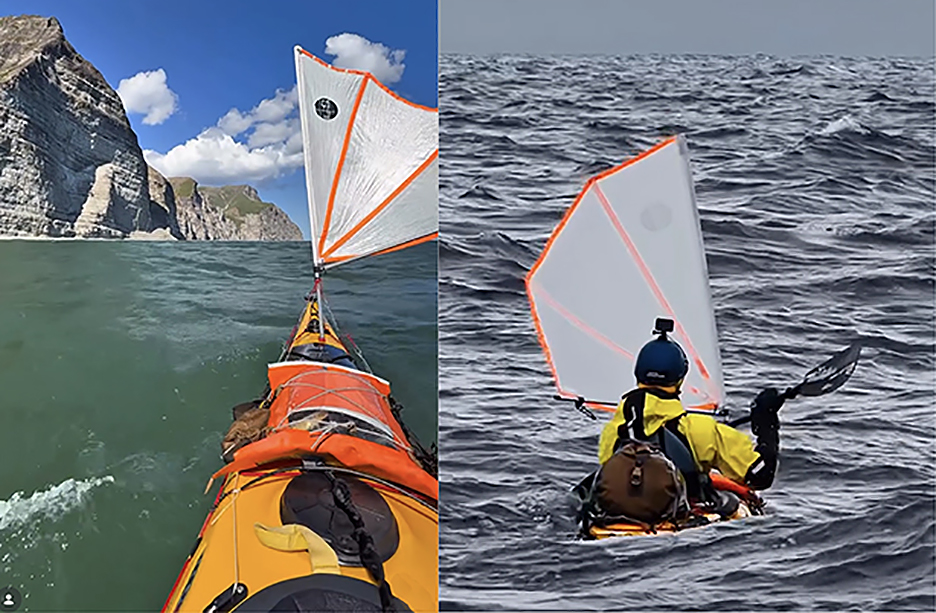
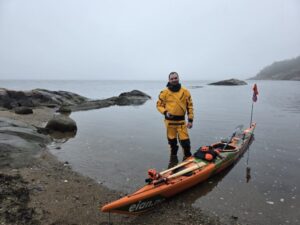
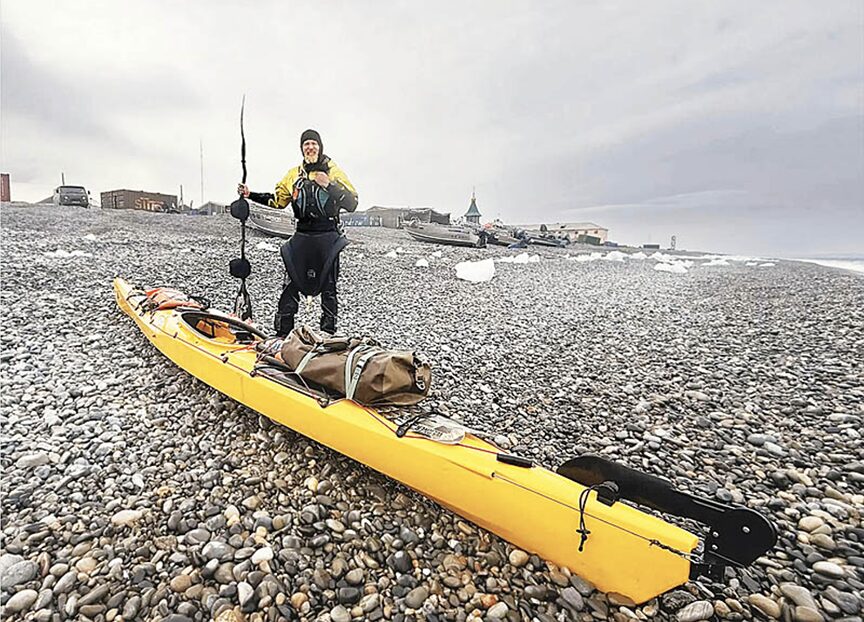
A small sail nudged Klochkov along when the winds were right. Photos: Ivan Klochkov
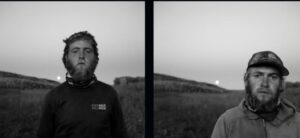
Klochkov handled the rough and foggy conditions along the North Pacific coastline mostly alone. His father joined him for the first 627km in Kamchatka; the other 3,000+km he paddled on his own.
His isolated route often featured long cliff sections with nowhere to land. On one particularly wild stretch, between Ust-Kamchatka and Chukotka, he hurried 600km in 17 days.
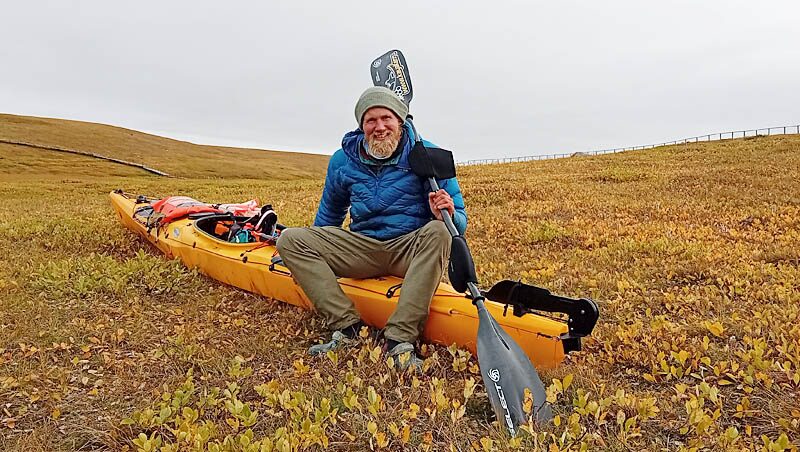
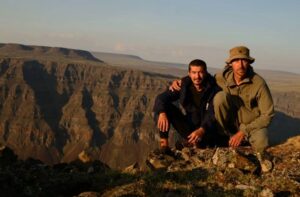
Not every one of Klochkov’s camps was austere. Photo: Nataliya Grigoryeva
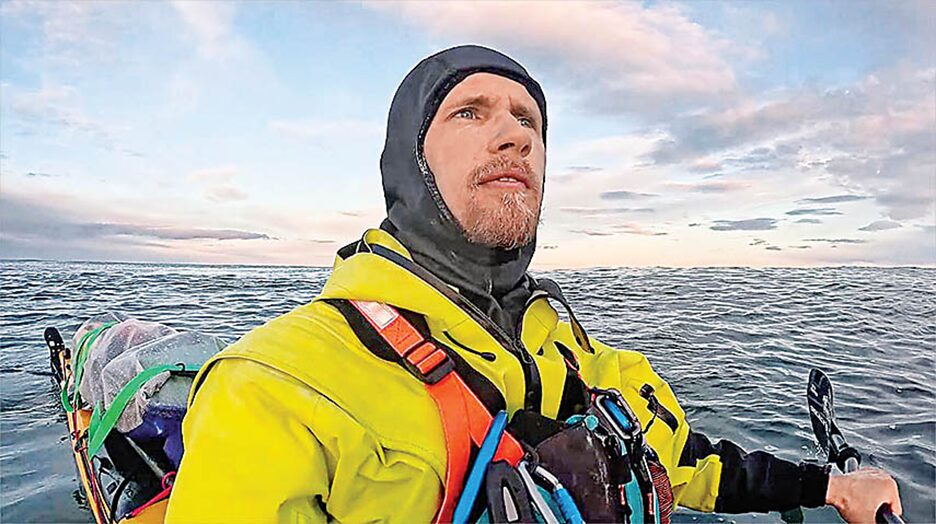
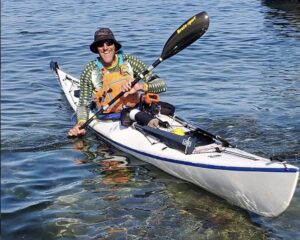
Photo: Ivan Klochkov
Although Meta is banned as an “extreme organization” in contemporary Russia, Klochkov has managed to have an Instagram account. Images and videos from the expedition show dark water, rocky coasts, and a lot of brown bears. Often, they investigated his camp. To rest easier, he rigged up an electric fence around his tent. Later in Chukotka, he also had to deal with polar bears.
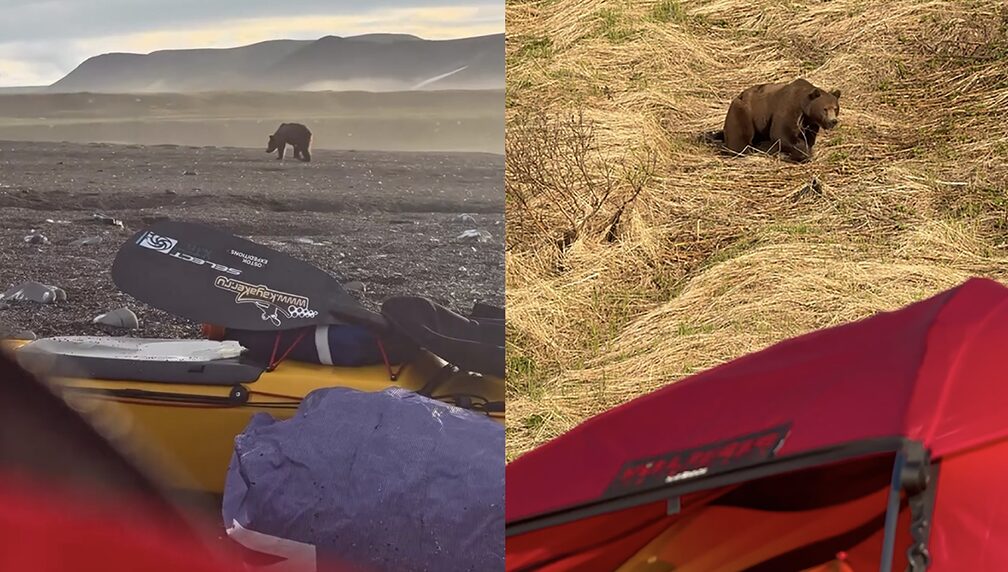
Just two of the many too-curious bears Klochkov had to deal with. Photos: Ivan Klochkov