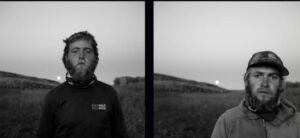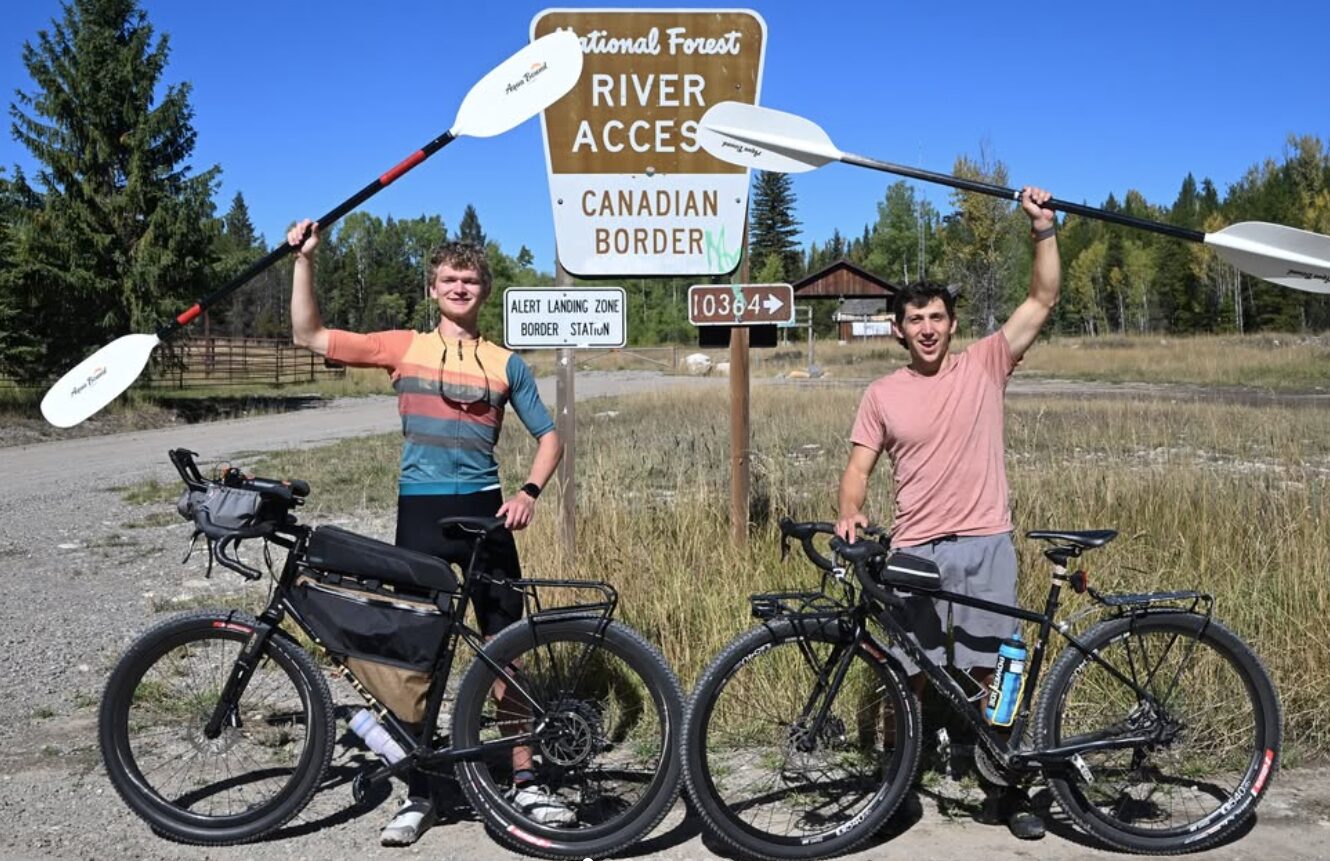
Pete Streufert and his friend Carter (no last name) are cycling 4,025km and packrafting 645km across the U.S. from Canada to Mexico. Starting in Glacier National Park, they will cross four rivers and six U.S. states to finish in El Paso, Texas.
Their route connects the rivers with long-distance cycling trails. This allows the pair to cross landscapes that would usually require separate trips by bike and watercraft. Streufert, a geospatial wildfire scientist and cartographer, came up with the route by combining existing GPS tracks and geographical data from Bikepacking.com, American Whitewater, and OpenStreetMap. He overlaid cycling corridors and rivers to identify where the two could connect.
Before starting the journey on September 17, he said they could find no record of anyone using this particular combination of rivers and cycling routes. So it is possible that they are the first to do so.
The start
They started what they neatly call the Saddle to Paddle Traverse on September 17, from Glacier National Park, Montana, on the Canadian border. They kicked off the first packrafting section with a 115km descent of the North Fork of the Flathead River, which forms part of the western boundary of Glacier National Park.
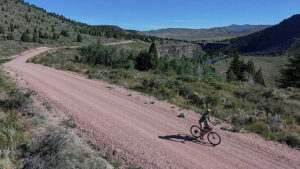
From there, they followed the Great Divide Mountain Bike Route through Montana toward Jackson Lake, Wyoming, for 1,107km. Here, they hit their second paddling phase on the Snake River.
Every time they reach a river, the pair inflates their rafts, load their bicycles aboard, and paddle downstream. Then at each takeout, they deflate the rafts, attach them to their bikes, and continue riding.
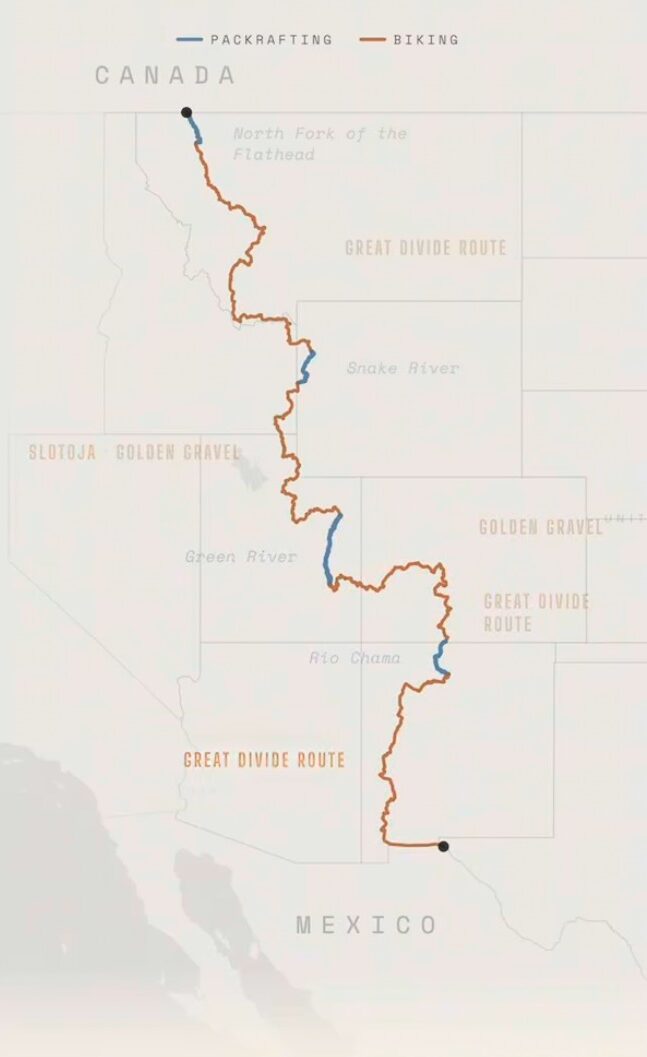
The route. Photo: Pete Streufert
After 130km along the Snake River, their route joined the SLoToJa cycling corridor. They pedaled through Idaho, Wyoming, and Utah. Here, a short connector track took them onto the newly developed Golden Gravel Trail. A further 860km of cycling brought them to Utah’s Green River.
Class III and IV rapids
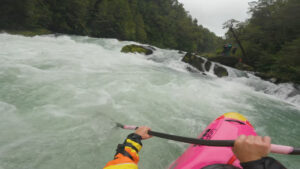
They then paddled 328km through Desolation and Gray Canyons, including a handful of Class III rapids, and their only Class IV rapid of the trip.
Pulling their rafts out in Canyonlands National Park, they took the White Rim Trail to Moab. They are now taking a few days in Moab to “get all the mud off our bikes and escape the rain for a day or two before we keep heading south,” says Streufert.
From here, they will once again pick up the Golden Gravel Trail through the La Sal Mountains and across Colorado, then continue on the Great Divide Mountain Bike Route to New Mexico.
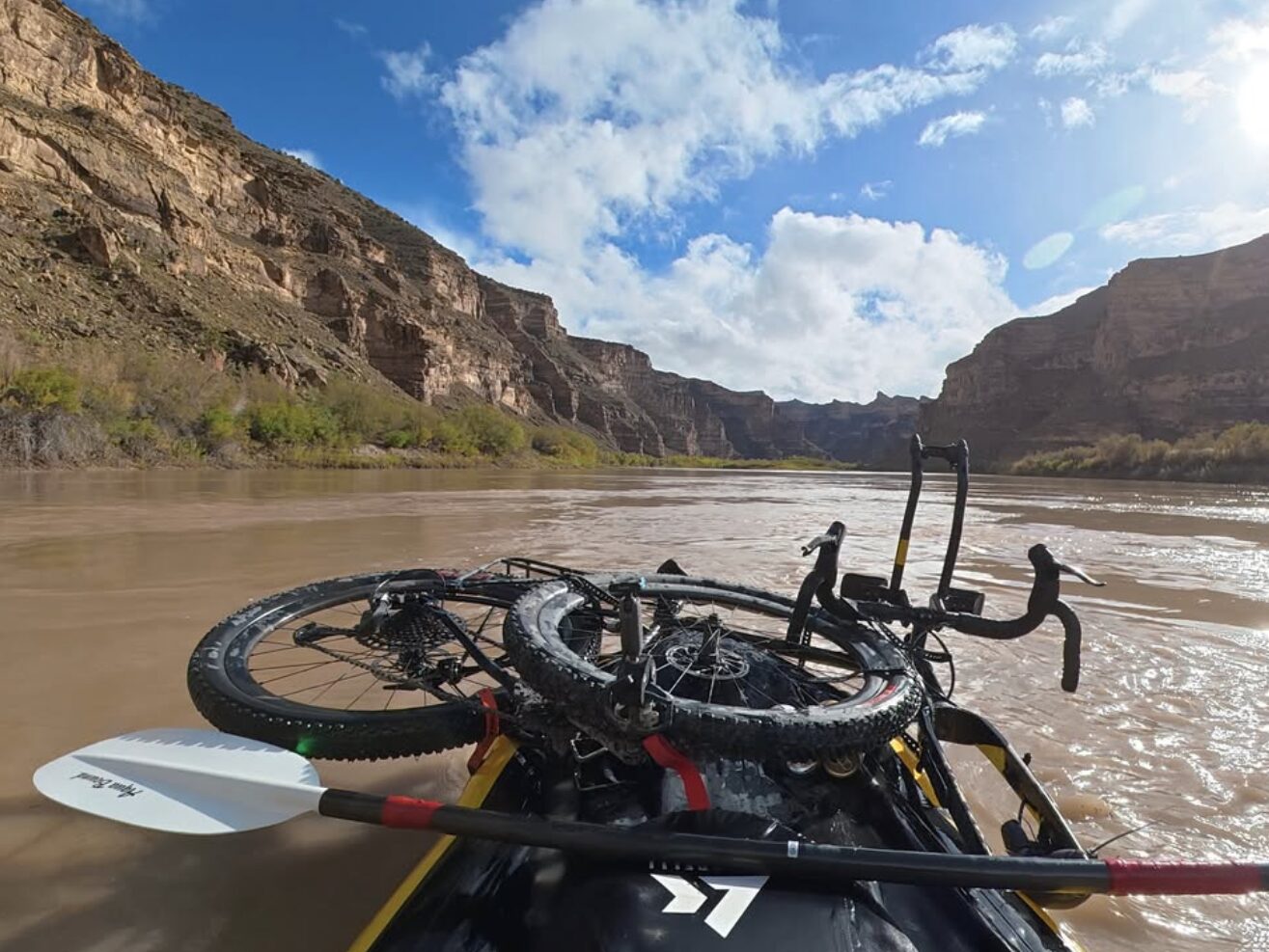
Paddling the Green River. Photo: Pete Streufert
A final paddling section on New Mexico’s Rio Chama will take them to the last leg of the trip, a 950km ride to El Paso.
The pair are riding Rodeo Labs Flaanimal 6.0 Steel, fitted with 29-inch Vittoria Mezcal tires, and using Kokopelli packrafts. The pair have described this as a “self-supported” route, although of course they’re replenishing their food along the way. They seem to combine camping with staying in towns.
They should complete the journey within the next few weeks, within their two-month timeline. You can follow their progress here.