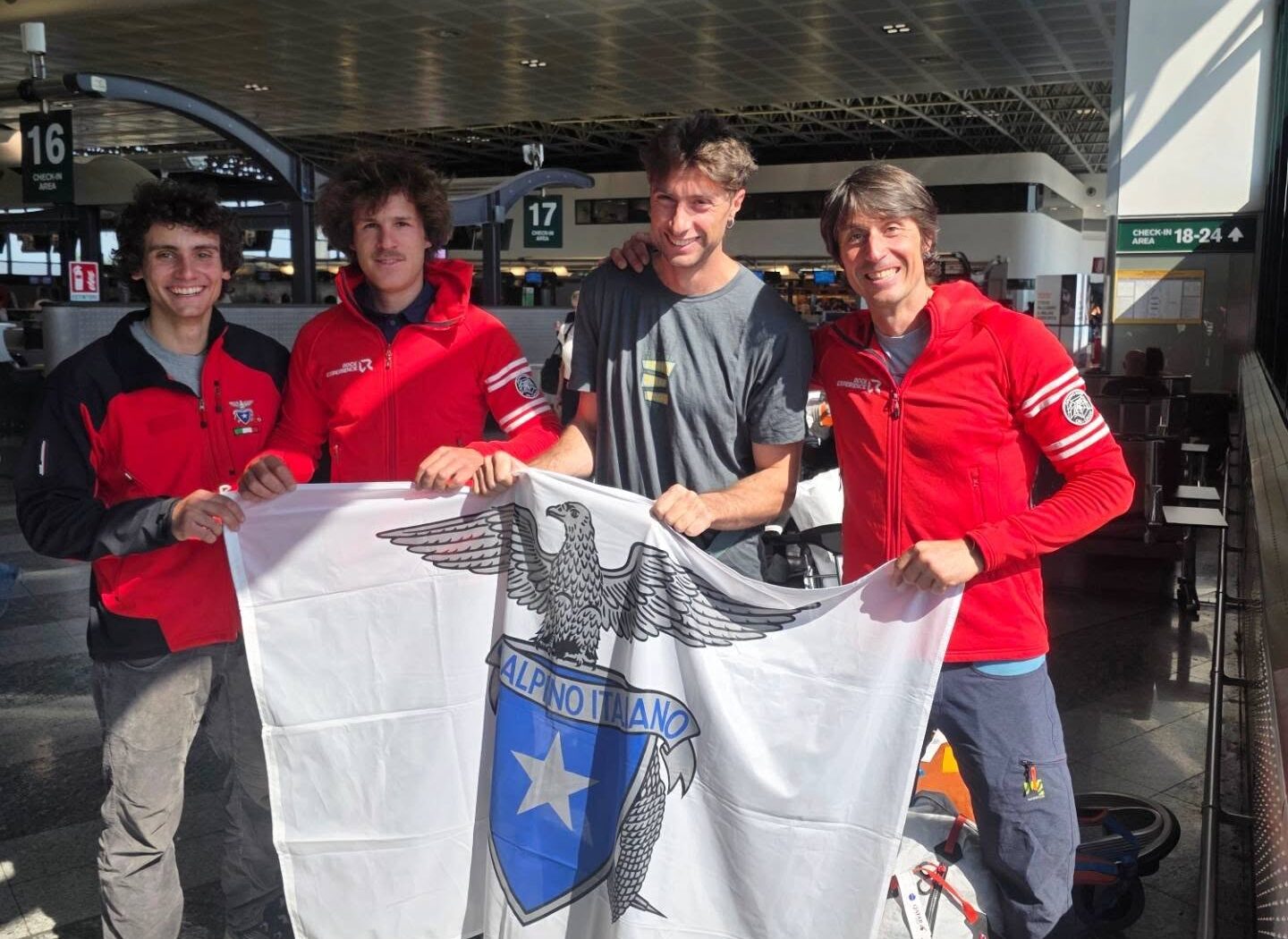
Matteo della Bordella is wasting no time. At the head of a powerful Italian team eyeing a new route on K7 — one of the most coveted spires in the Karakoram — Bordella’s team has already reached base camp and climbed another peak to prepare.
The team from the Italian Alpine Club (CAI) includes Mirco Grasso, Luca Ducoli, and Giacomo Mauri. They departed from Italy in the last week of May.
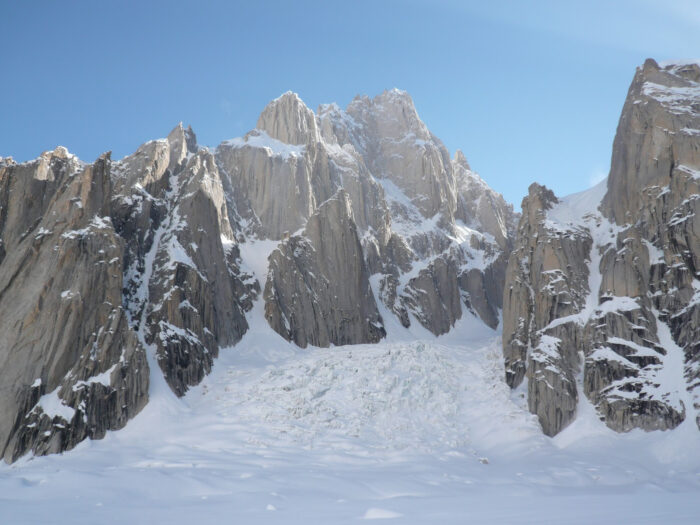
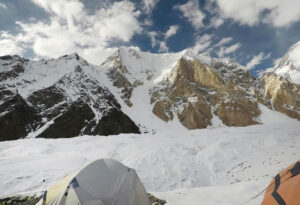
The K7 massif, in Pakistan’s Charakusa valley. Photo: CAI
Snowed up
Starting so early in the season comes with pros and cons. With the hottest months still ahead, the climbers hope to find better snow conditions and more stable rock. Last year, rockfalls caused several injuries in the Karakoram and took the lives of a German climber on Laila Peak and of a Chinese climber on K2. However, this early in the season, the valleys and peaks are still covered in snow. Upon arrival in base camp on Monday, the Italian team found the place covered in 50cm of fresh snow.
“The approach trek was anything but easy, and it was only possible thanks to the incredible work of porters, who carried up to 25kg of gear each along the approach trek, often in worn-out shoes ill-suited to these conditions,” Bordella reported.
Preparatory summit
After a day setting up base camp and a lot of shovelling, the team chose Sulu Peak (6,050m) for an acclimatisation climb.
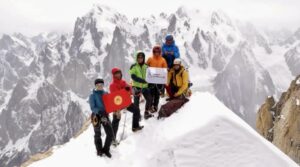
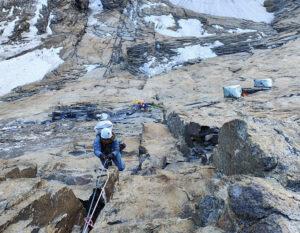
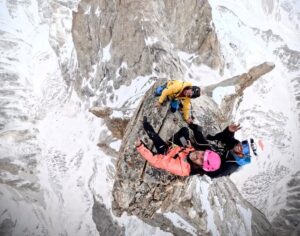
“We spent three days of hard work, up and down a very long snow-covered gully, until we reached the summit,” Bordella said. The climbers spent the entire day and the following night camped at the summit to adapt to the altitude.
Next, the team will wait for better weather to start working on the route they have in mind on K7 Main.
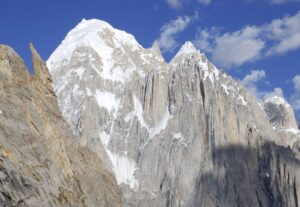
K7, also known as Saraska Peak, is a highly technical granite peak, 6,934m high, located in the Masherbrum massif, Charakusa Valley. It was first climbed by a Japanese team in 1984. Steve House soloed it in 2004, and Hayden Kennedy, Kyle Dempster, and Urban Novak opened a new route on the east face in 2012.
For more background, you can watch a video about the expedition below: