Climbing options in Pakistan expand far beyond the 8,000’ers, and a few small teams with alpine ambitions on technical peaks might write a bright epilogue to an otherwise somber season.
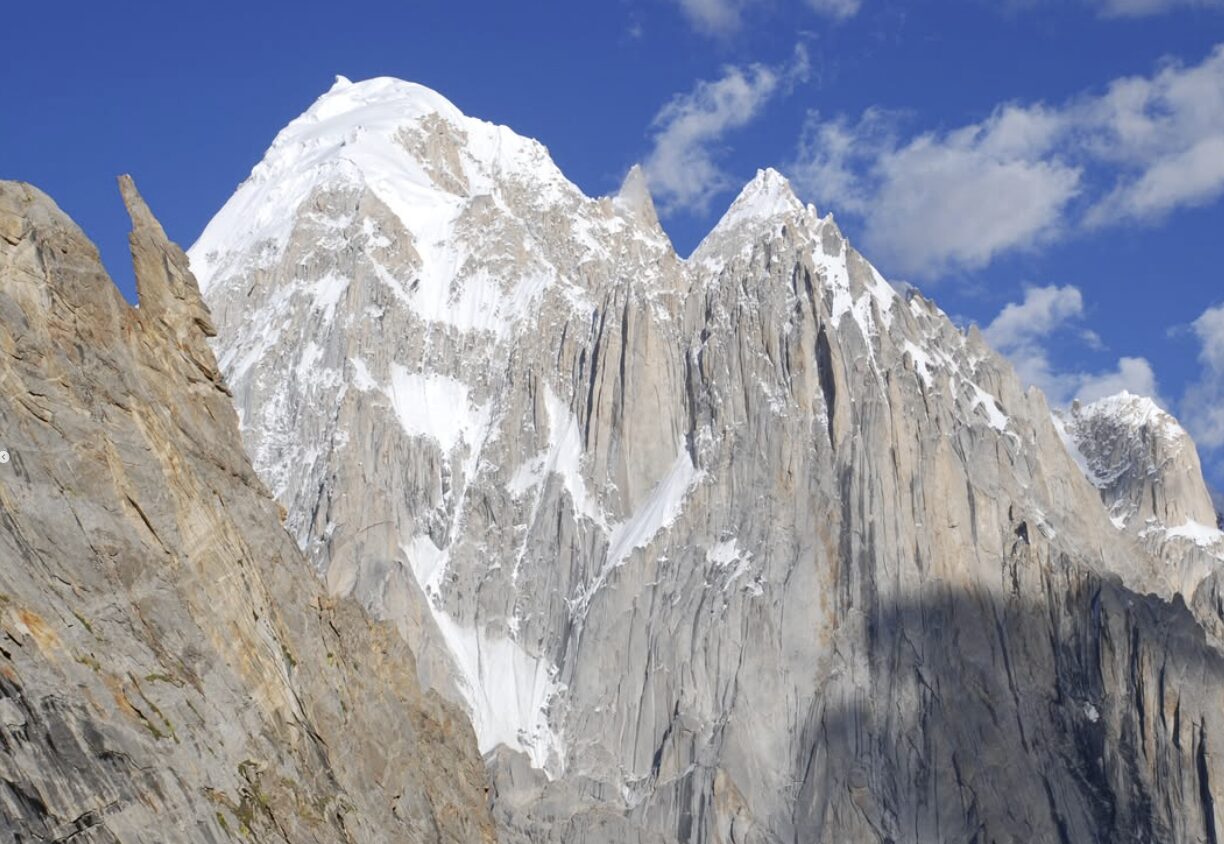
Slovenians Luka Krajnc, Luka Lindic, Martin Zumer, and Gasper Pintar are heading for the highly difficult K7 (6,934m) in the Charakusa Valley.
Krajnc and Lindic are experienced climbers and regular partners. They told Manca Ogrin, a journalist with the Alpine Association of Slovenia, that they were originally considering climbing as a pair. However, after discussing their goals with Zumer and Pintar, they decided to join forces.
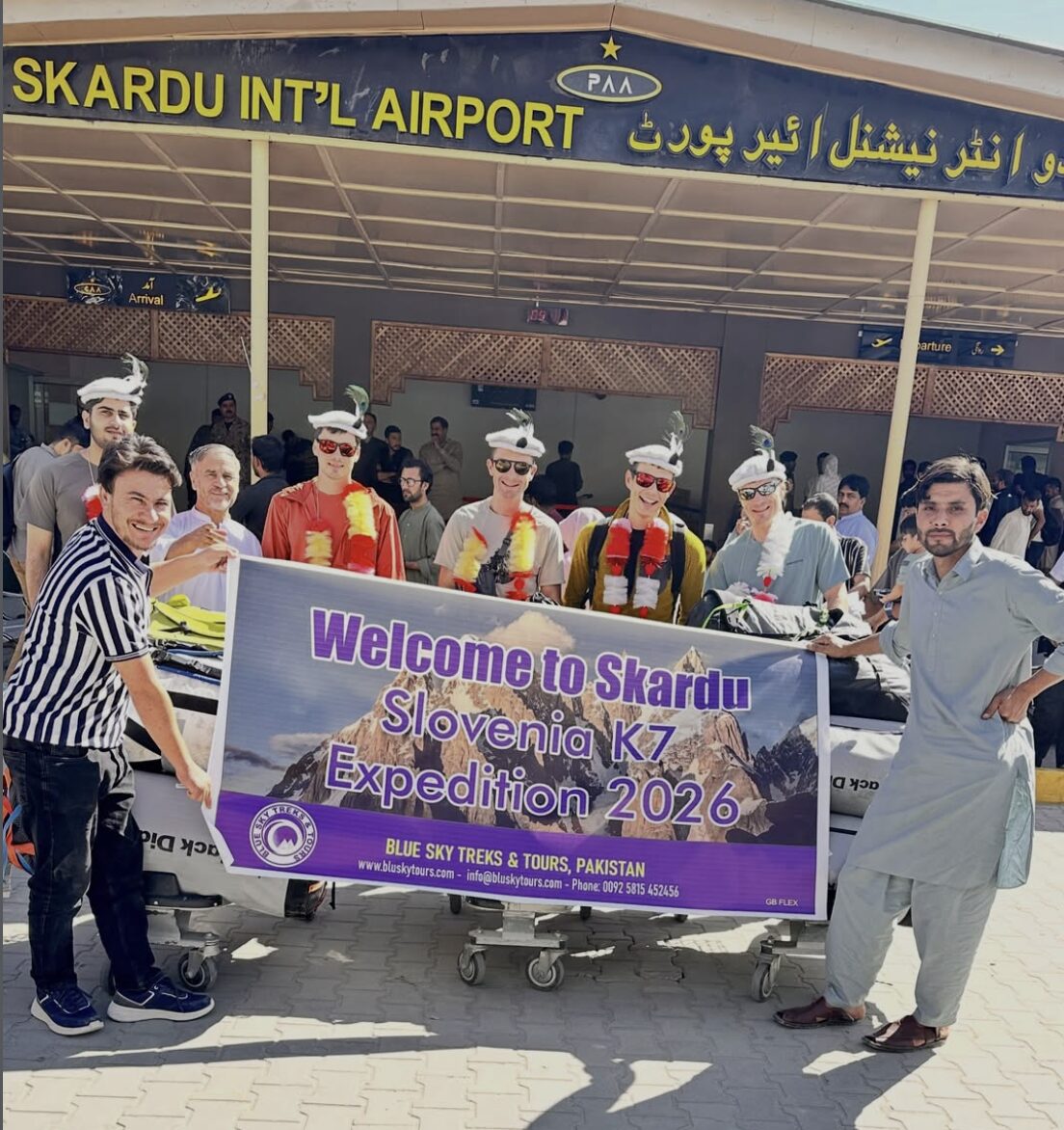
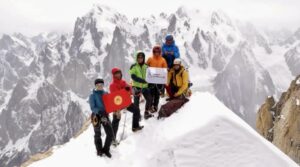
The Slovenian team in Skardu. Photo: BlueSky Treks and Tours
Eyeing the east face
The team hopes to open a new route up the east face, but will check conditions before making their final call. The east face was climbed by Italians Matteo Della Bordella, Mirco Grasso, Luca Ducoli, and Giacomo Mauri at the end of June this year. The Italians opened a new route but failed to reach the peak’s main summit.
K7 is a formidable mountain in the Masherbrum subrange of the Karakoram. A Japanese team made the first ascent of the main peak in 1984. Steve House soloed it in 2004, and Hayden Kennedy, Kyle Dempster, and Urban Novak opened the first route on the east face in 2012.
Luka Lindik first climbed in the K7 massif in 2008. He was very young at the time, but was nevertheless invited to climb with Piolet d’Or recipient Ales Cesen and Rok Blagus. The team completed the first repetition of the Anderson-House-Prezelj route on K7 West. Lindik believes it was also the second ascent of K7 West.
Whatever the Slovenian team’s plans, they’ll have to climb fast; they plan to leave Pakistan on October 3.
Adapting to climate change
Last week, we reported on another expedition hoping to climb a new route on another “almost-7,000’er,” Gasherbrum VI. Jacek Pawel’s Czech team should now have reached Base Camp. They will need to adapt to the current weather patterns in the Pakistan mountains, characterized by extremely high temperatures and drier faces with unstable rock.
“We are deliberately setting off on the expedition a little later than usual, because summers are getting hotter and hotter and, consequently, high mountains are less stable at higher temperatures,” the Slovenians explained.
They know this from experience. During a previous expedition, they experienced above-zero temperatures up to 6,000m. They hope for cooler weather this year.