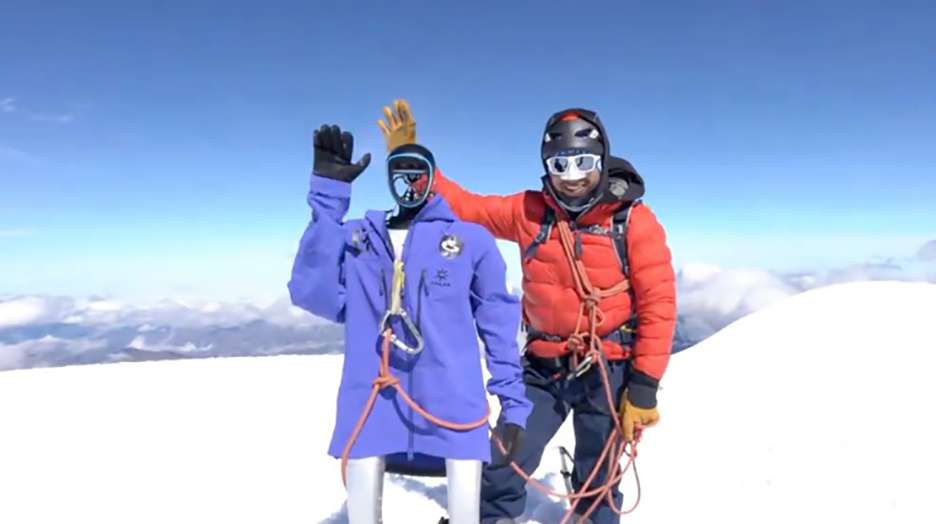
Pemba, a 35kg humanoid robot manufactured by China’s Unitree Robotics, recently reached the 6,263m summit of Ecuador’s Chimborazo volcano. It was probably an altitude record for a climbing robot, and though it climbed no-O2, it wasn’t unsupported.
Engineer Pablo Berlanga, founder of the U.S. nonprofit Geologic Dome, led the expedition. It was part of the “Triple Crown” robotics project, according to Humanoids Daily. The project focuses on the three highest mountains, according to three different definitions. Chimborazo’s summit is the furthest point away from the center of the Earth. The other two mountains will be Mauna Kea in Hawaii and Everest.
On Chimborazo, the robot walked on its own on gentler slopes with inclines under 30˚, fitted with specialized snow and ice gear. On steeper terrain, Pemba was assisted or carried by a human support team. The climb took about 16 hours.
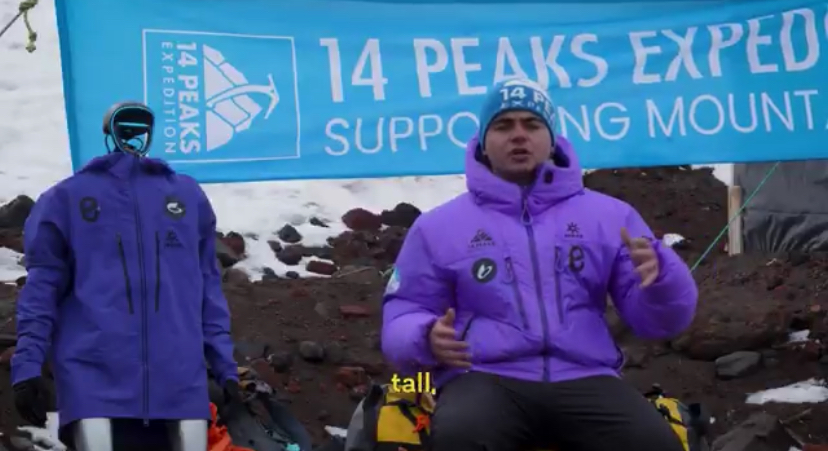
Pemba and Pablo Berlanga. Frame of a video posted by Pablo Berlanga.
Future goals for Pemba-like robots
Developers aim to deploy robots like Pemba for practical, high-risk tasks in extreme mountain environments. These include waste removal on peaks such as Everest, glacier monitoring, environmental data collection, and support for search-and-rescue operations.
Such “cameras with legs” are equipped with AI, sensors, Starlink satellite connectivity, and solar power. This will eventually allow the robots to patrol remote areas to help conservation efforts and scientific research while minimizing risks to humans.
According to Berlanga’s recent post on X, the next goal is 4,207m Mauna Kea volcano, the world’s tallest mountain, if you count its underwater base. Although only 4,207m of the peak clears the surface, it is 10,205m high if you start from the ocean bottom.
Finally, their third goal is Everest.
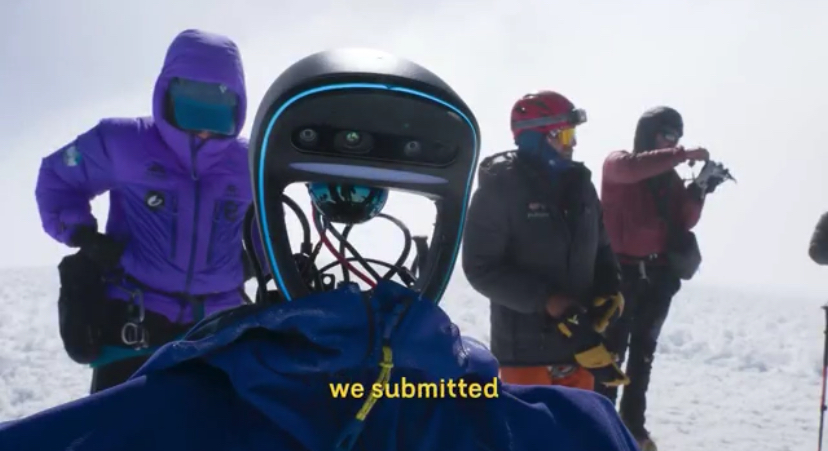
Pemba on the summit of Chimborazo. Autocorrect does not recognize ‘summit’ as a verb and likes to change it to ‘submit.’ Frame of a video by Pablo Berlanga
Hurdles on Everest
The team tried to take Pemba to Everest earlier this year but ran into bureaucratic problems. There is no robotics law in Nepal, and no permits currently allow robots to climb mountains. Berlanga says that they are working with the government of Nepal to fix that. The pace of humanoid robotics development is fast compared to the evolution of regulatory and diplomatic frameworks.
The team plans tests in the Himalaya, potentially from Everest Base Camp to higher camps such as Camp 4 at 7,950m, to assess performance at high altitude and in severe weather.
According to the Kathmandu Post, a proposal involving the Pemba project — a Chinese-made, U.S.-backed initiative partnered with Nepal-based 14 Peaks Expedition — has been placed on hold. The Department of Tourism and relevant ministries are painstakingly drafting guidelines, making any Everest attempt unlikely in the near term.
Berlanga hopes to take Pemba to Everest in October, but they may not receive a permit until April 2027.
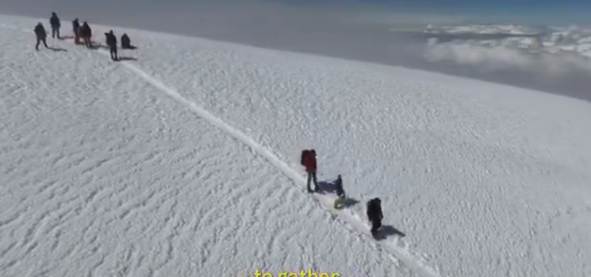
Frame of a video by Pablo Berlanga, showing Pemba walking on Chimborazo, accompanied by his human companions.
Security concerns
A similar initiative involving U.S.-made drones for Everest was suspended this season due to security concerns and regulatory reviews. Everest’s location increases complexity. It lies on the Nepal-China border, raising concerns about advanced technology — whether a drone or a robotic climber — surveilling across sensitive Himalayan frontiers.
If Pemba eventually receives a permit, we wouldn’t see any tired-faced, oxygen-masked selfies from it at the summit — just cold, efficient data collection from a machine that never needs to catch its breath.
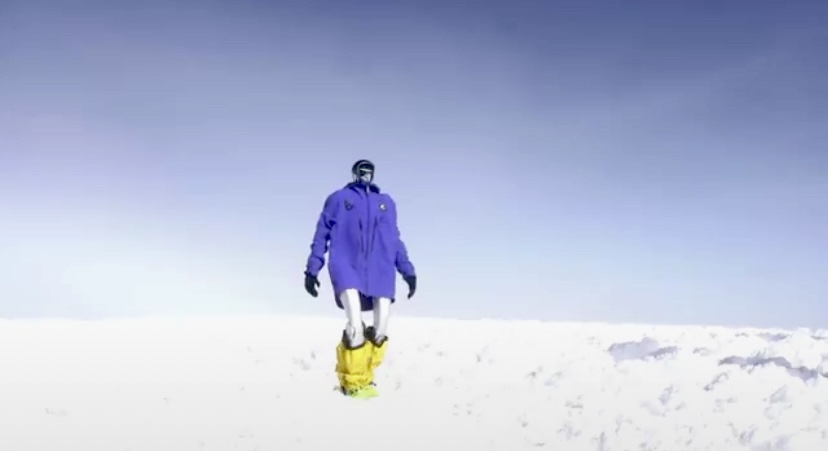
Gloves, really? Pemba on Chimborazo. Photo: Pablo Berlanga