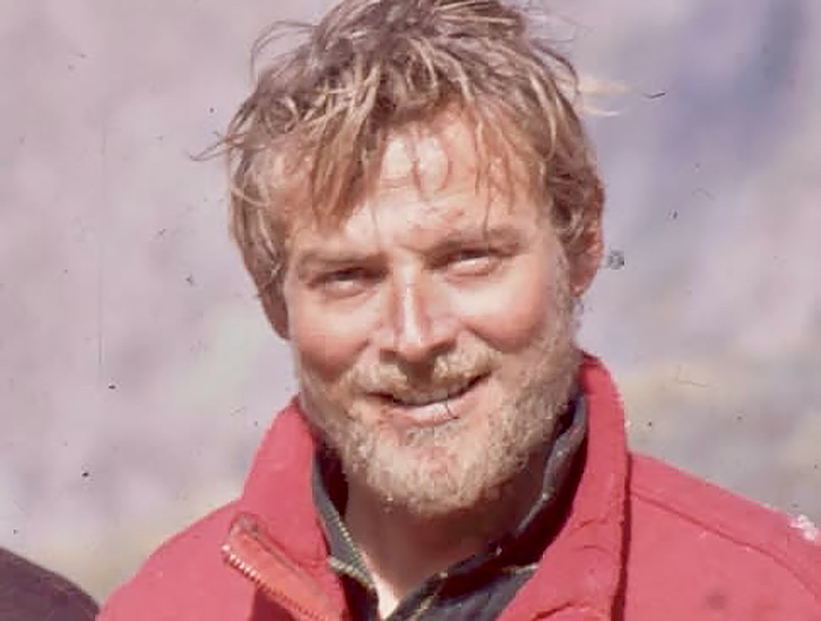
Major Gerry Owens was a British Army officer and mountaineer who died during an expedition to Nuptse in 1975. Today, December 31, is the 88th anniversary of his birth, and 2025 marks 50 years since his death.
Born in 1937, Owens served with distinction in the military, which instilled a discipline and resilience that translated seamlessly into his passion for mountaineering. Though his serious climbing career spanned only about seven years in the early 1970s, Owens achieved an extraordinary record on some of the world’s most challenging mountains.
His Himalayan exploits began prominently with the 1970 British-Nepalese Army Expedition to 8,091m Annapurna I. He contributed to the mountain’s second overall ascent and the first British ascent.
Following a variation on the original 1950 French route, Owens reached the summit on May 20, 1971, with M. W. Henry Day. The pair climbed the final 686m in just three hours using oxygen. Earlier in that expedition, Owens and Richard Summerton had survived a terrifying avalanche that destroyed Advance Base Camp on April 24, leaving them bruised but undeterred.
The previous year, in 1969, Owens had joined efforts in the Hindu Kush, participating in the fourth ascent of 7,708m Tirich Mir, again alongside Henry Day, who also claimed the first ascent of nearby Little Tirich Mir.
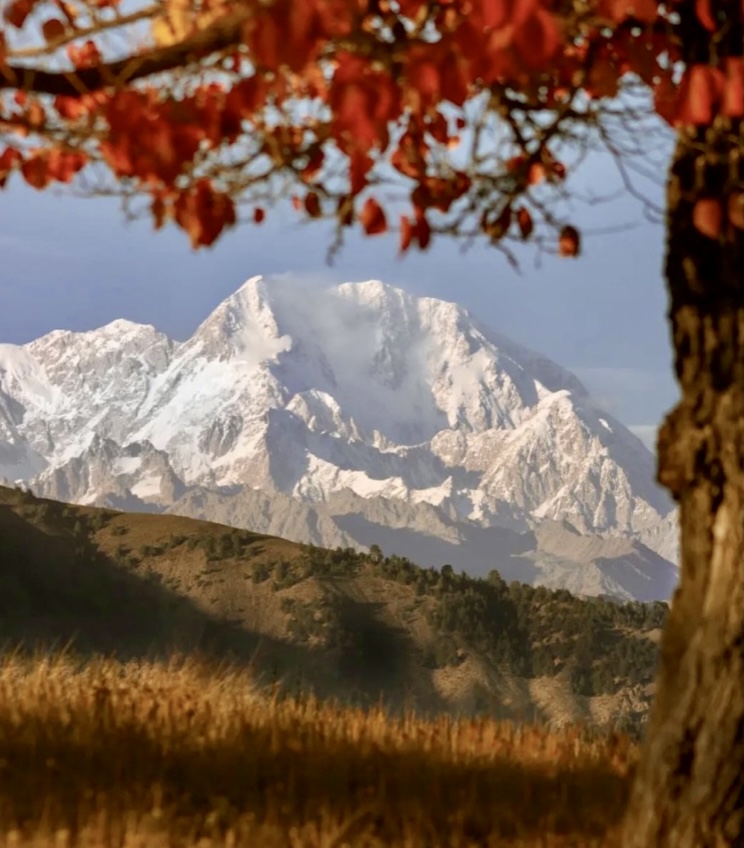
Tirich Mir. Photo: Uzair Ali Khan
Lesser-known peaks
In 1974, as deputy leader of a British Army Mountaineering Association expedition to Himachal Pradesh in India, Owens led a team of 10 in exploring lesser-known peaks. The group achieved several ascents, including 6,001m Deo Tibba from the north, and a new route on 6,221m Indrasan via the east ridge. Owens himself summited both peaks, often in strong parties that included climbers like Sergeant Andy Anderson and Lieutenant Simon Eskell.
Closer to home, Owens excelled in the Alps. The 1974 season stands out, when he completed a series of five north face ascents in the Bernese Oberland, culminating in a solo climb of the demanding and exposed Silberhorn.
Beyond climbing, Owens represented his regiment in cricket and hockey, showcasing athletic versatility. An enthusiastic ornithologist, he also enjoyed observing birds.
Those who knew him described a reserved, sometimes withdrawn personality, stoic in the face of danger. One memorable anecdote from a climb in the Kulu region recounts how Owens endured an avalanche in complete silence as snow flowed around him. Afterward, he brushed off concerns and simply signaled it was time to descend, embodying a calm resolve that inspired companions.
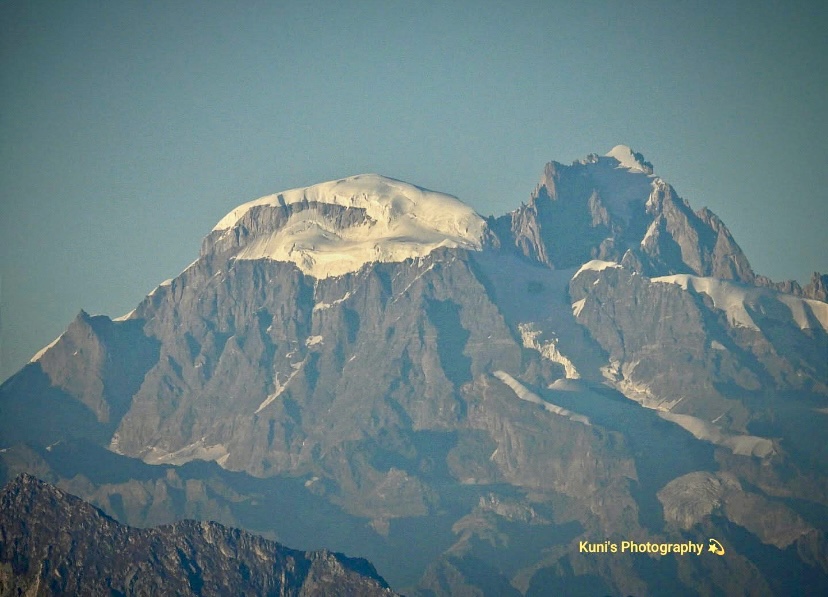
Deo Tibba, left, and Indrasan. Photo: Kunal Sabharwal/Facebook
Tragedy on Nuptse, 1975
The fateful 1975 Joint British-Nepalese Army Expedition to 7,861m Nuptse, led by Jon Fleming, aimed to repeat the 1961 first ascent route while evaluating gear, oxygen systems, and climbers for a planned 1976 Everest attempt.
The team established camps progressively, reaching Camp 7 at around 7,200m by May 7, where Owens, Summerton, and others carved platforms in ice amid challenging conditions.
On May 9 at 7:15 am, Owens and Summerton set out from Camp 7 for the summit, tackling the final 700m couloir. The conditions appeared favorable, with snow filling what had been ice in 1961, potentially easing progress. They moved steadily, one at a time, and after nearly three hours had covered about two-thirds of the couloir. Then, abruptly, they disappeared.
Observers lower on the mountain noted the couloir empty and spotted some debris (including a backpack and an orange bag) tumbling down the South Face amid stone fall. Radio communications relayed the grim news later that day.
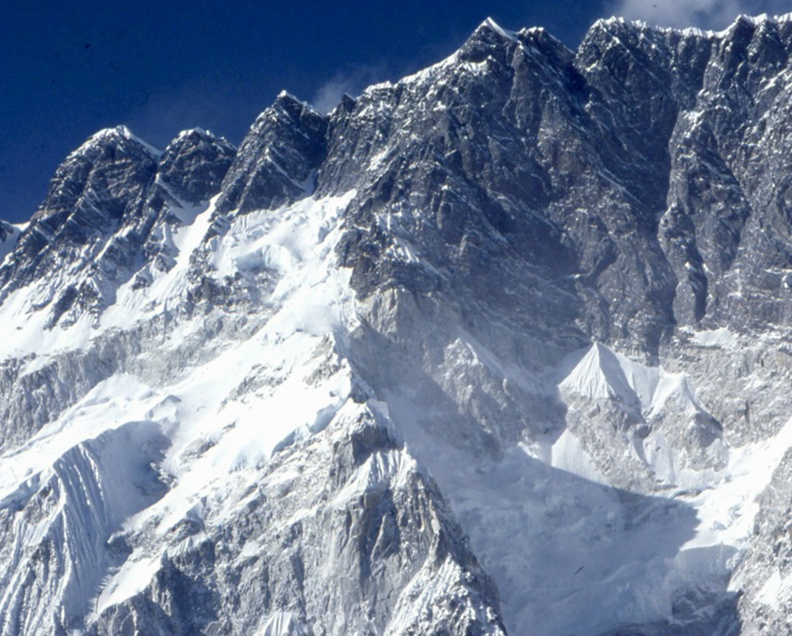
Nuptse. Photo: Valery Babanov
Hope fades
Hope lingered through a snowy evening and sleepless night, with team members inventing possible delays. Searches in the following days yielded nothing from the ground. A helicopter, delayed by weather, finally arrived on May 11. Guided by radio, it located the bodies of Owens and Summerton in a crevasse at the base of the vast South Face. Deteriorating weather prevented recovery or burial.
Tragedy compounded when, days later, in persistent heavy snow, two more members (David Brister and Pasang Tamang Sherpa) also perished while descending between high camps. The expedition erected a memorial cairn at Base Camp for the four lost climbers before withdrawing.
Owens died at the pinnacle of his abilities, with Nuptse poised to be his fourth major Himalayan summit in a short but brilliant span. His passing at age 37 deeply affected the climbing community, his regiment, and those close to him, including his fiancée.
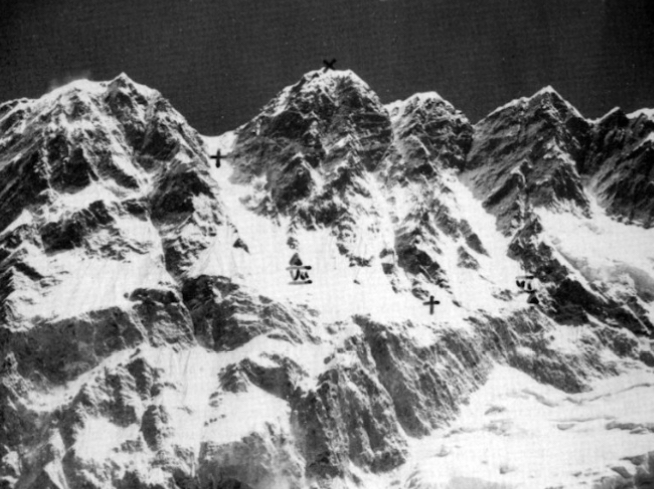
The top section of Nuptse with sites of camps and accidents marked with an ‘x.’ Photo: Jon Fleming/aajlr.org