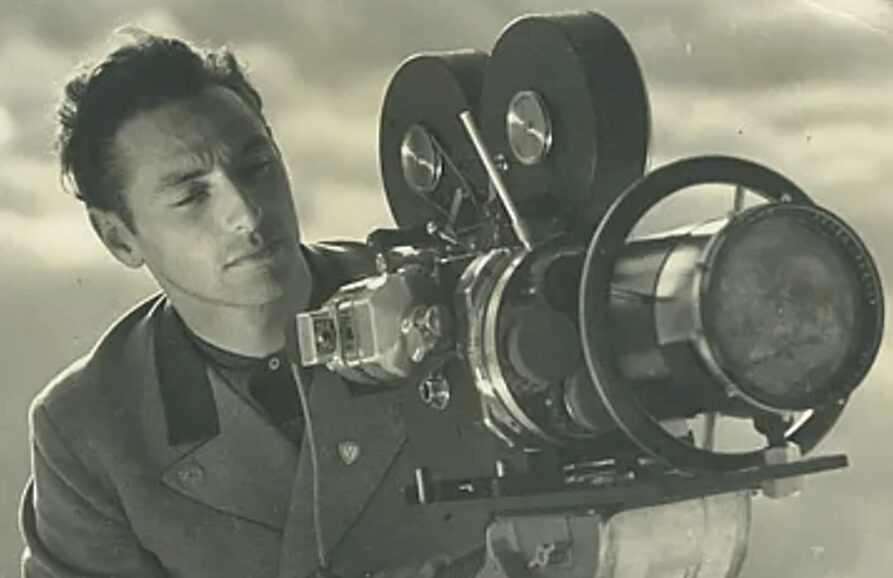
Hans Ertl was born 118 years ago this week. The German cinematographer and mountaineer lived through the worst decades of the 20th century and made some questionable decisions shaped by the times. Yet he left behind pioneering imagery of rock and ice.
Ertl grew up in post-WWI Munich with little money and a lot of hunger for the mountains. The young climbers around him (the so-called “Munich School”) were mostly working-class kids who rode their bikes to the foothills, slept in barns, and attacked the biggest remaining problems in the Eastern Alps with minimal gear and maximum nerve.
Ertl learned quickly. In 1930, at age 22, he and Hans Brehm made the first ascent of the north face of 3,851m Konigspitze in the Ortler group, a steep, committing line that demanded precise mixed climbing. The following year, he turned to 3,905m Ortler itself, climbing its north face, another significant first.
These were not heavily publicized climbs. They were done in the style of the era: light packs, no bolts. Success meant getting back down in one piece, and perhaps a beer in the nearest Gasthaus.
Even in those early years, Ertl carried more than just a rope. He had already begun experimenting with a camera. The Bell & Howell 16mm he lugged into the mountains was heavy and unforgiving in the cold, yet he filmed from summits and belay stances alike. The habit defined the rest of his life.
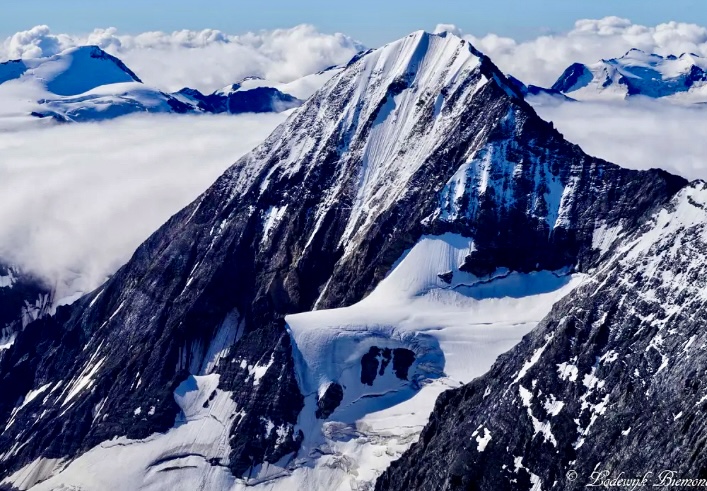
The north face of Konigspitze. Photo: Lodewyk Biemond/Summitpost
Mechanical ingenuity
By the early 1930s, Ertl was working as an assistant to Arnold Fanck, the pioneer of mountain filmmaking. He helped on S.O.S. Eisberg (1933) and The Eternal Dream (1934), learning to frame climbers against vast faces and to keep film from freezing. In 1935, he shot parts of Demon of the Himalayas, blending staged drama with genuine high-altitude footage from the Karakoram.
What really set him apart was his mechanical ingenuity. Standard tripods were useless for following a skier through a turn or a climber across a traverse. So Ertl built a ski-mounted camera rig, a primitive but effective stabilizer that let the lens track motion smoothly. He also constructed one of the earliest practical underwater camera housings, allowing shots from beneath the surface of Alpine lakes. These were home-made solutions tested in real conditions, long before sponsorships or GoPro existed.
His technical skill earned wider work. In 1936, he collaborated as director of photography on Leni Riefenstahl’s Olympia. The film, though technically proficient, was later criticized as Nazi propaganda. Ertl’s family insisted that he never identified ideologically with the regime.
He continued collaborating with Arnold Fanck and Luis Trenker, a charismatic star of Alpine drama, but the pull of real climbing never faded.
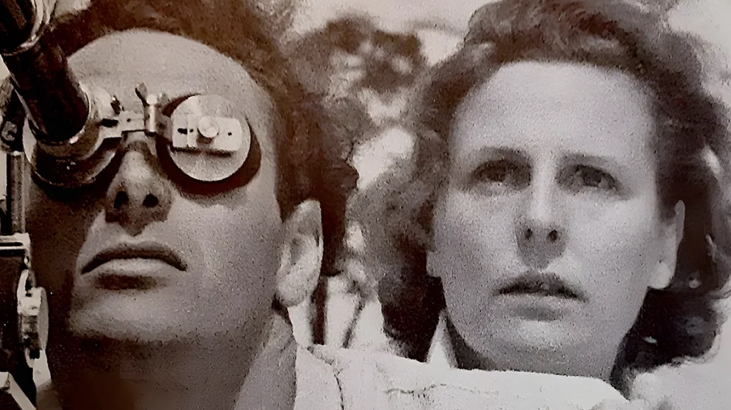
Hans Ertl and Leni Riefenstahl in 1936. Photo: Frombolivia.com
War years
In 1939, while preparing to film in Chile, Ertl received his call-up papers. He served as a war correspondent in North Africa, attached to General Rommel’s Afrika Korps. After Germany’s surrender, the Allies briefly detained him, and opportunities in the film industry were closed to him for several years. Eventually, new mountains offered him a new start.
Nanga Parbat 1953
The 1953 German-Austrian expedition to 8,126m Nanga Parbat became the high point of Ertl’s mountaineering career. Karl Herrligkoffer led a determined team that included Hermann Buhl, Peter Aschenbrenner, Walter Frauenberger, Otto Kempter, and others. The now 45-year-old Ertl was both the official cameraman and a fully participating climber.
During the slow, punishing approach, monsoon snow buried their camps. On July 1, the weather finally improved. Ertl, Frauenberger, Buhl, and Kempter pushed to Camp 4 at 6,700m. The next day, Ertl and Frauenberger helped fix ropes and carry loads to Camp 5 at 6,900m, just behind the prominent Moor’s Head feature on the Rakhiot Ridge.
Space at the high camp was tiny. Ertl and Frauenberger chose to descend, giving up their own summit chances so that the younger climbers could attempt the top.
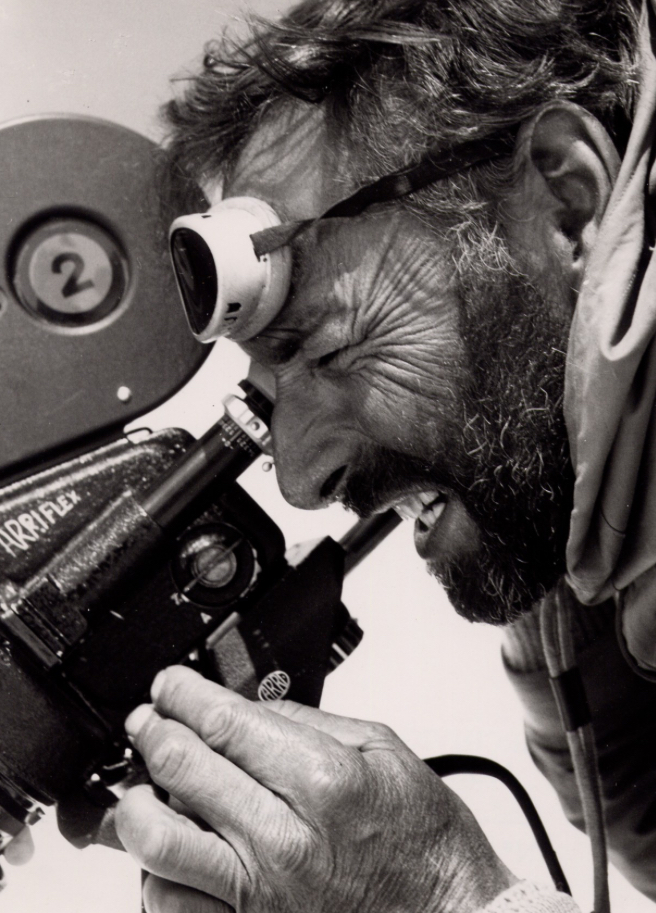
Hans Ertl, filming Nanga Parbat 1953. Photo: Trento Film Festival
Buhl summits
On July 3, 1953, Hermann Buhl left Camp 5 alone at 2 am. Kempter followed a few hours later, but turned back because of exhaustion. Buhl continued through the night and the following day, reaching the summit at 7 pm on July 3. This was the first solo ascent of an 8,000m peak.
Buhl spent a freezing night on the summit without a sleeping bag, then began the long descent. Forty-one hours after leaving Camp 5, Buhl staggered back into the tiny platform at 6,900m. One crampon was gone, he had left his ice axe behind on the summit as an offering, sun and wind had blackened his face, and his eyes were hollow.
Ertl helped Buhl into the tent, brewed tea, examined the frostbitten toes, and only then asked the obvious question: Did he summit? The answer was yes. Ertl’s black-and-white photograph of Buhl walking down between Camps 3 and 2 is one of mountaineering’s iconic images: the climber’s gaunt, bearded face turned toward the camera, exhaustion written in every line, yet unmistakably triumphant.
Ertl also shot the color documentary Nanga Parbat 1953, carrying the camera through storms and thin air to produce one of the clearest visual accounts of a major Himalayan ascent during that period.
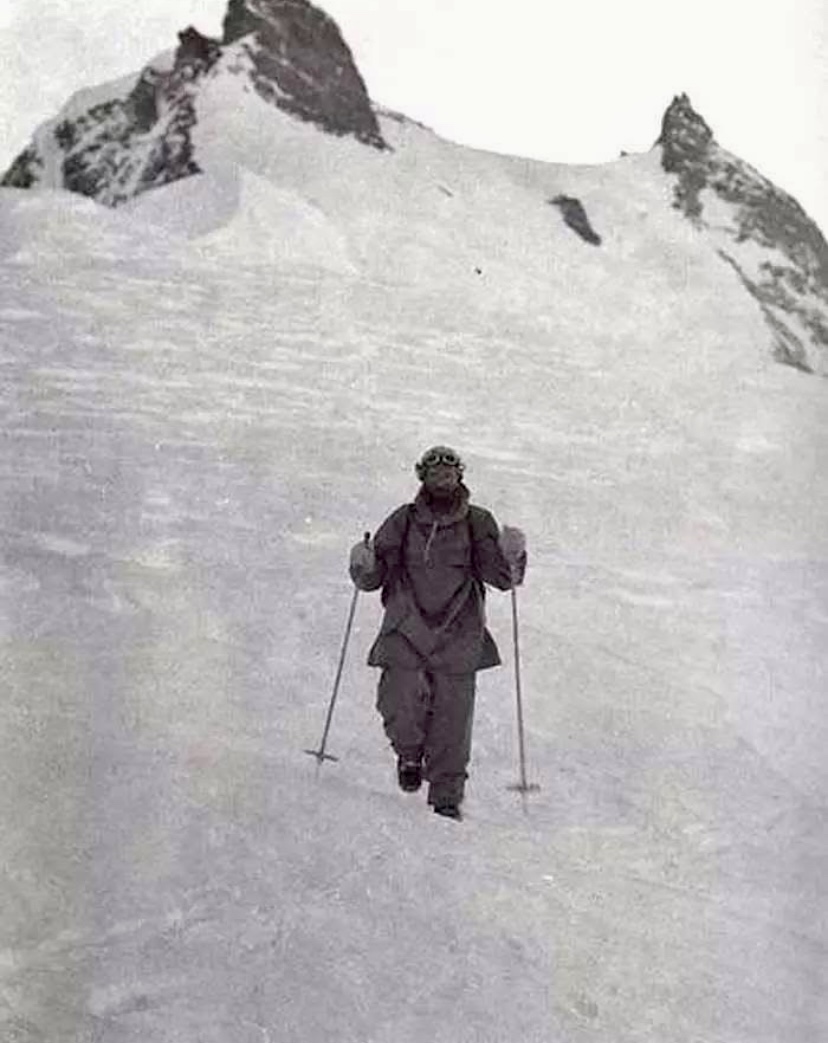
Hermann Buhl descends Nanga Parbat after his 41-hour solo climb. Photo: Hans Ertl
Life in Bolivia
After Nanga Parbat, the Himalaya no longer called as loudly. Ertl had already visited Bolivia in 1950 to test high-altitude film for a German firm. That trip turned into real climbing. He made the first solo ascent of 6,439m Illimani South, and the first ascent of 6,403m Illimani North. In 1951, he completed the second ascent of 6,368m Illampu. All were done in the light, self-reliant style he had learned in the Alps.
He shot two major expedition films in South America. One took him deep into the Amazon basin to search for the legendary lost city of Paititi. A third project ended badly when his tractor, loaded with exposed film, broke through a bridge. Much of the material was destroyed.
Disheartened, Ertl bought land in the Chiquitania region of eastern Bolivia. He named it La Dolorida (“The Sorrowful One”) and settled into the life of a farmer. He married, raised three daughters, and gradually withdrew from the public eye. His wife died of liver cancer in 1958.
Ertl continued alone on the estancia, tending cattle, growing crops, and keeping his old cameras and climbing gear in the house. He collected butterflies and rarely spoke about the past. The farm became a small world of its own.
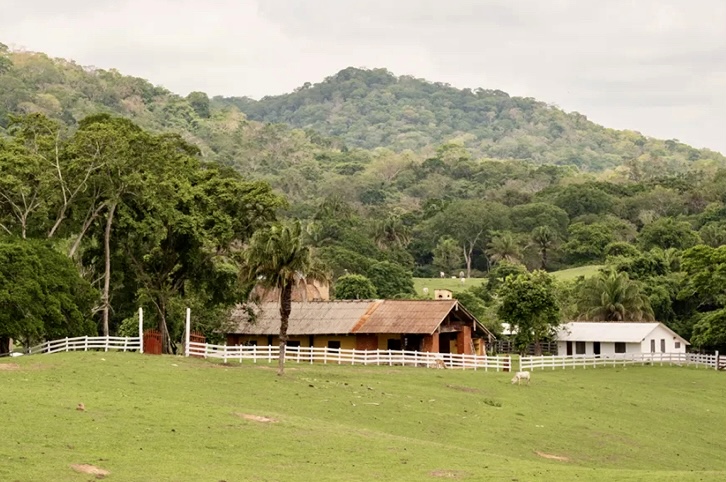
Hans Ertl’s farm, La Dolorida. Photo: eye.tpoty.com
Final years
Ertl lived to 92. In his final days, he asked his daughter Heidi, who lived in Bavaria, to send a small bag of German soil. It was placed in his grave on the hill above the farm. He was buried looking out over a lake where capybaras swim.
Ertl’s eldest daughter, Monika, took a very different path. She joined a leftist guerrilla group in the 1970s and was killed in 1973 by Bolivian security forces. Family members have always maintained that Ertl himself was never politically driven. His service during the war, they say, was a matter of survival in a conscripted system. Today, a small private museum occupies part of the old house at La Dolorida. It holds Ertl’s cameras, ice axes, crampons, and butterfly cases.
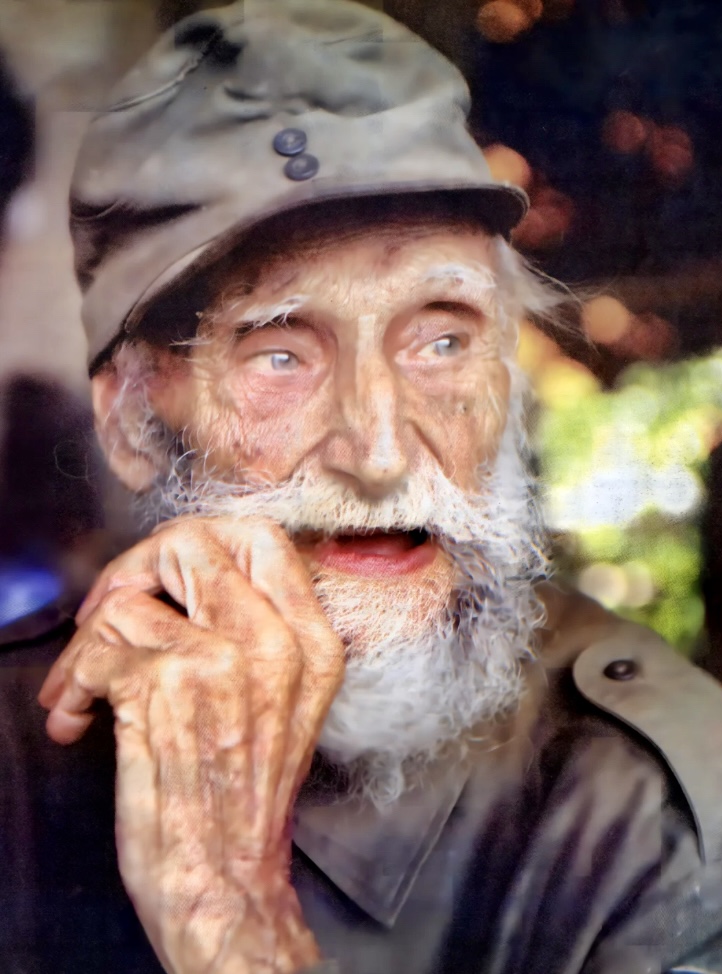
Hans Ertl in Bolivia. Photo: Hilario Munoz/Diario El Deber via Frombolivia.com
Legacy
Ertl never sought fame. He climbed because he felt he had to, filmed because he saw something worth showing, and later farmed because it gave him peace. His ski-mounted camera and underwater housing were early steps toward the action footage we now expect from every climbing film. His Nanga Parbat stills and documentary gave the climbing world a visual grammar for high-altitude struggle. He proved that mountains can be both climbed and remembered, and that sometimes the clearest view comes from standing a little to one side, camera in hand.
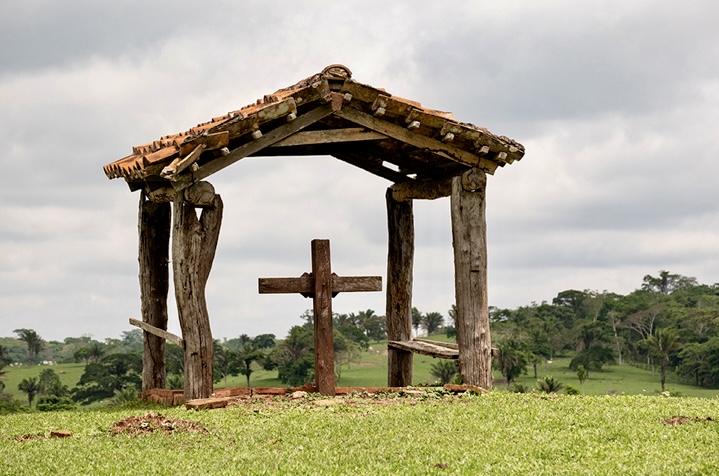
Hans Ertl’s grave on the hill above La Dolorida. Photo: eye.tpoty.com