When badly conceived expeditions fizzle out or end in unnecessary disaster, we may wonder: Where did these guys come from? What made them think they could do this? Were they doing it for the attention, or did they have a vision and were just not practical enough to bring it off?
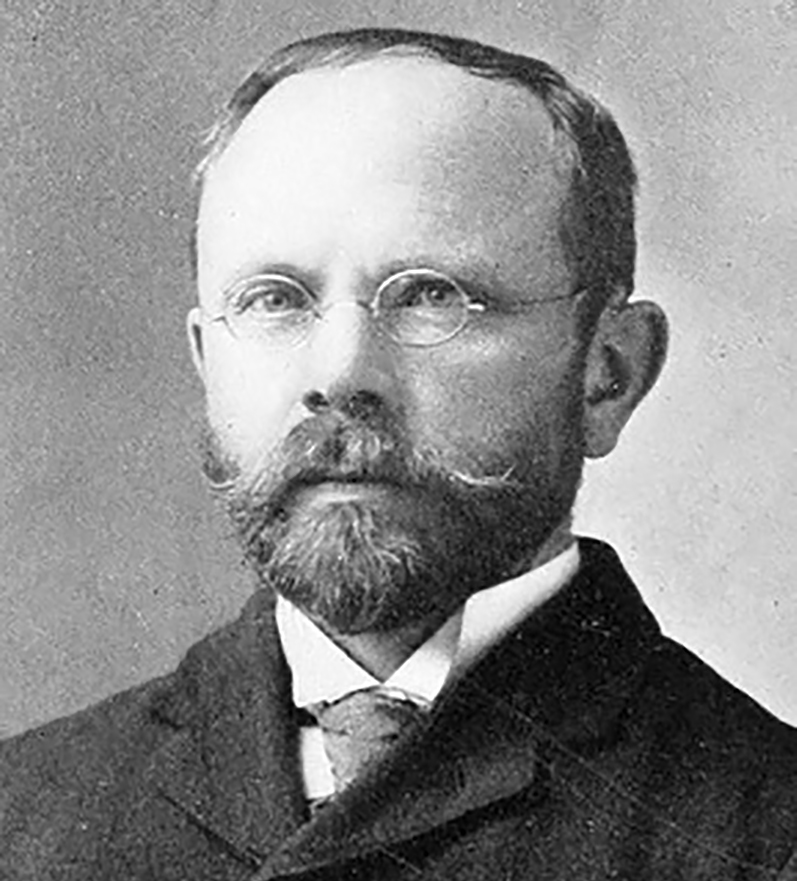
Robert Stein seems to have fit in the last category. Born in Germany in 1857, he emigrated to the United States at age 18. The energetic Stein studied for the priesthood, earned a medical degree, and learned so many languages that he eventually became a government translator in Washington, D.C.
He became obsessed with the Arctic in his 30s. The Arctic has always had these types: urban people inexplicably drawn to those cold horizons. The Arctic becomes the focus of their ideas and dreams.
The late 19th century was the tail end of the Golden Age of Arctic Exploration. Big goals remained. No one had sailed the Northwest Passage or reached the North Pole. In an increasingly mapped-out world, there were still unknown lands to discover. Minor characters like Stein, Henry Howgate, Johan Alfred Bjorling, and others were all bitten by the Arctic bug at this exciting time.
The plan
In the mid-1890s, Stein devised a plan he tried to sell in Washington: to establish a permanent station on eastern Ellesmere Island as a base for exploration. Why Ellesmere? It was a trendy spot, with famous expeditions from the 1850s through the 1880s making early inroads into that giant island. Furthermore, what lay to the west was unknown. Finally, Robert Peary, who had become America’s most famous explorer, often hovered in that area because he considered it the gateway to the North Pole.
The Swedish naturalists referred to above disappeared in 1892, several years earlier, but would-be explorers like Stein often tried to fund their expeditions by looking for missing persons. Expeditions were still offering to “search” for Sir John Franklin 10 years after he disappeared.
Stein was not exactly impoverished — he and his brother bought land and founded a small but notable German community in Maryland — but he did not move easily through the corridors of power in Washington or hobnob with captains of industry. His proposals seemed to fall on deaf ears, and he was reduced to writing to Peary himself, begging for passage north on one of Peary’s ships.
Peary was no one’s mentor; he viewed that whole area as his personal duchy, and he considered other explorers as interlopers, not as colleagues to encourage. He had no interest in helping Stein and strung him along for several years, half-promising rides and then reneging at the last minute, while leaving hope open for the future.
The problem of getting north
At one point, Peary told Stein that the price of the ride would be $2,500 — the equivalent of about $90,000 today. If Stein had been more resourceful, he might have tried to catch a whaling ship out of Dundee, Scotland, for almost nothing. Instead, he threw himself on Peary’s mercy, explaining pathetically that the most he could raise by mortgaging his farm was $888.25, but he could bring this close to $900 by withdrawing his entire savings of $7.44 from the bank.
How Stein eventually raised enough money to satisfy Peary is unclear. Years ago, on eBay, I bought a $200 check that Stein wrote to himself in 1899, drawn on a Washington, D.C. bank. Presumably, the cash he received — whether from mortgaging the farm or some other source — was going for supplies or was part of his passage on Peary’s supply vessel, the Diana. That summer, he and two companions, taxidermist/photographer Julian Warmbath and Leopold Kann, a 25-year-old Austrian math student who would take weather readings, finally headed north to Ellesmere Island.
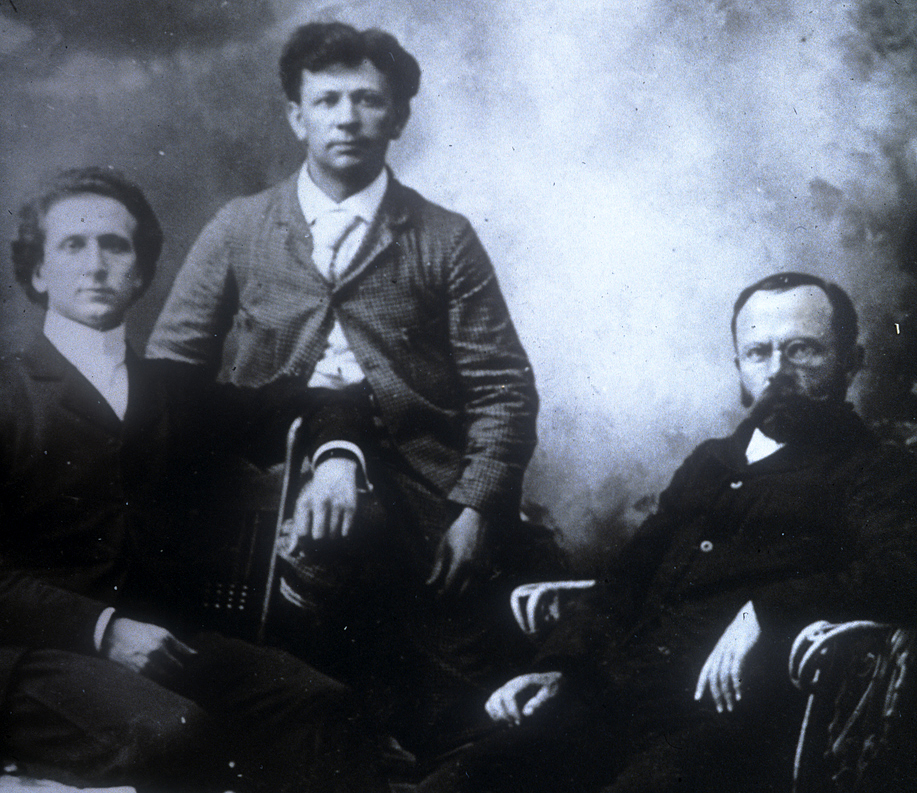
Left to right, Leopold Kann, Julian Warmbath, and Robert Stein. Photo: Public Domain
Stein did what he could to behave like a serious explorer. He even found a sponsor, albeit a goofy one. A company gave Stein centimeter-thick metal insulation for his Arctic hut. How well chunks of magnesium work as insulation is unknown to me, but a grateful Stein called his 3x4m hut Fort Magnesia.
The site today
I’ve visited the site a few times on expeditions. The hut is gone — the wood would have been valuable raw material for visiting Greenlanders — but some blackened chunks of oxidized magnesium still lie on the ground. I verified their identity by scraping a few shavings from the soft metal with a penknife, then threw them onto my camp stove and watched them flare up with a brilliant white light. Yep, magnesium, all right.
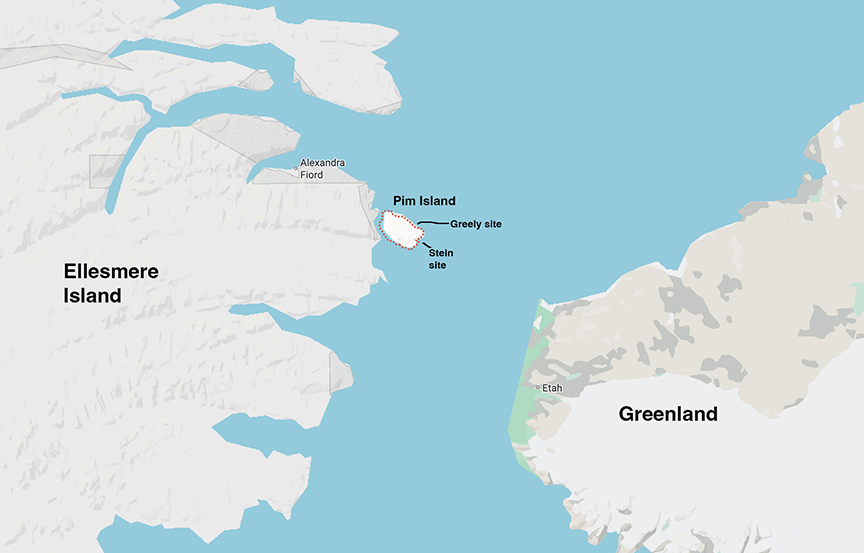
Stein’s outpost was on Pim Island, a small, barren satellite just off mainland Ellesmere. Pim famously figured as the location of the Starvation Camp of the Greely expedition in 1883-4, when 25 men tried to survive for eight months on 40 days of food. Somehow, six survived.
Stein’s Fort Magnesia was a few kilometers away from the Greely site. Because of the drama of the Greely expedition, many have visited it in modern times — cruise ships, scientists, kayakers on ecotours from nearby Alexandra Fiord. Over the years, most of the artifacts have disappeared. The Stein site, far more obscure and harder to get to, is almost untouched.
When Stein and his partners built their hut, they thought they were being clever by tucking it against a small cliff to shelter it from the north wind. They didn’t realize that skirling snow quickly accumulates in that eddy. As winter came on, Fort Magnesia was soon beneath several meters of snow and needed constant tending so the men would not be buried alive, and so their stovepipe could vent.
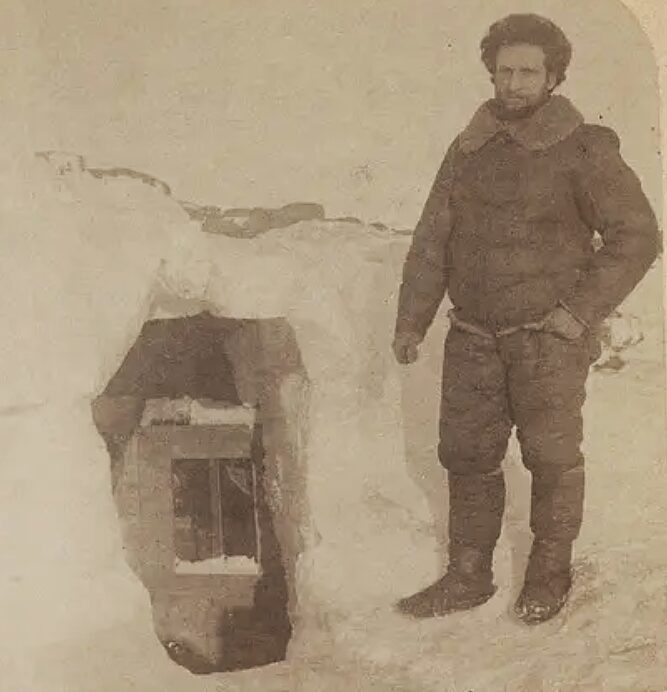
Leopold Kann at a snowed-in Fort Magnesia. Photo: Public Domain
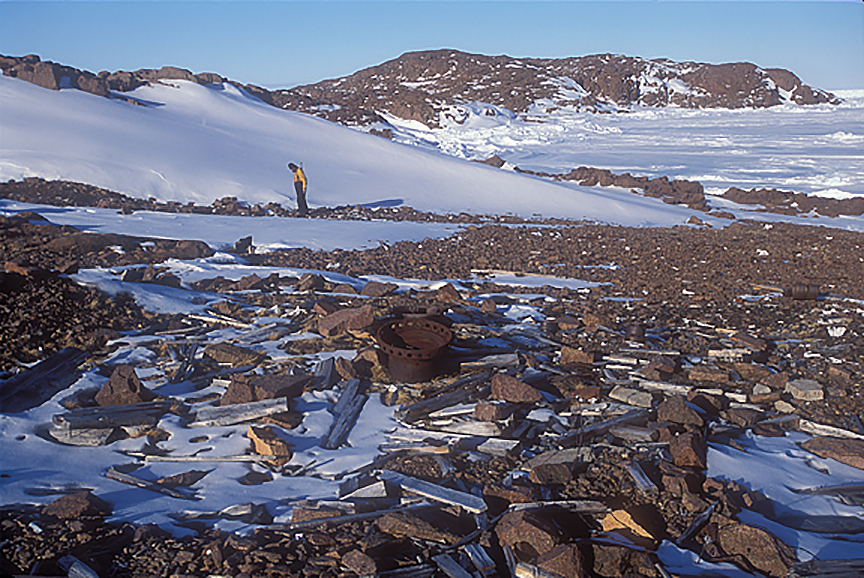
At the site of Fort Magnesia, rear left, still buried in snow in late May, while in the foreground, the Peary site is already bare. Photo: Jerry Kobalenko
The consequences of delay
They had brought sled dogs with them for spring travel, but they had little food for them. The captain of the Diana told Stein he would return with walrus meat, but, no doubt wrapped up in more important matters, he never made good on that promise. Over the winter, almost all of Stein’s dogs starved. The would-be explorers had no means of traveling except walking, which does not seem to have occurred to them.
Moreover, the years-long delay as Peary screwed around with him became clear. Stein had originally dreamed of exploring the unknown lands to the west. That spring of 1899, the very year Stein finally went north, a well-equipped Norwegian expedition under Otto Sverdrup had ventured west by dogteam from its base nearby and discovered Axel Heiberg Island from a viewpoint just 70km from Pim Island. There are a lot of ifs, but had Stein gone north a couple of years earlier and managed to procure meat for the dogs, he might have become famous as the discoverer of the largest still-unknown island in the Arctic.
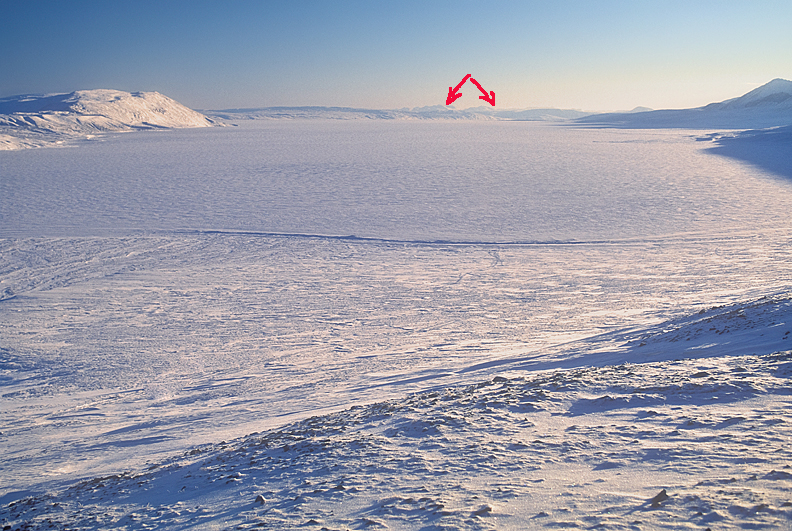
The viewpoint, barely 70km from Fort Magnesia, from which Otto Sverdrup first saw the snowy peaks of Axel Heiberg Island in 1899. Photo: Jerry Kobalenko
The loss of his dogs seemed to break something in Stein. He made no attempts to explore. He, Warmbath, and Kann passed the winter and spring passively hanging around Fort Magnesia. That they survived seems their only notable accomplishment. “Stein’s expedition must be rated among the least effectual that had ever crossed the Arctic Circle,” wrote Arctic historian William Barr, witheringly.
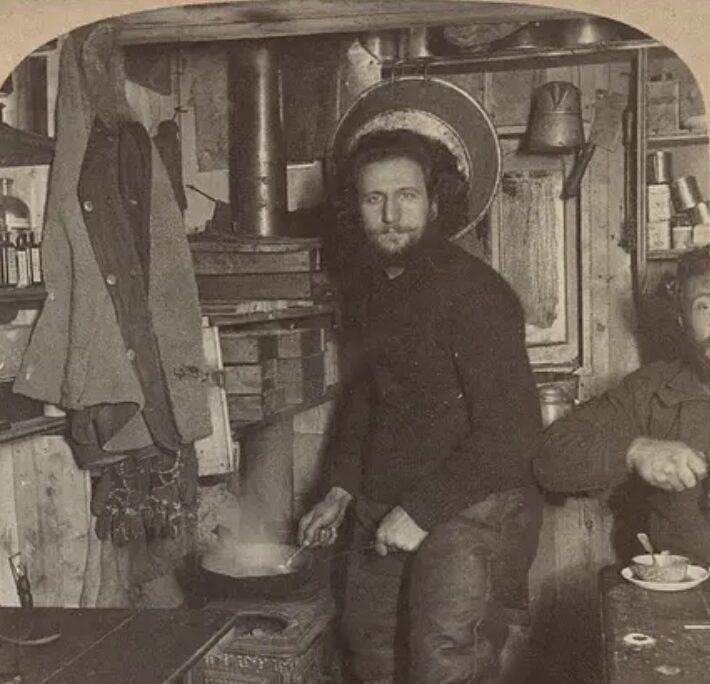
Leopold Kann inside Fort Magnesia. Photo: Public Domain
A second winter
Stein eventually passed a second winter at Fort Magnesia, along with Julian Warmbath. Leopold Kann had had enough of Stein and that place and caught a whaling ship home. The following year, Stein returned home to his government job, never to go north again.
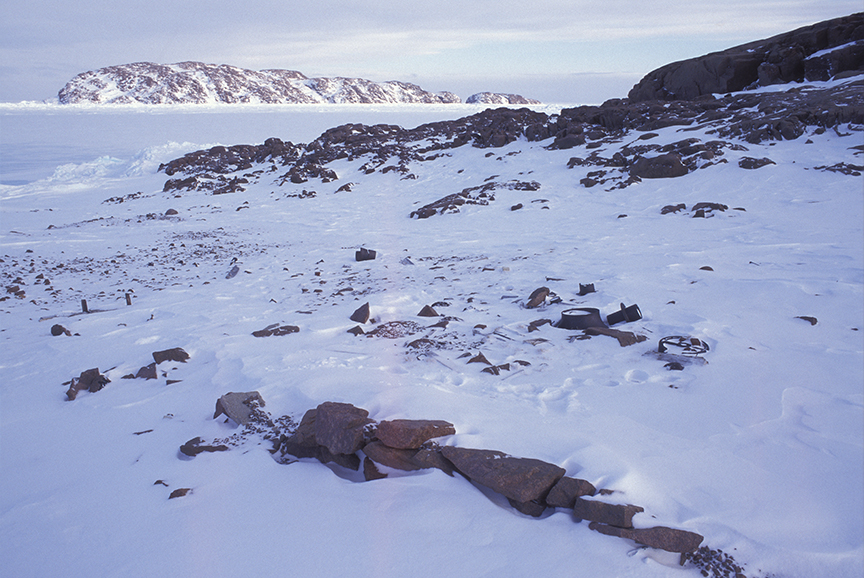
Robert Peary also overwintered in that area in a ship’s deckhouse. The hut is gone, but garbage from that era remains. The experienced explorer set the hut just a few steps away from Stein’s Fort Magnesia, but because it was not placed right against the cliff, as Stein’s was, it was not buried in swirling snow. Photo: Jerry Kobalenko
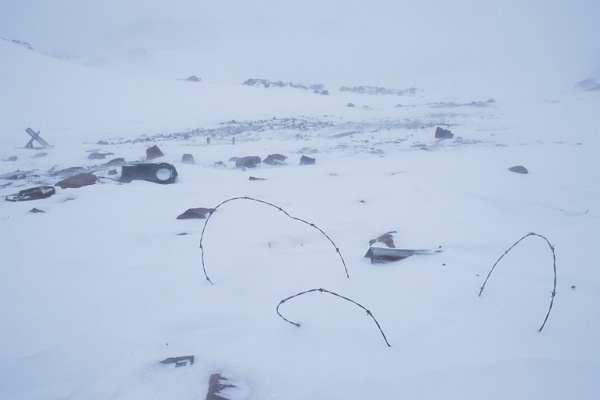
Another view of Peary’s site earlier in the spring. The remains of Fort Magnesia lie buried in deep snow in the upper-left-hand corner of the image. Photo: Jerry Kobalenko
That winter, Peary himself overwintered just a few meters from Fort Magnesia, in a small deckhouse offloaded from his ship. As you may gather, I’m no fan of Peary’s, but the veteran explorer certainly knew the Arctic. He placed his hut on some nice flat ground away from the cliff, where it remained beautifully snow-free all winter. When he abandoned the place, he blew up his stove with dynamite, in typical Peary fashion, presumably so that other explorers could not use it.
Although Stein never returned to the Arctic, it remained a focus for his ideas. One of them has contemporary relevance. As historian Kenn Harper points out, Stein concocted a plan to change the ownership of Greenland. It would not go to the United States, however, but to Canada.
Land swap
Stein suggested a sort of complicated swap. The United States would give Denmark some of the Philippines in exchange for some Danish islands in the West Indies. Denmark would cede Greenland to Canada, while Britain, Canada’s Commonwealth ally, would give Denmark some of its land in Polynesia and Africa.
Denmark would then turn over its new possessions in the Philippines, Polynesia, and Africa to Germany, in return for North Schleswig, which Germany had previously seized and which Denmark wanted back. In this roundabout way, the growing tensions between nations would be resolved, and the world would remain at peace.
As always with Stein, his idea led nowhere, but like his ambition to explore the unknown territory west of Ellesmere, it had a tragic visionary quality. In the late 1920s, a similar land swap actually took place between four main players: Denmark, Canada, Norway, and the United States. In some ways, it wasn’t so much a swap as an acknowledgment of sovereignty, which had been disputed to that point.
This deal gave the Virgin Islands to the United States, Denmark got Greenland, Norway got tiny Jan Mayen Island, and Canada got Ellesmere and its neighbors.
Stein, of course, received no credit, if indeed his earlier proposal had any relation to this later land swap. He was long dead anyway. His dream of world peace in shambles, Stein committed suicide in 1917, during World War I.