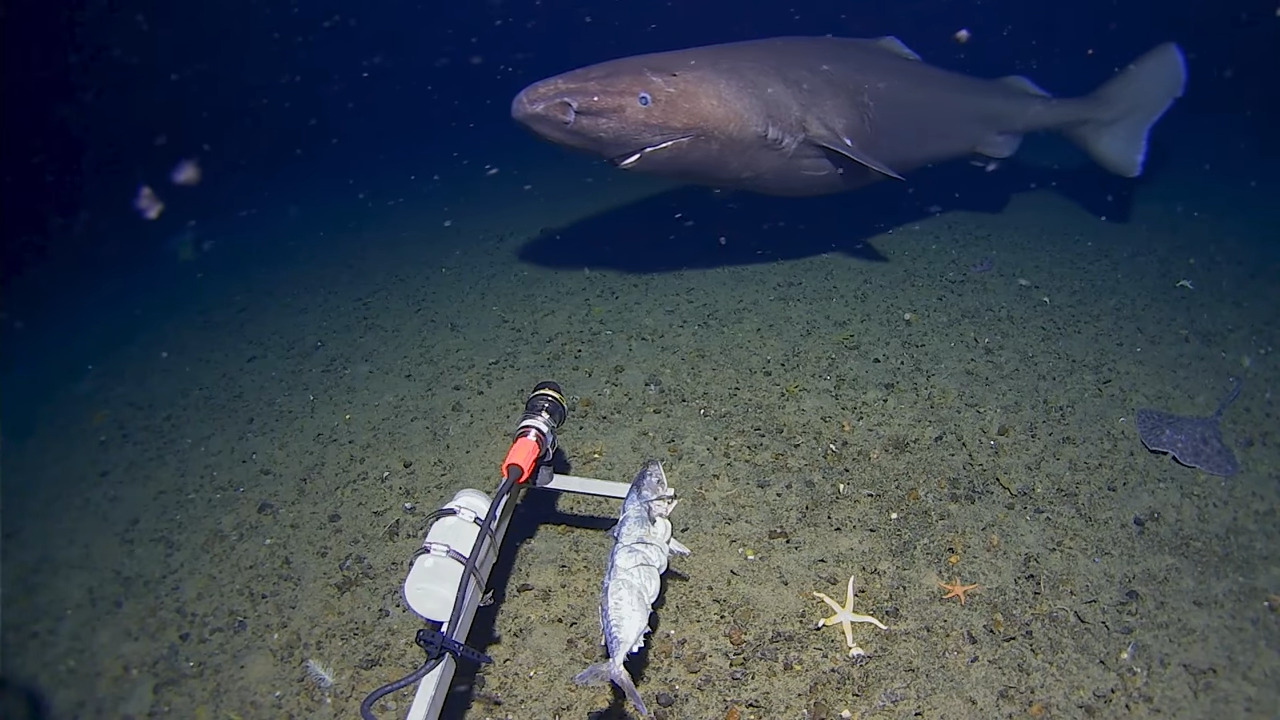
University of Western Australia researchers have captured the first proof of sharks living in Antarctic waters. In their footage, a large sleeper shark drifts across the seafloor, unknowingly overturning expert opinion on shark distribution.
They recorded the footage last January, about 490m below the surface, off the South Shetland Islands. The astounded researchers tentatively identified it as a southern sleeper shark female between three and four meters long. She moved at the leisurely pace characteristic of her species.
This is the first time any shark has been seen in the Antarctic, but the southern sleeper shark would be the right species for the job. Well-adapted to deep, cold water, it lives mainly in the subantarctic regions of the Indian, Atlantic, and Pacific Oceans. A deep-water species, it prowls just above the seafloor.
In this section of the South Shetland Trough, the seafloor features a layer of relatively warm water. While salt content allows some Antarctic water to reach -2˚C, our shark was cruising along at a balmy 1.27˚C.
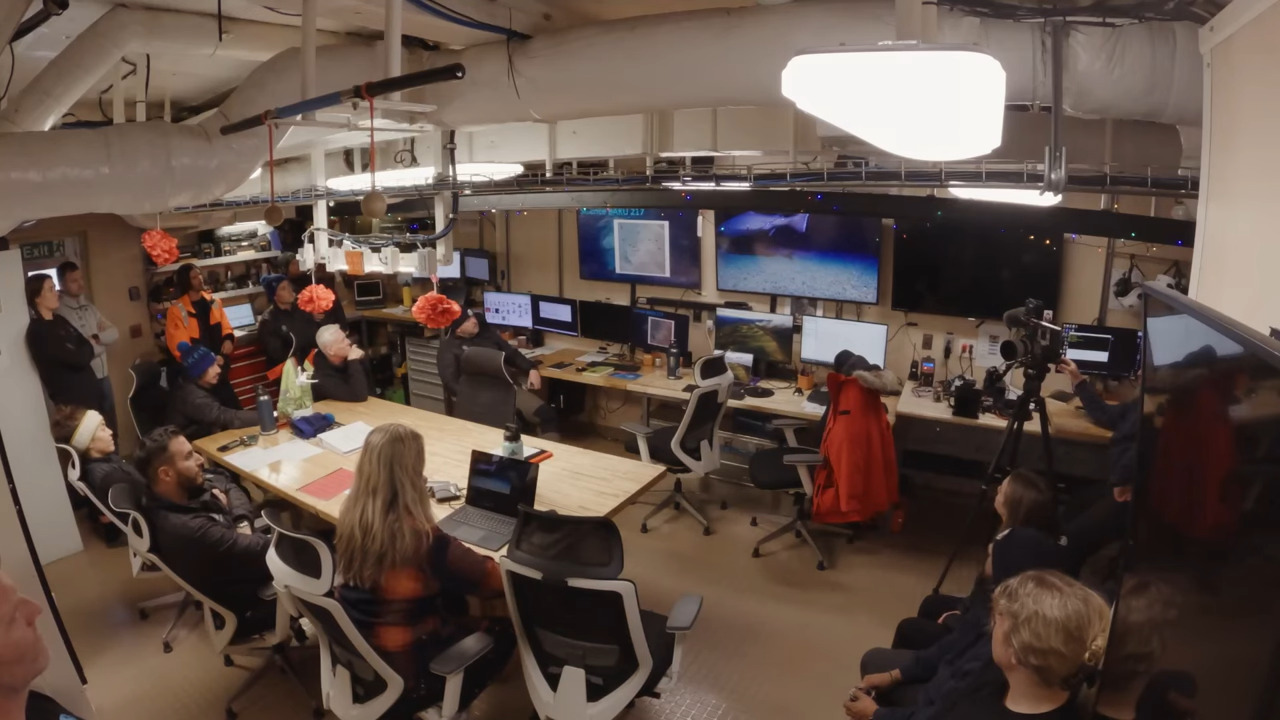
Researchers review the surprising footage of a shark. Photo: Minderoo-UWA Deep-Sea Research Centre, Inkfish, Kelpie Geoscience
A secret world of Antarctic sharks?
Just how much cold this species can tolerate, and how widespread sharks are in the Antarctic, remain open questions. Another sleeper shark species, the Greenland shark, has adapted to Arctic water as low as -2˚C. Very high concentrations of nitrogen compounds in its tissues allow it to withstand high pressure and frigid water.
Like the Greenland shark, southern sleeper sharks have very long lifespans. If this individual shark is native to the Antarctic, she may very well have been alive during the era of Bellingshausen and James Clark Ross in the early 19th century. She was probably alive in 1913, when Douglas Mawson’s expedition stopped on Macquarie Island in the subantarctic and made the first scientific description of her species based on a washed-up specimen.
The camera that captured her belongs to the Minderoo-UWA Deep-Sea Research Centre, an Australian deep-sea research organization. The center’s founding director, Alan Jamieson, told the Associated Press that this shark is likely part of a small but stable population of Antarctic sleeper sharks living in that warm-water zone. They would feed on whale, squid, and other carcasses. As Antarctic waters warm, their population and range may expand.
It’s hard to tell just how many sharks live in Antarctic waters. As Jamieson pointed out, what few cameras are down there are only active for a few months of the year, when ice conditions allow research vessels to operate. This also means it’s impossible to tell whether climate change is pushing these animals into a more southern range.