Between October 23 and 27, Alexander Parfenov and Alexander Semenov of Russia opened a demanding new route on 6,895m Lunag Ri in the Rolwaling Himal on the Nepal-Tibet border. They turned back short of the summit, which some sources list as 6,907m.
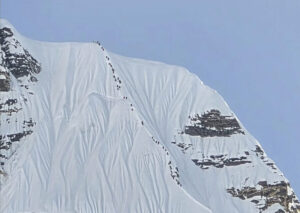
The pair climbed a previously unexplored southeast-facing buttress of the Lunag Ri massif. The line would have ended on the southeast summit. It involved mixed and rock climbing to M6, aid sections of A2–A3, ice up to WI5–WI6 in places, and long stretches of steep snow with limited protection.
They placed a piton on the final part of the pillar and began rappelling from there, reaching the base of the wall on October 28, according to gore-ljudje.net. The duo turned back short of the summit due to a coming storm and health issues. The complex summit area — multiple closely linked peaks and ridge features — also left some uncertainty about how close they came to the main summit.
Even without summiting, this was a significant exploration of a major, unclimbed feature on a remote peak.
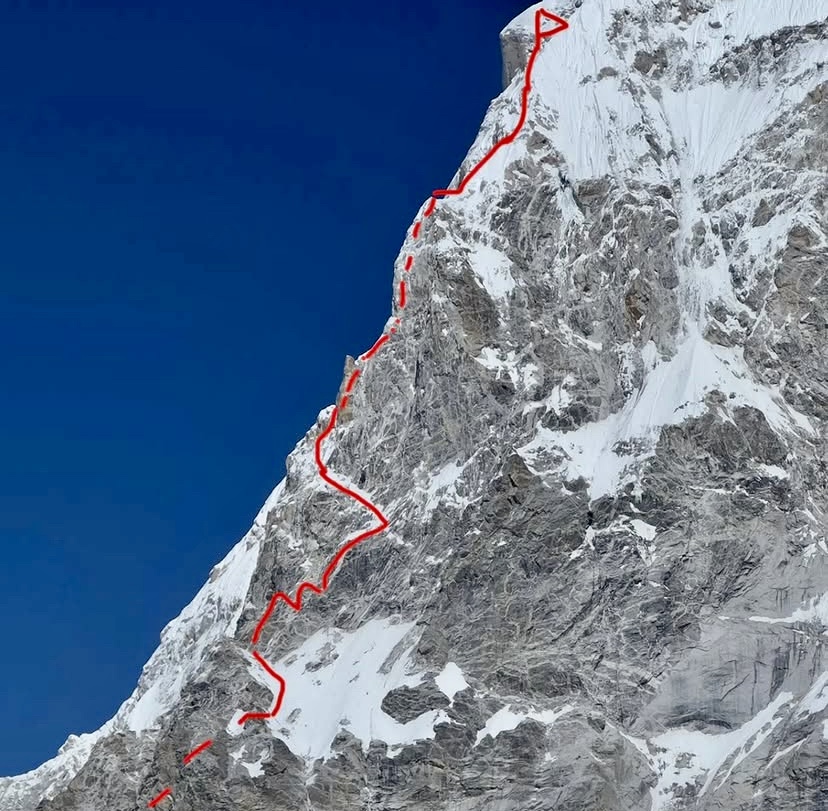
The new line opened by the Parfenov and Semenov. Photo: Alexander Parfenov
Climbing history
Lunag Ri, the highest peak in the Lunag massif, has long stood as one of Nepal’s highest unclimbed summits. Early attention focused on the broader massif after Joe Puryear and David Gottlieb made the first ascent of the neighboring 6,778m Jobo Rinjang via its South Face in 2009.
In the same year, a Swiss-led team under Stephane Schaffter attempted lines in the area, including approaches to Lunag I, though their claims about summits on the massif were later met with skepticism in the American Alpine Journal.
In the autumn of 2010, a French team that included Max Belleville, Mathieu Detrie, Mathieu Maynadier, and Sebastien Ratel climbed the southeast face of Lunag Ri. Their route, Close the Door (1,200 m, IV/5 F5), was completed in a three-day alpine-style push with two bivouacs. They reached a distinct southeast top (6,812m to 6,830m) on the long ridge connecting Lunag I to Jobo Rinjang. By this time, they were exhausted and did not continue the short remaining traverse to the higher main summit. This remains the only major completed route on the Lunag I massif before the first ascent of the true summit.
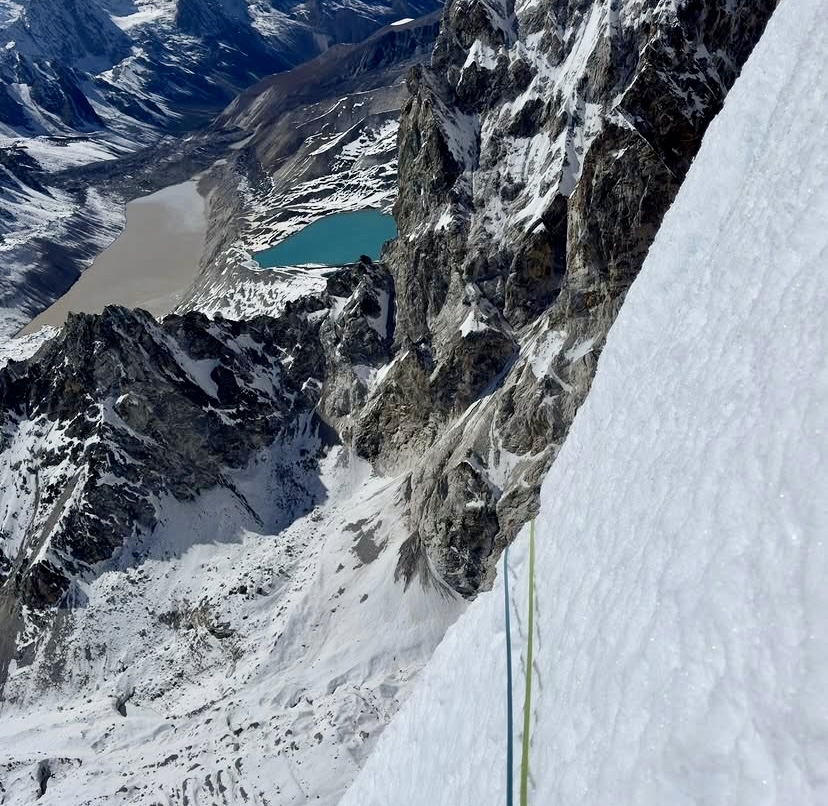
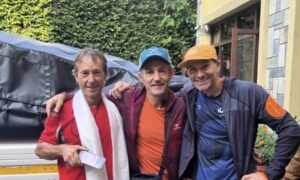
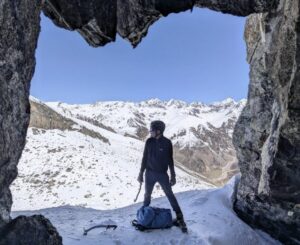
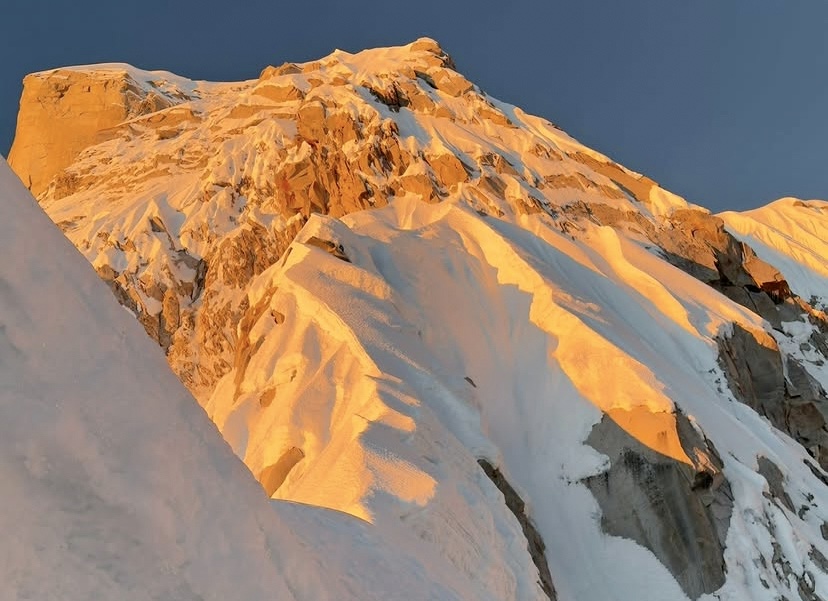
From the recent climb on Lunag Ri. Photo: Alexander Parfenov
Attempts by Lama and Anker
Attention then shifted to the west ridge and southwest face of the main peak. In November 2015, Conrad Anker and David Lama’s alpine-style attempt reached a high point roughly 300m below the summit before retreating due to the unexpected complexity of the ridge.
They returned in 2016 to try a similar line. On the first day, at about 5,800m, Anker suffered a heart attack and was evacuated by helicopter. Lama subsequently continued alone on a variation that moved farther right onto an icefield. He established two bivouacs and pushed 50m higher than the previous year’s high point before turning around 250m shy of the summit.
The first ascent
In late October 2018, Lama returned solo. Over three days (October 23-25), with two bivouacs, he climbed the southwest face and northwest/west ridge (1,500m of vertical gain, terrain to 90°). He moved mostly ropeless, with limited self-belaying on the harder mixed sections. Lama negotiated the previously unclimbed headwall and made the final exposed traverse onto the main summit.
This was the first ascent of Lunag Ri’s highest point. He descended largely by rappelling down the line of ascent. Lama was awarded a Piolet d’Or for this solo first ascent of Lunag Ri.
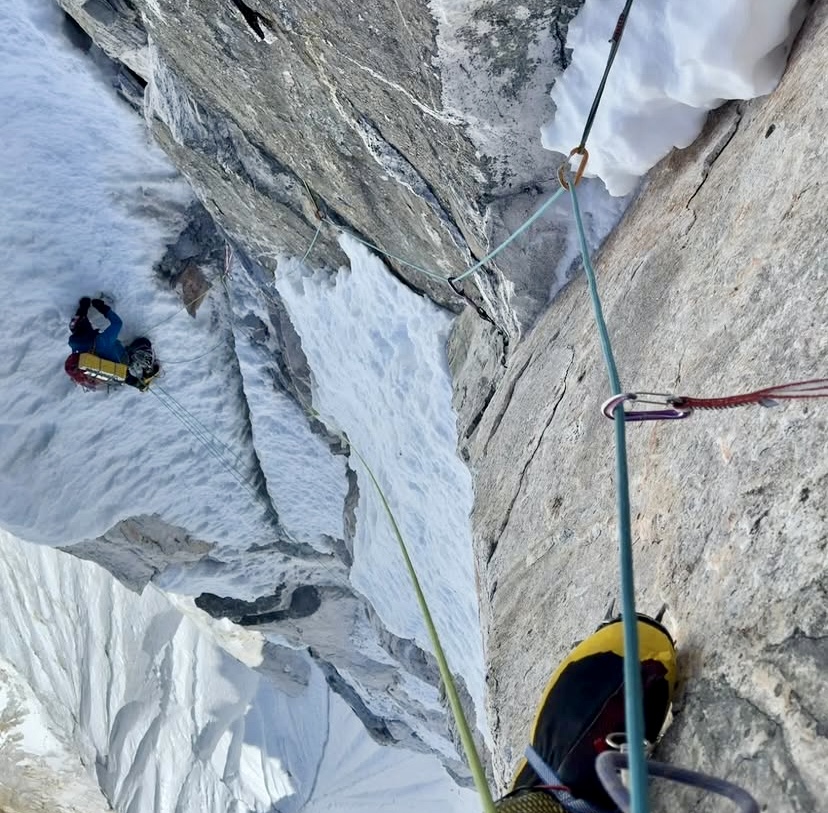
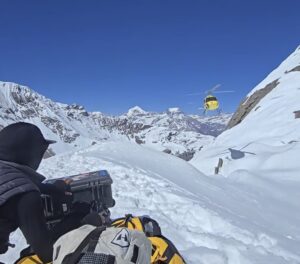
From the recent climb on Lunag Ri. Photo: Alexander Parfenov