In Beau Miles’ recent documentary, Canoeing Australia’s Most Contested River, Miles and friend “Ponch” paddle the Murray River. This journey is the culmination of a larger project, exploring Australia’s most polluted and at-risk rivers. The Murray is the largest and most endangered of them all, making for, as Miles discovers, a strange journey.
With him on the four-day journey of discovery is river expert Brian “Ponch” Poncho, Miles’ friend and former PhD supervisor. According to Miles, this journey is going to be about food. So, he takes us along on the supply run, attempting to only pack food which was grown in the Murray watershed. Something that, he finds, was a lot easier 100 years ago than it is today.
They make it work and set off into the so-called bread bowl of Australia.
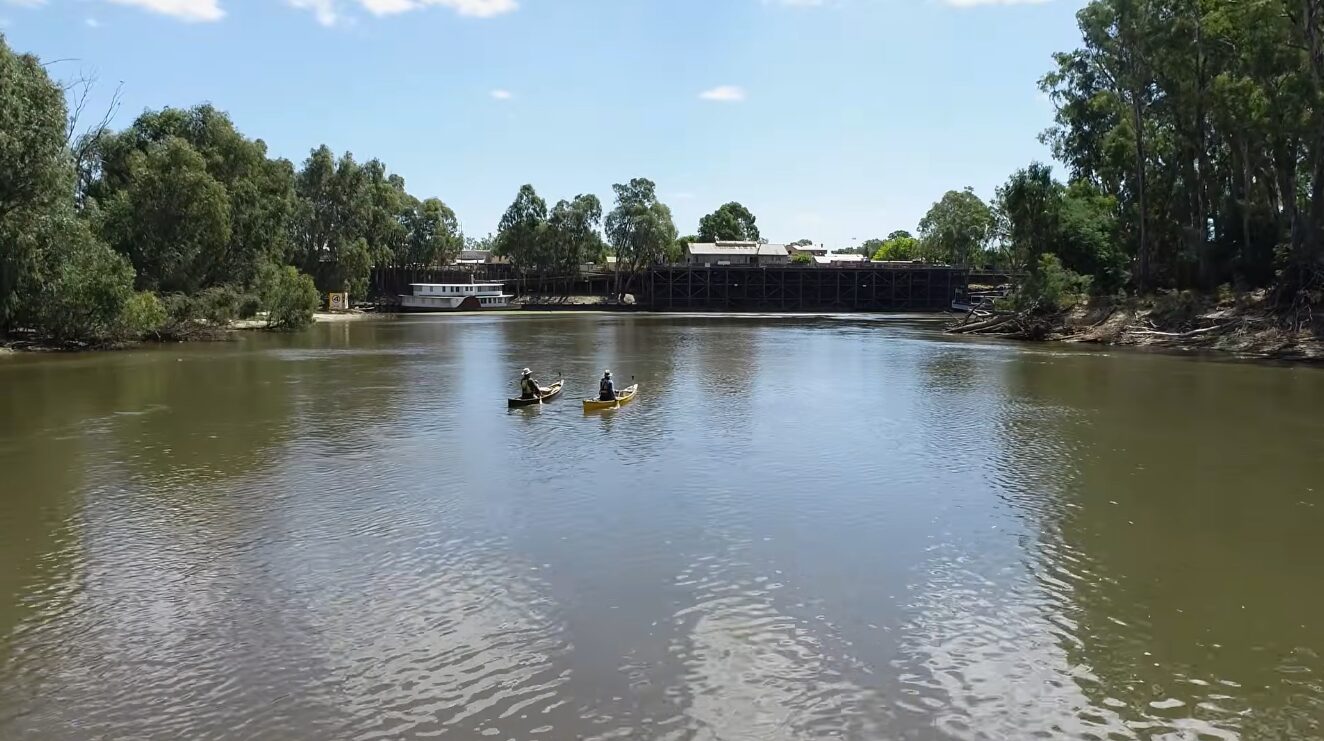
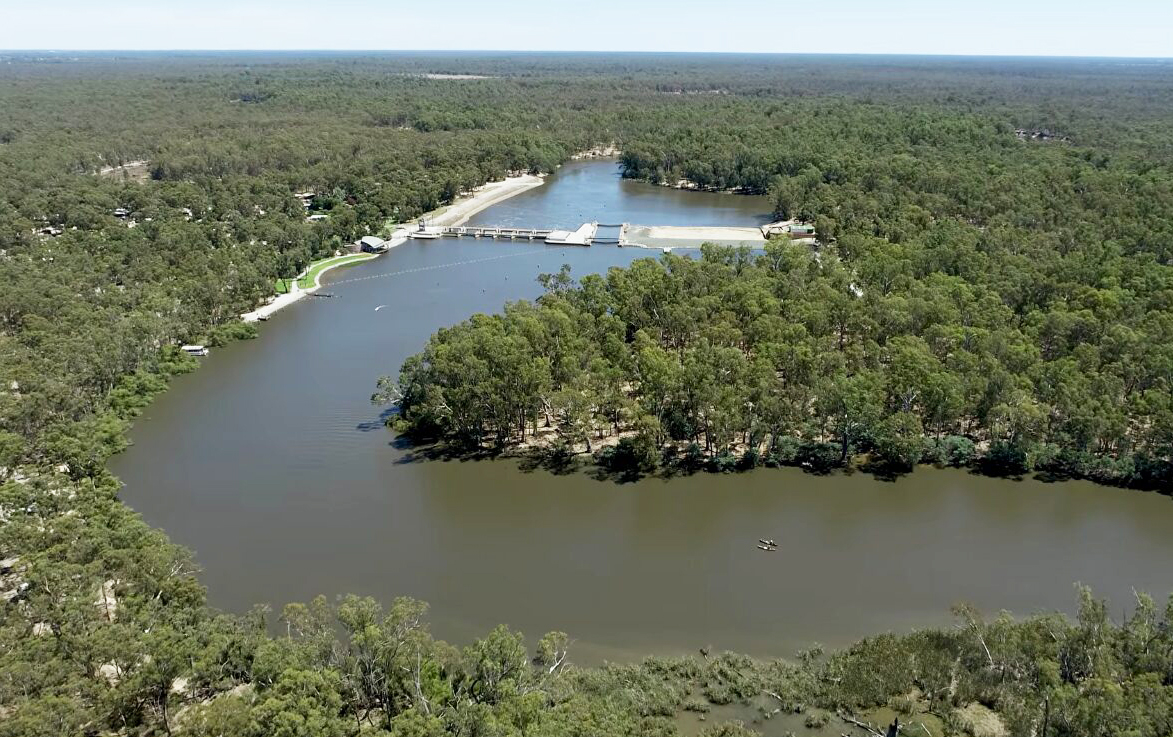
Miles and Ponch paddle up to Torrumbarry Weir. Photo: Screenshot
A beautiful, dying river
As they paddle along, Miles becomes increasingly aware of an odd contradiction. This “bad,” damaged, and polluted river looks, and feels, good. The damage, the changes, the consequences, are hard to see at first. But, as Miles-the-narrator explains, that doesn’t mean it’s not there.
He lays out the very limited protections on the Murray, and the “frontier-style destruction” that disregards long-term and environmental concerns in favor of short-term pleasure, profit, and convenience.
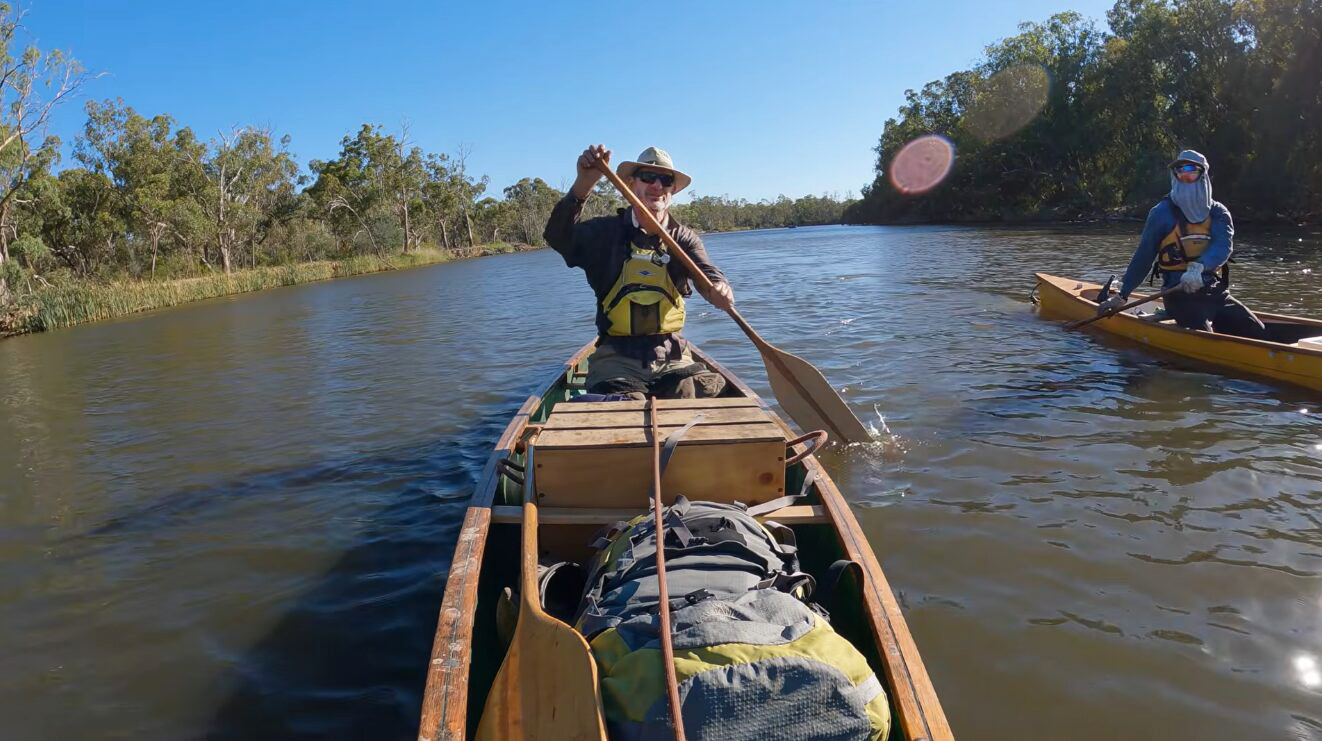
It’s a fine day on the water. But as Miles notes, they never have to look far to find discarded trash and waste. Photo: Screenshot
On day two, they split up. Miles takes out a rather comical-looking scooter, scooting inland in an experimental quest to forage for what food can be found in a bread bowl, investigating backwaters and tributaries along the way. Ponch, meanwhile, leans into his old role as an outdoor educator, paddling along at a relaxed pace and laying out the basics of river health.
Ponch stresses an understanding of the river as a complex, connected system. A river isn’t just the main watercourse, but the entire floodplain, the backwaters, and the surrounding environmental conditions. Meanwhile, after scootering 20 kilometers, Beau gets a stroke of luck and finds a small winery that harvests rainwater, rather than river water.
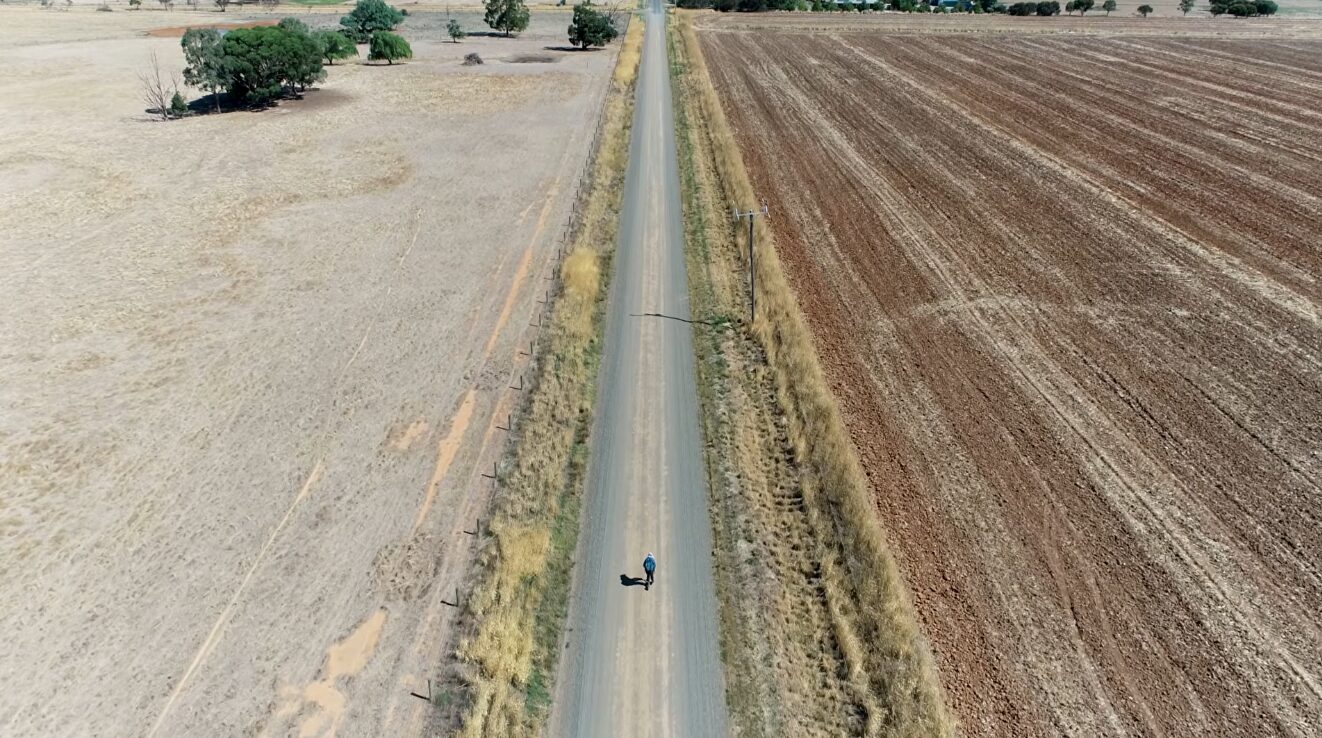
Miles scootering between fields watered with, and at the expense of, the Murray. Photo: Screenshot
The takeaway
“I might be the first person in history to choose a scooter over a canoe,” Miles reflects, still trying to find his way back to the river, “and I regret it.” Still, he says, after years of guiding on the Murray, he almost learned more about it from its increasingly disconnected floodplain than from the river itself.
They reunite for the last leg. As the pair paddle onward, Miles struggles to put a neat cap on the adventure. He voices confusion and even guilt for having fun on a river that was dying, in part because of people wanting to enjoy it. At the mouth of the river, they pass the dredge, which has to be on constantly; the river is no longer powerful enough to reach the sea unaided.
“This bad river provided a good experience,” Miles sums up, deciding to end on a positive note. “And for a human in search of meaning, that’s a start.”