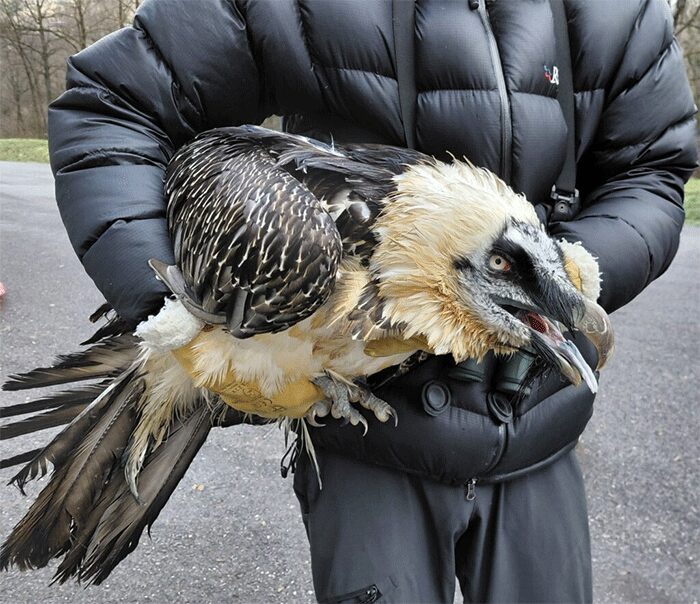
The population of bearded vultures is so small that even a single bird is vital. One such individual was discovered last October, weak and grounded by a roadside in Haute-Savoie, France, just south of Geneva. It was taken to a veterinary clinic that works with a nearby bearded vulture captive-breeding center. During its check-up, workers checked the band on his leg.
The band provided quite the surprise. The sickly vulture was well known in local bearded vulture lore. Named Balthazar, he was released into the wild in 1988. Now 37 years old, he’s the world’s oldest bearded vulture outside of captivity.
The bearded vulture is a massive bird of prey which nests in mountainous crags across much of Eurasia and Eastern Africa, feeding primarily on bones. Gypaetus barbatus is also in danger from habitat encroachment, poison, power lines, and poaching. After going locally extinct, conservationists reintroduced it into the Alps in the late 1980s. Since then, they have made a fragile comeback.
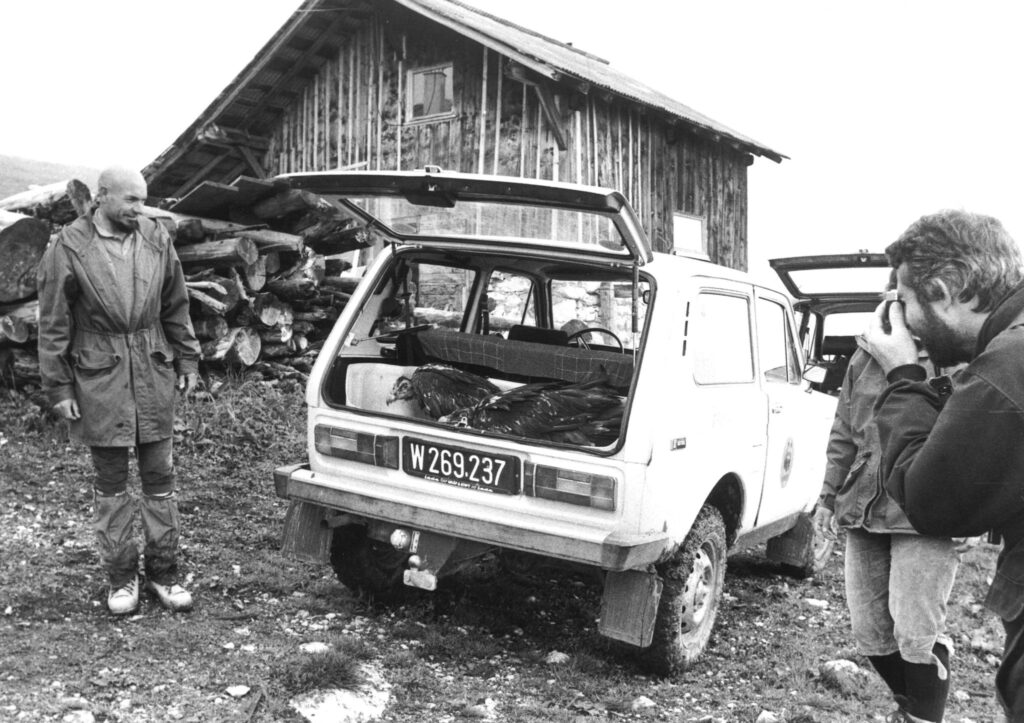
Conservation workers release Balthazar into the wild in 1988. Photo: Vulture Conservation Foundation
A short Balthazar biography
Balthazar hatched on Feb. 17, 1988, in a Dutch breeding center. Workers released him and two other juveniles later that year. The Vulture Conservation Foundation (VCF) continued to track Balthazar, which became the first reintroduced male to successfully reproduce in 1997, when he raised his first chick. He went on to father 14 more chicks. Currently, he has over 30 descendants.
Then in 2016, he disappeared. VCF assumed that Balthazar had died until he appeared again in Haute-Savoie in late 2025.
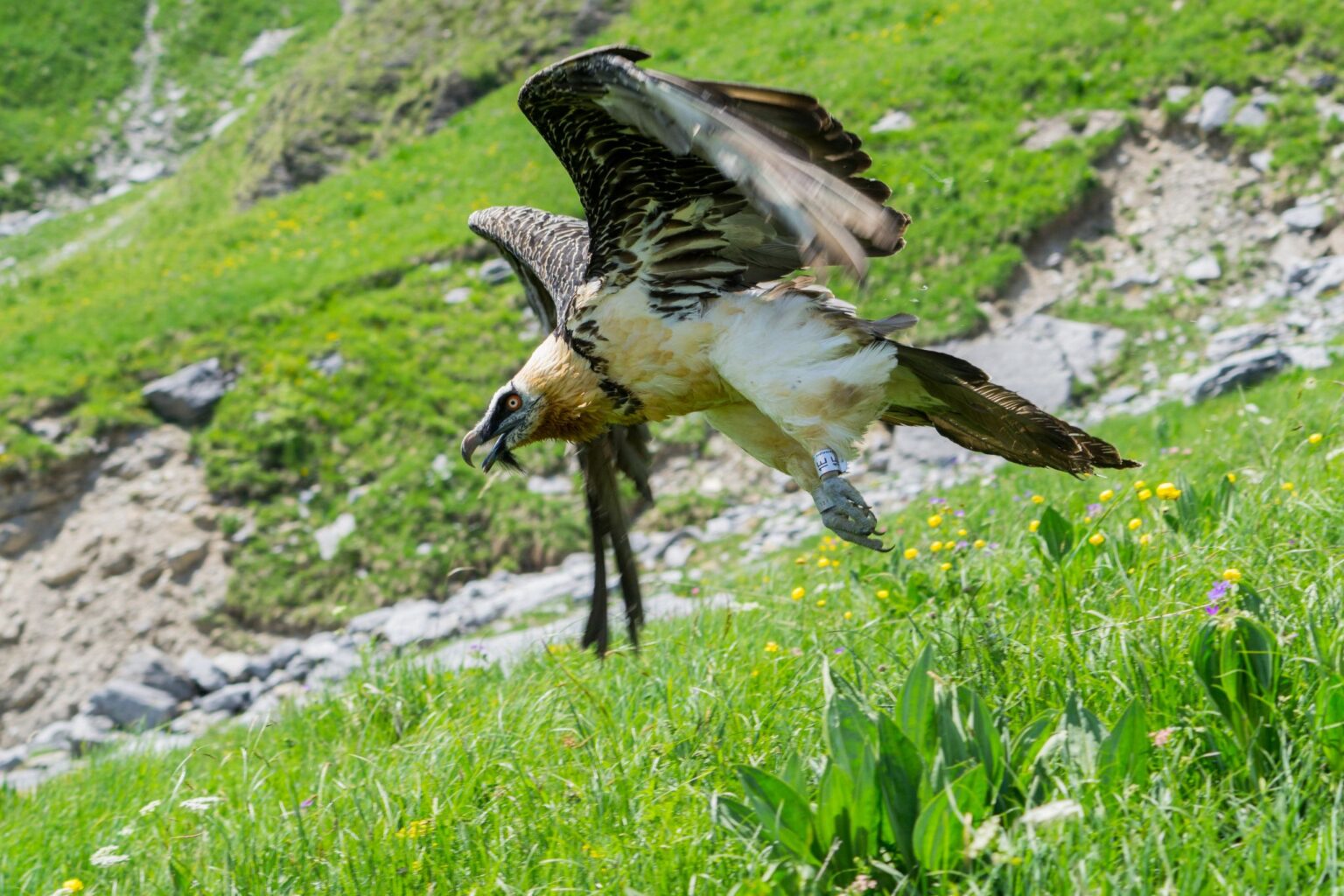
Photo: Vulture Conservation Foundation
Wear and tear
The years have not been entirely kind to old Balthazar. He was underweight and suffering from arthritis when vets examined him, but an X-ray scan revealed a deeper problem. A lead pellet was embedded in his right foot. Harming a protected bearded vulture is a criminal offense, but clearly that didn’t stop someone from shooting Balthazar. Vultures across the world suffer from a bad reputation, making conservation difficult.
The wound wasn’t recent, but embedded lead pellets can leech lead into an animal’s system, sickening them over time. Conservation experts monitored his condition over the next few days, as he gained weight and his condition improved. They released Balthazar back into the wild on November 6, with a GPS tag attached.
Over the following days, however, the tag showed he was staying at low elevations and exhibited odd behavior, roosting in a spruce tree and not making many flights. On November 27, they recaptured Balthazar. He will live out the rest of his life in captivity, where bearded vultures can live up to 50 years. Here’s to another 13 years of Balthazar.