Dreamers hoped that building a Trans-Saharan Railway would return France to prosperity and glory. But realists knew the desert could not be tamed and that this ambitious colonial project was doomed to fail spectacularly.
Early in the 19th century, France was a shell of its former self. It had to cede all the territory Napoleon had seized. It gave Britain St. Lucia, Tobago, Mauritius, and the Seychelles and had to pay 700 million francs in compensation. Its influence diminished, as did the national pride.
At the same time, European powers were expanding their territories and cashing in on conquered lands, particularly those they acquired in the “scramble for Africa.” France was not far behind. Its most prized possession was Algeria, which was conquered in 1830. But instead of following the trend of establishing colonies on the coast, France turned to the continent’s interior.
The how
Most Europeans avoided the Sahara, but the French saw immense potential in the desert. They attempted to conquer the Sahara in the 1840s, but resistance from local tribes, compounded with the brutality of the desert itself, was too much.
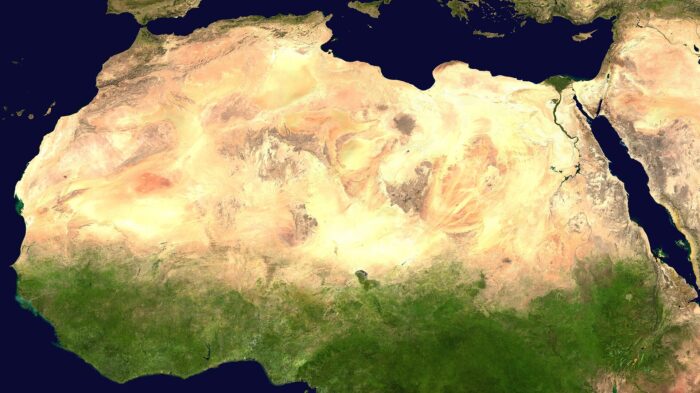
The Sahara from space. Photo: NASA
In the Sahara, the French saw opportunities for mining iron ore, salt, and phosphates. Some even believed that they could irrigate the desert. But how? First, they need a way to cross it and connect all its points. A railway was the answer. Civil engineers Alphonse Duponchel and Paul Soleillet pushed the idea in the 1870s, and a surveying expedition was soon underway.
A railway from Algeria to Sudan and beyond would give France commercial access to untouched regions. In an article in Scribner’s Magazine, writer Napoleon Ney identified four key areas that the French sought to conquer: the oases, the desert itself, the gumtree belt, and anywhere with “running water and tropical vegetation.”
The French were also competing for West Africa and its gold deposits. A railway would enable France to extend its reach into Africa further than any colonial power at the time.
This was not without obvious risks. Several groups resisted French occupation, including the nomadic Tuareg. They lived in the Sahara, controlled trade and caravan routes, and did not take kindly to outsiders.
Enter Paul Flatters
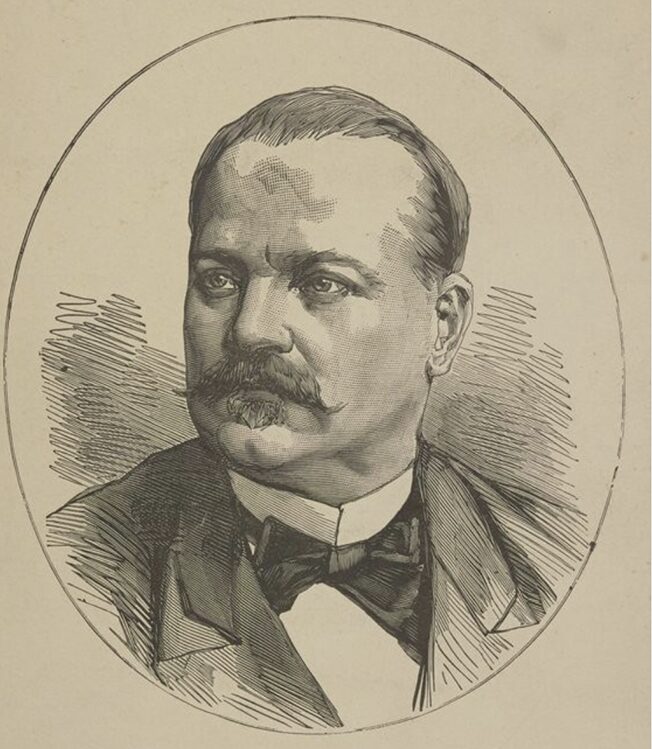
Paul Flatters. Photo: Wikipedia
Paul Flatters was a French soldier and administrator who had spent most of his military career in Algeria. He was eager to establish himself as the one who could make this railway dream come true. He thought outside the box and was very frank with his superiors. For example, he suggested that France should allow some degree of slavery so it could penetrate the desert more easily. France had abolished slavery by this time, but it was still practiced in parts of Africa.
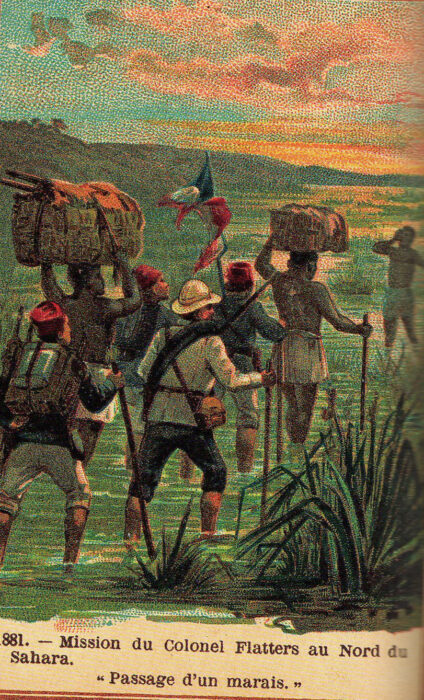
Painting of the Flatters Expedition. Photo: Sammelbild von Chocolat Lombart
Flatters also wanted to serve as the principal intermediary between the French and the Tuareg. He researched their ways, made an effort to learn Arabic, and felt he understood them. However, his enthusiasm was overshadowed by his older age of 48 and a predisposition to moodiness.
The expedition
Previously, a French explorer named Henri Duveyrier, who went on a life-changing expedition to the northern Sahara as a teenager, had thoroughly documented the Tuareg. This later launched his career as an adviser to the French government on all matters African. He proposed peaceful relations between France and Africa, rather than a conqueror/conquered relationship.
Duveyrier fully supported the idea of a railway and gave the go-ahead for a surveying expedition. He did not believe that the Tuareg would harm the party. In his writings, he portrayed the Tuareg as cultured, tolerant, and aloof from Western affairs.
The surveying expedition was divided into three parts to examine three possible starting points for the railway’s construction: Oran, Algiers, and Constantine. In all three, the explorers had to find water sources, get past the Tuareg, survey the land, and plot routes.
Flatters’ expedition consisted of himself, French and Algerian military officers, engineers and surveyors, Arab volunteers, camel drivers, and native guides. They left the city of Ouragla on December 4, 1880, and spent the next three months at work. All was well until they reached Bir-al-Garama, a well in southern Algeria guarded by the Tuareg.
The Tuareg ambushed the party and captured and murdered several members of the expedition, including Flatters. They also seized the intruders’ camels. The remaining explorers had few supplies left and nowhere to go.
In February 1881, as the men were increasingly desperate for food and water, some Tuareg feigned mercy and offered them a selection of milk, meat, and dates for a ridiculously high price. The men paid them and gorged on the food until they started to feel violently ill. The Tuareg had secretly laced their food with poison from a local plant.
Vomiting, hallucinations, and death ensued. The survivors broke off into small groups to fend for themselves, but eventually, groups began to turn against one another. Some shot others to death. Eventually, their hunger was so great that they resorted to cannibalism. In April, the bedraggled survivors made it to Ouargla.
Who was to blame?
Many blame Flatters for the expedition’s failure. According to John Strachan of Lancaster University, “In many ways, Flatters was ill-suited to the role of colonial martyr. Comparatively old and jaded by years of mundane administrative service, Flatters has been described variously as unsuited to military command, ambitious, obstinate, naive, and grossly over-optimistic.”
In essence, he was an idealist who underestimated the desert and the people who called it home. When word of the expedition’s demise spread, the French were at firsst angry for revenge, but this rage did not last long. Douglas Porch, author of The Conquest of the Sahara, explains that “the effect of the Flatters massacre on the French was perfectly predictable. After a brief period of incredulity…most of them soon forgot the tragic episode.” They soon gave up their colonial dream.
When Henri Duveyrier heard of the failure of the Flatters expedition, his ego could not take it. The public blamed him for presenting the Tuareg as merely “medieval paladins.” In further despair after the premature passing of his fiancée, he committed suicide in 1892.
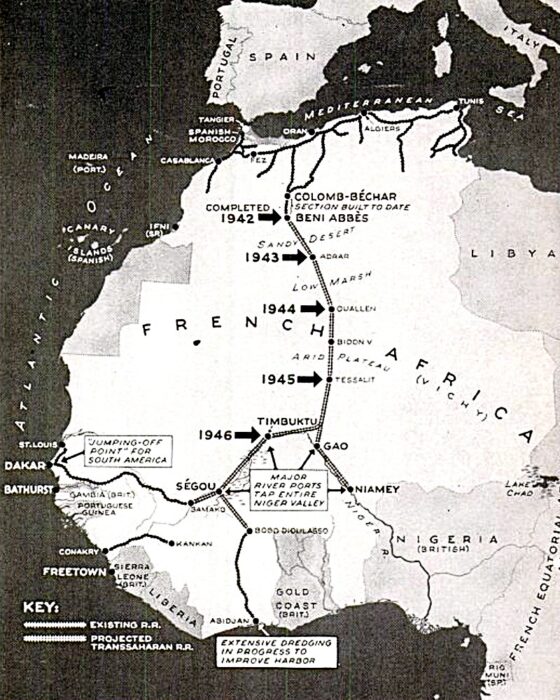
Proposed map of the railway in 1942. Photo: Unknown
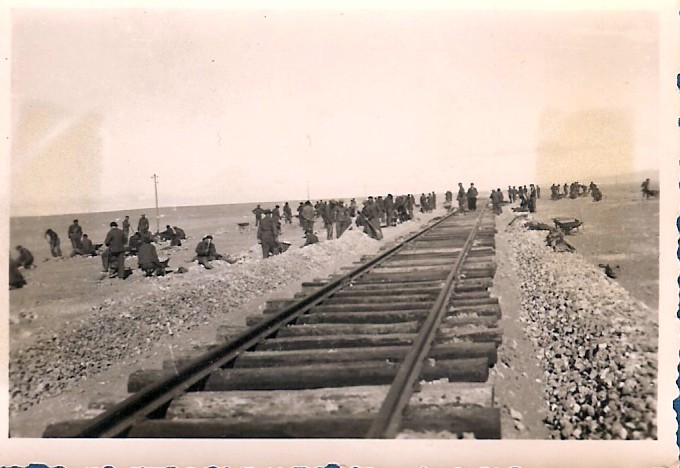
In the end, the Trans-Saharan Railway never came into fruition. The idea experienced a brief revival in Vichy France during World War II, and some sections of track, built by slave labor, were even laid down. But the workers became sick, the money dried up, and the tracks were left to rust in the sand.