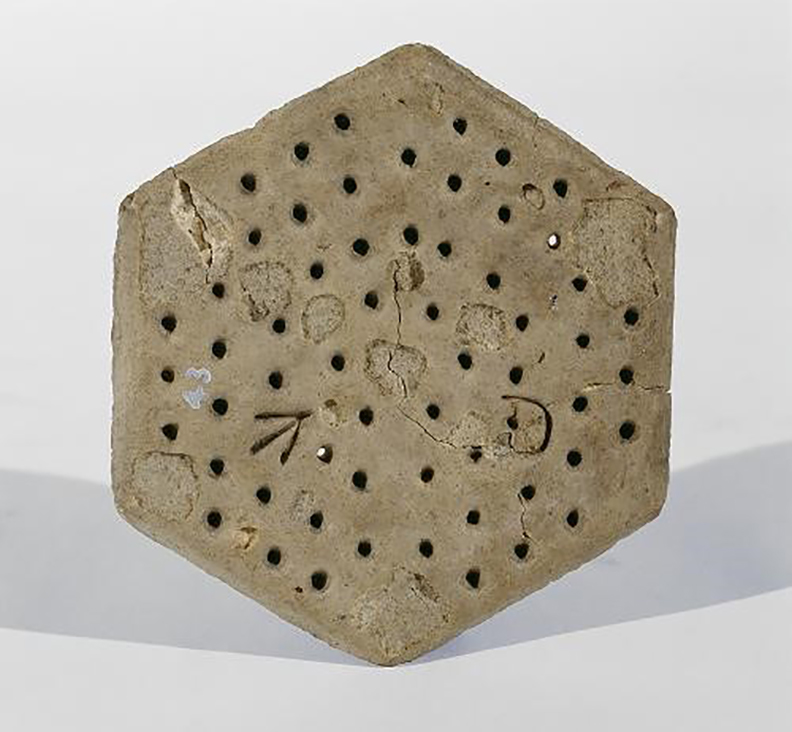
In the Royal Geographical Society’s collection sits a remarkable survivor from an Arctic expedition. Hundreds of explorers perished, but this small, fragile item has survived against all odds. It is a biscuit.
Here is its backstory: 1848 marked the beginning of Franklin mania in the UK. Sir John Franklin had left three years earlier to seek the Northwest Passage. He and his 129 men had not been heard from since. The search for the famed explorer would persist for decades, but in 1848, the first vessels set sail for the Arctic to look for him.
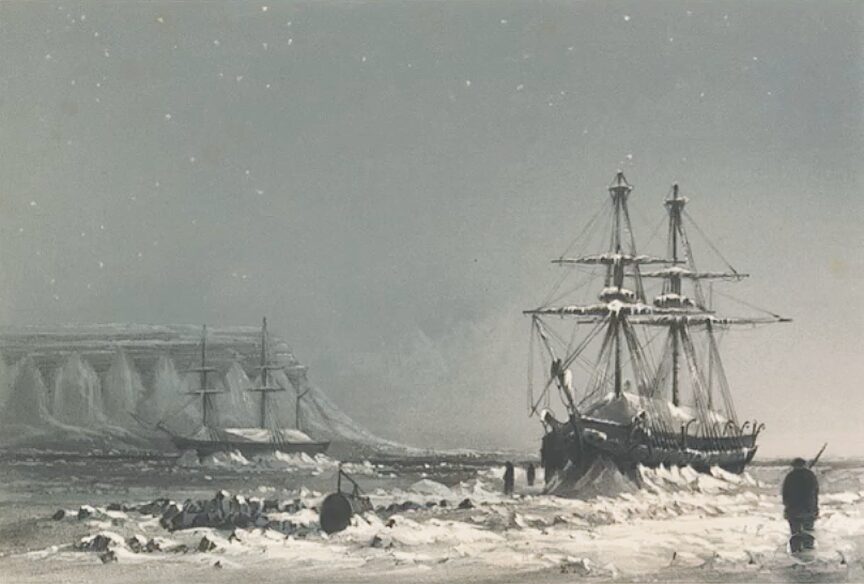
Port Leopold in winter. Photo: RGS
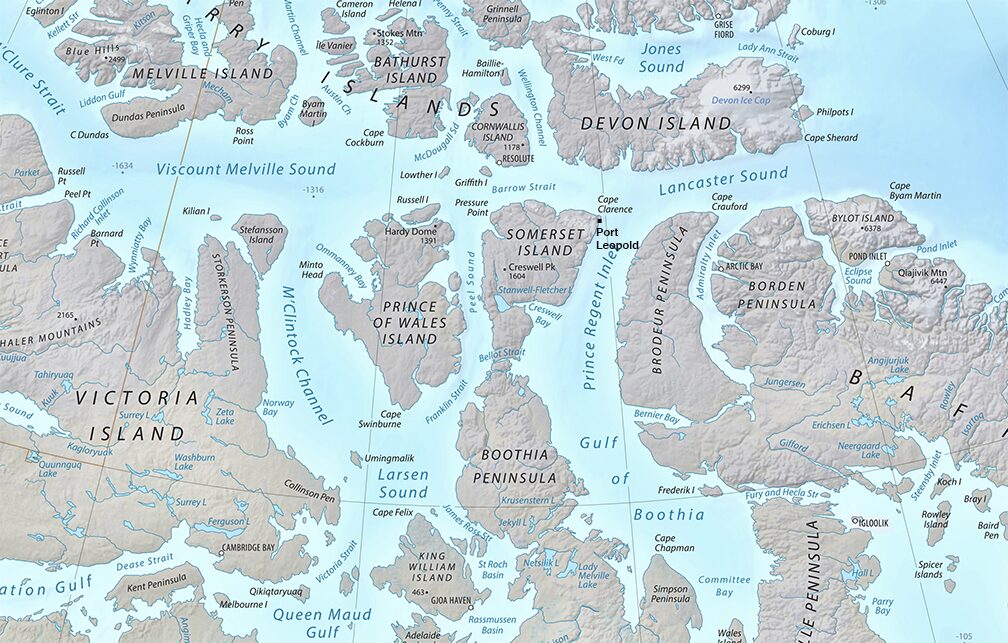
Port Leopold lay in a sheltered crook of land at the northeast corner of Somerset Island. Although it wasn’t known at the time, John Franklin and his men had become stuck in the ice near Cape Felix on King William Island. Ultimately, they all perished.
Among them were HMS Enterprise and HMS Investigator under veteran James Clark Ross, who had discovered the North Magnetic Pole some 18 years earlier. Heavy sea ice prevented them from proceeding far west. They overwintered at the northeast corner of Somerset Island, at a place they called Port Leopold. Here, they built a cabin in which they left abundant supplies, in case Franklin should make his way there and need food. Among the supplies was a popular, near-indestructible naval cracker called hardtack.
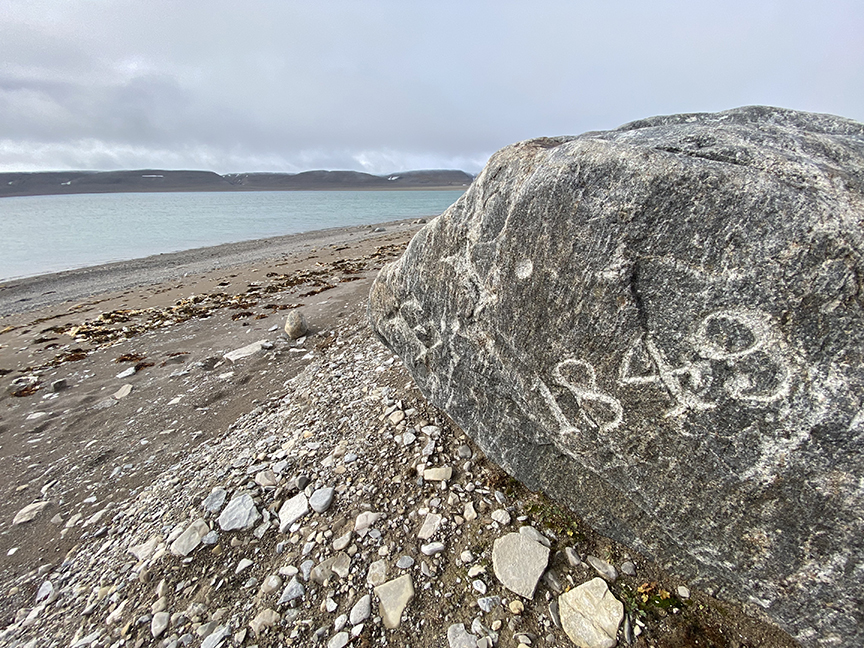
“E. I. 1849” — Enterprise/Investigator: A rock carved by one of James Clark Ross’s men during their 1848-9 overwintering at Port Leopold. Photo: Jerry Kobalenko
Hard as a rock
Baked four times to eliminate all moisture, it lasted indefinitely, as long as it did not get wet. It was as hard as a rock, and many men dipped it in liquid to soften it or broke it into crumbs before trying to eat it.
The biscuit, embossed with the broad arrow symbol indicating Royal Navy property, sat in a barrel at Port Leopold for 24 years. Then in 1873, Albert Hastings Markham found it on a whaling expedition and brought it back to England. Markham was a long-time naval officer, but this was his first Arctic deployment. Two years later, he made Arctic history when he achieved a new Farthest North as George Nares’s second-in-command on the British Arctic Expedition.
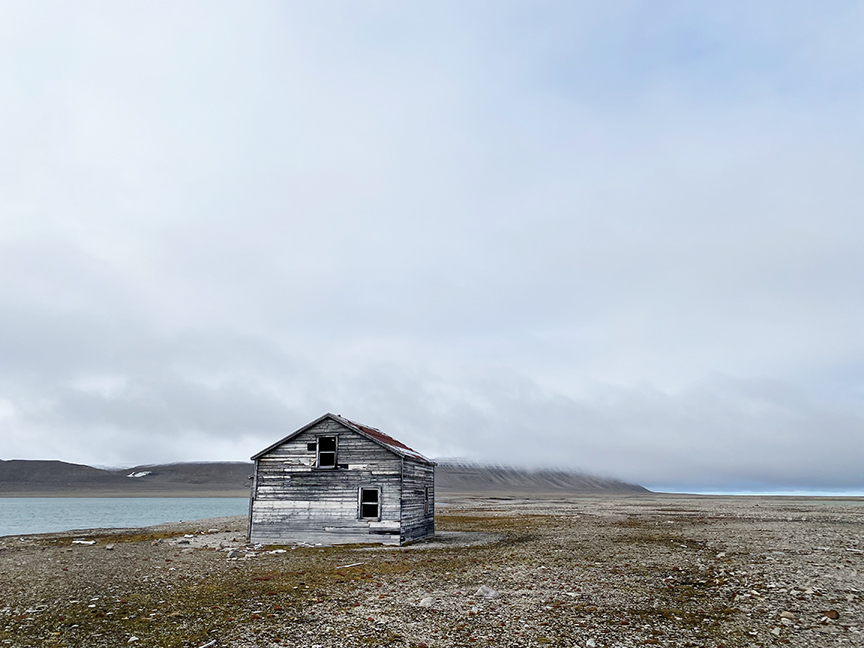
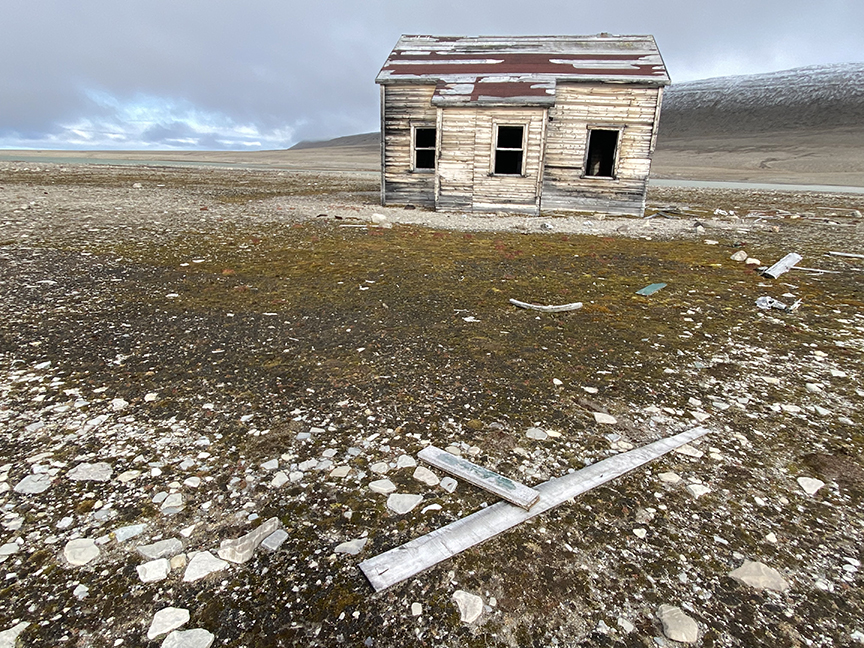
Both: The original James Clark Ross hut where they left the biscuit and other stores is gone now, but the long-abandoned Hudson Bay Company post remains in roughly the same spot. The “E.I. 1849” rock is just down on the beach a few meters away. Photos: Jerry Kobalenko
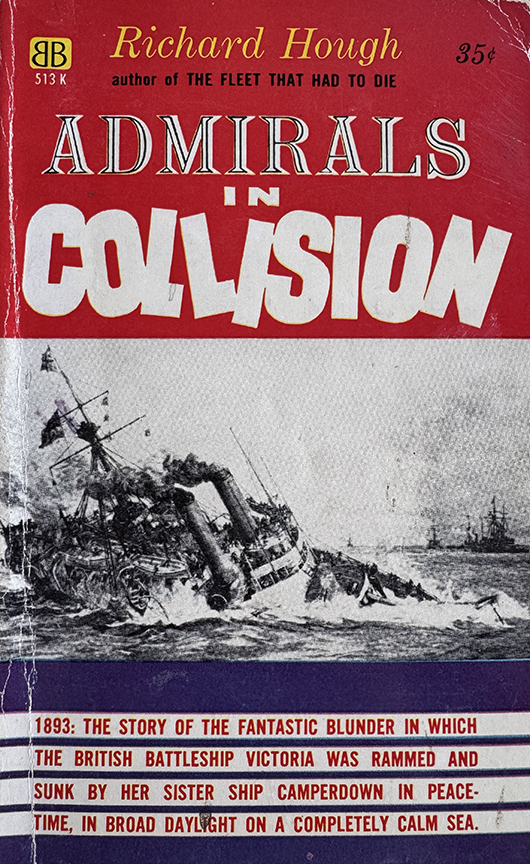
Markham weathered a famous scandal in his later years when, despite his misgivings, he followed his superior’s orders and allowed two British ships to perform a showy maneuver. They crashed into each other with great loss of life — a tragedy later covered in detail in the 1959 book, Admirals in Collision. Markham escaped a court-martial and eventually became a Vice-Admiral himself.
Meanwhile, the biscuit that Markham brought back is among 1,500 artifacts in the Royal Geographical Society’s collection. Other prized items include Charles Darwin’s sextant, David Livingstone’s compass, and the right climbing boot of George Mallory, who perished on Everest in 1924.
Hardtack history
Hardtack was standard fare for centuries on long sea voyages. Sometimes called pilot biscuits, these crackers still exist, though they aren’t as common as they once were. Because of their longevity, they used to be widely available in Arctic grocery stores. Bush pilots carried them in their emergency kits; they were also common in the sparse larders of Arctic hunting cabins.
The main North American manufacturer, Nabisco, ceased production of them in 2008, despite protests from aficionados. A small company in St John’s, Newfoundland, Canada, continues to make them, while in the U.S., Interbake Foods of Richmond, Virginia, sells a version called Sailor Boy. Almost all of it goes to Alaska.
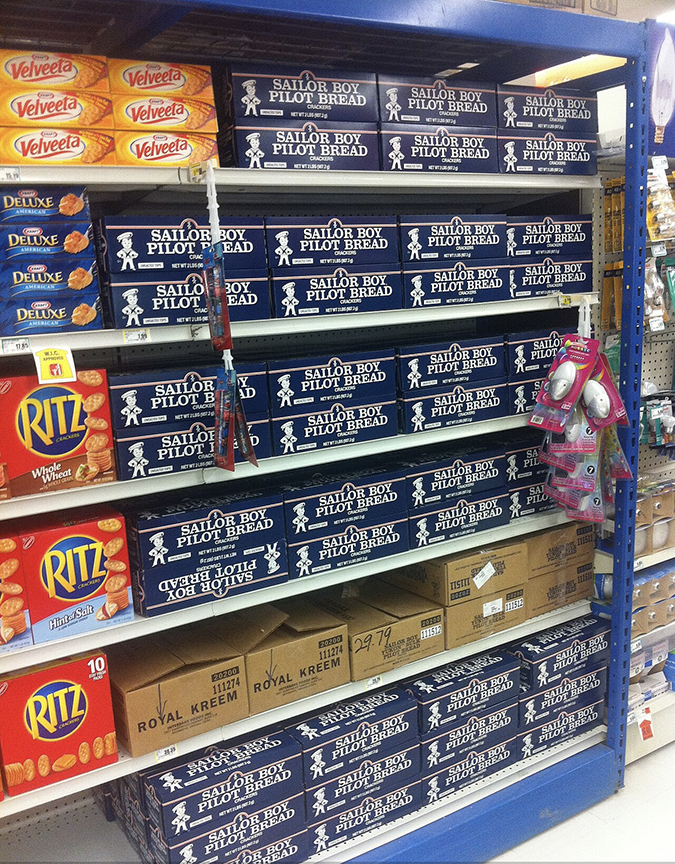
Pilot biscuits in an Alaskan grocery store, along with other near-immortal foodstuffs. Photo: Wikipedia
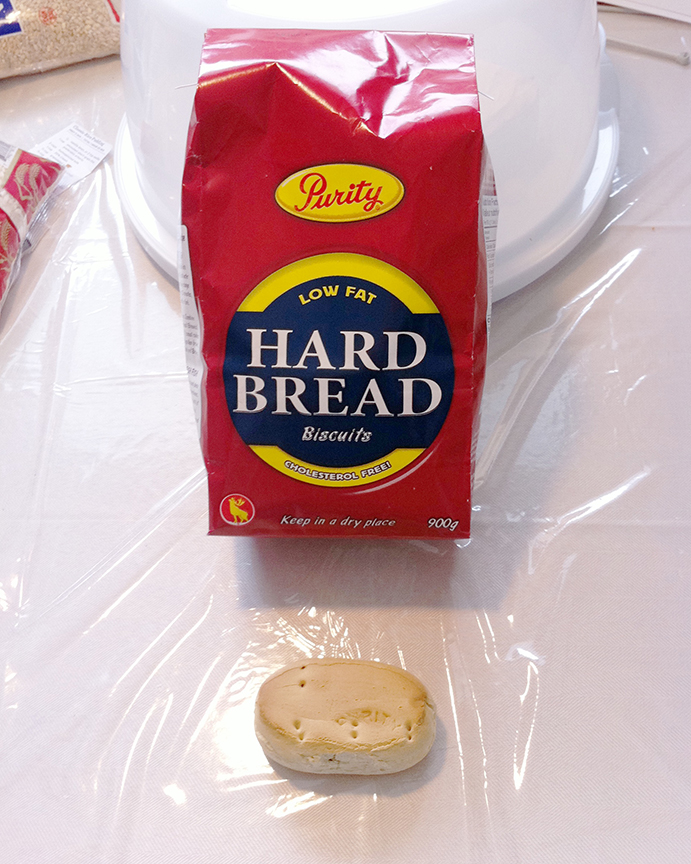
Pilot biscuits are still made in Newfoundland, Canada.
Strangely, the biscuit in the Royal Geographical Society is not the world’s most famous pilot biscuit. That would probably be the one that survived the 1911 sinking of the Titanic. Part of the emergency rations on one of the lifeboats, it sold at auction in 2015 for $23,000.
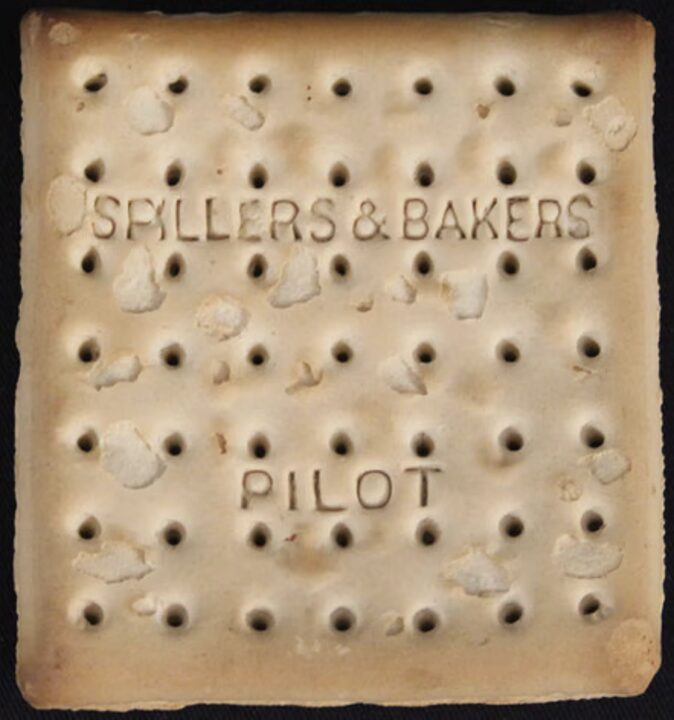
The $23,000 cracker from the Titanic. Photo: Henry Aldridge & Son Auctioneers