In 1989, two climbers set out on a highly difficult route on Dhaulagiri I in alpine style. What unfolded was a harrowing ordeal, a fateful decision, tragedy, extraordinary survival, and a father’s decades-long search. Among the many dramatic accounts of Himalayan mountaineering, few are so deeply moving as the 1989 expedition on the West Face of Dhaulagiri I.
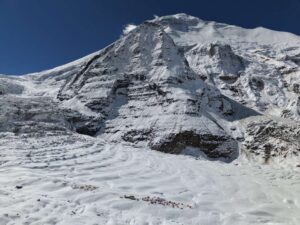
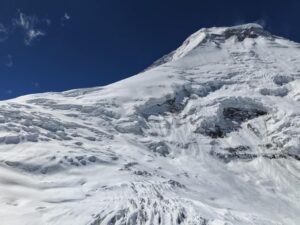
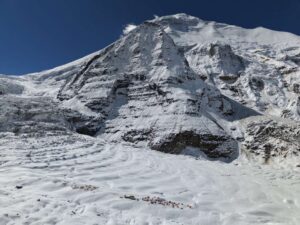
The West Face of 8,167m Dhaulagiri I rises 4,000-4,300m from base to summit and is one of the largest unbroken walls in the Himalaya, indeed, in the world.
The first ascent of the West Face
In the autumn of 1984, the Czechoslovakian Mountaineering Dhaulagiri Expedition, led by Jiri Novak, targeted this unclimbed West Face of Dhaulagiri I, without Sherpa support or supplemental oxygen.
The climbers arrived at Base Camp in late August, and despite bad weather, methodically pushed upward. By early October, they had reached the Northwest Ridge at 7,600m.
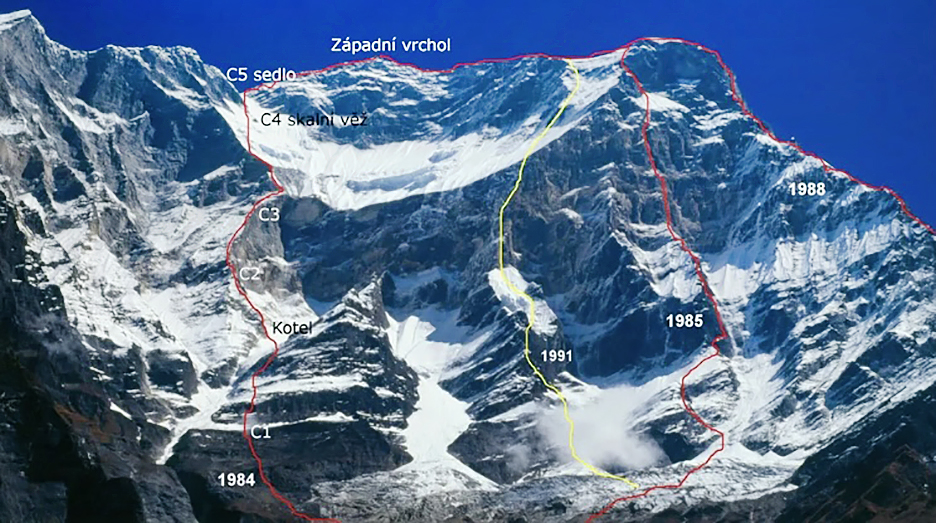
The 1984 Czechoslovakian route on the West Face of Dhaulagiri, on the left. Photo: Animal de Ruta
Bad weather forced Novak’s team to retreat from Camp 5 four times. Finally, three members, Jan Simon, Karel Jakes, and Jaromir Stejskal, reached Camp 5 in good conditions. On the morning of October 23, all three summited. Tragically, Simon, 25, disappeared during the descent. Tracks in the snow suggest that he fatally fell down the West Face.
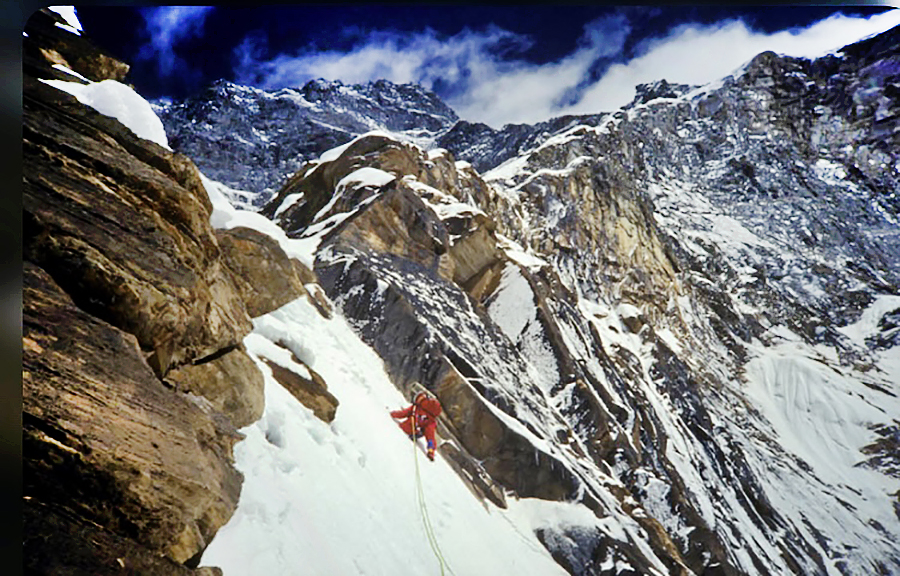
The climb’s technical crux was between Camp 1 and Camp 4. Higher up was hardly easier: Camp 5 to the bivouac site featured 60˚ ice, steep snow, and the occasional overhanging rock. Furthermore, the section between Camps 2 and 3 featured rock of UIAA grade IV, and steep ice slopes reaching 80º. The team faced severe objective hazards — most notably, a dangerous 200m traverse through a snow couloir between Camp 1 and Camp 2, and a volatile serac zone below Camp 4 that frequently discharged ice onto the route. Nothing about the climb sounded easy.
Aiming to repeat, but in alpine style
In the autumn of 1989, Francesc Dalmases, 31, of Andorra, and Jordi Canyameres, 25, of Spain, wanted to repeat the 1984 pioneering Czechoslovak route, but in alpine style, without established camps or fixed ropes. Like the original expedition, they also wanted to go without Sherpa support or supplemental oxygen.
Dalmases was an experienced climber and a poet. He had climbed the North Face of the Eiger three times, ascended over 20 6,000m peaks in the Peruvian Andes, and summited Saipal in the far western Himalaya in 1985. He lived in Andorra working as a ski patroller.
Canyameres was a high-altitude guide, photographer, and close friend of Dalmases. Both shared the same mountaineering philosophy: go alpine style and leave no trace on the mountain.
The small team arrived at the Italian Base Camp (located at 3,750m) on August 27, after a difficult approach via the Myagdi Khola valley. Dalmases and Canyameres climbed several nearby 6,000m peaks for acclimatization during two weeks, and spent several nights sleeping close to their summits.
Once they finished acclimatizing, they dismantled the main base camp and moved it to the base of the north side. They planned their descent via the normal (Northeast Ridge) route.
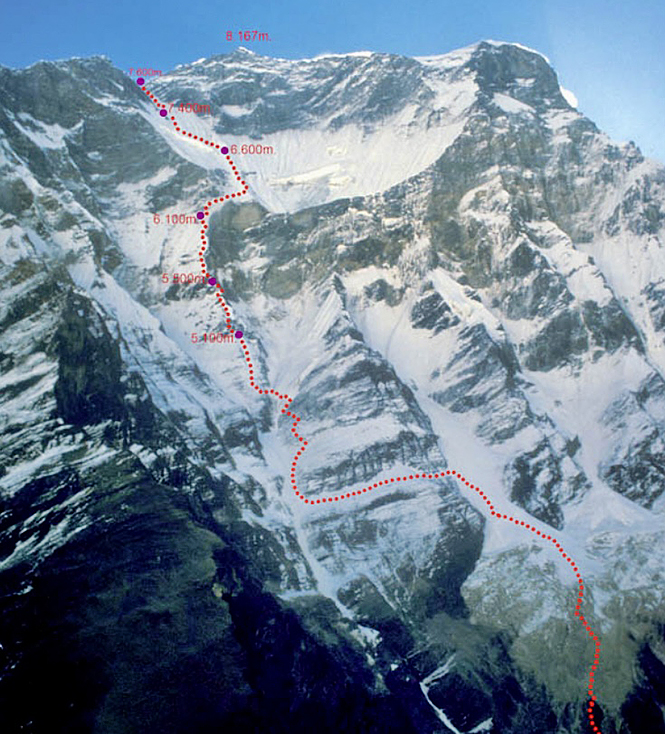
The West Face of Dhaulagiri and the route marked in red. Photo: 1989 Expedition route/Desnivel
Starting the ascent
On October 3, the duo started up via the 1984 Czechoslovakian route in capsule style — a form of alpine climbing in which they dismantled their camp each day and carried everything in their backpacks as they climbed higher. Each afternoon, they pitched their tent, melted snow, and rested in their sleeping bags.
Thanks to Desnivel, which has written extensively about this expedition and interviewed Jordi Canyameres in 2025, we know in detail what happened during the ascent.
In the first days, the two climbers progressed on mixed terrain of rock, ice, and snow. They had to face constant technical difficulties that started to drain their energy, as logical, on the exposed terrain. However, everything was going smoothly, and they felt positive.
On the fourth day, Dalmases and Canyameres reached 6,200m, where they had to undertake a risky, avalanche-prone traverse. In their next camp, at 6,600m, the two men experienced a particularly harsh night, with temperatures dropping to -40ºC.
On days 5 and 6, they faced snow slopes, a rocky pyramid at 7,400m, and a 200m couloir with soft snow and the risk of rockfall. Finally, they successfully climbed the face and reached the Northwest Ridge, between 7,600 and 7,650m. Dalmases and Canyameres were exhausted but satisfied after climbing more than 4,300m of this immense face.
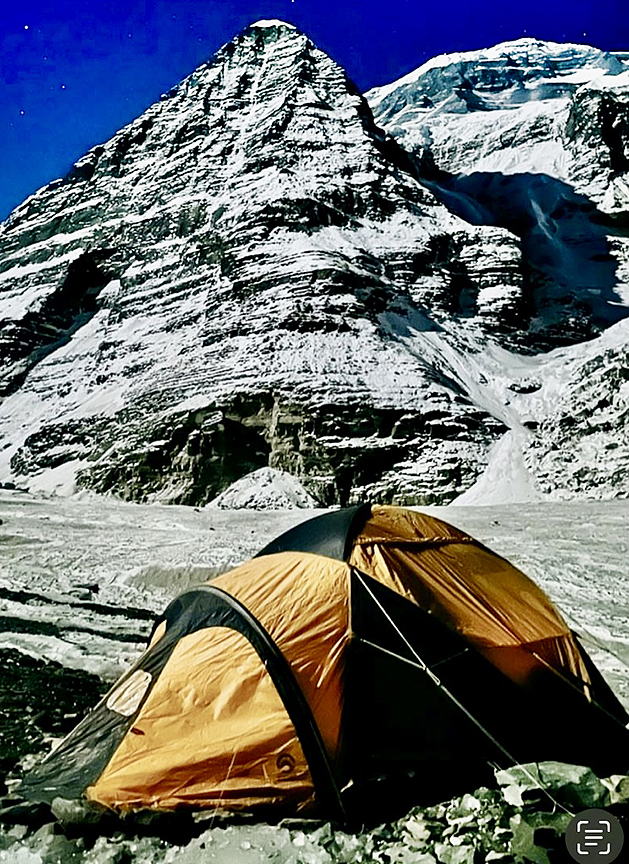
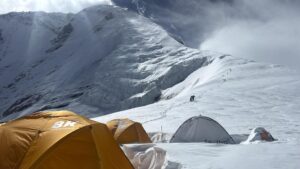
Dhaulagiri I Base Camp. Photo: Herve Barmasse
Frigid nights
The night on the col, October 8-9, was the turning point. Winter arrived brutally early, and temperatures plummeted to -40º. The weather didn’t improve during the day, either. Other expeditions on the Northeast Ridge route had to abandon their attempts, but Dalmases and Canyameres, who were isolated on that side of the mountain, were unaware of this.
After pitching their tent on the ice, their toes began to turn white. Dalmases already had minor frostbite, and Canyameres was more severely affected. They didn’t have symptoms of altitude sickness, thanks to their good acclimatization, but the cold was so bad that the climbers shivered constantly.
The next night was even worse. At dawn, the duo tried to advance toward the summit. They had only 500 vertical meters left to go, but they could barely progress 80-100m. The extreme cold, the numbness in their limbs, and the thin air forced them back to the col.
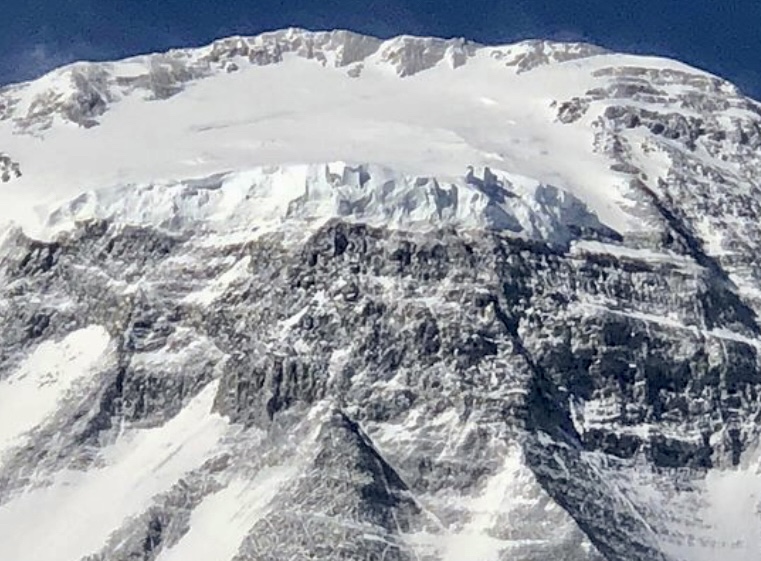
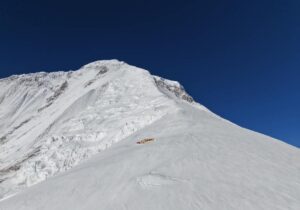
Dhaulagiri I North Face from the French col. Photo: TripAdvisor
A critical decision
A crucial question arose. They knew they needed to descend to save their lives. Canyameres had to lose altitude quickly to combat the cold, and he found it more logical to descend directly down the North Face, traversing it diagonally. Dalmases said that it would be safer to summit and then descend by the normal route, as it was better known and equipped with fixed ropes and camps.
Neither imposed their will, because they deeply respected each other. They decided that each would go in his preferred way. They divided the equipment for the separate descent. Canyameres kept the small, technical tent, while Dalmases had the lighter bivouac sack.
On October 10, Dalmases set off for the ridge. His silhouette faded as he ascended. Canyameres never saw him again.
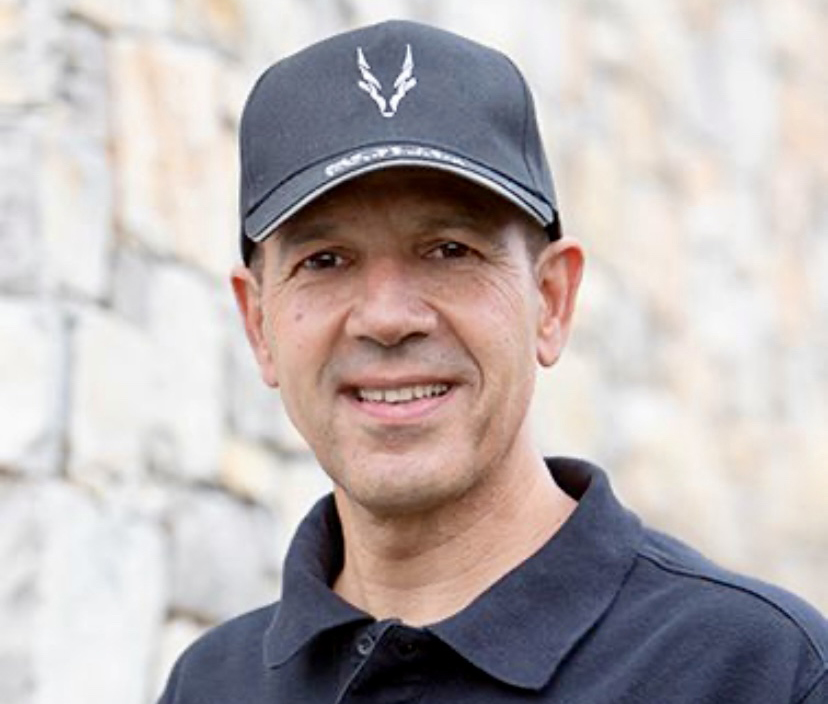
Jordi Canyameres. Photo: soulofexplorer.com
A hellish descent
Canyameres’ descent was five days of absolute hell. The snow was a nightmare of breakable crust that collapsed under every step. He slipped on mixed ice and rock, sliding meters toward the edge. Navigating through thick fog, he dodged crevasses and seracs with almost no visibility. One night, a powder avalanche slammed into his tent. Somehow, he managed to keep himself from being swept away.
Exhaustion made him hallucinate. He also had severe frostbite. Despite all odds, he survived by strictly rationing his last gas canister to melt snow for drinking water.
Dalmases’ father, Joan Dalmases, dedicated three decades of his life to searching for his son’s body. He contacted many climbers who did expeditions on Dhaulagiri, begging them to try to find his son’s remains and his notebook, which presumably contained Dalmases’s final thoughts. His father was convinced that he had reached the summit. (We recommend reading the 2019 La Vanguardia article featuring Joan Dalmases’ own words, by Rosa M. Bosch.)
The mystery continues
In the spring of 1995, during a Swiss German-Austrian-Mexican Dhaulagiri I expedition led by Norbert Joos, German summiter Albrecht Hammann died near the summit during the descent. Most summiters coming via the Northeast Ridge could see his body, lying on its back.
”The father of a Spanish climber, [Francesc] Dalmases, came to believe that this body was that of his son,” wrote Elizabeth Hawley in The Himalayan Database. “The father, Joan Dalmases, appealed in the spring of 2007 to climbers that season to check various details to identify the body.”
According to another note, Inaki Ochoa de Olza summited Dhaulagiri I in April 2007 and was one of the climbers whom Dalmases’ father asked for help. Ochoa de Olza said that the body was likely Hammann’s, because the kind of crampons attached to its feet didn’t exist in 1989.
In 2007, Italian climber Mariarosa Morotti said that she saw two bodies near the summit of Dhaulagiri I. One was at a small col on the ridge that leads eastward to the top. Morotti believed that the body might belong to Dalmases. According to her, the other body, slightly below the col, was perhaps that of Hammann, but nothing definite could be confirmed.
Dalmases’ father was never able to fully close the circle. Even so, he always defended the decisions that his son and Canyameres had made.
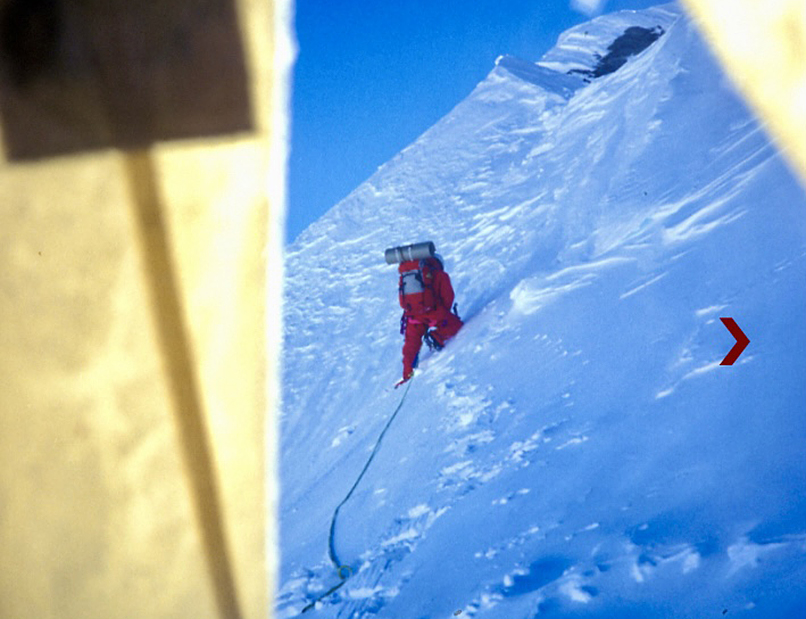
The last photo of Francesc Dalmases as he leaves toward the summit, taken by Jordi Canyameres on October 10, 1989. Photo: Jordi Canyemeres via feec.cat