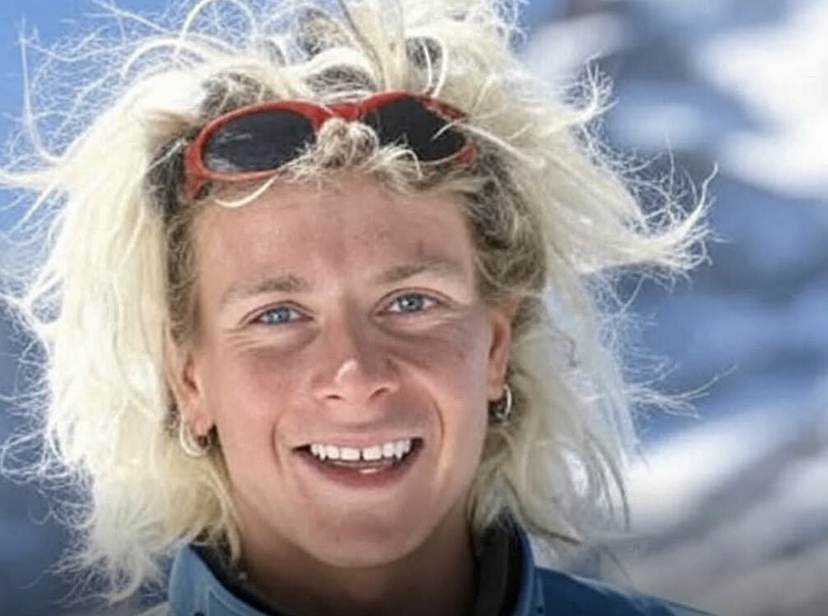
Today, extreme snowboarder Marco Siffredi would have turned 47.
Siffredi was born on May 22, 1979, in Chamonix into a mountain-oriented family. He had an older brother, Pierre, and a sister, Valerie. His father, Philippe, worked as a mountain guide, and the family ran a campground and general store. Pierre died in an avalanche when Marco was about 18 months old.
According to family accounts detailed in Jeremy Evans’ book See You Tomorrow: The Disappearance of Snowboarder Marco Siffredi on Everest, Marco’s mother, Michelle, regularly read The Little Prince to him as a child. He never outgrew the story, identified strongly with the character, and carried a copy on expeditions, reading it in his tent at high camps. He told his mother he wanted to look like and be like the Little Prince.
Marco Siffredi started skiing at a young age and switched to snowboarding at age 16 in 1995. Growing up in the steep terrain around Mont Blanc gave him constant access to serious lines and the area’s history of bold descents. He worked at the family business to finance his expeditions.
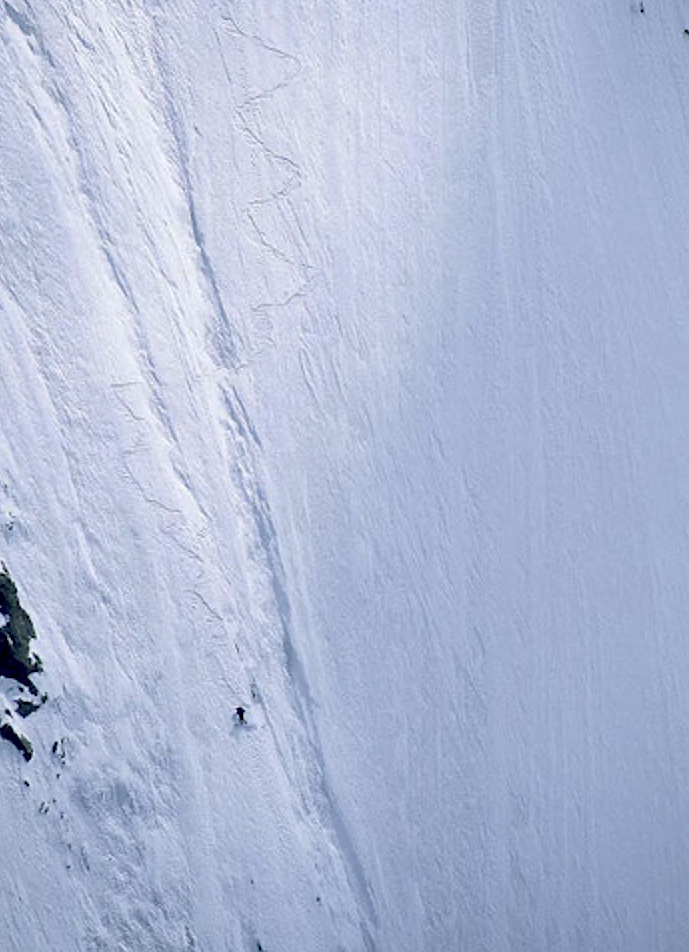
Siffredi snowboards down Nant Blanc, the famed northwest face of the Aiguille Verte in the Mont Blanc massif. Photo: Rene Robert via tahoequarterly.com
Alps and abroad
Siffredi advanced quickly. In May 1996, one year after picking up a snowboard, he completed a descent of the Mallory route on the North Face of the Aiguille du Midi, a 1,000m line with sections around 55° that required rock navigation.
Later that season, he made the first snowboard descent of the Aiguille du Chardonnet with friend Philippe Forte. In 1998, he traveled to Peru, summited and descended 6,032m Tocllaraju with Forte and photographer Rene Robert.
In June 1999, at the age of 20, Siffredi achieved the second-ever descent of the Nant Blanc face on the Aiguille Verte and the first on a snowboard. The face drops roughly 1,000m with sustained 55° slopes and sections reaching 60°. It had not been repeated since Jean-Marc Boivin’s 1989 ski descent.
Snowboard descent of Dorje Lhakpa
In the autumn of 1999, at the age of 20, Siffredi joined a French team led by Rene Robert to 6,966m Dorje Lhakpa, located in the Jugal Himal, near the Tibetan border.
The party included Siffredi, Sandie Cochepain, Bertrand Delapierre, Kami Tshering Sherpa, Nima Sherpa, and Pemba Sherpa. Ascending by the West Ridge and fixing rope on a few sections, they were caught in a big storm on the night of October 18.
The next day, they retreated safely to Base Camp despite many avalanches below Camp 1. Base Camp was smothered with two meters of new snow, and some of their tents were destroyed.
On October 28, all team members summited the mountain without bottled oxygen. From the top, Siffredi and Delapierre descended by snowboard to Base Camp.
In 2000, he summited 6,088m Huayna Potosi in Bolivia, also descending by snowboard.
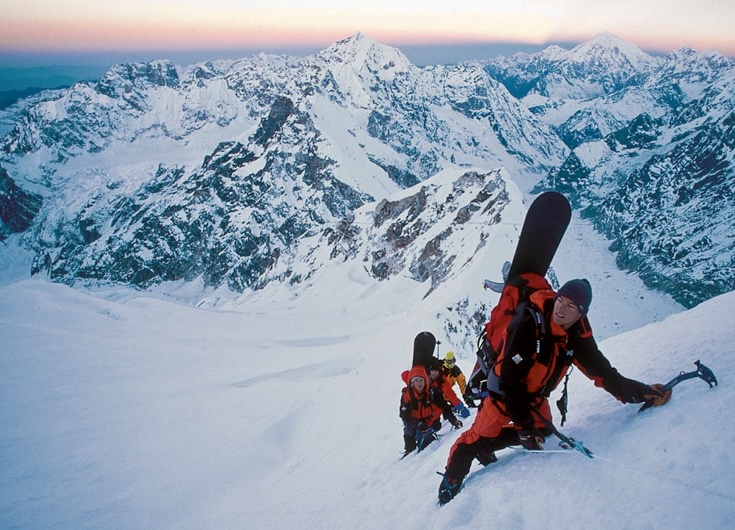
The team ascends Dorje Lhakpa. Photo: Rene Robert
His first snowboard descent of an 8,000’er
That same year, in the autumn of 2000, he took part in Russel Brice’s Cho Oyu expedition. It was Siffredi’s first 8,000m peak. On September 24, he summited without supplemental oxygen, and alongside Delapierre, he snowboarded down to Camp 1, an amazing feat by a 21-year-old.
In the spring of 2001, Siffredi joined another expedition led by Russel Brice to the North Col-Northeast Ridge of Everest. His intention was to summit and snowboard from the top. Siffredi had dreamed of riding the Hornbein Couloir, a steeper, more committing line that he considered the ultimate challenge, but snow conditions made it impossible. However, the Norton Couloir would offer him the best chance for a safe, continuous descent.
Everest’s Norton Couloir
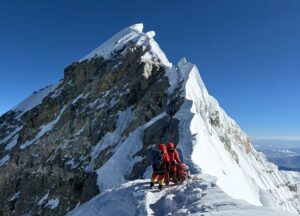
The Norton Couloir (aka the Great Couloir) is a steep gully high on the North Face of Mount Everest in Tibet. It lies just east of the summit pyramid and runs up to within 150m of the top, providing a direct route that avoids the exposed Northeast Ridge and its obstacles, such as the Second Step.
Edward Norton first climbed high into the couloir in 1924, reaching around 8,573m without bottled oxygen on an unsuccessful summit attempt that nevertheless gave the Norton Couloir its name. Reinhold Messner made the first complete ascent of the couloir to the summit in 1980, solo and without oxygen. Australians Tim Macartney-Snape and Greg Mortimer later climbed a more direct version in 1984.
Compared to the Norton Couloir, the Hornbein Couloir is narrower and steeper, positioned high to the west on the same North Face.
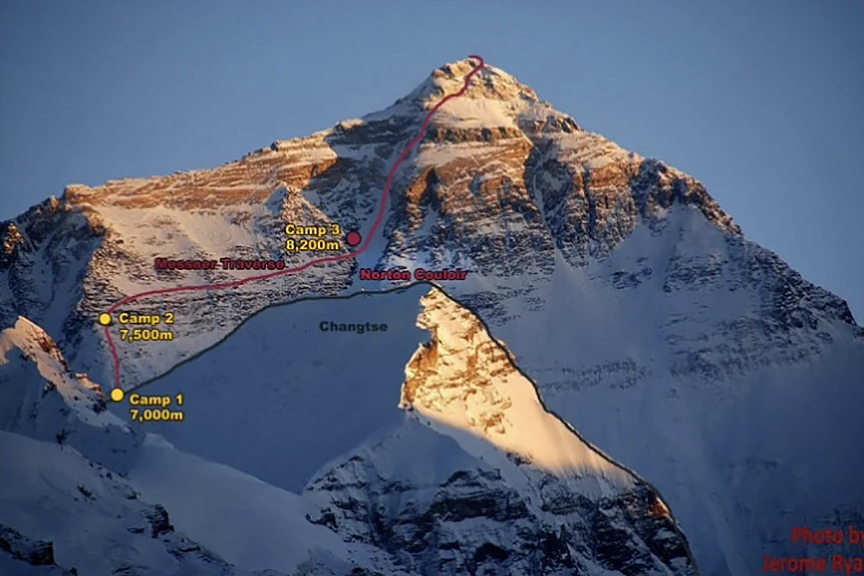
The Norton Couloir on the North Face of Everest. Photo: Jerome Ryan via blog.alpineclubofcanada.ca
Preparation and the summit push
Siffredi spent weeks rigorously acclimatizing on the North Side, climbing to the North Col at 7,000m eight times and making several trips to Camp 2 at about 7,500m. The night before his summit push, he celebrated his 22nd birthday at Camp 4 at 8,300m. During the climb, he used supplemental oxygen.
On the morning of May 23, he left Camp 4 at 2 am alongside Lobsang Temba Sherpa. Four hours later, Siffredi topped out. The conditions were crowded that day on the mountain, as 89 people reached the summit from both sides, a record at the time. On the summit, he waited for Lobsang to bring up his snowboard. By 8 am, he had ditched his oxygen gear and was already making his first turns along the summit ridge.
The descent
The ride down the Norton Couloir started with some struggles. In the first tricky 150m by a steep 45° section laced with rocks, one of his bindings snapped in the cold. With a simple pair of pliers, Lobsang helped him jury-rig a repair on the spot. It held, and Siffredi kept going.
At about 8,300m, he hit a rock barrier where he’d figured he might need to rappel. But the mountain had received heavy snow earlier in the season, and that extra coverage allowed him to surf through without stopping.
He dropped into the couloir proper, carving turns on slopes around 40°, threading his way past seracs near the base before cutting right toward the North Col. After a brief rest there, he linked the final 600m down to Advanced Base Camp on the Rongbuk Glacier. The whole descent took about two-and-a-half hours.
This remains the first documented continuous snowboard descent from the summit of Everest. One day before Siffredi’s feat, Austrian Stefan Gatt had summited Everest without supplemental oxygen or Sherpa support, and also wanted to snowboard the Norton Couloir, but ultimately abandoned his plan.
In the autumn of 2001, Siffredi climbed Shisha Pangma’s Central Peak, intending to snowboard down, but strong winds prevented him from completing a full descent.
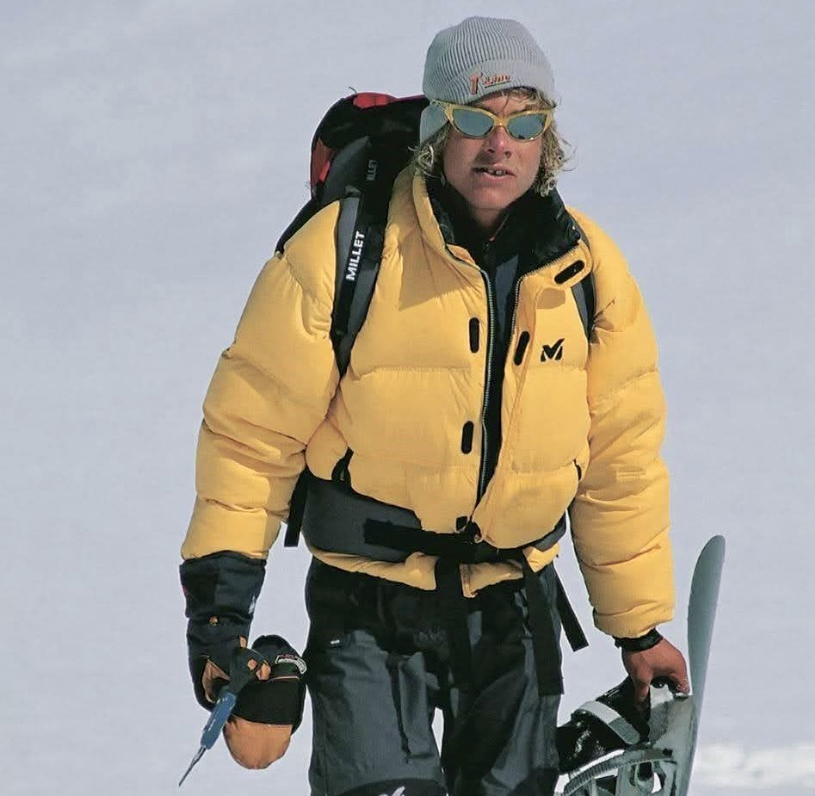
Marco Siffredi. Photo: Marco Siffredi Archives
Targeting the Super Direct on Everest
Siffredi returned to the North Side of Everest in August–September 2002 (a self-led expedition) with Sherpas Phurba Tashi, Pa Nuru, and Da Tenzing, and Olivier Besson. For the snowboard descent, Siffredi targeted the full Super Direct: a highly exposed and dangerous line on the North Face consisting of the steep Hornbein Couloir feeding directly into the Japanese Couloir. He had long considered this committing route the ultimate challenge. (In the fall of 2025, Jim Morrison finally skied the Hornbein/Japanese Couloirs.)
In 1980, Japanese climbers Takashi Ozaki and Tsuneo Shigehiro completed the first full ascent (with oxygen and fixed ropes), while in 1986, Erhard Loretan and Jean Troillet of Switzerland made an oxygen-free, lightweight, alpine-style ascent in just 39 hours up and 41 hours round-trip from Base Camp. (You can read about the Super Direct and its history here.)
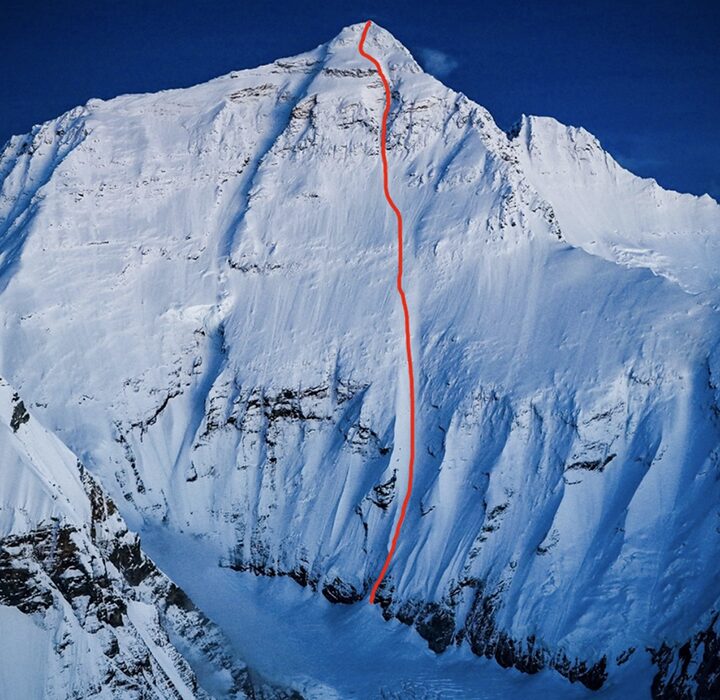
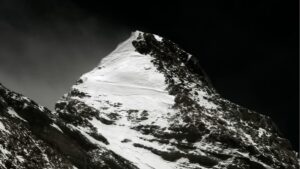
The Hornbein Couloir. Photo: Petzl/Instagram
Summit
Siffredi and the three Sherpas ascended by the North Col-Northeast Ridge route. While slogging through chest-deep snow on their final ascent from Camp 2 at a relatively low 7,700m, they relied on supplemental oxygen (burning through a total of 22 bottles) to stay warm. They reached the summit on September 8, 2002, at 2 pm. That season, out of the five teams on Everest, only Siffredi’s party summited.
The weather at the summit was clear, but Siffredi had to wait for the clouds below to disperse, according to Elizabeth Hawley’s report in the American Alpine Journal. Before the ascent, Siffredi had pitched a camp below the Japanese Couloir, where he planned to stop briefly on his way down, while the Sherpas would descend the route they had ascended.
According to journalist Trey Cook’s investigative account for Snowboarder Magazine, Siffredi was completely exhausted on reaching the summit. His lead Sherpa, Phurba Tashi, recalled Siffredi complaining in broken English, “Tired, tired…too much climbing…” With the afternoon weather rapidly deteriorating and heavy clouds rolling in, the Sherpas strongly advised him against snowboarding.
However, after resting for about an hour and changing his oxygen tank, Siffredi ignored their warnings and headed down toward the Hornbein Couloir just after 3 pm.
Disappearance
The Sherpas lost visual contact with Siffredi at times due to clouds and wind. Lower on the mountain, they reported seeing a distant figure stand up and then slide. From Advanced Base Camp through binoculars, Besson saw Siffredi starting his snowboard descent, but he couldn’t see tracks or any further sign of him below 8,600m. When the Sherpas arrived at their Advanced Base Camp at 6,400m at 10 pm, they were unaware of Siffredi’s disappearance.
”One would immediately guess that [Siffredi] might have plunged into a crevasse, but there are no crevasses where his trail ended. No one knows what became of him. He simply vanished,” recalled Hawley.
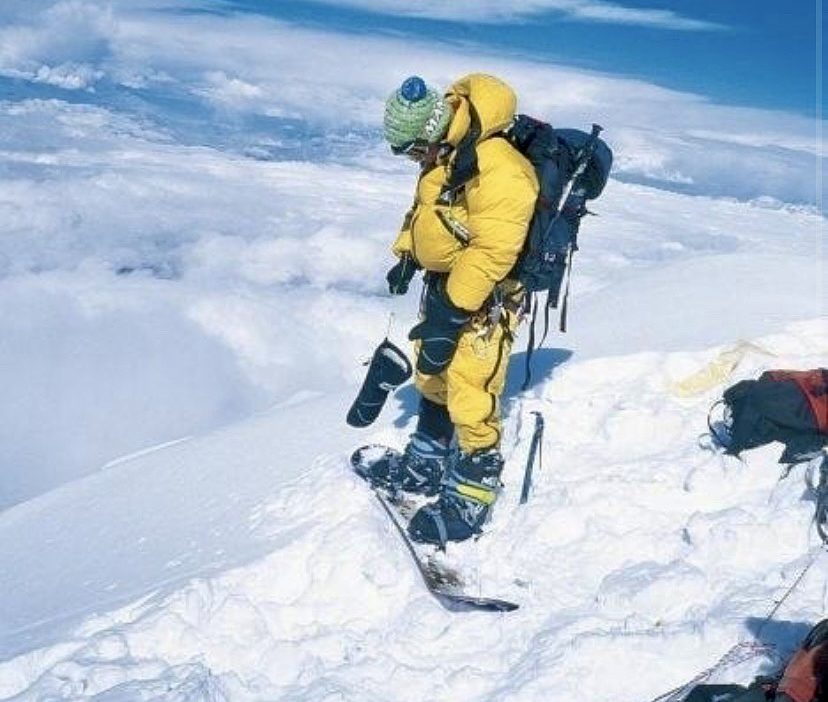
One of the last photos of Marco Siffredi, right before starting the snowboard descent on Everest toward the Hornbein Couloir. Photo: Marco Siffredi Archives
Siffredi was 23 years old. The exact circumstances of his disappearance remain unresolved.
His family lost both sons to the mountains, and his mother has spoken about the lasting pain and lack of closure.
Legacy
Siffredi stood out for his natural talent, internal drive, and commitment to pure mountain objectives in an era when snowboarding was becoming more professional. He progressed methodically from local Alpine test pieces to major Himalayan descents while self-funding through work at the family business.
His 2001 Everest snowboard descent of the Norton Couloir remains a landmark in snowboarding history, and his Hornbein Couloir attempt is a respected early try. On what would have been his 47th birthday, Siffredi is remembered for the raw drive and focus he brought to extreme snowboarding.
Like the Little Prince, his true essence remains. As Antoine de Saint-Exupery wrote in Siffredi’s favorite childhood book, “It is only with the heart that one can see rightly; what is essential is invisible to the eye.”
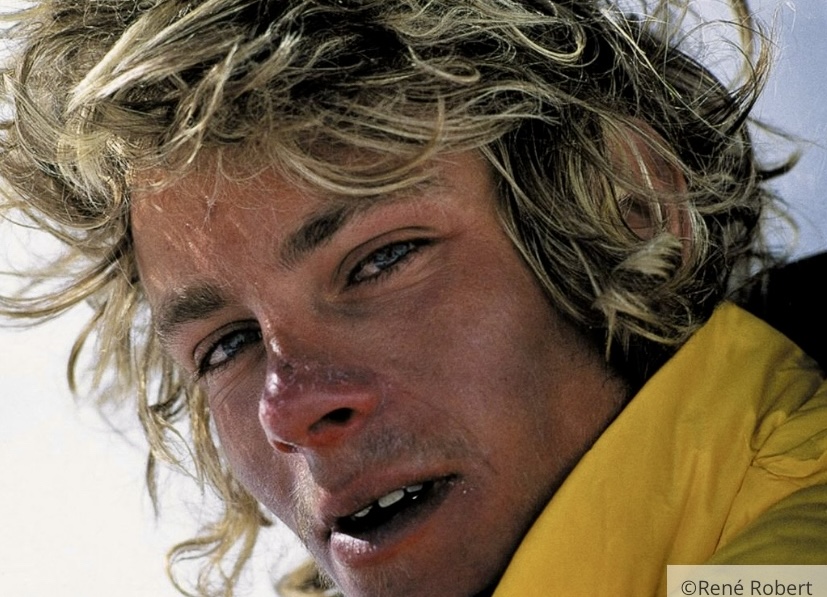
Marco Siffredi. Photo: Rene Robert via Alpinemag