Totally exposed to the power of the North Pacific, Canadian kayakers Finn Steiner and Pascal Smyth kayaked completely around Moresby Island, part of the Haida Gwaii archipelago off the coast of British Columbia. The pair paddled the 475km route last month in 13 days, despite originally only planning to do the exposed western side of the island.
“We had great weather windows and felt strong, so we kept pushing as we felt fit,” explained Steiner. “We ended up turning a shoulder season window into an accidental circumnavigation.”
Steiner, 26, and Smyth, 36, started and finished at Jake’s Landing, a remote beach on the north side of the island, and paddled counterclockwise, with no outside support.
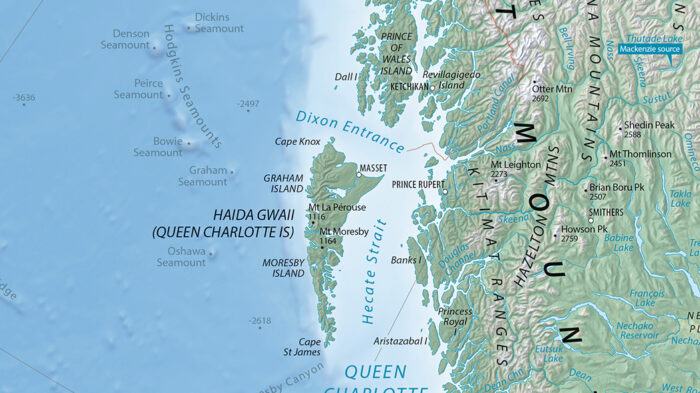
Moresby Island and the Haida Gwaii archipelago. Map: shadedrelief.com
Exposed, steep, and powerful
Steiner outlined the challenges of paddling the island’s western coast, which faces the North Pacific. “Committing distances, limited landing options, big surf, heavy swell, weather windows, and the mental game of moving through a coast where there often isn’t an easy ‘out’.”
“The west side of Moresby feels very serious,” added Steiner. “It is exposed, steep, and powerful, with places where the ocean piles into the land with very little forgiveness.”
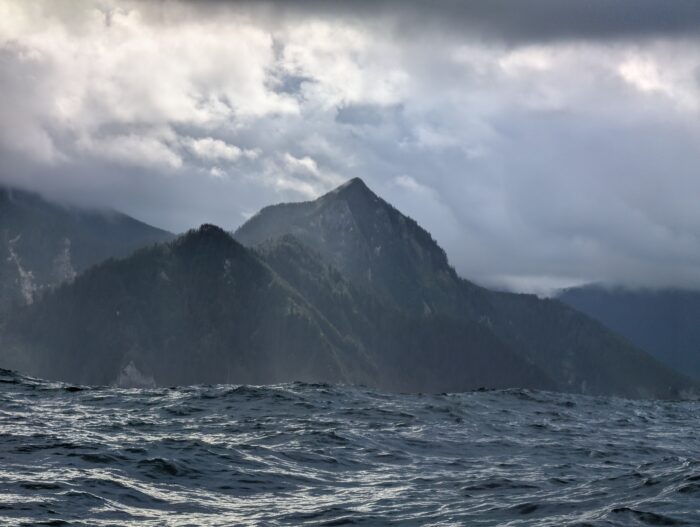
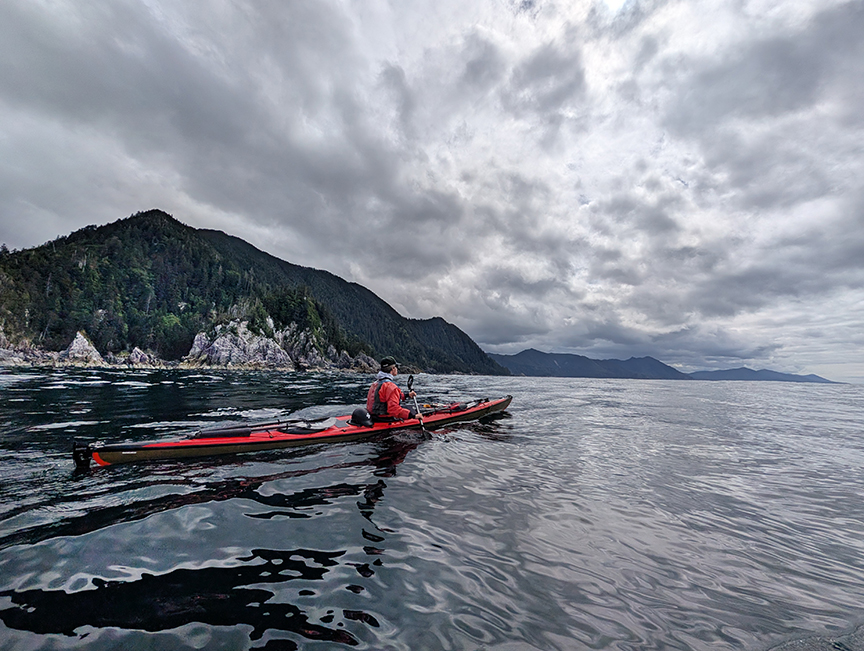
The wild West Coast. Photo: Finn Steiner
The pair are both experienced kayakers. Steiner is a kayak guide, and Smyth paddled the Inside Passage last year. During this expedition, they spent “lots of killing time on beaches trying not to be impatient…[followed by] one to five-mile pushes offshore to get away from rebounding swell before we could turn southward, oftentimes in 2-3,000 meters of water off the continental shelf with albatross buzzing by.”
“The whole west side of Moresby looks like someone cut Mordor in half and chucked part of it into the sea. It is dark, steep, wild, and unbelievably beautiful,” Steiner added.
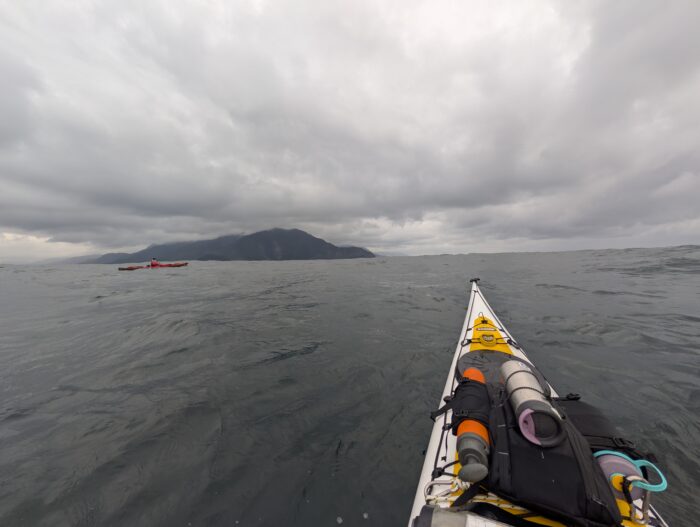
Photo: Finn Steiner
The end of the world
The two Canadian’s faced steep surf and swell around exposed headlands, including five to seven-meter seas near Buck Channel on the west coast. “A lot of the trip was less about heroic paddling and more about patience, reading the water, and being willing to wait when the coast was clearly not offering passage,” said Steiner.
“We did have one day turn a three-nautical-mile paddle into a 2.5-hour odyssey,” explained the younger Canadian.
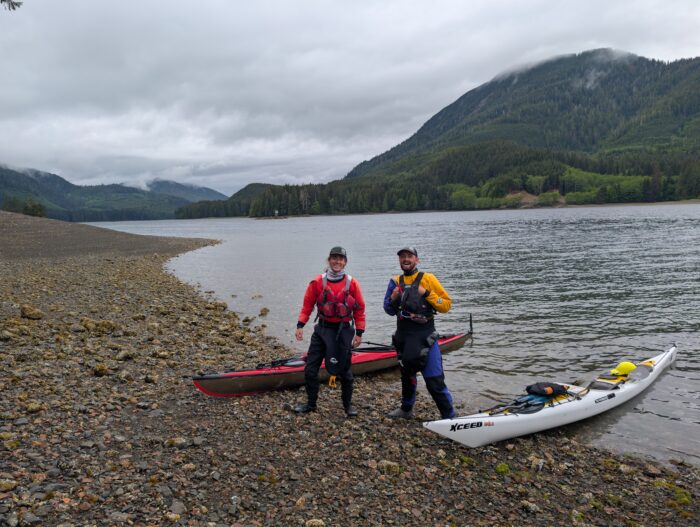
Pascal Smyth, left, and Finn Steiner. Photo: Finn Steiner
“Entering Kootenay Inlet on an ebbing current with 25-30 knot squalls setting up walls of water behind us as waves rebounded all around. It was a tough slog in through the gap in the walls to get into the inlet, but we made it.”
Steiner listed several capes and points as highlights of the journey, but described Cape St. James on the remote southern tip of the island as having an “end-of-the-world feeling.”
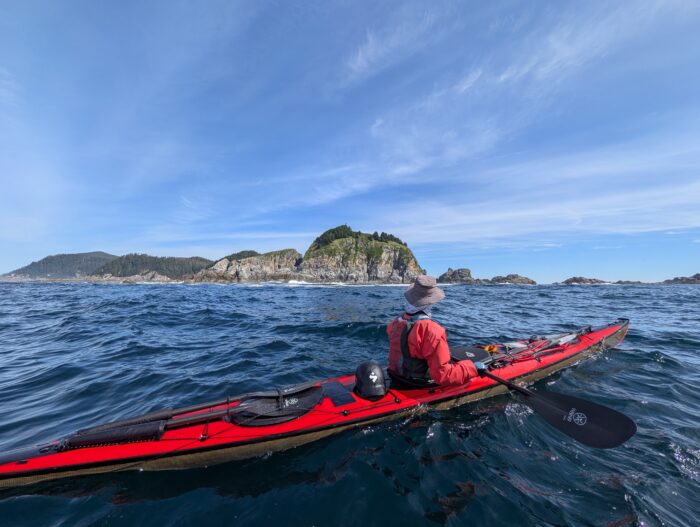
Rounding Cape St James. Photo: Finn Steiner
“Huge ocean, huge energy, and a sense that you are right on the edge of the continent. The Kerouard islands lead off into the Pacific like a set of stepping stones, and it’s all too tempting to want to follow them wherever they may go.”
Varied wildlife
Haida Gwaii has a varied mammal and marine environment, with everything from black bears and bald eagles to sea otters and black-tailed deer. Steiner and Smyth saw Pacific puffins, albatross, salmon, and humpback whales.
“We only saw a few bears but were warned by locals before leaving of the ‘spider’ bears that live in the mountains,” said Steiner.
“Apparently, they are a spindly, more meat-hungry variant known to attack people. The bears, spiders, and spider bears, thankfully left us alone.”
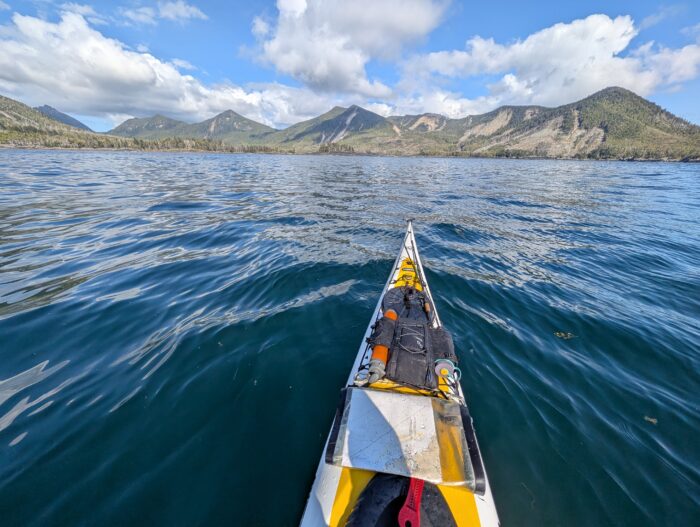
Photo: Finn Steiner
Judgment and humility
Steiner said the journey demanded far more than physical endurance, describing it as “a constant negotiation with weather, swell, terrain, judgment, and humility.”
Reflecting on the experience, he said, “Haida Gwaii has a way of making you feel very small,” before adding: “I have paddled and expeditioned on all continents, and there are some places where the line between this world and whatever lies beyond seems to be separated by the thinnest of veils.”
“This is one of those places. The energy there is intense.”