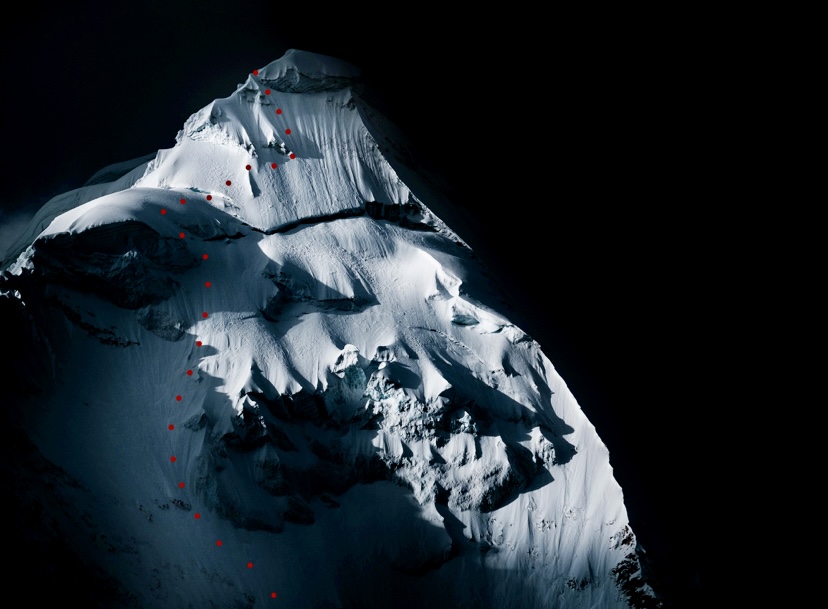
In this dry winter of 2026 in South America, Elias Ejderhamn of Sweden and Marco Malcangi of Italy have made the first ski repetition in 45 years of the Southwest Face of Peru’s 6,025m Artesonraju. Ejderhamn — also a fine photographer who took the images accompanying this story — spoke to ExplorersWeb after the duo returned from the Cordillera Blanca.
Their original objective was an unskied line elsewhere in the range. When they inspected it closely, they found the steep lower wall covered in ice. The already advanced dry season had progressed too far.
Unsure whether any major objectives would still be in condition, the duo traveled into the Paron Valley and turned toward Artesonraju’s Southeast Face. During the approach, however, another side of the mountain kept diverting their attention.
At first, the Southwest Face looked improbable, but the more they watched it, the more coherent, skiable, and compelling it appeared. They finally abandoned the classic southeast route and committed to the lesser-known one.
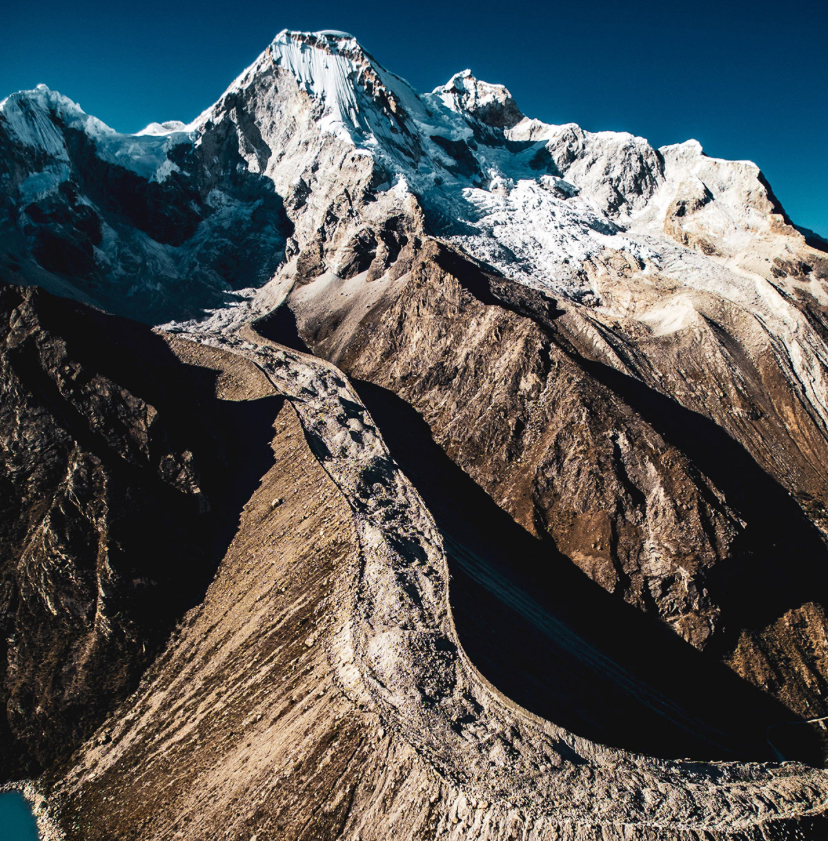
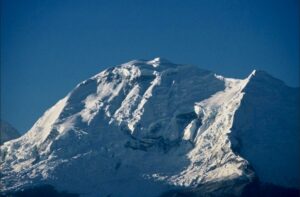
Artesonraju lies in the Cordillera Blanca in the Peruvian Andes. Photo: Elias Ejderhamn
A line through the seracs
None of the locals they spoke to knew of a previous descent. They approached the face, believing that they were opening it completely.
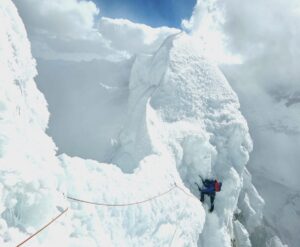
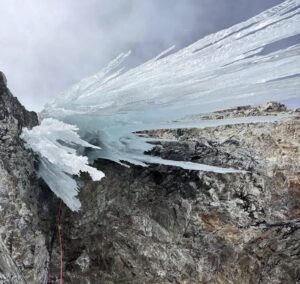
They carved a route safely through the seracs down the entire face. Gradients ranged from 55° to around 70° for most of the descent, with some milder sections that allowed rest, before mellowing to about 45° at the bottom. Snow conditions were highly variable: one-meter crust over sugar snow, accumulated spindrift, and pure ice.
“We had heavenly turns, and we had some hellish ones,” Ejderhamn later wrote, “but the experience was incredible, as we skied at sunset and arrived at the bottom [when it was] pitch black.”
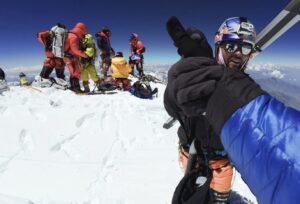
Ejderhamn documented the expedition while climbing and skiing alongside Malcangi.
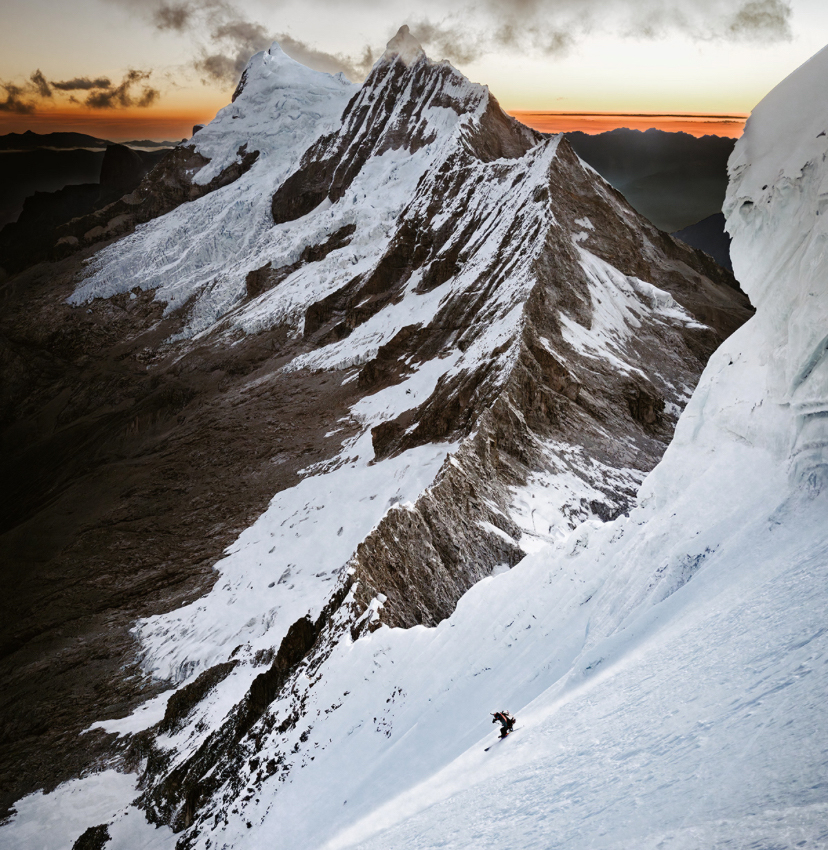
Descending the Southwest Face. Photo: Elias Ejderhamn
A nearly forgotten first descent
After the expedition, the pair went to the ENSA library in Chamonix to research possible predecessors. They uncovered a nearly forgotten account by French skier and inventor Gerard Chantriaux, who descended the Southwest Face alone in 1981.
According to Chantriaux’s report in the 1981 American Alpine Journal, he climbed Artesonraju on July 13 after earlier attempts on other peaks in the range. About 300m from the top, a line of seracs cut the steep face. An icy traverse to the left looked unpleasant. He then found himself at the top of a narrow gully that sliced for 100m through the seracs.
“It was horribly steep,” Chantriaux wrote. The lower slope became less steep and had better skiing. Crossing the snow-covered crevasses of the glacier remained risky.
Despite extensive research, Ejderhamn and Malcangi found no evidence that anyone skied the face again in the following 45 years. Their descent, therefore, appears to be the first known repetition since Chantriaux’s original passage.
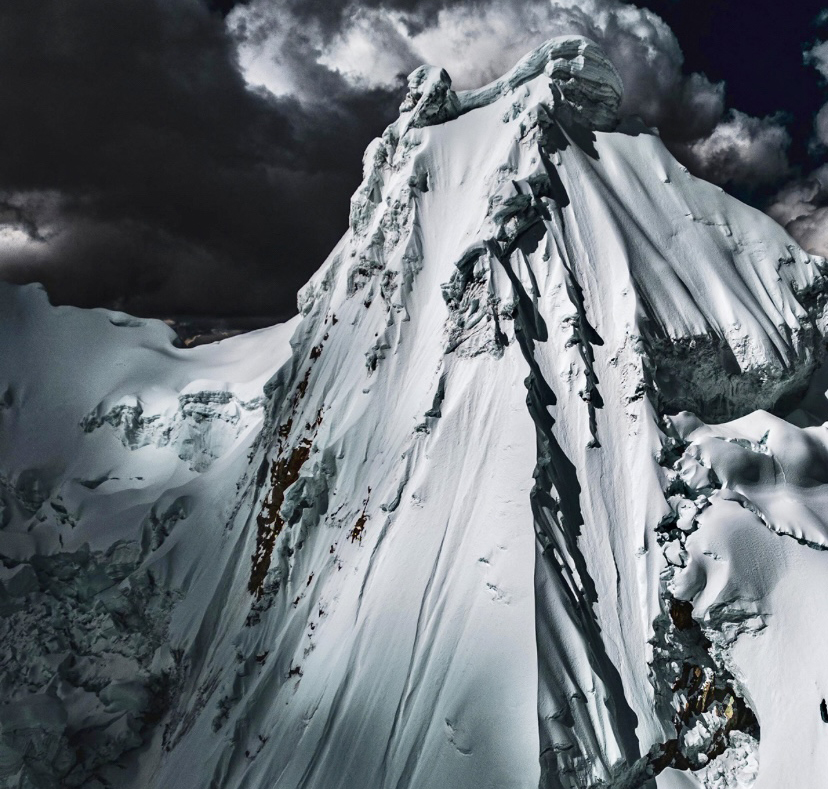
Artesonraju’s Southwest Face. Photo: Elias Ejderhamn
A changed face
That is what makes the story so fascinating: This is not a remote, obscure peak, but the most recognizable mountain in South America — it’s the one on the Paramount logo. It takes a mere one-day hike to reach it. The Southwest Face is visually striking and intimidating, yet in the conditions the pair found, it proved remarkably skiable.
While the adjacent Southeast Face is often described as a dream line resembling faces such as Laila Peak, the Weisshorn, or the Obergabelhorn, the Southwest Face feels more like something around Mont Blanc, the Peuterey, or the Integral Tacul: a huge face that contracts into a beautiful run through obstacles, demanding that the skier experience the mountain fully.
The mountain itself has also transformed. The seracs, the glacier, and the passages that Chantriaux described no longer exist in the same form. This raises a larger question that the pair posed after their research: What does it mean to follow in someone’s footsteps when the mountain beneath them no longer exists in the same shape?
For more details and photos, visit Elias Ejderhamn’s project page.
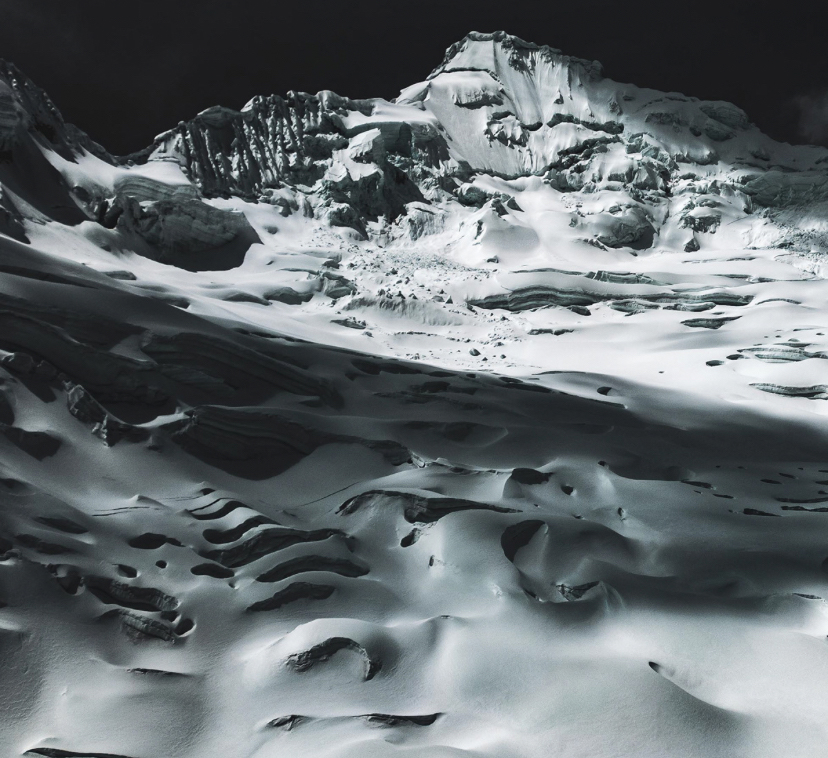
Artesonraju seen from below. Photo: Elias Ejderhamn