In the spring of 1971, only one party attempted to climb Everest. Led by Norman Dyhrenfurth and Jimmy Roberts, this ambitious expedition planned to split into two groups. One party would go for the steep Southwest Face, while the other would attempt the West Ridge.
It was meant to be as much a test of international cooperation as an extraordinary climbing effort. But what happened turned out to be more complicated and controversial than anyone had expected.
Before the team even arrived in Nepal, the venture was heavily commercialized and advertised to the public. The BBC secured exclusive television rights and embedded a nine-person film crew directly into the expedition. At the same time, the British newspaper rights were sold to The Sunday Times, which sent along prominent journalists like Murray Sayle. The media machinery relentlessly hyped the expedition beforehand, boldly framing the climb as a mere formality and setting public expectations for a historic success.
Difficult goals
The expedition itself came from a merger of two plans. A British-Norwegian group asked Roberts to lead a Southwest Face attempt. Dyhrenfurth was already organizing the same route, so they joined forces. As the combined team was large, they decided to try two routes at once.
The Southwest Face was the main goal, specifically aiming for a direct, vertical line (a direttissima), while the other group targeted the complete, aesthetic West Ridge route. Both goals were very difficult, and climbers chose their preferred route.
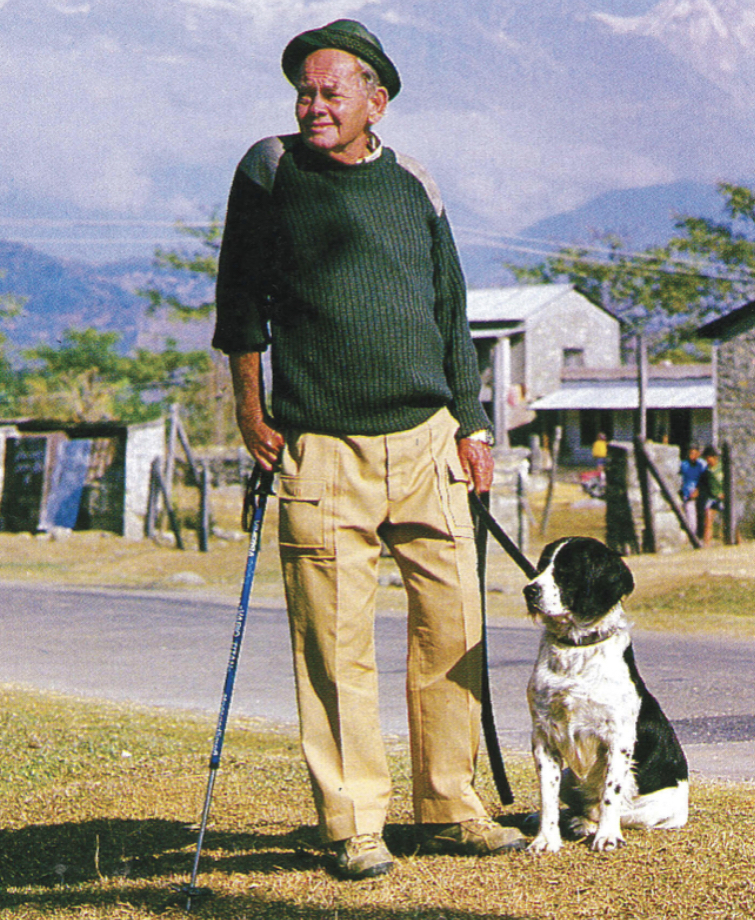
Jimmy Roberts in Nepal. Photo: The Nepal Times
The Southwest Face team included British climbers Dougal Haston and Don Whillans, Japanese climbers Naomi Uemura and Reizo Ito, and others. The West Ridge team included Austrian Wolfgang Axt, Swiss climbers Michel and Yvette Vaucher, Norwegian climbers Odd Eliassen and Jon Teigland, American David Isles, and Indian Major Harsh Vardhan Bahuguna. Frenchman Pierre Mazeaud and Italian Carlo Mauri later joined the West Ridge side.
In total, the whole expedition had 31 foreign climbers from a dozen countries, as well as several Sherpas, including Ang Phurba and Sonam Girme. According to early planning notes, neither leader had personal summit ambitions. Both described themselves as the older men of the team.
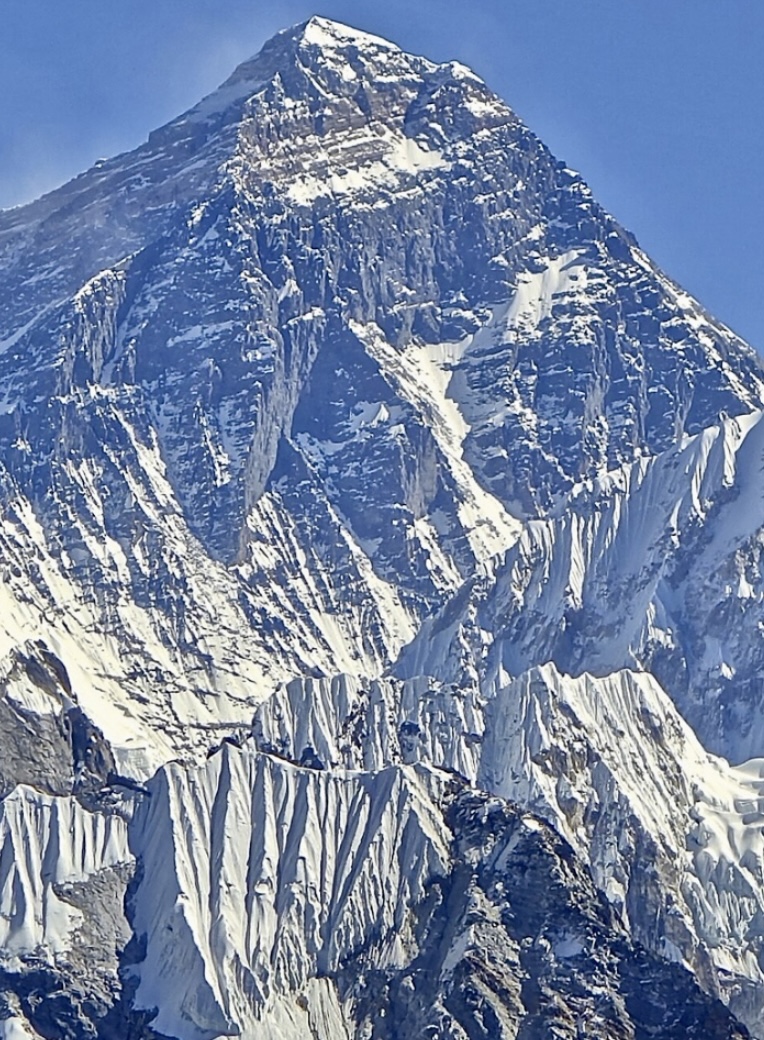
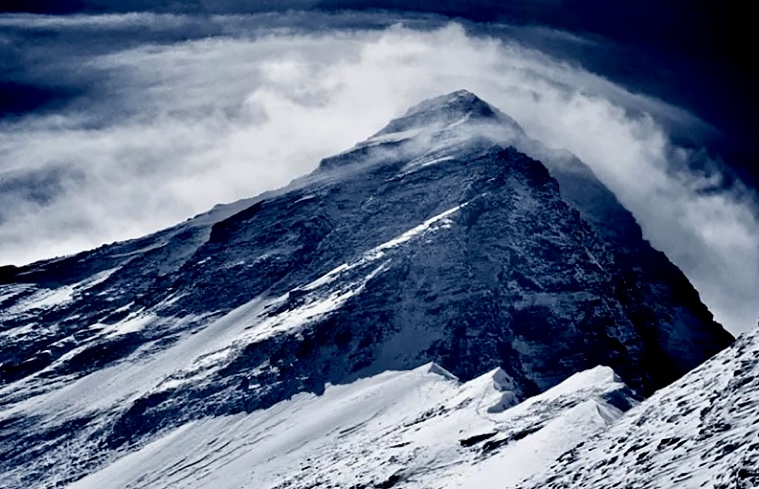
The Southwest Face of Everest. Photo: Wikimedia
Setting up the routes
Base Camp was established on March 22, 1971, at 5,425m. Both teams worked through the Khumbu Icefall. Dyhrenfurth later said it was in the most difficult and dangerous state he had ever seen it. They set up Advance Base Camp on the Western Cwm, then separated.
The Southwest Face team pushed higher. The West Ridge team, with Axt as coordinator, began setting up their own camps, although supplies arrived slowly. Some of the West Ridge climbers didn’t want to carry heavy loads. A long storm in late April made conditions worse for both teams and delayed everything by two to three weeks. Dyhrenfurth’s own account in the American Alpine Journal confirms the early harmony among the team and the exceptional difficulties of the Icefall that spring.
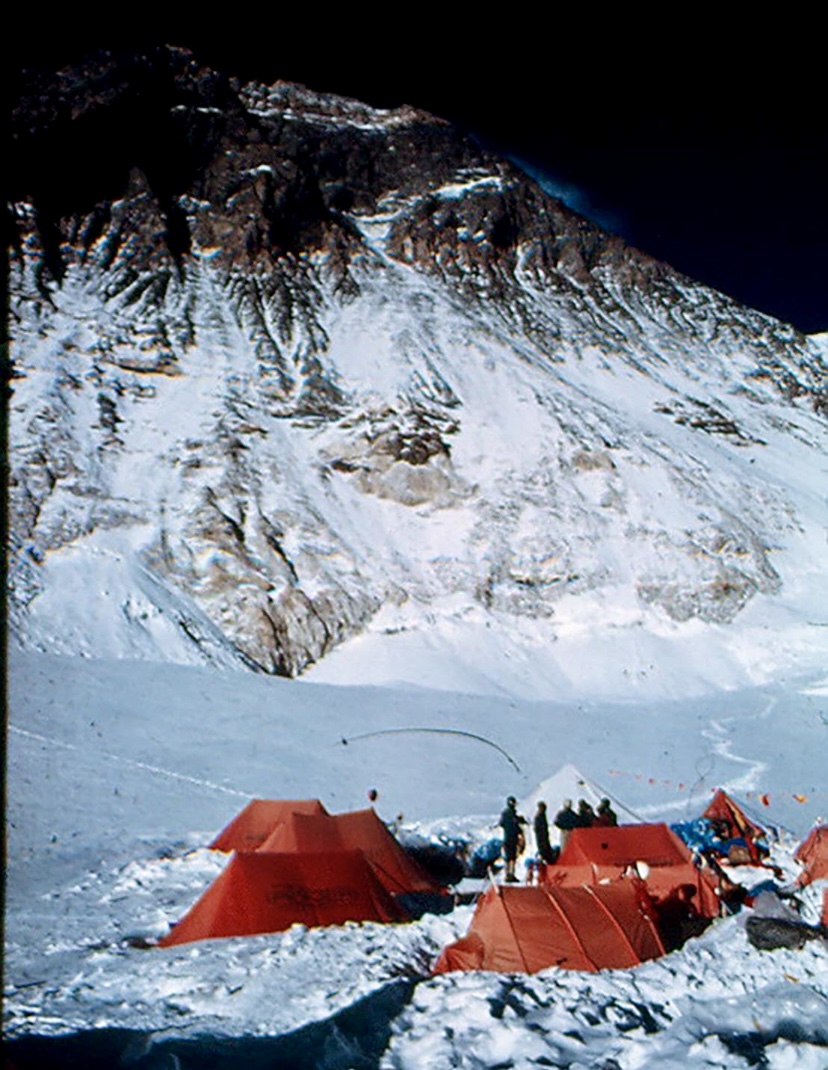
The 1971 Everest expedition. Photo: ‘Surrender to Everest’/imdb.com
One member dies
On April 18, Bahuguna and Axt of the West Ridge team were descending from a high camp in a storm at about 7,000m. They were not tied to each other. Axt had left his harness and climbing rope higher up to save weight, knowing fixed ropes were already in place. He crossed a long fixed-rope traverse by hand, waited for Bahuguna, saw him wave, then continued down because he was exhausted. He later heard screams and raised the alarm.
A rescue party reached Bahuguna still clipped to the fixed rope, about 25m from easier ground. He had lost a mitten and a crampon, and his face was covered by ice. Attempts to lower him failed in the storm and darkness, and he finally died of cold and exhaustion. Bahuguna’s fingers and face were crusted with ice, his eyes were wide, and he could not recognize Whillans or speak.
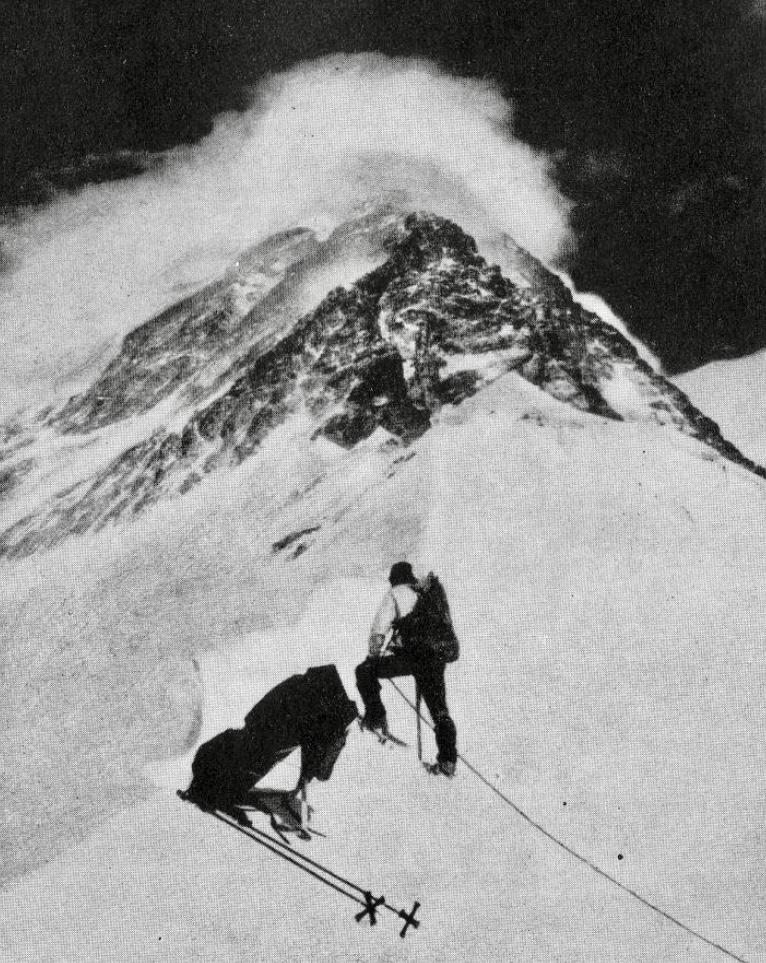
Major Harsh Vardhan Bahuguna on the West Ridge. Photo: Wolfgang Axt/The Himalayan Journal
According to Roberts’ report in the Himalayan Database, the rescuers had to leave Bahuguna because it would be completely dark in 10 minutes, and the others would freeze too. Roberts later described the death as the result of a series of mistakes by Bahuguna and Axt themselves, and noted that allowing them to go so high alone had been a factor.
Bahuguna’s body was later recovered and cremated near Base Camp.
Inquiry and blame
Dyhrenfurth held an inquiry after the fatal incident. Axt said that the fixed ropes made roping up unnecessary and that he didn’t realize how serious things were until the screams. He later explained that if he had stayed longer, he risked losing his own fingers and toes.
“What should I do? One hour later and I am frozen,” he said. He added that he couldn’t pull Bahuguna himself and had to go down for fresh men.
Mazeaud called it murder through negligence. Dyhrenfurth agreed that Axt should have gone back to look, but said that it was easy to judge after the event. Roberts noted that Bahuguna’s death was very sad but didn’t determine the expedition’s final outcome.
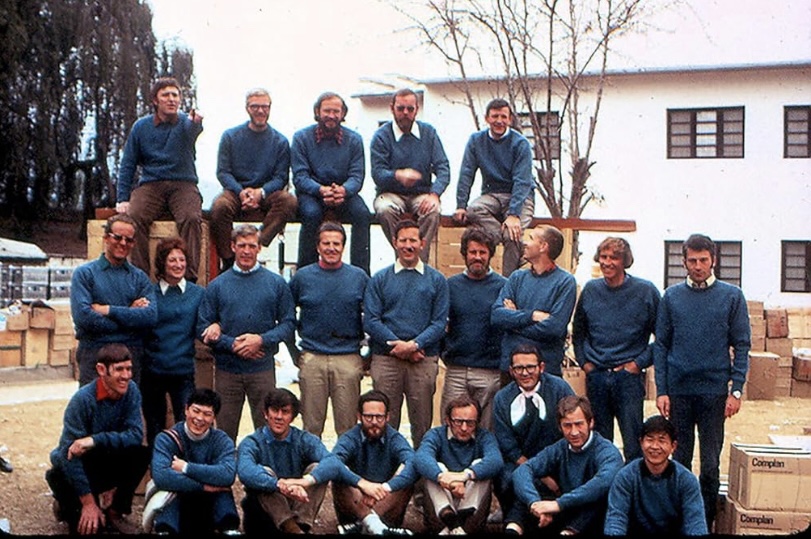
Norman Dyhrenfurth, Carlo Mauri, Yvette Vaucher, Reizo Ito, Pierre Mazeaud, and Michale Vaucher in ‘Surrender to Everest’ (1971). Photo: imdb.com
After the death and the storm, most of the remaining West Ridge climbers (especially Mazeaud, Mauri and the Vauchers) wanted to abandon both hard routes and switch to the normal South Col route. They said that it was more practical and gave a better chance of reaching the summit.
Many others, including most of the Southwest Face group and the leading Sherpas, believed that those climbers mainly wanted personal success: first Frenchman, first Italian, or first woman. A vote that included the Sherpas went strongly in favor of putting all remaining effort into the Southwest Face. The West Ridge group said the decision was a plot to keep them off the summit, so the press would stay focused on the Southwest Face.
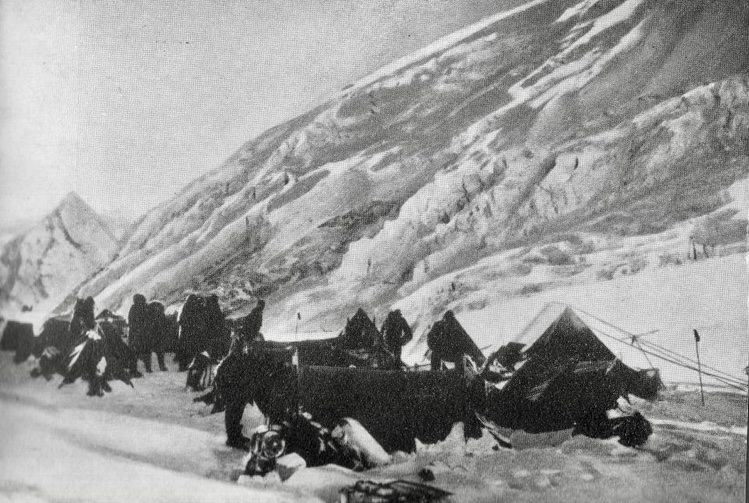
Camp 2. Pumori on the left, with snow-and-ice slopes leading to the West Ridge. Photo: Wolfgang Axt/The Himalayan Journal
More accusations
Mazeaud’s radio message said that they expected him — a French member of parliament — to work like a Sherpa for Anglo-Saxons and Japanese. He said France had been insulted. Yvette Vaucher called the decision monstrous and said she had lost Everest and her friends at the same time.
According to one account, Roberts told Mazeaud to leave during a loud argument. The four went home in early May, ending further work on the West Ridge. Isles and Teigland later said that the decision to cancel the West Ridge climb, made in a highly emotional moment after Bahuguna’s death, was a great mistake. Teigland said he had dreamed of the West Ridge for two years.
Sickness, and another attempt
A virus, diagnosed by some as mononucleosis, spread through the camps and forced many climbers down, including Dyhrenfurth. Bad weather continued to block supplies. With the West Ridge group gone and fewer people left, Haston and Whillans kept pushing on the Southwest Face. Japanese climbers and Sherpas carried heavy loads high on the mountain. Camps were placed up to approx. 8,290m.
Haston and Whillans fixed ropes partway into a chimney in the Rock Band but ran out of rope, oxygen, and food. According to Roberts, they placed Camp 6 at 8,290m and were making progress every day. He said they could have traversed onto the South Buttress and reached the summit that way in one day, but that was not the route they had come to climb. Extreme cold hampered them. They needed another camp higher up. They turned back 450m short of the summit on May 21.
Roberts later said weather was the basic cause of failure: Once it goes bad, it affects everything else. He described the expedition as 50 percent successful. They failed to summit, but those who stayed worked well together.
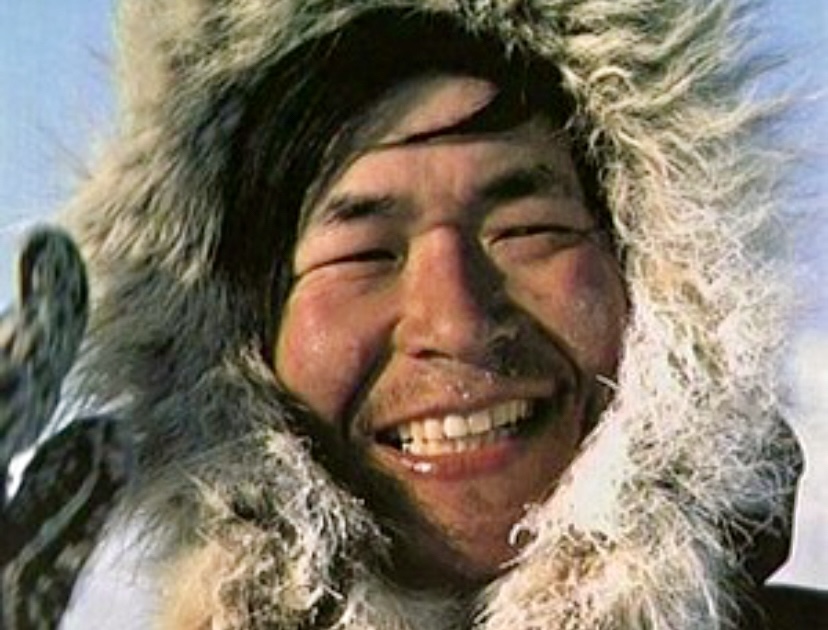
Naomi Uemura. Photo: Wikipedia
Different views after the climb
Roberts said that he was bitterly disappointed after three years of work, but apart from Bahuguna’s death, he had nothing to regret. He criticized Schloemmer for contributing almost nothing and said that Axt was asked to come up and help on the Southwest Face but thought it over and went down instead.
Haston called claims that the Austrians were ready to help “complete balls.” He said that when they asked for support at Camp 5, Schloemmer replied that he needed a Sherpa to carry his personal gear. Haston added that he and Whillans were the only ones who could push hard enough to get the route going, and that the Japanese were the only others with real high-Himalayan experience.
Uemura said that he and Ito helped by carrying loads because that was their obligation, and that if the weather had been good, the expedition could have succeeded. After the 1971 expedition, Uemura decided to always climb solo thereafter.
No real authority
Axt and Schloemmer complained there was no real authority above Advance Base Camp. Axt said the two British stayed high for three weeks and monopolized the lead, and that without a coordinator to rotate people, there was no room for others. He said if there had been good organization on the Face, he could have succeeded. Isles and Teigland said the international aspect had nothing to do with the failure.
The problems came from personalities and the emotional decision after the death. Mazeaud and the Vauchers maintained that the leaders had broken the original plan of two routes and prevented them from reaching the summit for publicity reasons. Dyhrenfurth said the experiment in international climbing was only partially successful, but cooperation had been good until the argument over the route. He noted that the United Nations had tried international cooperation for a long time and had not done too well, either.
Post-mortem
In their interesting and detailed post-climb article titled Post-Mortem of an International Expedition for Mountain magazine (later reprinted by The Himalayan Club), authors Ken Wilson and Mike Pearson traced exactly how the initial merger and massive team size doomed the expedition from the start. They concluded that the 1971 expedition’s collapse was primarily driven by severe natural forces, specifically adverse weather and illness, rather than interpersonal friction. They also attributed systemic blame to organizers for combining distinct climbing factions into an unmanageable, oversized team.
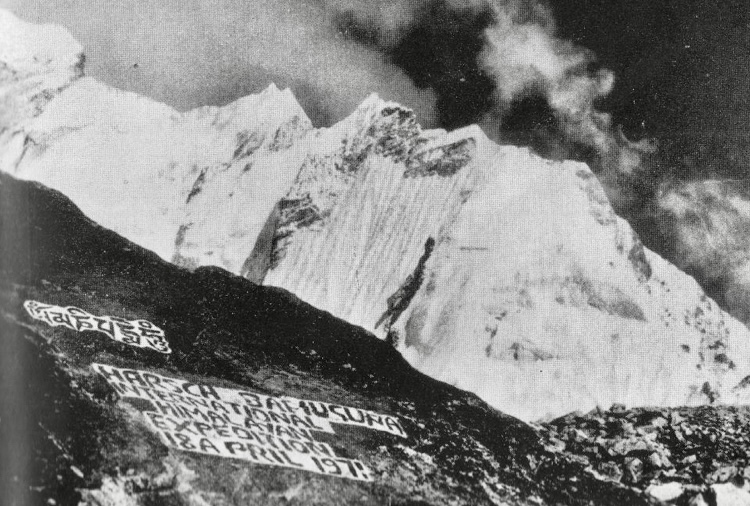
Memorial at Everest in 1971 for Harsh Bahuguna. Photo: Wolfgang Axt/The Himalayan Journal
The questions remain: Was Bahuguna’s death mainly the result of mistakes by the two men involved, or something the leaders should have prevented? Did the decision to drop the West Ridge and focus on the Southwest Face save the expedition or destroy it? And was the international idea itself the problem, or simply the mix of strong personalities, bad weather, and the pressure of being on Everest?