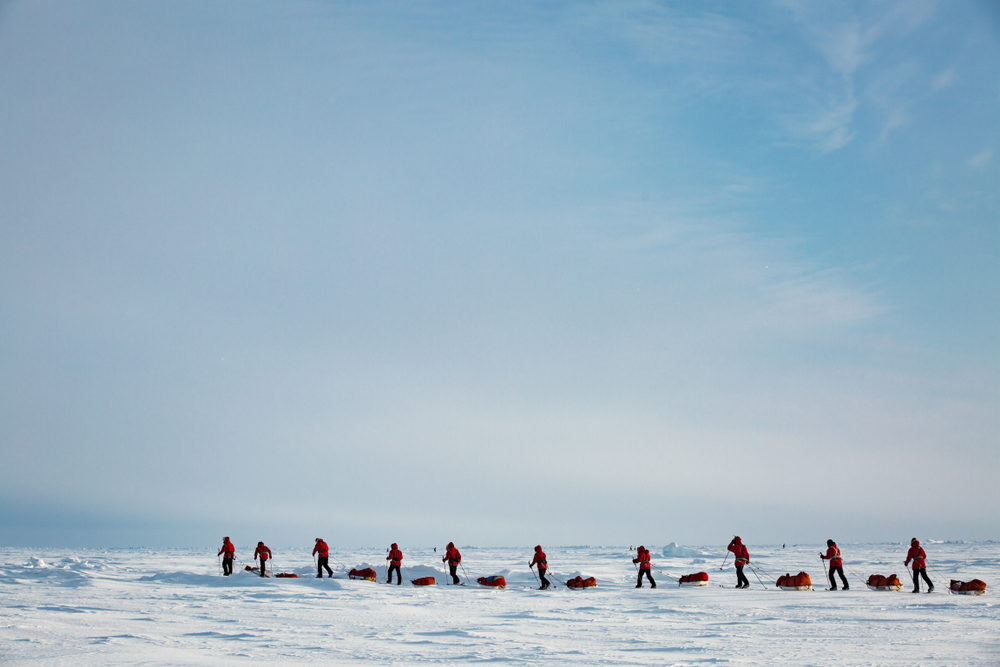
A new Australian-registered company is planning to establish one-time access to the North Pole for expeditions and scientific teams in the spring of 2027. SIX, led by geologist and polar logistics expert Dr. Jonathan Bell, hopes to ease the backlog of adventurers who have been unable to reach the Pole since 2018.
Until recently, the only route to the North Pole was through Barneo, the Russian-operated drifting ice station. However, the facility has not operated for the past eight years due to a combination of geopolitical tensions and increasingly unreliable ice conditions.
The issue with Barneo
Explaining the challenges of the traditional approach, SIX said in a press release: “Legacy methods depended on parachuting heavy tractors onto drifting sea ice to carve temporary runways for large aircraft. These ice runways — along with the main camp, typically established roughly one degree from the Pole — were constantly threatened by the movement of the ice pack. Fractures could open without warning, compromising runway integrity and endangering personnel and assets.”
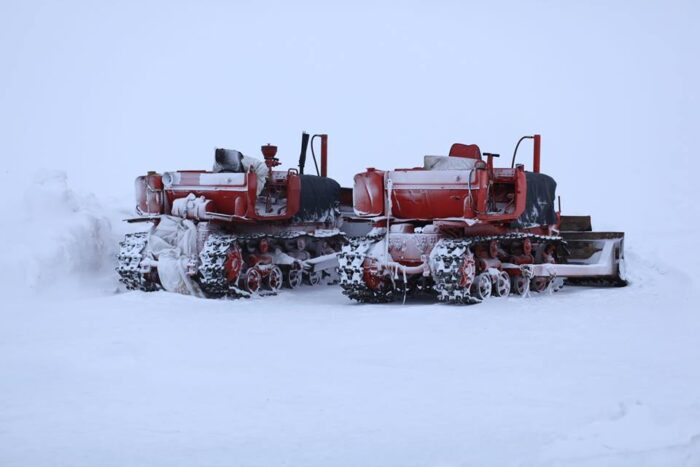
Snow tractors prepare an ice runway for Camp Barneo. Photo: Camp Barneo
The company also highlighted the environmental impact of previous operations.
“Tractors and support equipment were routinely abandoned at the end of each season, left to sink through the ice into the seabed. Air operations relied heavily on aging, high-emission Soviet-era aircraft, further amplifying the environmental footprint.”
SIX argues that changing Arctic conditions are making the traditional model increasingly difficult to sustain.
“With the Arctic warming at roughly four times the global rate, the stability of sea-ice infrastructure is reducing. The reliability of ice-runway operations is in rapid decline, raising doubts about the long-term viability of the historical approach.”
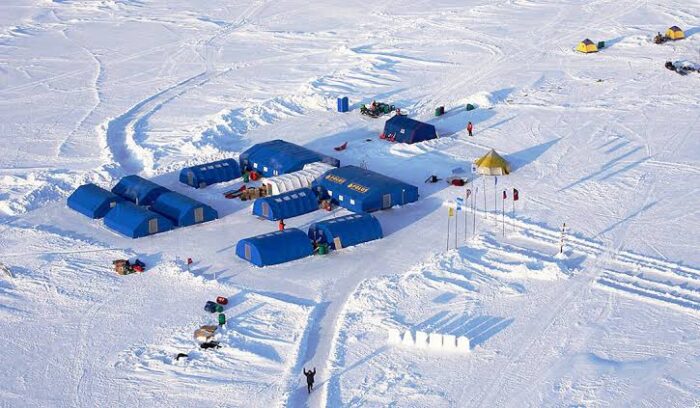
Camp Barneo when in full operation. Photo: Camp Barneo
What’s the new approach?
SIX, short for Specialized Implementation and Extraction, is planning to establish a helicopter route between Svalbard and the North Pole. The proposed 1,100km journey, which takes around six hours, will rely on a series of fuel caches parachuted onto the ice to extend the helicopters’ range and enable access to the Pole and vicinity.
The company intends to accommodate up to 100 clients, a target that would require around 12 return flights. However, that figure could vary depending on each expedition’s logistical demands, including the need to transport additional equipment such as sleds for ski expeditions. SIX also plans to provide rescue support for expedition teams operating in the region.
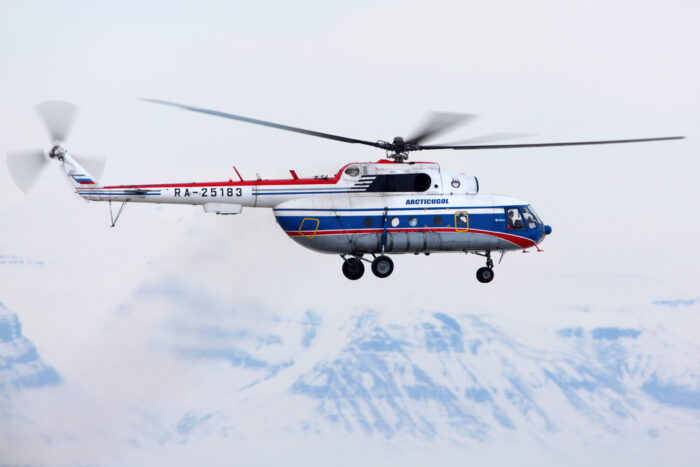
A helicopter operating in Svalbard. Photo: Shutterstock
“We will have multiple helicopters distributed across our core locations, along with spare pilots to allow for near 24/7 response capability,” says Bell. “We will have medics stationed at each of our camps, and all personnel will have first-aid training to support the medics,” he added.
Permits for the aircraft have been cleared through the Governor of Svalbard’s Office. Since the operation is on international water,s no further clearance is required.
Last Degree only
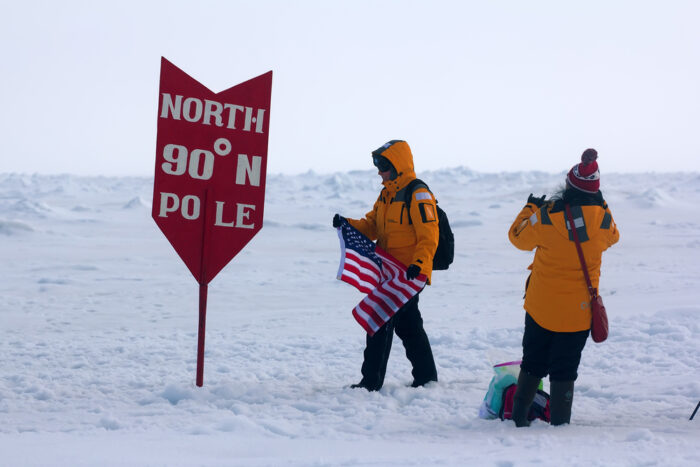
Tourists at the North Pole. Photo: Shutterstock
“The operations will largely be within the Norwegian flight information region, and we can provide service within one degree of the Pole, excluding the Russian flight information region,” he confirmed.
For Last Degree expeditions, SIX is offering a standard 10-day itinerary from start to finish out of Svalbard. By comparison, the Barneo ice camp typically offered an eight-day program.
Premium prices
SIX will act solely as a logistics provider rather than an outfitter. As a business-to-business company, it hasn’t disclosed pricing estimates, arguing that doing so could affect the margins of the guiding and tourism companies that would ultimately sell trips to customers. Bell did, however, acknowledge that the price will be much higher than Barneo’s was.
“Due to the extensive use of helicopters, we cannot compete on price with Barneo, which has a completely different service offering, cost base, and risk profile,” he said.
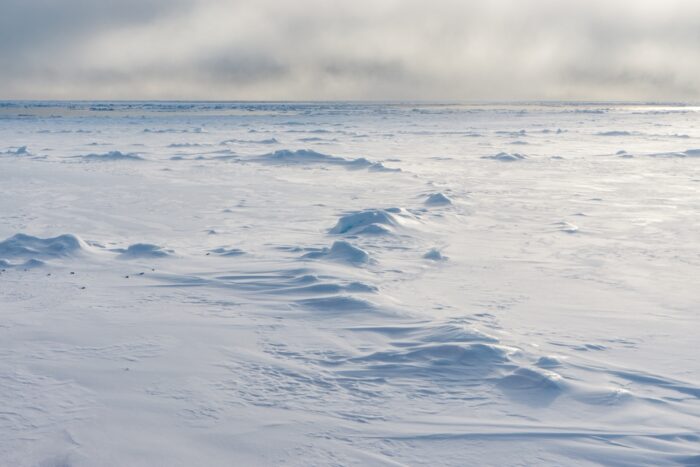
The frozen Arctic Ocean. Photo: Shutterstock
Despite confidence that sufficient demand exists to launch operations, Bell said there are questions over whether the market can sustain such an expensive model in the long term.
“While we are comfortable that there is enough pent-up demand to run an event, we are less certain that the market can support this cost structure annually.”
Who are SIX?
Bell declined to identify members of the core operational team, citing professional sensitivities. However, he said the personnel, which includes skydivers and emergency responders, bring extensive experience from complex projects in some of the world’s most challenging environments.