When we’re not outdoors, we get our adventure fix by exploring social media and the web. Here are some of the best adventure links we’ve discovered this week.
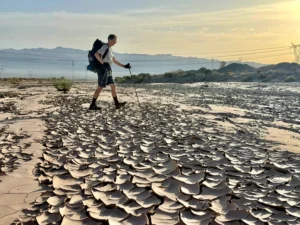
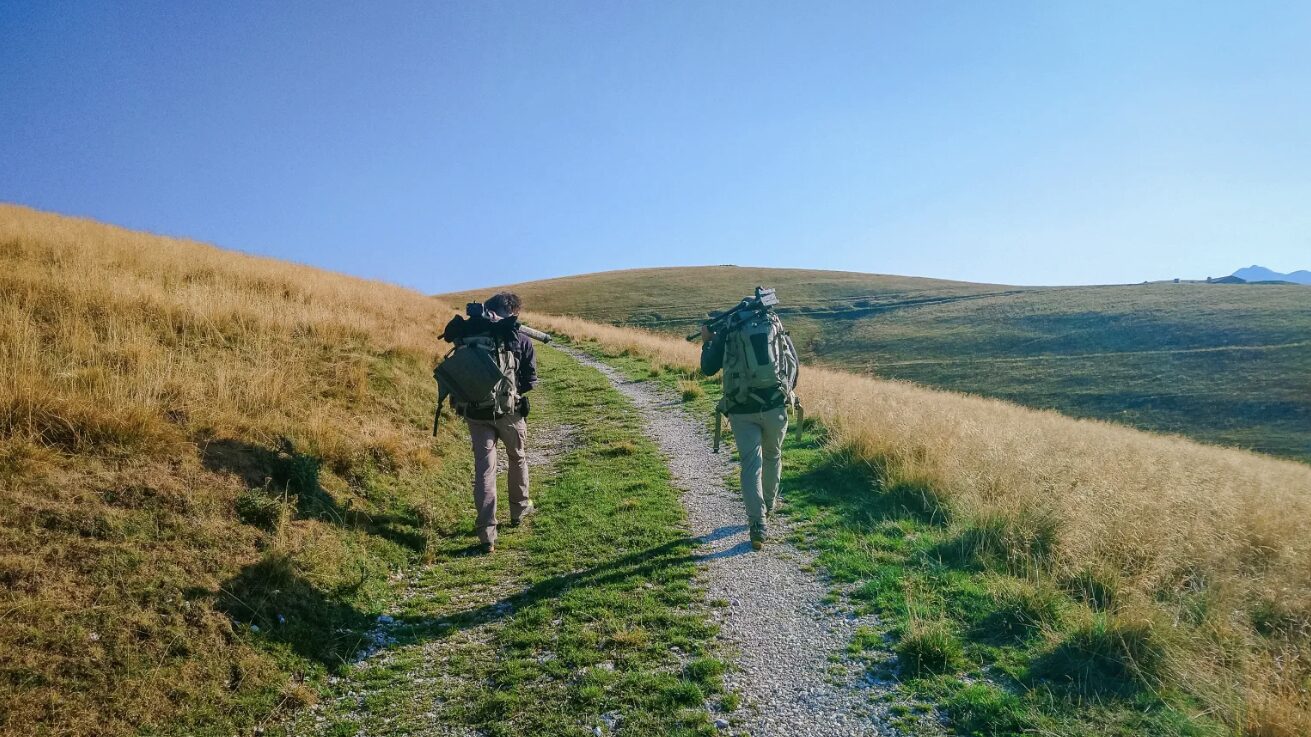
I Walked 1,600km in the Footsteps of Europe’s Lone Wolf: In December 2011, a young Slovenian wolf with a GPS collar left its pack and began traveling north. It eventually covered more than 1,600km through Slovenia, Austria, and Italy. Adam Weymouth set out to retrace its steps.
This is the route Weymouth followed to learn about how our relationship with the wilderness, farming, and wolves is changing. The walk took him through snowy forests, villages, and the Dolomites. Along the way, he met farmers, shepherds, and hunters living alongside the returning wolves.
Going Up and Going In: Brian Laidlaw used to be a cautious climber, but over time, he has tackled increasingly serious unroped routes. He sees free soloing as a way of exploring what risk does to the human mind.
Over the years, he has met extreme athletes who have experienced the devastating consequences of living permanently at the edge of risk: losing their friends and family, having accidents that impact their lives forever. Instead of becoming interested in why people risk death, Laidlaw wants to figure out what they gain from confronting it. Deaths on a route he was planning to solo forced him to reconsider the confidence he had developed and what he was prepared to risk in order to feel fully alive.
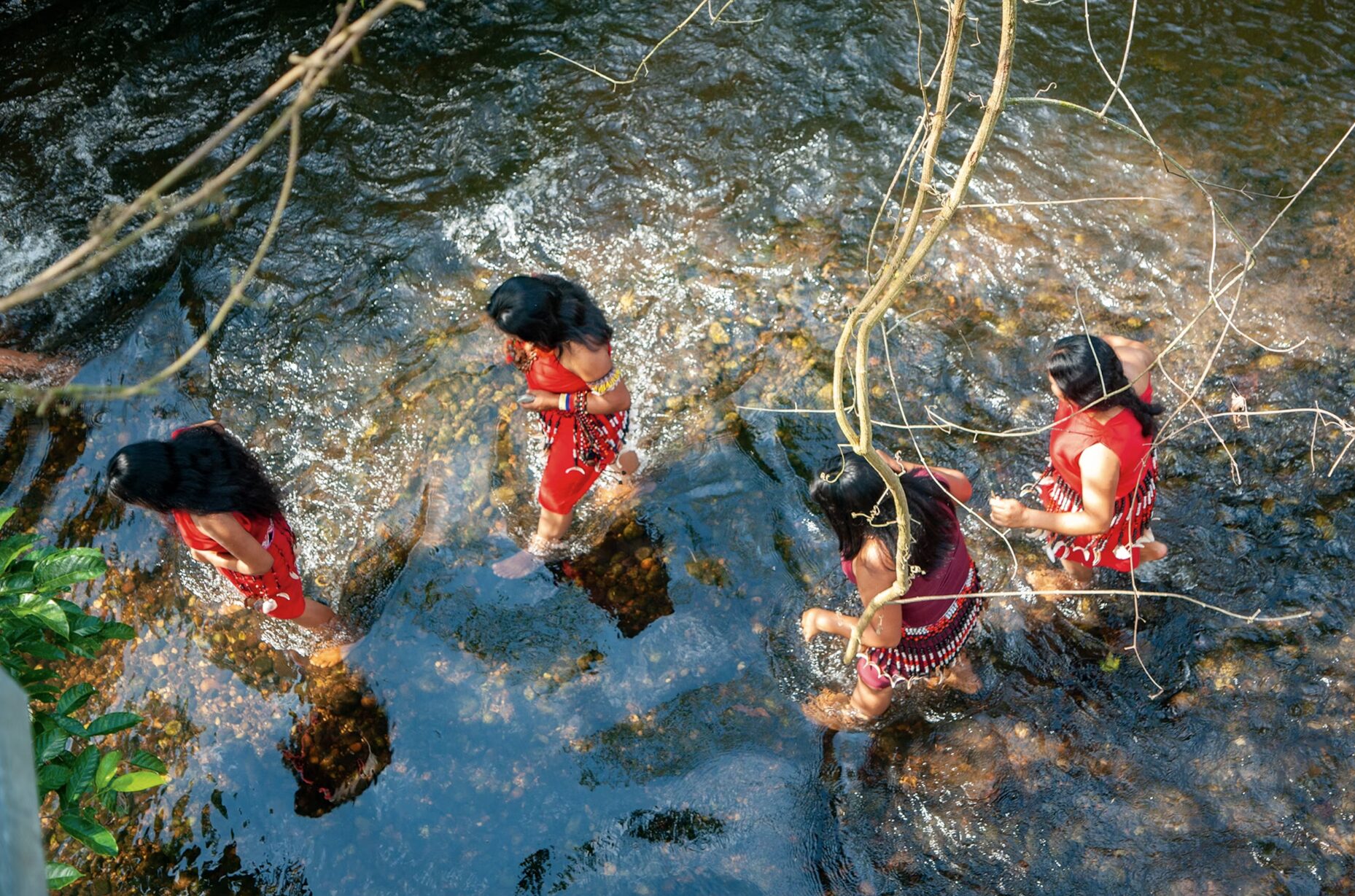
Women from the Awajún communities follow rivers for travel and fishing.
Photo: Conservation International Peru, Marlong DAG
Amazon guardians
The Indigenous Women Protecting Peru’s Amazon Rainforest: In Peru’s Amazon rainforest, indigenous women are working to protect both their environment and their communities’ traditions. In the San Martín region, members of the Awajún group have transformed an area known as the Nuwas Forest from an isolated patch of jungle into a hub for ancestral knowledge. The women cultivate native medicinal plants and share traditions of the plants and sacred trees with visitors.
In Chazuta, another group of indigenous women is preserving traditional Amazonian crafts. The Yana Rumi collective brings together generations of women who make pottery, baskets, and textiles using techniques passed down through their families. These women are doing everything they can to keep traditional practices alive and showing visitors their version of the Amazon.
Europe’s Newest Thru-Hike: Slovenia has opened a new 307km long-distance hiking route through the Kamnik-Savinja Alps. The Kamnik-Savinja Alps Water Trail winds through mountain valleys, forests, meadows, and historic villages. The route came from a 2022 project to identify and protect the region’s natural springs, with 54 water sources mapped and connected by the trail.
In total, the trail passes by three lakes, four rivers, several waterfalls, and over 200 springs and streams, and features 37km of elevation gain and 14 peaks over 2,000m.
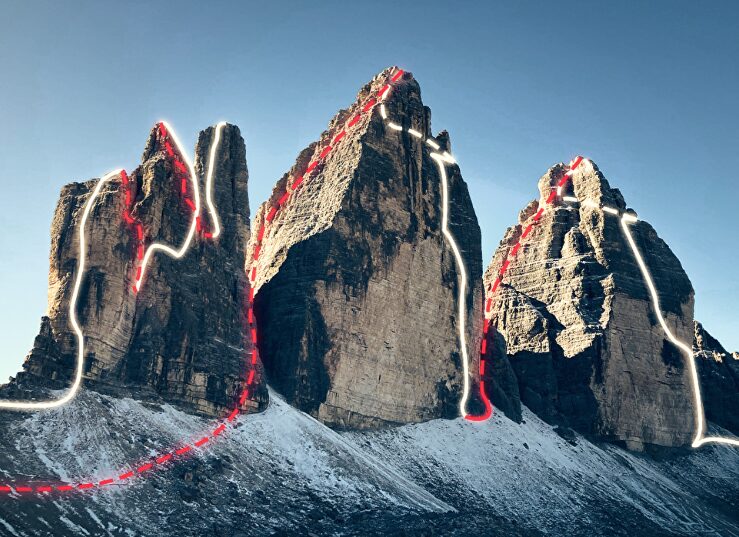
The route over five peaks in the Tre Cime di Lavaredo group of the Dolomites. Photo: Marian Aßmair
Five north faces in a day
Tre-Cime di Lavaredo – Five North Faces Climbed in a Day: Marian Aßmair and Michael Stadler of Austria completed an extraordinary link-up of the five major north faces of the Tre Cime di Lavaredo in Italy’s Dolomites in a single day. Starting at 4:30 am on September 5, the pair climbed the Cassin-Ratti route on Cima Ovest, the Comici-Dimai on Cima Grande, the Preuss Crack on Cima Piccolissima, the Via Dülfer on Punta di Frida, and the Innerkofler on Cima Piccola. They reached their final summit after just 14 hours and 15 minutes, covering around 2,000 vertical meters and 56 pitches.
Sequences in a Tragedy: The death of climber Fiona Layton in a rappel accident has prompted a wider discussion about one of climbing’s less obvious hazards: “knot migration” or “rope creep.” Andy Kirkpatrick believes that, although examining someone’s death can feel uncomfortable, sharing what went wrong helps other climbers avoid making the same mistakes.
He details how a series of seemingly ordinary choices can gradually combine to create a dangerous situation. In a hypothetical scenario, he describes a pair of climbers facing worsening weather, darkness, cold, wet ropes, equipment issues, time pressure, and changing rope behavior. While none of these things will necessarily lead to an accident, they can combine to cause a tragedy. For him, it is not about blaming individual climbers, but recognizing how complex accidents can develop.
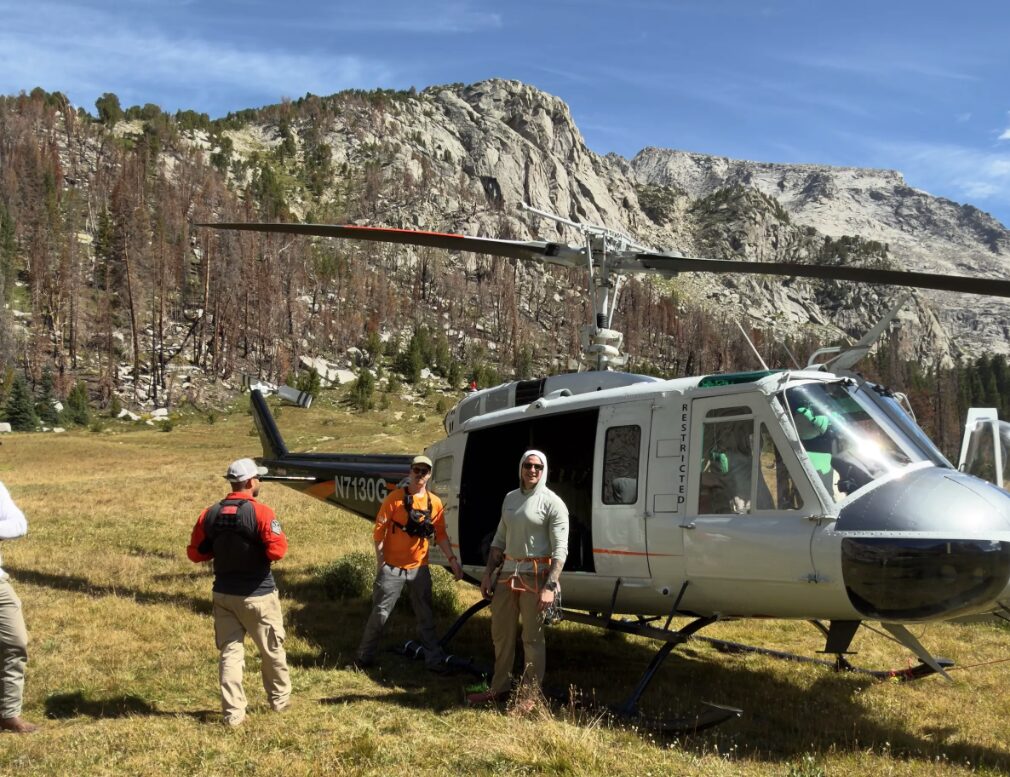
Jared Martin with the rescue helicopter. Photo: Jared Martin
Search for D’Artagnan’s skeleton
One Man’s Quest for a Musketeer’s Bones Got Him Locked Up: Retired archaeologist Wim Dijkman spent years investigating the possibility that D’Artagnan, the French soldier who inspired Alexandre Dumas’s The Three Musketeers, was buried beneath the Church of Saint Peter and Paul.
With the church’s knowledge, Dijkman and a small group of volunteers excavated the floor and uncovered a complete male skeleton. They believed they may finally have found their man, but local authorities quickly found out that the excavation had been carried out without the necessary permits and procedures. They took over the excavation, arguing that the poorly documented dig had destroyed valuable archaeological information. Dijkman ended up in police custody after refusing to hand over bone fragments that he had sent to Munich for DNA testing and carbon dating.
Getting Benighted on Pingora Peak: Jared Martin and his less experienced partner decided to abandon their climb on Wyoming’s Pingora Peak because of deteriorating weather, exhaustion, and dwindling water supplies. To speed up a descent that involved 300m of rappelling, they decided to use a lightweight 4mm “tagline” to double the length of their main rope. Neither climber had attempted this before.
Partway down, their main rope became stuck on the rock above them. With limited options, they called for rescue and spent a cold and uncomfortable night on the mountain before being brought down safely the following morning. Though Martin has said he won’t be attempting another tagline any time soon, experienced climbers and guides explain that taglines can be a useful way of extending rappel lengths and reducing the weight of a second rope. They just require careful assessment of the terrain and an understanding of how to deal with a stuck rope.