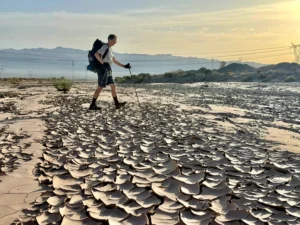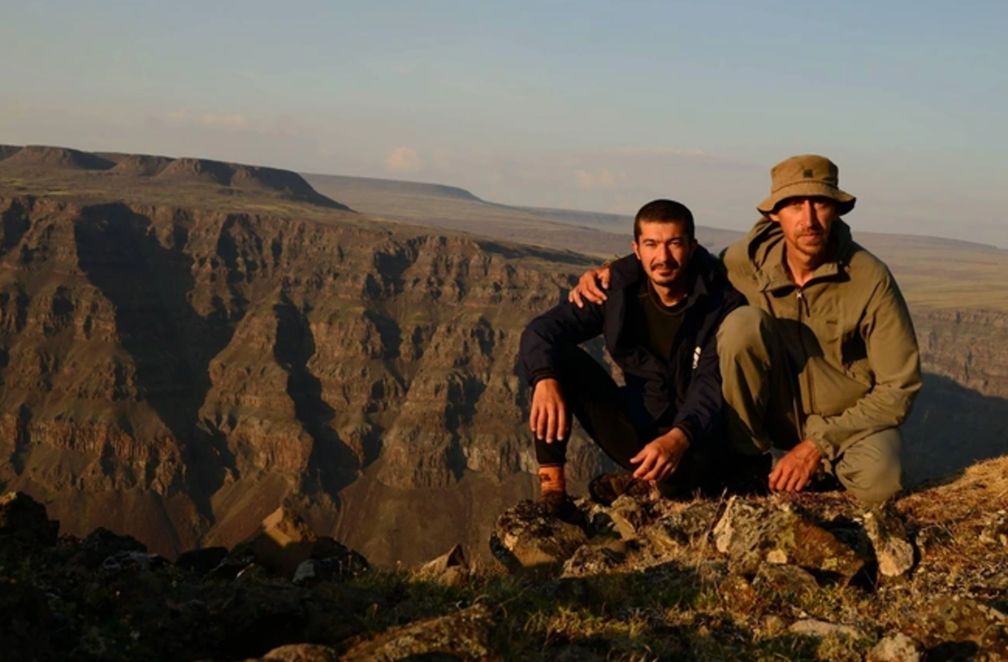
Two Russian explorers have completed a journey of about 700km across the remote Putorana Plateau in northern Siberia. During their expedition, they encountered drought conditions, wildfires, and a brazen bear that raided their food supplies.
Danil Barashkov and Sergey Malykh set off in early July. They flew to the small town of Svetlogorsk in northern Siberia, before taking a motorboat up the Kureika River system toward Lake Dupkun. On July 7, they started on foot across the Putorana Plateau from a nearby scientific research base.
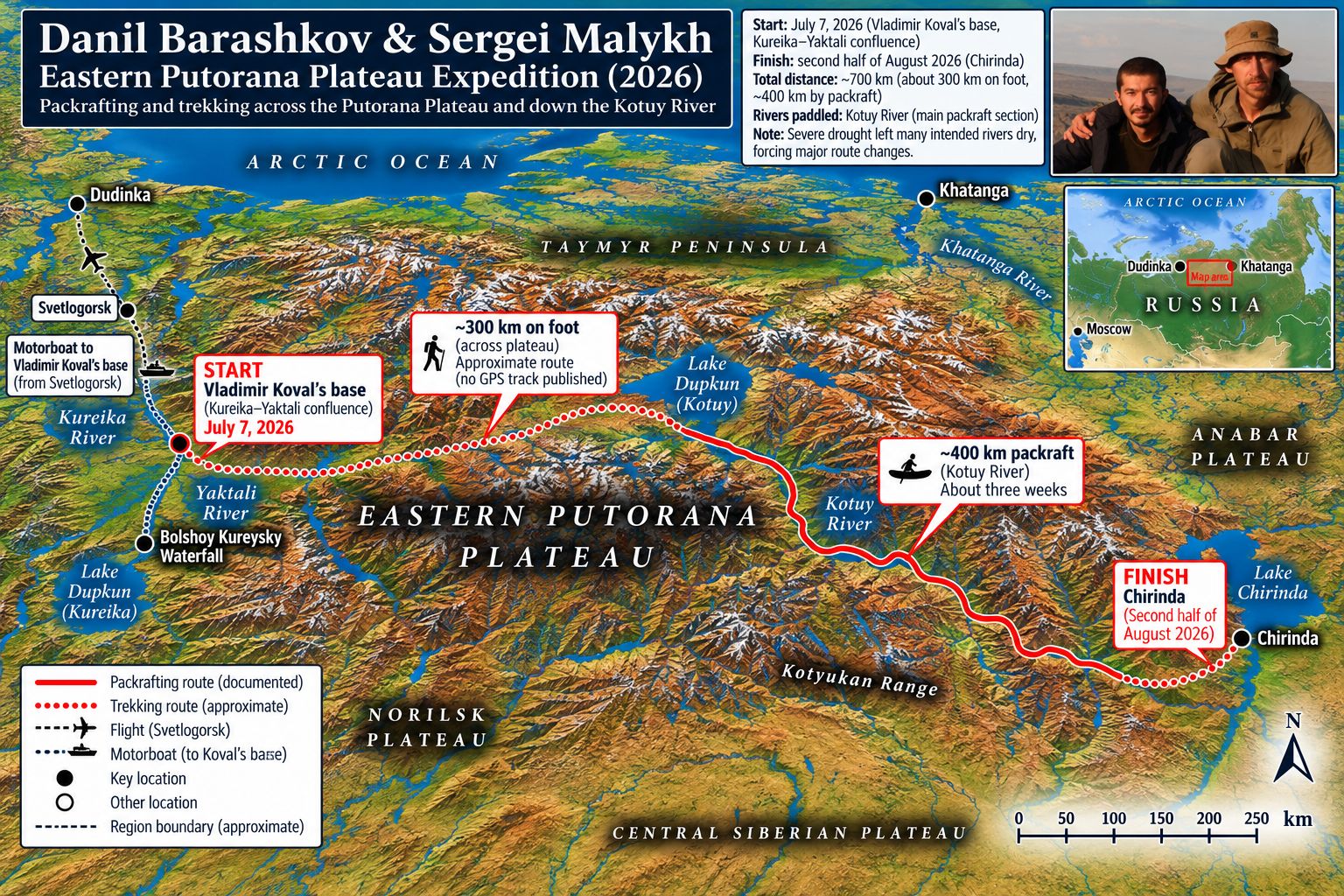
The Russian pair’s approximate route.
More hiking than expected
A mountainous region between 67°N and 70°N in the Arctic Circle, the plateau is the size of Great Britain. Featuring some 25,000 lakes, it is the second-largest store of fresh water in Russia after Lake Baikal. The men set out with 40kg packs and entered the plateau’s remote eastern section, expecting to use packrafts for most of their journey. Instead, they found drought conditions, with water levels too low to paddle, and even drinking water in short supply.
“There was almost no rain all of June. So we ended up like this: ‘I’m standing on the pavement, wearing skis.’ We arrived with our packrafts, and there was no water,” Malykh told Russian news site NGS24.RU. Though water was scarce, the mosquitoes remained. “I’ve never seen anything like this before: you lift the lid of the pot, and there’s a layer of mosquitoes floating around. Yeah, we definitely had no problem with protein.”
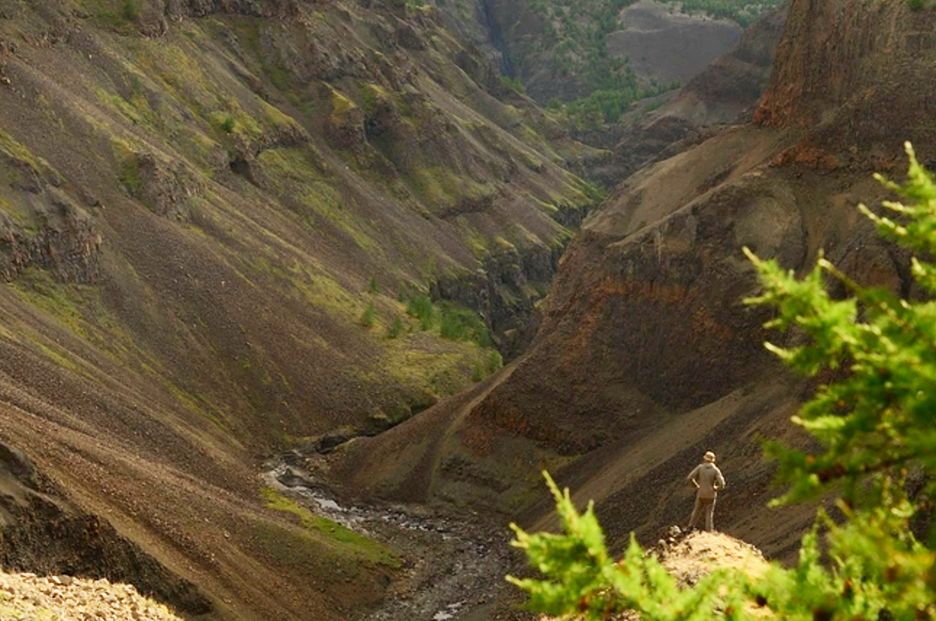
The pair found very dry conditions early in their trip. Photo: Danil Barashkov
Their original plan was to cross the plateau and continue to the settlement of Khatanga in northern Siberia. However, the exceptionally dry conditions forced a change of plan. Instead, they crossed toward the upper basin of the Kotuy River, 300km of hiking that sometimes required shuttles to move their gear. They covered only 15km per day and realized that their trip would run longer than their initial six-week plan. But this slog paid off; from the Kotuy, they could finally use their packrafts.
Bears
Barashkov and Malykh had a few scary bear encounters. In one instance, they almost walked into a sleeping bear, and in another, a curious bear only retreated from their campsite after coming as close as 15 meters — and after ignoring their shouts and a shot from a flare gun.
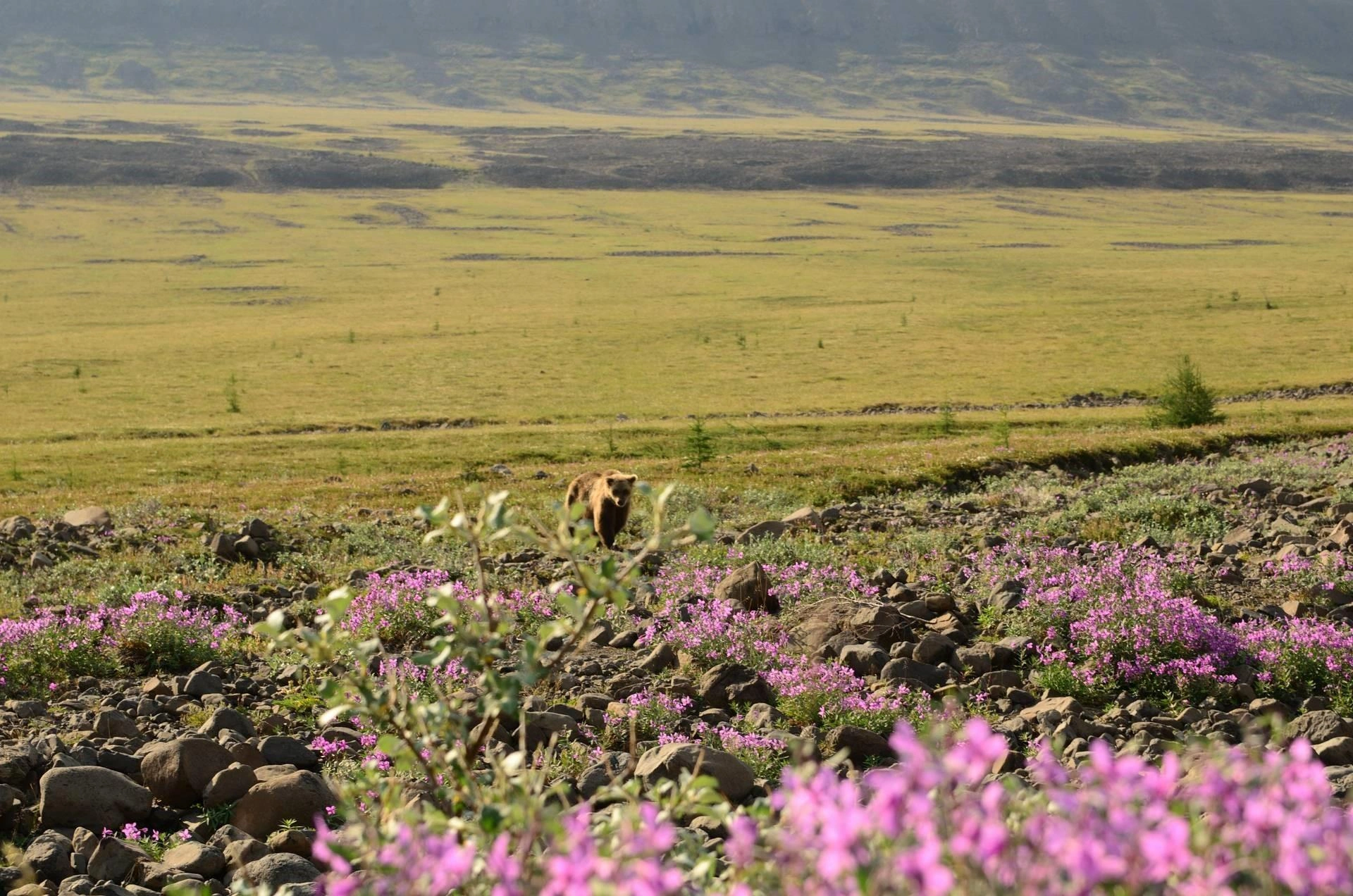
A bear that didn’t come too close. Photo: Danil Barashkov
However, the worst instance came after they cached some food. A bear had found the supplies and was still eating them when they returned. With hundreds of kilometers still to travel, Barashkov and Malykh couldn’t afford to lose everything. They collected their bear deterrents and managed to briefly scare the bear away before hurriedly packing what remained of their food into their backpacks and escaping downwind.
Rafting
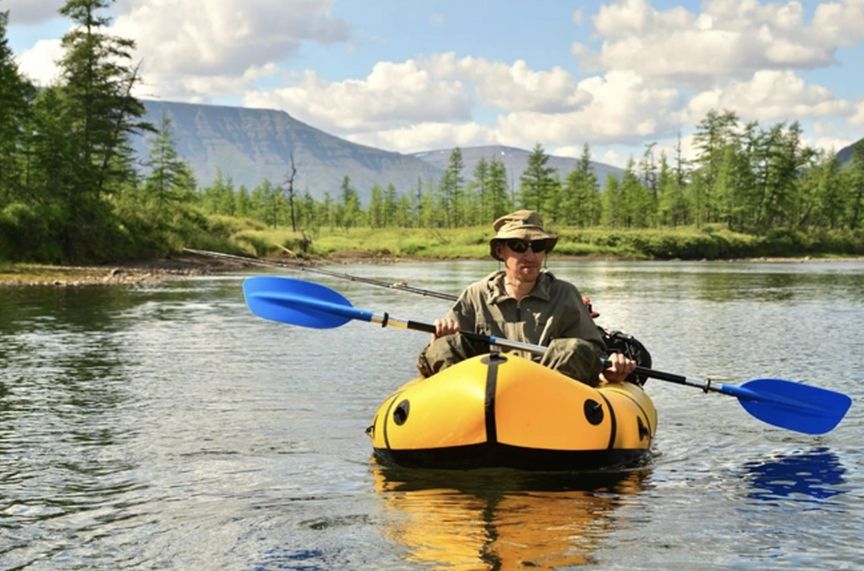
Photo: Danil Barashkov
Over the next three weeks, they used packrafts to travel 400km and their luck improved. They found plentiful berries and caught fish in the river to supplement their remaining food.
Their arrival at Chirinda in the second half of August marked the end of their expedition after around 60 days. Yet forest fires forced the pair to remain in the village for another 10 days. Wildfires swept through the surrounding tundra forests and smothered the area in smoke, grounding flights.
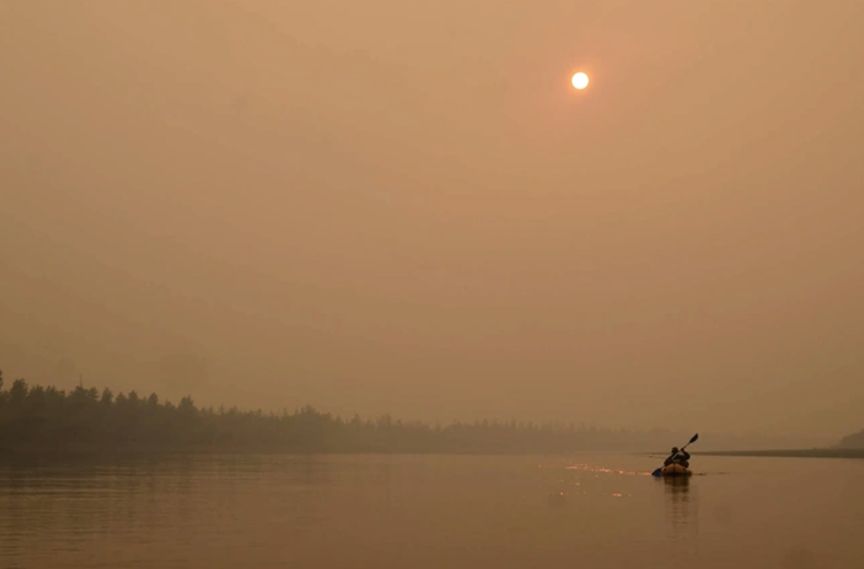
Wildfire smoke near the village of Chirinda. Photo: Danil Barashkov