The American Alpine Club has announced two of this year’s recipients of the prestigious Cutting Edge Grants. For nearly a century, this program funds alpine-style teams attempting exceptional climbs around the world.
Most recent years have featured five grantees. This year, there will be four. Today, the AAC revealed the details about two projects, while they await more information from two other successful applicants.
Chantel Astorga and partner Fanny Schmutz will return for the third time to attempt Shivling in the Indian Himalaya. And Tad McRea and Jon Griffin will go to the rarely climbed Kula Kangri on the Bhutan-Tibet border.
Back to Shivling
American Chantel Astorga has been granted $7,000 to have another stab at 6,543m Shivling in western Garhwal, in the Indian Himalaya. As before, her partner will be Fanny Schmutz of France.
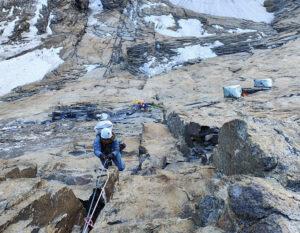
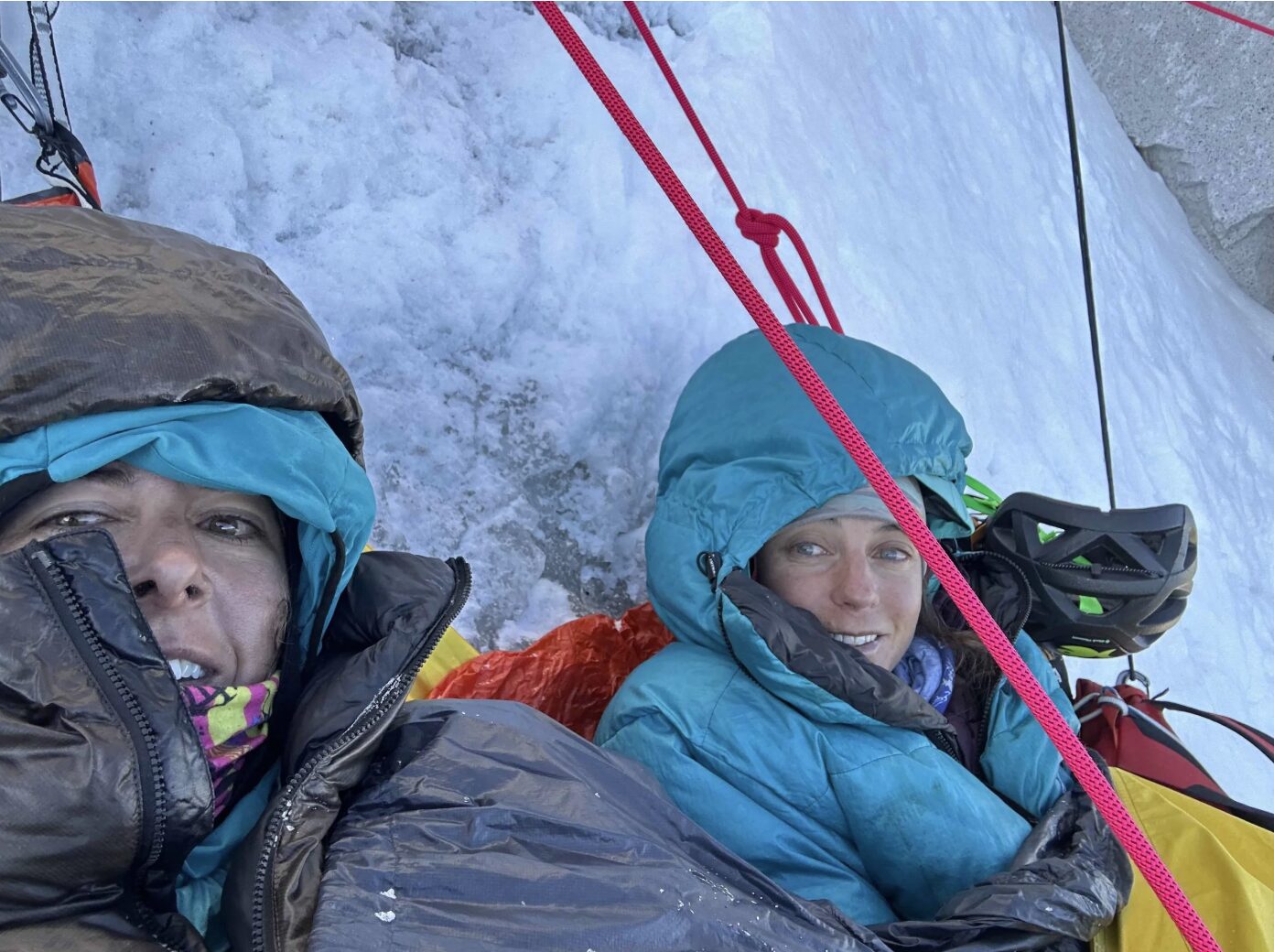
The women tried to climb the mountain in both 2023 and 2024. In 2024, they fought for each meter up a difficult new line on the ENE face (which they called the Direct East Face), but were forced back just 100m from the summit.
This time, Astorga and Schmutz have added Lise Billon of France to the team. “Returning this fall gives us the opportunity to continue where we left off, with a better understanding of the route and what it demands,” Astorga told the American Alpine Club.
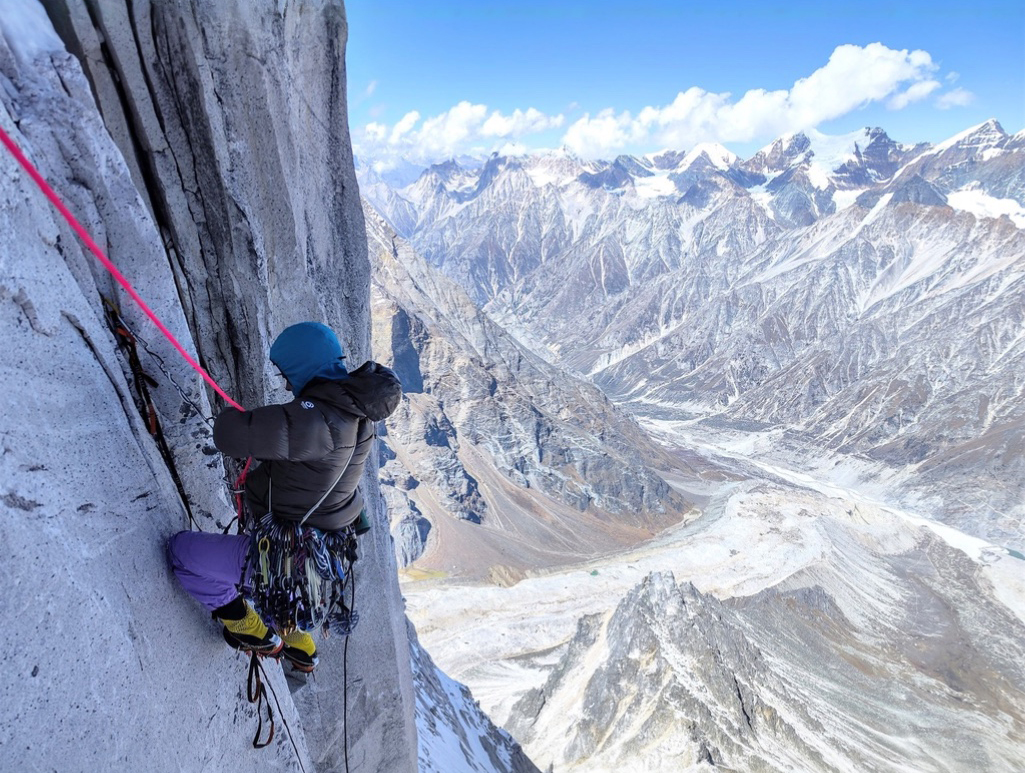
Astorga during last year’s attempt on the Direct East Face of Shivling. Photo: Fanny Schmutz
Chantel Astorga is an elite climber and skier with several new routes and first ascents on her resumé. One of them, on Nilkanth in the Central Garhwal in 2017, lies not far from Shivling. She has skied the Seattle Ramp variation on Denali’s West Rib and a highlight-reel line down the Great Trango Tower, with Jim Morrison and Christina Lustenberg.
Lise Billon is a member of the young alpinists program in the French mountaineering Federation. She is familiar with the Indian Himalaya, where she climbed last fall. Billon comes from a family of climbing guides, and her brother Leo Billon is one of the most respected alpine climbers in Europe.
The last we heard of Fanny Schmutz was after a trip to China’s Sichuan Mountains, where she opened a new route on a 5,600m peak with Luka Lindic of Slovenia.
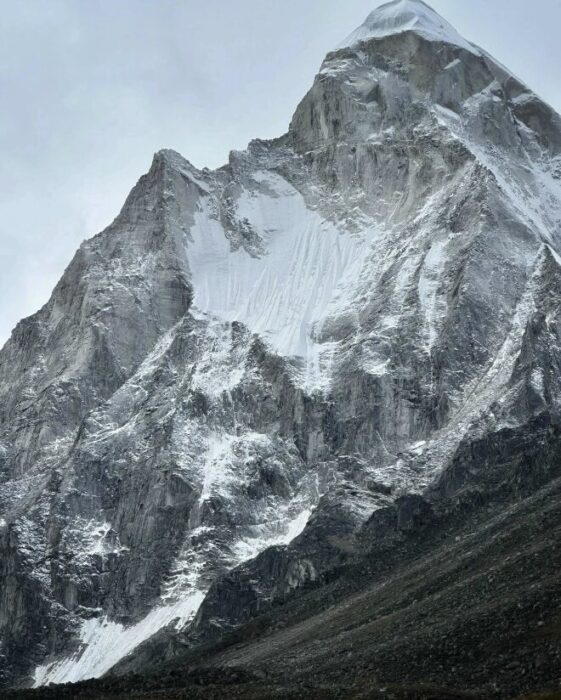
The east face of Shivling, Indian Himalaya. Photo: Chantel Astorga
Disputed territory
The second Cutting Edge Grant this year goes to Tad McCrea and Jon Griffin. They will receive $6,000 to attempt a new route on the rarely climbed Kula Kangri (7,538m) in the eastern Himalaya. The climbers told the American Alpine Club that they expect the route to include 2,000m of steep technical terrain.
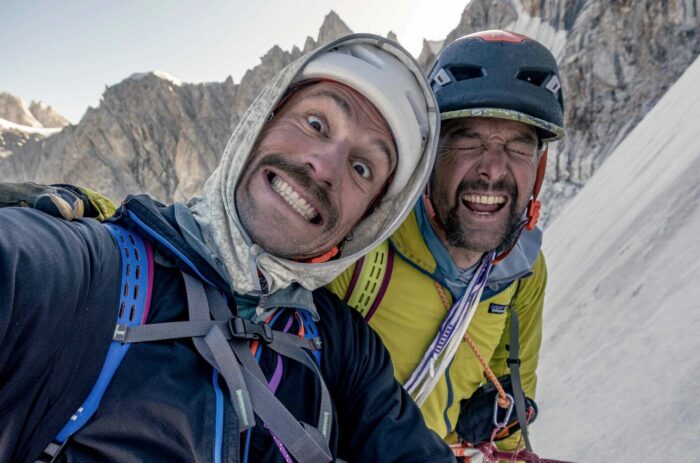
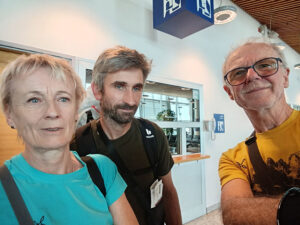
Tad McCrea, left, and Jon Griffin ham it up. Photo: Tad McCrea
McCrea was also awarded a Cutting Edge Grant in 2025. It helped support the first ascent of Eye Ri on the previously unclimbed northern spire of Suma Brakk in Pakistan.
Kula Kangri stands on the border between Bhutan and Tibet and is surrounded by other 7,000m peaks.
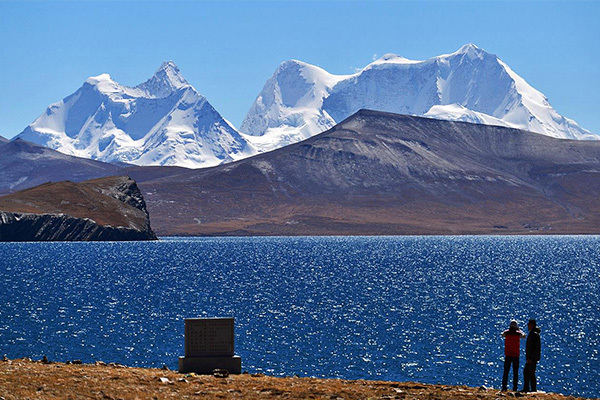
Kula Kangri from Pumo Yumco Lake. Photo: Great Tibet Tour
Both China and Bhutan claim the peak as part of their territory. If it does lie within Bhutan, Kula Kangri would be, at 7,538m high, the highest peak in the country. However, modern Chinese maps include it on the Tibetan side of the border.
While Kula Kangri is relatively easy to reach, thanks to the roads heading into the mountains from Lhasa, it is rarely attempted. It was first climbed in 1986 by a Japanese team. The peak was open to climbing, according to the CTMA’s 2024 list, although obtaining climbing permits for the Tibetan mountains is always messy.
Last year, also supported by a Cutting Edge Grant, McRea and Griffin did a new route to an unclimbed point on Suma Brakk in Pakistan’s Choktoi Valley. The third member of that team was Alex Huber of Germany.
About the Cutting Edge Grants
The American Alpine Club’s Cutting Edge Grants, sponsored by Black Diamond, have helped subsidize exploratory alpinism since 1925. They provide a significant amount of money, but in exchange, the requirements are high. They’re only suitable for highly experienced climbers “planning expeditions to remote areas featuring unexplored mountain ranges, unclimbed peaks, difficult new routes, first free ascents, or similar world-class pursuits.” At least one member of the team — the applicant — must be American.
The Cutting Edge Grants have become a badge of prestige for the teams awarded and a guarantee that the expeditions will be exciting and imaginative.