Despite the devastating floods in Nepal last week, most of the country’s mountains and valleys are unaffected.
In the aftermath of the deadly floods that turned the Bhote Koshi River and Trishuli Valleys into a soup of mud and debris, Nepal is searching for survivors and recovering the bodies of the lost. The most affected areas were those in important tourism hubs near the Langtang Valley, bordering one of the most-used passes to Tibet. More than 100 tourists were caught in the flood as they headed toward Langtang or Mount Kailash.
Tourism victims
The Trekking Agencies’ Association of Nepal (TAAN) has so far identified 36 support staff from five travel and trekking companies as missing in the disaster, The Tourism Times reported today. That figure may change as companies continue to verify their employees’ whereabouts.
Yet Nepal’s tourism industry can’t afford to lose its livelihood as the year’s busiest trekking season begins. Those planning to visit Nepal in the coming weeks may help the country by their presence. However, they may need to readjust plans.
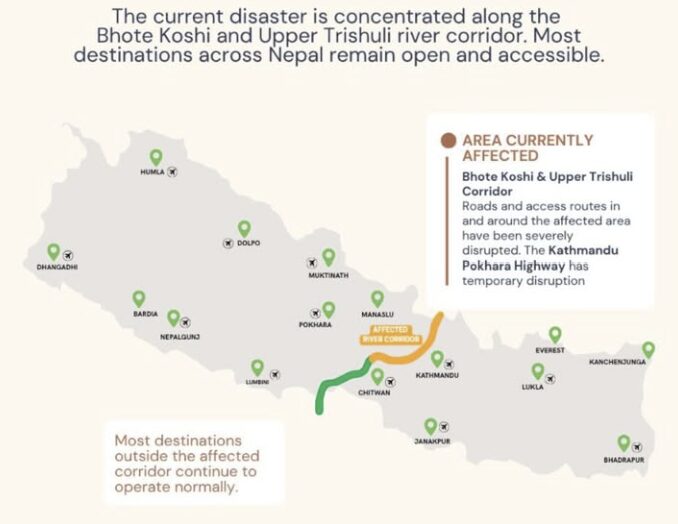
A map shows the area affected by floods, shared by Mingma David Sherpa
Where not to go
The entire Langtang region, where the GLOF (Glacial Lake Outburst Flood) that triggered the disaster occurred, is currently isolated. The pilgrimage to Mount Kailash is not an option. Nepal Peak Adventure, a Kathmandu-based trekking agency, has posted a useful breakdown of the areas currently closed, those at risk, and other potential danger spots in different watersheds.
Routes closed: Langtang Valley, Gosaikunda, Tamang Heritage Trail, Helambu Circuit, Ruby Valley, and the overland Kailash route via Rasuwagadhi. The gateway town of Syabrubesi and the Pasang Lhamu Highway are badly damaged.
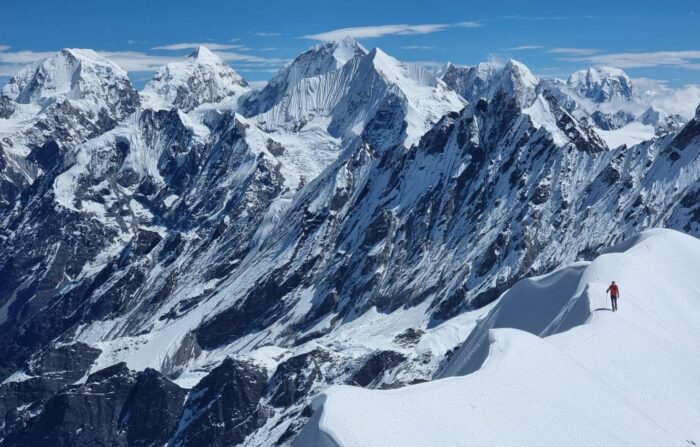
The bigger peaks of Langtang. Photo: Ondrej Husherka
Areas at risk: Lower regions downstream of the flooded area are still under alert. Nepal Peak Adventure mentioned Nuwakot, Dhading, Gorkha, and Chitwan.
8,000’ers safe
For climbers, the main high-altitude climbing areas are unaffected and operating normally because they are in different watersheds. Climbers and trekkers bound for the Khumbu-Everest region, Manaslu, Annapurna Circuit, Mustang, Dolpo, and Kangchenjunga should be okay.
Seven Summit Treks, one of the biggest operators in the country, has informed its clients that the expeditions and treks in the Manaslu, Dhaulagiri, and eastern Nepal regions remain on schedule for the autumn season.
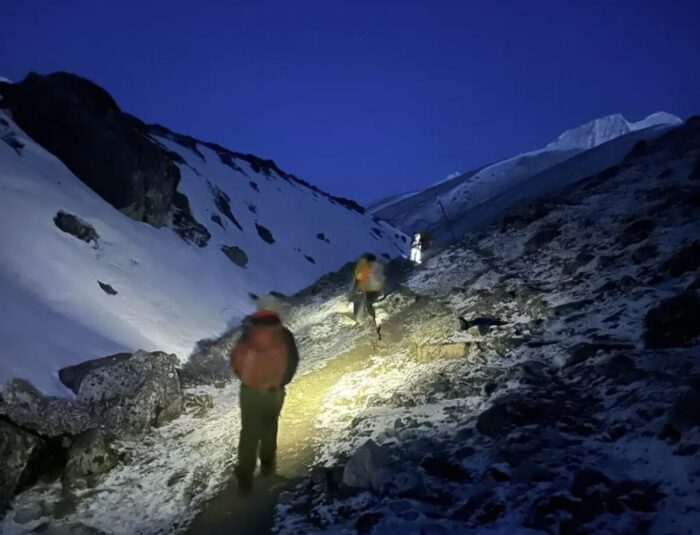
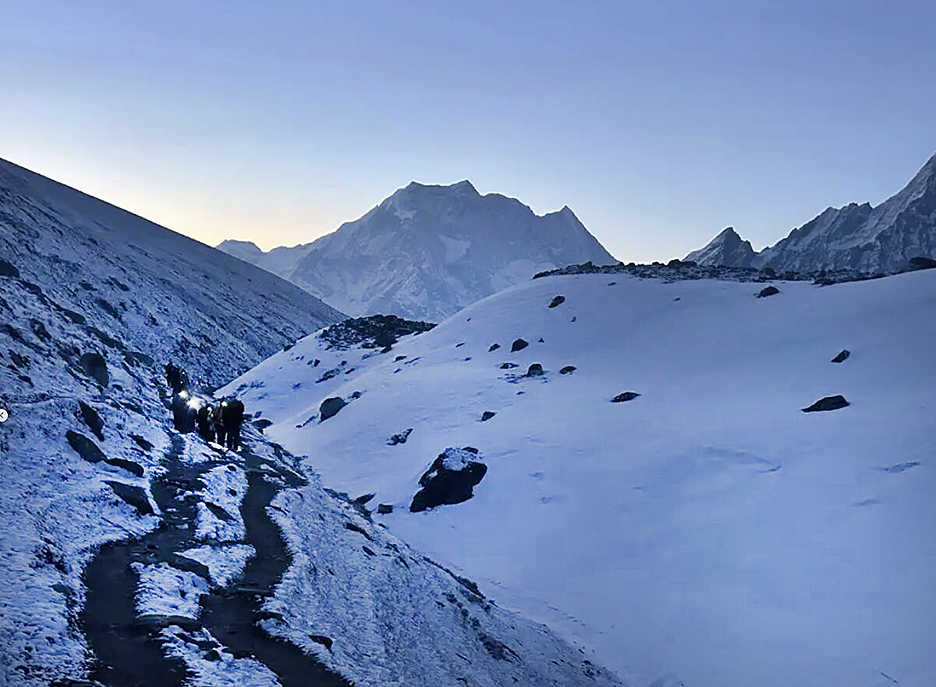
Trekkers on their way to Manaslu base Camp. Photo: Peaceful Nepal Treks
Manaslu boom
Hundreds of climbers now in Kathmandu are heading to the mountains this week, with Manaslu as this season’s favorite peak.
Nepal’s Department of Tourism has issued permits for 18 Manaslu teams totaling 219 foreign climbers. Numbers are expected to rise even more since the China-Tibet Mountaineering Association confirmed last week that Shisha Pangma and Cho Oyu will remain closed this year. It has prompted some teams, such as U.S.-based Madison Mountaineering, to head to Mansalu instead.
The Expedition Operators Association of Nepal (EOA) deployed a team of Sherpas to fix the ropes on Manaslu last week. They might complete the route to the summit by the third week of September, according to EOA estimates.