The remaining expeditions in Svalbard have now concluded. Crossings of the Greenland Ice Sheet, however, are in full swing and will continue for a few more weeks. Meanwhile, in Canada’s Northwest Territories, veteran polar traveler Will Steger makes gradual progress as the spring breakup approaches.
Greenland
An international four-person team comprising Gilles Denis, Sasha Doyle, Ed Luke, and Wilson Cheung left on April 19 to attempt a 1,700km kite-powered crossing of the Greenland Ice Sheet from Kangerlussuaq in the southwest toward Qaanaaq in the northwest. The expedition has now reached day 26. Tracker data places the team at around 77°N, closing in on Qaanaaq.
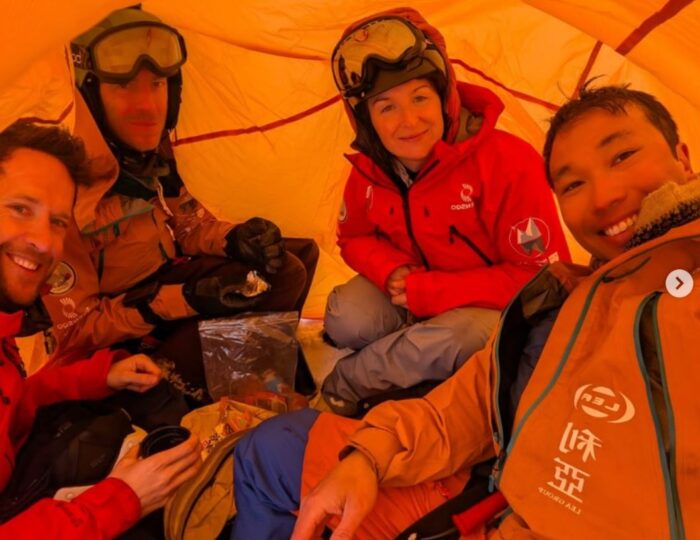
Photo: Gilles Denis
On day 19, they described a period of strong progress: “We had a beautiful southern wind that effortlessly shifted to a north wind, allowing us to cover 150km today without any issues. The powder snow is absolutely heavenly!”
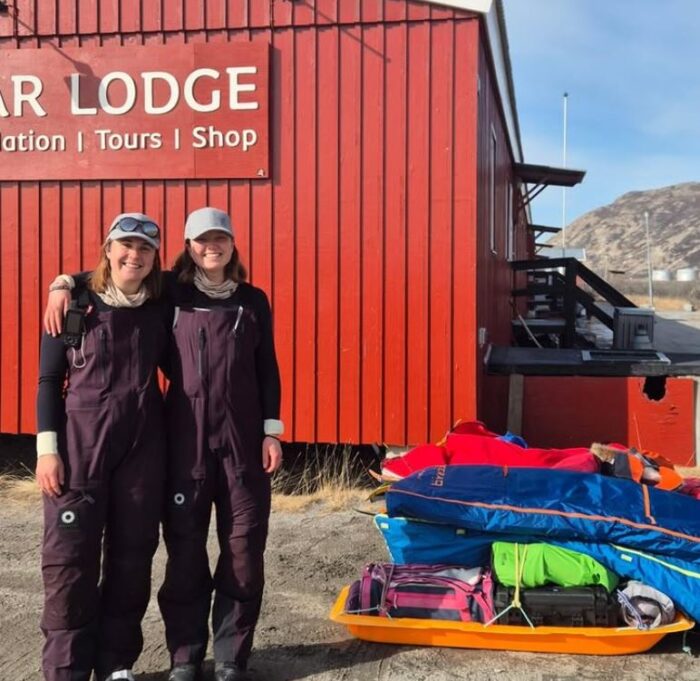
Photo: Live Skattum and Marta Flotve in Greenland, ready to start a west-to-east crossing.
Norwegian’s Live Skattum, 25, and Marta Flotve, 23, are two weeks into an independent crossing of the Ice Sheet from Kangerlussuaq to Isortoq. They plan to finish on June 8, and as yet, there are no updates on their progress. Note that many expeditions begin or end in Kangerlussuaq because that is where most European flights land.
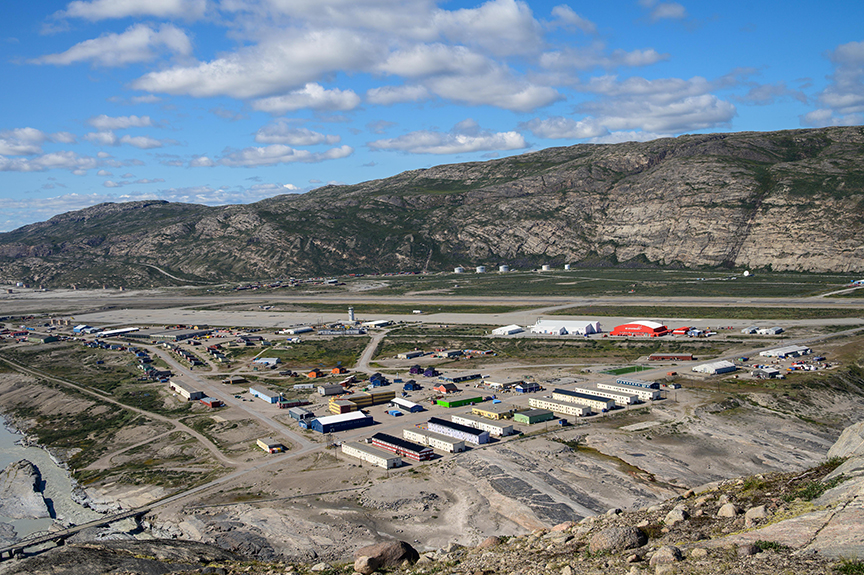
Kangerlussuaq in summer. Lying 150km inland up a giant fiord, it has typically beautiful weather. Photo: Ash Routen
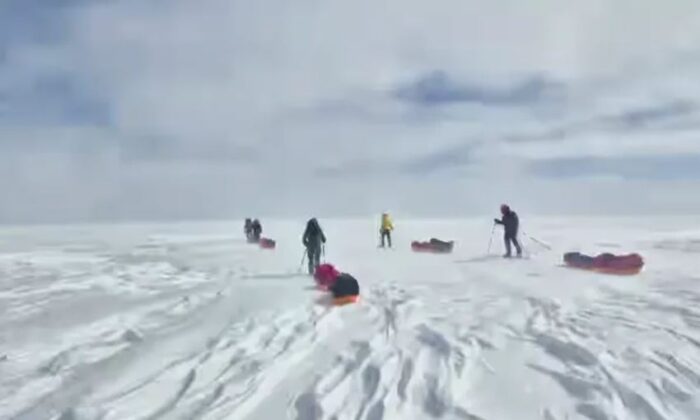
The Finnish team on the Ice Sheet. Photo: avotunturit.fi
More Greenland crossings
Finnish guide Nina Teirasvuo and her five clients are 29 days into a west-to-east crossing from Point 600 on the west coast to Isortoq on the east coast. Their tracker shows them very close to their eastern finish point.
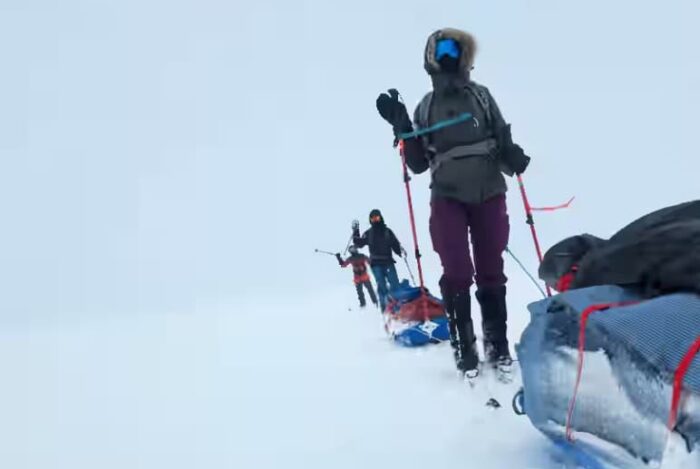
The Arctic Adventure Team. Photo: arcticadventure.nl
Elsewhere, a five-man team led by Dutch outfitter Arctic Adventure is 199km onto the Ice Sheet, on a ski crossing from Kangerlussuaq to Isortoq. The team reached the abandoned DYE-2 Cold War radar station in the past 24 hours. There, one person was evacuated by helicopter from here due to gastrointestinal issues.
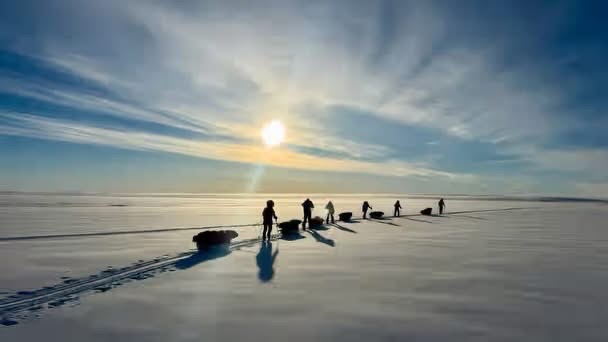
The Icetrek team. Photo: Icetrek Expeditions
A ten-person Icetrek Expeditions team, led by IPGA guide Mardi Philips, along with Steven Giordano, is now two weeks into a west-to-east ski crossing of the Greenland Ice Sheet from Point 660 to the Grill Hut on the east coast. Six days ago, they passed DYE-2 and were maintaining daily distances of around 20km, aiming to reach the coast by the end of May.
Conditions have since deteriorated. Yesterday, the team reported: “Another day in the unrelenting wind. Skied nine full hour-long sessions into a 40-60km headwind. Brutal!”
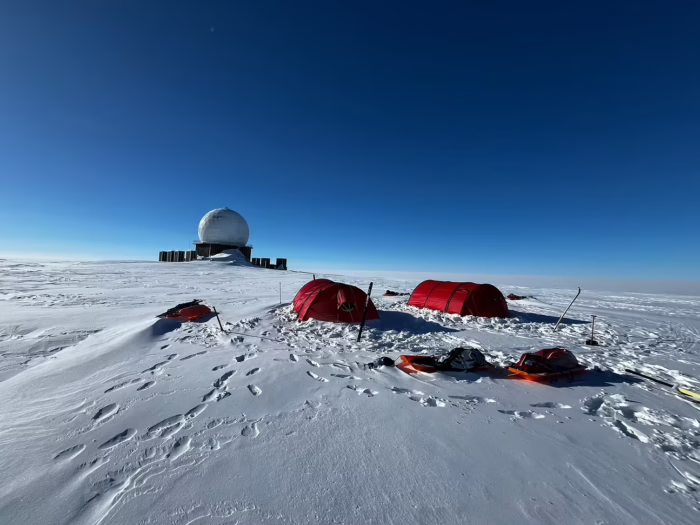
The Polar Explorers team camped at DYE-2. Photo: polarexplorers.com
Svalbard
The all-female team of Britons Cat Burford, Amelia Rudd, Amelia Steele, Emma Maher, and Jen McKeown, along with Japanese-American Ayuka Kawakami, completed their 200km ski journey across Svalbard’s glaciers from Ekmanfjorden to Magdalenefjorden on May 12.
Nunavut
Baffin Island residents and multi-disciplinary adventurers Erik Boomer and Sarah McNair‑Landry are continuing their 45‑day expedition on Baffin, combining travel and climbing objectives. Their focus remains on seeking out unclimbed ice, with plans to later link up with British climber Leo Houlding for big wall objectives.
About a week ago, Boomer and McNair‑Landry completed a lower‑grade ice climb they named “A bear ate our snowmachine seat!”— a reference to an incident that occurred while they were on the route. (For whatever reason, polar bears like to munch on snowmobile seats.)
Northwest Territories, Canada
Eighty‑one‑year‑old American expedition veteran Will Steger is 43 days into a solo Arctic traverse of approximately 1,300km, a journey he expects will take around 60 days. He began on the northeastern shore of Great Bear Lake and is traveling north toward Paulatuk, an Inuit community on the Arctic Ocean.
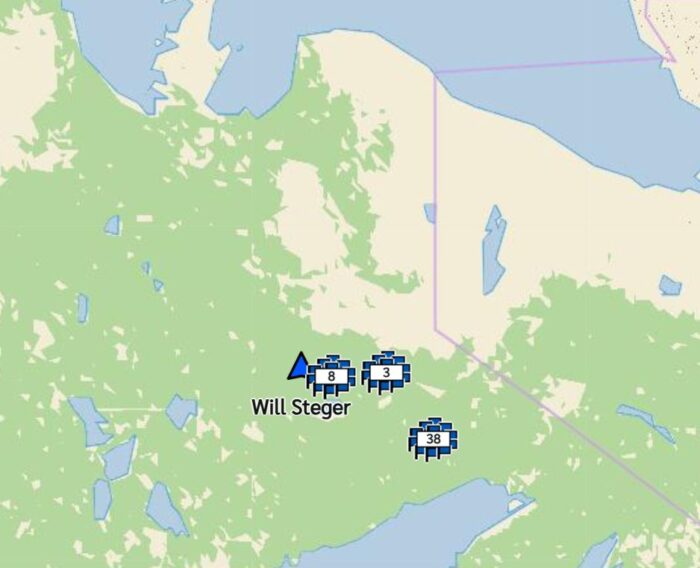
Steger is still far from the Arctic Ocean
Tracking data shows Steger has now rounded the westward bend of the Horton River and is progressing north, though he still has considerable distance to cover. Spring conditions are increasingly affecting travel, with river ice beginning to weaken. For now, he continues to move on the remaining patches of frozen crust, working to avoid overflow and at times following the riverbanks.
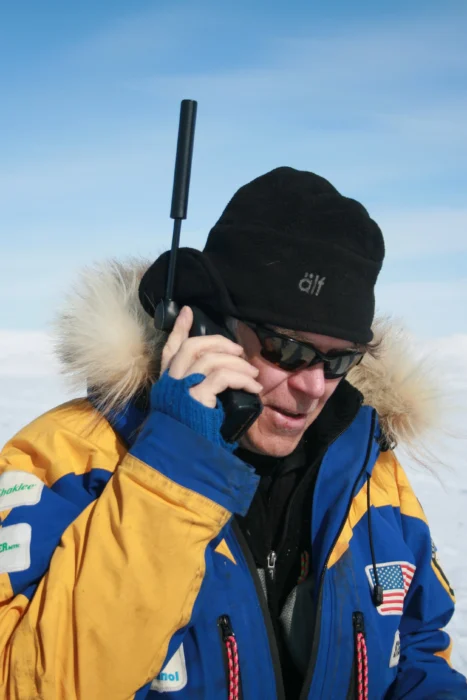
Steger on a previous expedition. Photo: Will Steger
These sections present their own hazards, as currents erode the inside of bends while the outer banks can be steep, unstable, and waterlogged. Steger is aiming to reach more forested terrain, where he can establish a secure camp with access to fuel wood and wait out the spring breakup along the Horton.