Last December, French adventurer Noe Perchet completed a 1,750km solo kayak expedition from the Curaray River in Ecuador to Leticia in southern Colombia. The journey crossed Ecuador, Peru, and Colombia through the Amazon basin.
Perchet, who turned 34 during the expedition, set off on October 8, 2025, from Tonampare on the Curaray River. He reached Triunfo in southern Colombia on December 4. From there, he continued to Leticia by boat due to security risks along the lower sections of the river. However, he completed about 1,400km of the 1,750km journey by kayak.
Although independent and solo, Perchet interacted occasionally with river communities. “I…received fruit at some points, slept in or near villages roughly every five days, and later bought food in Santa Clotilde,” he explained.
The route
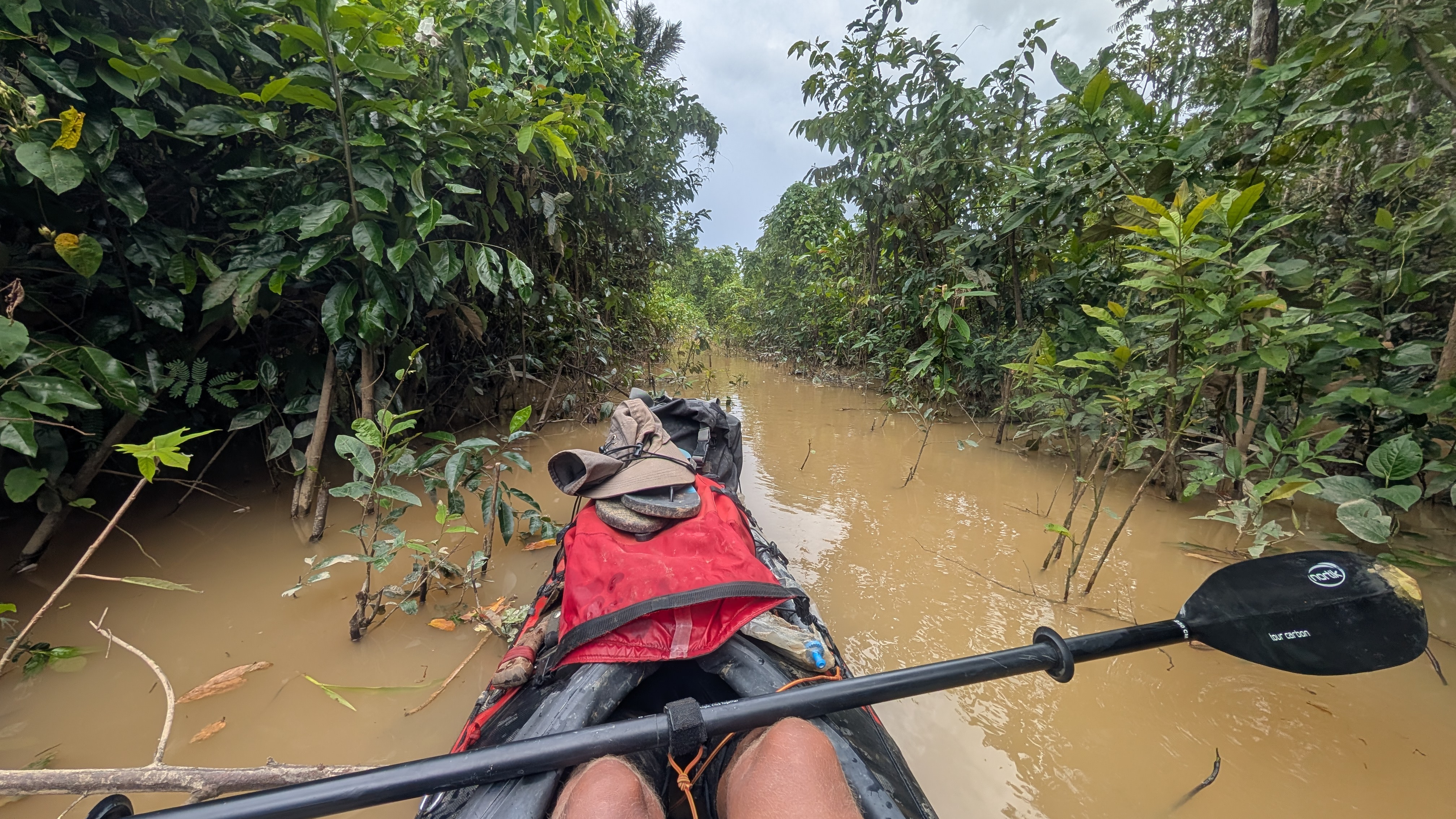
Perchet covered 1,000km of the expedition along the Curaray, a remote river in the western Amazon. Rising in Ecuador and flowing eastward through dense rainforest, the Curaray eventually feeds into larger tributaries that form part of the vast Amazon River system.
The adventurer, who had only day-trip kayaking experience, took a continuous river route, starting at Tonampare and paddling downstream along the Curaray River into the Napo River. From there, he continued onto the Amazon River before finishing in the city of Leticia.
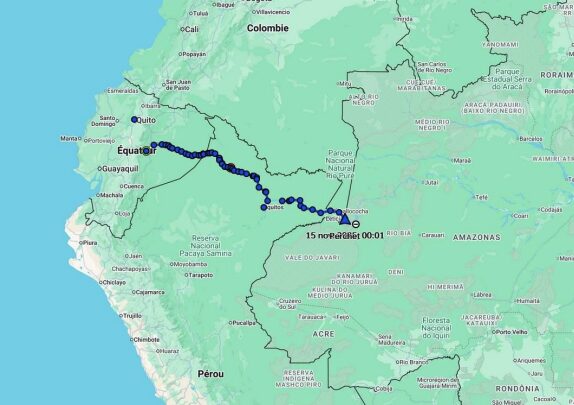
Access to this region required prior negotiation with Indigenous communities who govern large areas of the forest.
“Juan Bay, the Waorani president, eventually agreed to help with the departure,” said Perchet. “At the same time, he warned that the expedition looked close to impossible. He spoke about the rains, the animals, the isolation, the human risks, and the fragility of the boat. For people who know the forest and the river, the idea of going alone in a small folding kayak did not look credible.”
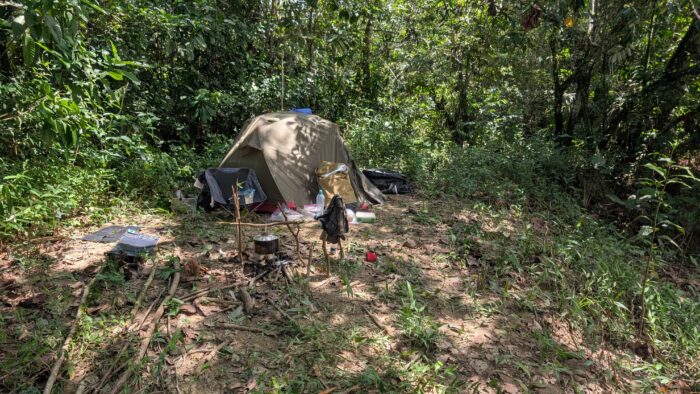
Photo: Noe Perchet
Importance of fishing
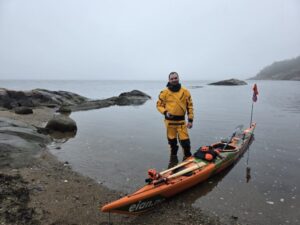
Perchet set out in a folding kayak carrying 185kg of equipment and supplies, balancing weight, durability, and self-sufficiency. “I started with around one and a half months of food, mainly compact dry food such as rice, quinoa, oats, and other reserves.”
From the outset, he planned to supplement those rations from the river itself.
“Fishing was part of the strategy from the start and became increasingly important in the middle of the Curaray,” he added. “I used a rod and improvised traps. I regularly caught fish, mainly mota, piranhas, and several catfish species, including one strange catfish-like fish with human-looking teeth.”
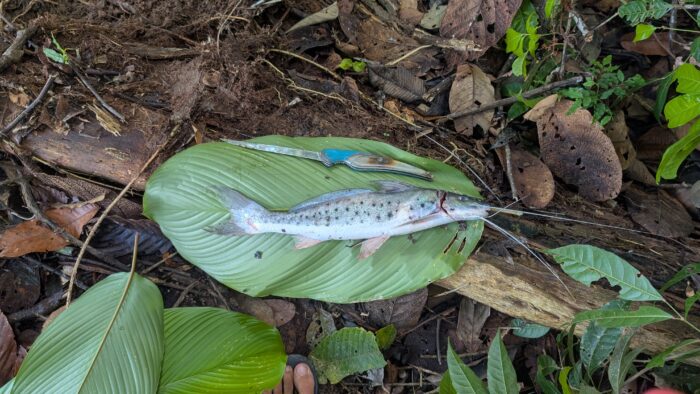
Photo: Noe Perchet
Environmental conditions were a key challenge, particularly the impact of upstream rainfall.
“The Curaray could change very quickly,” explained Perchet. “Beaches that looked safe in the evening could be partly gone during the night. I had to monitor the water level constantly, sometimes by placing markers in the sand and waking up repeatedly to check whether the river was getting close to the tent or the kayak.”
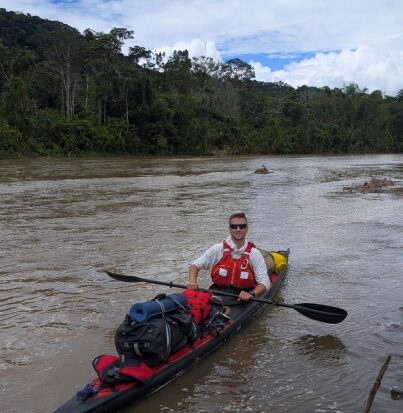
Photo: Noe Perchet
Folding boats don’t turn on a dime
The choice of craft added another layer of difficulty. The heavily loaded folding kayak sat low in the water and maneuvered sluggishly. Along the Curaray, Perchet had to contend with submerged logs, fast currents, whirlpools, and sudden shifts in water levels.
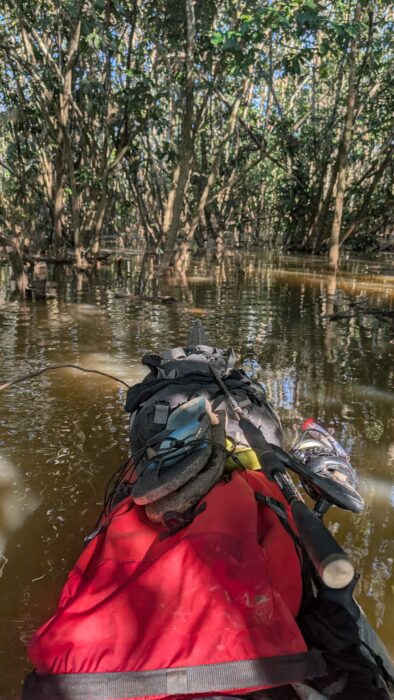
Photo: Noe Perchet
“I capsized twice under or against fallen tree trunks,” he recalled. “In both cases, the kayak became trapped, took on water, and I had to spend a long time getting it free. Losing or breaking the kayak in that environment would have meant losing the expedition.”
An encounter at gunpoint
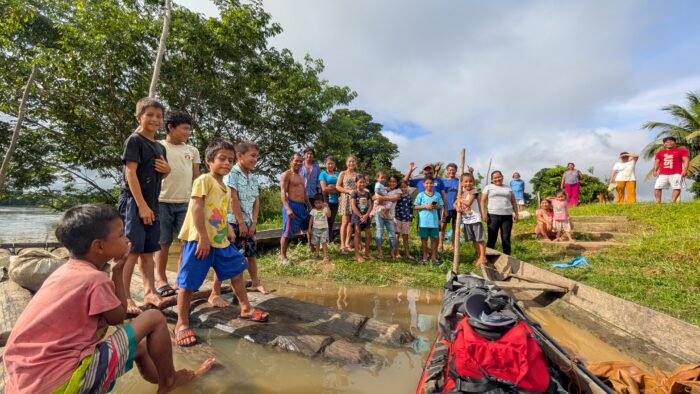
Photo: Noe Perchet
On the Napo, Perchet again had guns pointed at him. As the journey wore on, the security risks accumulated.
“It was not one isolated problem. In that section, several risks came together at once: isolation, armed men, river piracy, local criminal networks, and uncertainty about who could be trusted,” he explained. “This is why I eventually stopped paddling the final section and continued by lancha [boat] toward Leticia.”
Rarely traveled
Perchet believes the Curaray has likely seen few, if any, modern kayak expeditions of this length. He says that most past activity on the river was “motorized, scientific, missionary, military, local, or traditional.”
Despite those risky encounters, Perchet clearly experienced many enjoyable moments.
“Some evenings, after the effort of the day, I watched fireflies moving above the river and reflecting on the surface of the water. Those moments were quiet, unreal and very powerful. They were the opposite of the armed encounters and the fear. Just the river, the forest, the dark, and the light of the insects.”
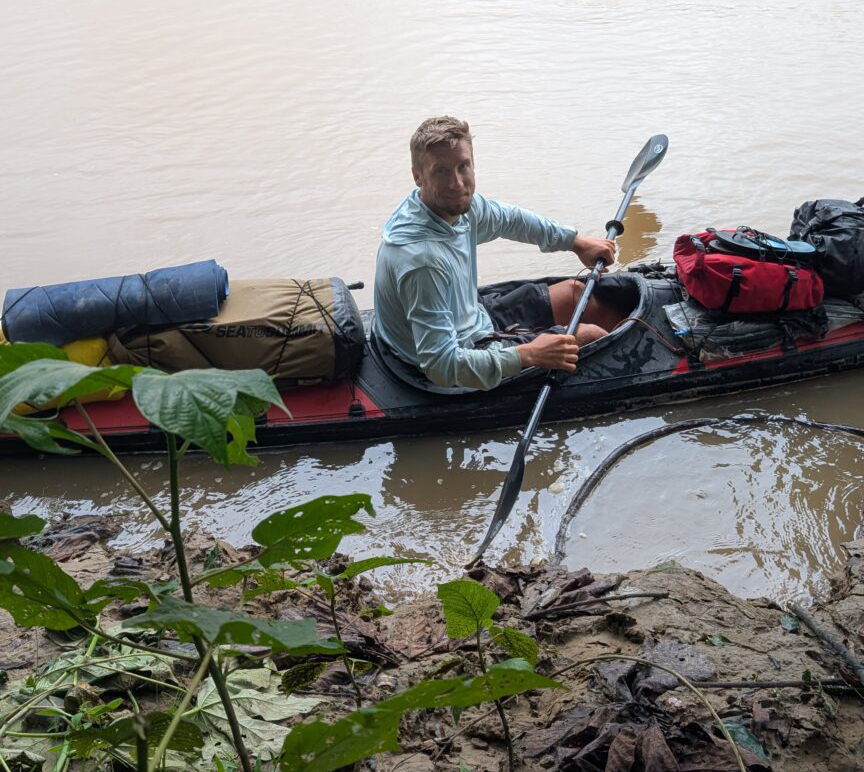
Photo: Noe Perchet