Proposed amendments to Nepal’s Tourism Bill will increase revenues from commercial climbing and trekking and give local companies even more of a business advantage at the expense of foreign outfitters. However, making high-altitude climbing safer for both clients and workers is not part of these amendments.
There’s been a lot of talk about upcoming regulations for Everest climbers in particular, especially the requirement that all have previous experience on a 7,000m peak in Nepal, and whether this might affect expeditions as early as 2027.
All this is part of a broad tourism bill presented last February in Nepal’s House of Representatives and currently under discussion. A total of 263 amendments from 58 members were accepted earlier this week, although not all of them were about Everest or even the outdoor industry.
The Tourism Bill 2081 has a broad scope, covering not only how climbing permits are granted but also casino licenses, hotel management, tourism visas, and infrastructure standards.
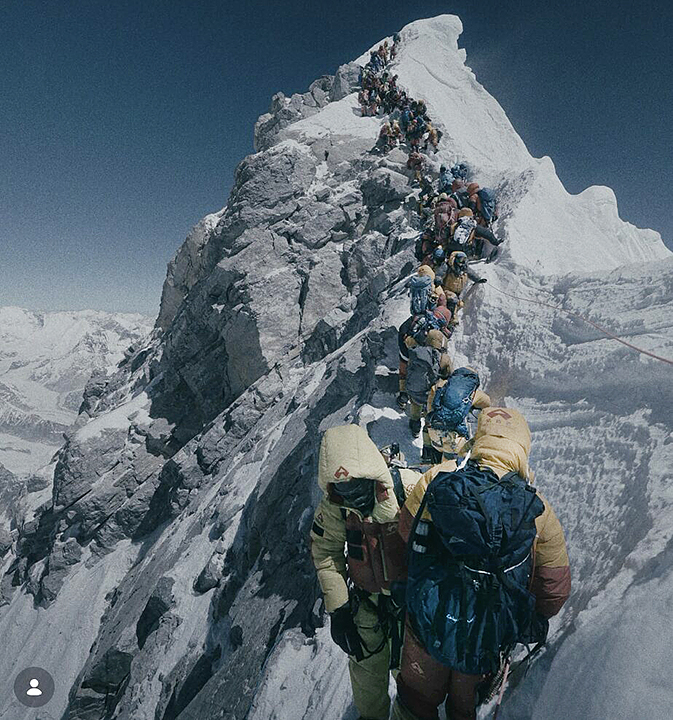
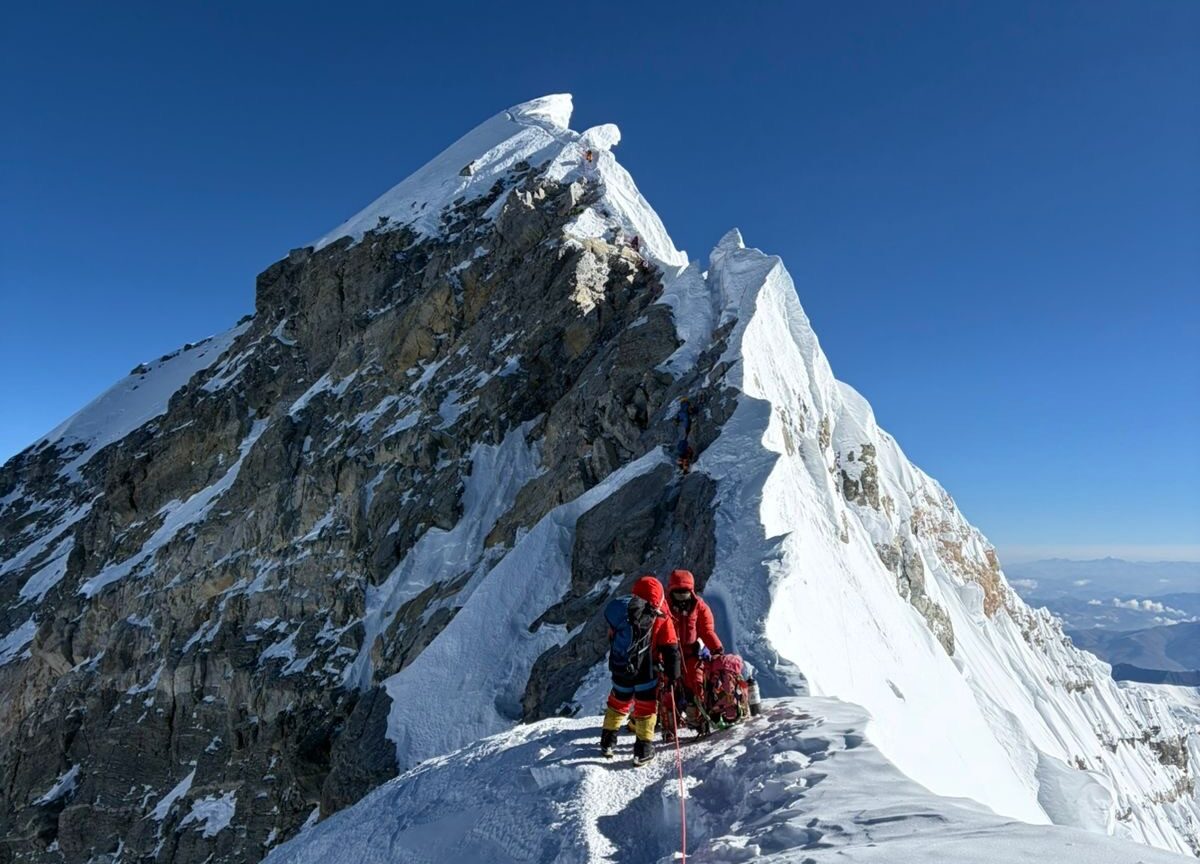
The long line to the summit. Photo: 8K Expeditions
Nevertheless, local papers have highlighted some important aspects affecting Everest. At first glance, all the proposed measures will lead to higher costs for climbers without increasing safety.
Experience and royalties
Many lawmakers seem to agree that climbers must have previously summited a 7,000m peak in Nepal. There is little interest in including experience on peaks of similar altitude outside Nepal in this prerequisite. Others go further and imitate China by demanding that before Everest, every climber must first have summited another 8,000m peak.
Others suggest that two 6,000’ers plus one 7,000’er should be required. Whatever the ultimate combination, that these required peaks are in Nepal suggests an interest in increasing business rather than just testing a visitor’s high-altitude climbing experience. From a common-sense point of view, it shouldn’t matter whether that experience came in Nepal, China, Pakistan, or Central Asia.
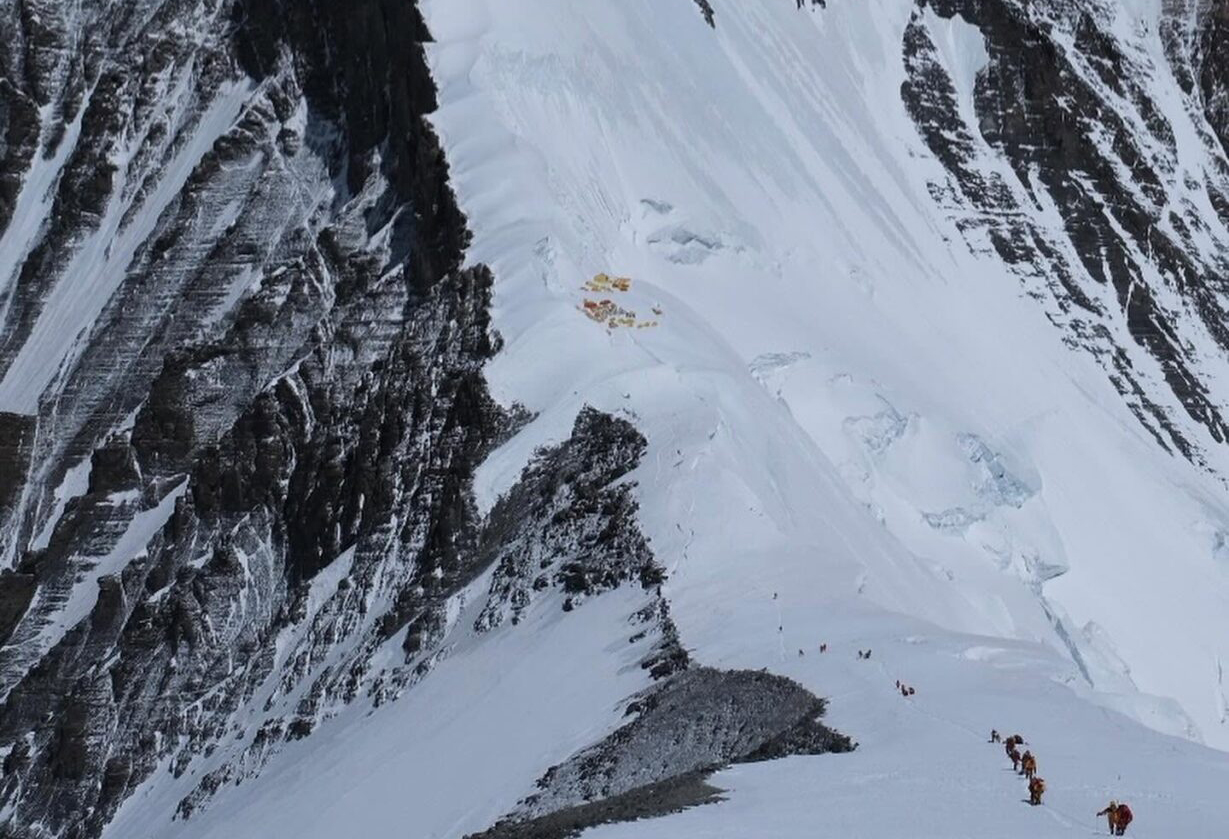
Is experience on the North Side of Everest not enough to climb on the South Side? Photo: Furtenbach Adventures
As it is, a climber who has summited K2 wouldn’t be accepted for a commercial Everest climb, while one who has done Manaslu would be. Cho Oyu climbers who summit from Tibet, or even Everest’s North Side, might not be eligible to attempt Everest’s normal route from Nepal.
If the requirement to climb a Nepali 8,000’er before Everest applies, Benjamin Vedrines — who has climbed no 8,000’ers in Nepal, only a new alpine-style route on the north face of Jannu East — wouldn’t be experienced enough to be a member of a guided Everest expedition.
Money grab?
The financial interest is also evident in a proposal to leave the assignment of specific Base Camp spaces in the hands of the Department of Tourism, rather than allowing companies to claim or negotiate their areas on the Khumbu Glacier. There is even the idea to auction Everest permits to the highest bidder, “within a cap set by carrying capacity assessments for each mountain each season,” The Tourism Times reported. As for who would decide how many climbers fit on each mountain, the reply is:
“The government shall determine the maximum number of climbers permitted on each mountain during every climbing season after considering the mountain’s physical carrying capacity, favorable weather windows, and the level of congestion likely to occur,” the proposal says, according to The Kathmandu Post.
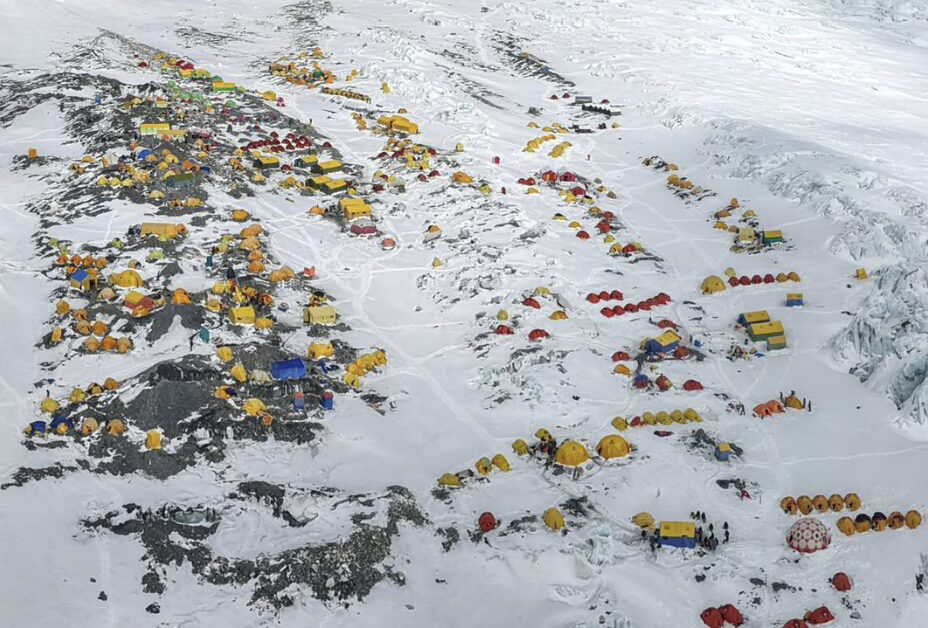
Everest Base Camp on the Khumbu Glacier. Photo: Altipro Adventures
A Nepal-only business
Some of the amendments seem to ensure that local companies eventually take over the entire business by requiring all mountaineering expedition packages, promotion, and sales to be routed exclusively through Nepal-registered trekking agencies. The proposal adds that all financial transactions should take place through Nepal-based banks.
“Foreign companies shall not be permitted to directly sell or operate such expeditions or packages,” one of the amendments reads.
Dig a little deeper, however, and it seems that such limitations are already enforced.
“International expedition operators have long been required to work through licensed Nepali companies, and foreign companies cannot obtain permits, sell expeditions independently, or employ staff directly in Nepal,” Lukas Furtenbach of Austria-based Furtenbach Adventures told ExplorersWeb. “Presenting these long-established rules as major reforms may create the impression of change without fundamentally changing how the industry actually operates.”
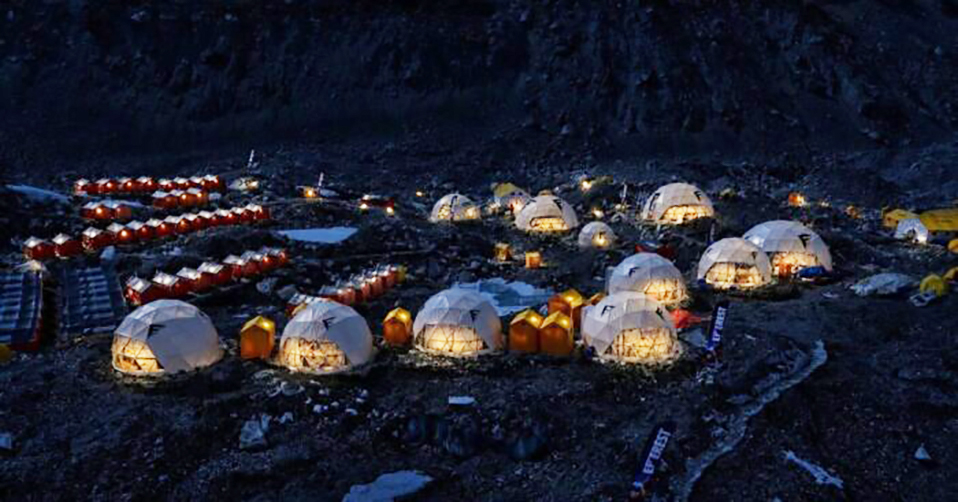
Tents in Everest Base Camp. Photo: Furtenbach Adventures
Garret Madison of U.S.-based Madison Mountaineering agrees.
“Most international operators, including Madison Mountaineering, already work in close partnership with licensed Nepali operators and employ outstanding Nepali Sherpas and staff,” Madison told ExplorersWeb. “Those partnerships have been the foundation of successful Everest expeditions for many years. My concern is that regulations should focus on raising standards, not simply changing who is allowed to market trips.”
Guides
There are petitions to improve conditions for mountain workers, mainly concerning insurance, salaries, and the maximum weight that a porter may carry. However, a proposal mentioned in a Kathmandu Post article caught our attention:
The proposals also guarantee that Sirdars, mountain guides and climbing support workers may refuse to continue an expedition if weather conditions become hazardous, their health deteriorates, or their safety is at risk. Workers exercising this right would be protected from wage deductions, dismissal, or other employment-related penalties.
There have been reported cases of clients clearly not fit to continue but who refused to abort their climbs. Others insisted on continuing despite dangerous conditions. Their Sherpa guides were unable to convince them to turn around, sometimes with tragic results for the Nepalese, the client, or both.
Such was the case of Piyali Basak of India, who nearly perished on Makalu, or Nawang Sherpa, who died together with his client, Cheruiyot Kirui of Kenya. Kirui insisted on climbing Everest without oxygen and was unable to descend on his own.
On the other hand, a guide’s decision to turn around when their clients feel okay and conditions seem adequate may spark controversy. The best way to guarantee a guide’s decisions is for the guide — both Nepalese and international workers — to have internationally recognized qualifications. Currently, the amendments only include a proposal for all Sherpas to belong to some mountaineering association.
Two sides to Everest
In the rush to make the Everest and 8,000m business completely local, some lawmakers may have gone too far. According to The Kathmandu Post, proposals include the demand that all mountaineering personnel — including Sirdars, guides, support staff, cooks, videographers, and photographers — be Nepali citizens. Others suggest that all insurance policies, including evacuation and medical care, be with a Nepali company. Such measures are so restrictive that they might deter a significant number of climbers.
There is only one Everest and, in that sense, it might seem that Nepal can make whatever demands it pleases. But Everest has two sides, and if the China Tibet Mountaineering Association opens the North Side route again soon, many foreign climbers may opt for Tibet.
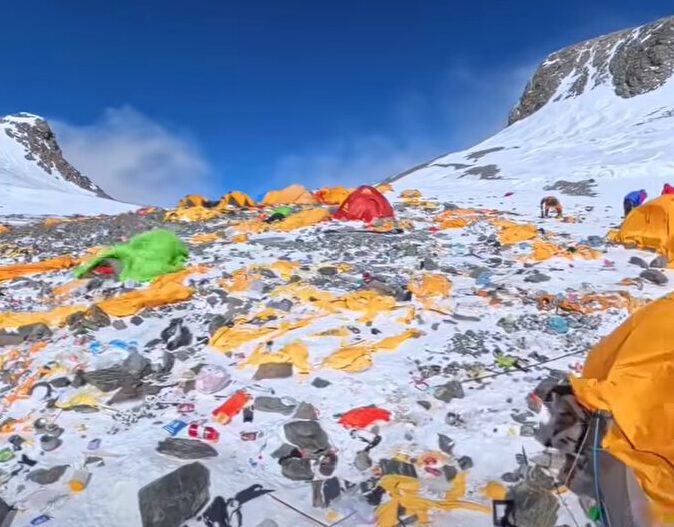
Trash at the South Col on Everest. Photo: Vinayak Malla
Too late for 2027?
Once amendments under discussion are approved by the House committee, they will return to Parliament for a vote. The final enacted law will probably differ significantly from the proposals. There is no deadline for the discussion stage or the final voting. Given the extensive debate expected, it is not likely that the future regulations will be enforced in time for the spring of 2027.