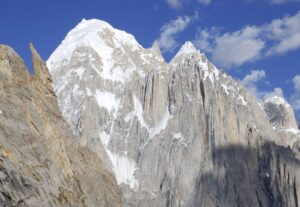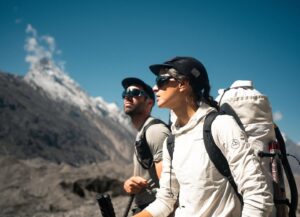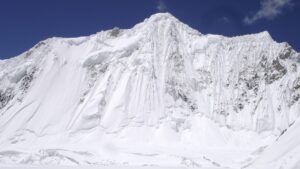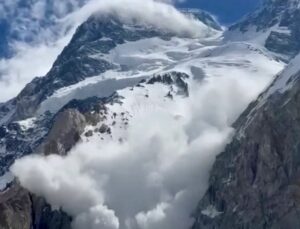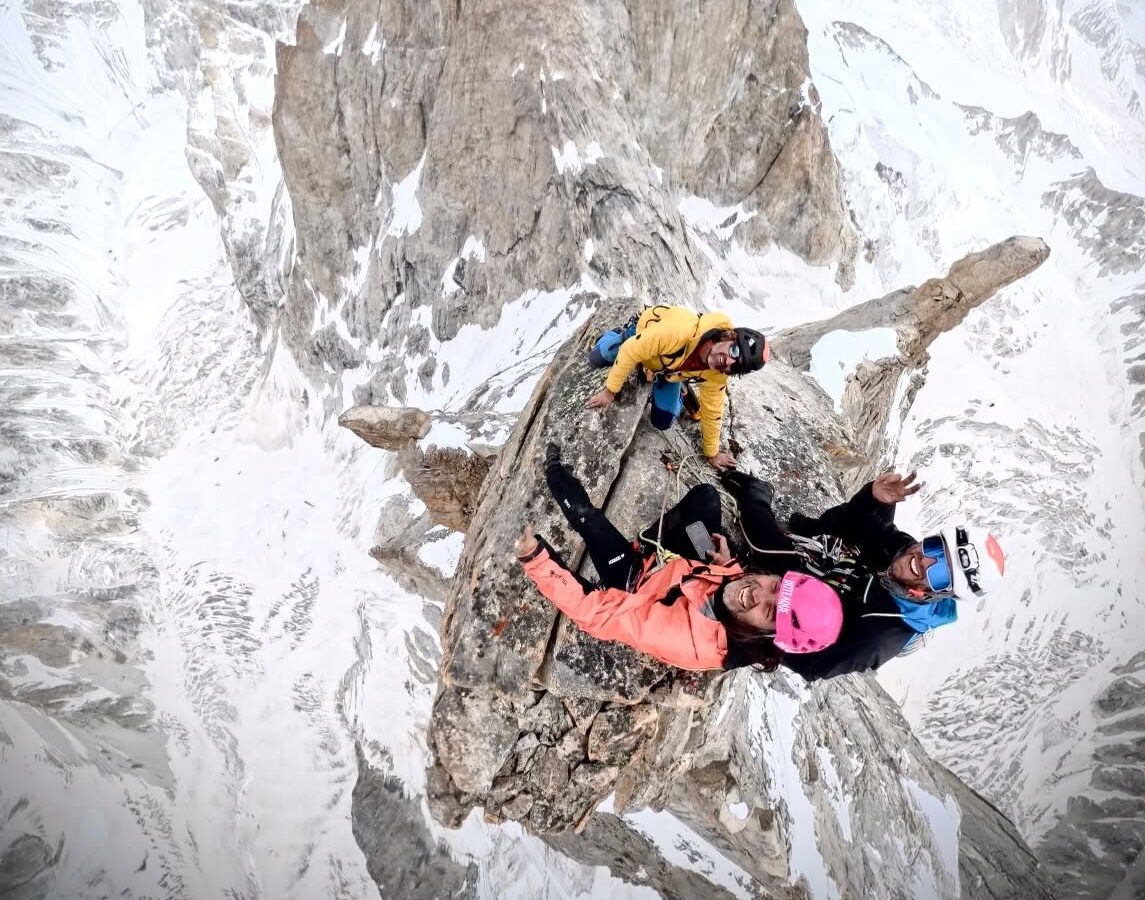
Thomas Huber has finally given information about his summer expedition to Pakistan’s Choktoi area. Together with Victor Sans and Miquel Mas of Spain, the German bagged a new 600m route on 5,700m Biacherahi Central. It featured difficulties up to 7a A2+. The team claims a first ascent, despite a 2002 report in the American Alpine Journal that suggests that other teams climbed it earlier.
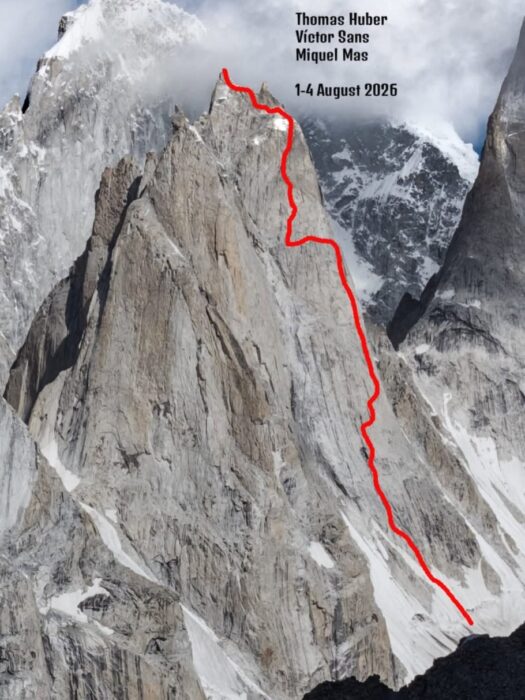
Topo of ‘Wild Soul’ on Biacherahi Central. Photo: Thomas Huber
The new route took four days of climbing, from August 1 to 4. However, the climbers only released their report now, after they returned home.
Starting in mid-July, they set up base camp at 4,400m. They then endured several days of stormy weather until a five-day window allowed them to complete the route’s 21 pitches, which they have called Wild Soul.
The team will be posting more details on social media in the coming days.
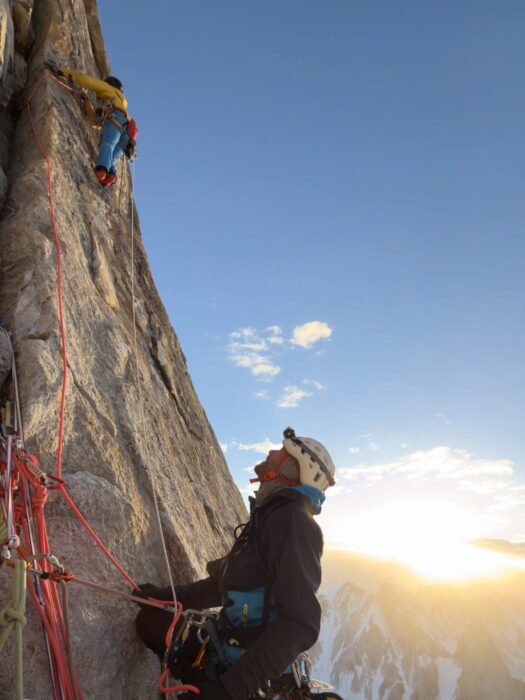
During the climb. Photo: Thomas Huber
Clearing up previous claims
The trio note that they found no traces of anyone on that summit before them. However, shortly after the first reports, ExplorersWeb readers noted an earlier report in the American Alpine Journal about a 2001 ascent of the same peak by a Polish-Japanese team led by the renowned Voytek Kurtyka.
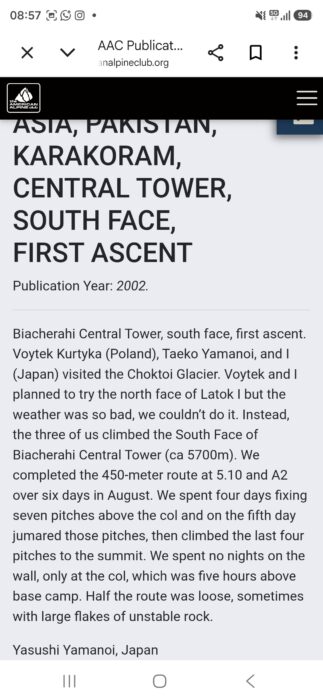
A report in the AAJ claims the first ascent of Biecherahi Central in 2001.
Huber was quick to clear up the situation. He explained that the confusion results from the many peaks and subpeaks within the Biacherahi group.
“There is Biacherahi South, Biacherahi Central, and Biacherahi Tower…with Biacherahi Tower the highest of these granite towers, at around 5,900m,” Huber wrote.
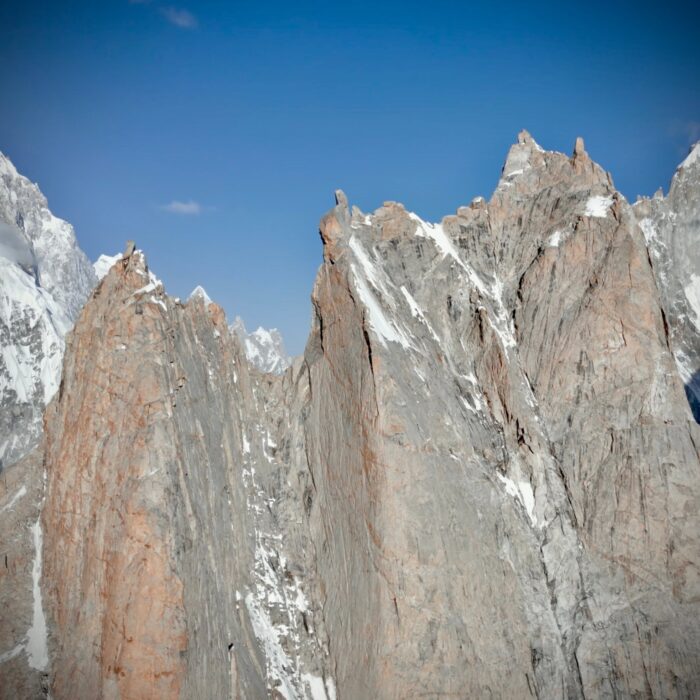
The Biacherahi group includes several points. Photo: Thomas Huber
He added: “Biacherahi Central itself is a three-summit formation. The southernmost and lowest of these three summits was climbed in 1989 by [Jon] Lazkano and [Javier] Mugarra of Spain, and later, in 2001, by Kurtyka and the Japanese.”
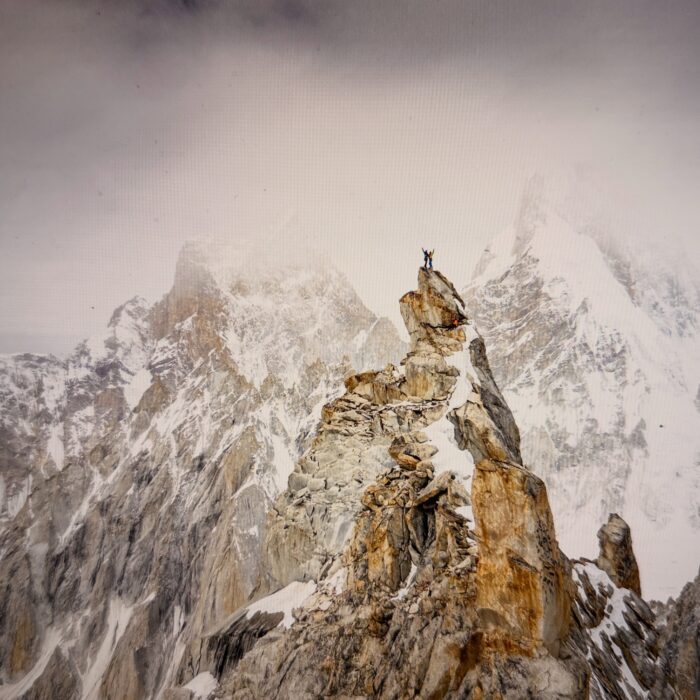
Drone shot of the 2026 team on the summit. Photo: Thomas Huber
Huber’s playground
The Biacherahi Towers are located next to the Latok group and near Baitha Brakk, known as The Ogre. Together, they form a formidable rocky massif of vertical walls that rises beside the Choktoi Glacier. Because of its remoteness and the great difficulty of every possible route, few climbers go there.
However, it has been a regular destination for Thomas Huber since he first climbed Latok II in 1997 with Conrad Anker, Toni Gutsch, and his brother, Alexander Huber. Huber also summited Latok IV in 1999, and the neighboring Ogre and Ogre III in 2001. Equally well-known are his determined attempts on the highly difficult north face of Latok I, which has turned him back several times.
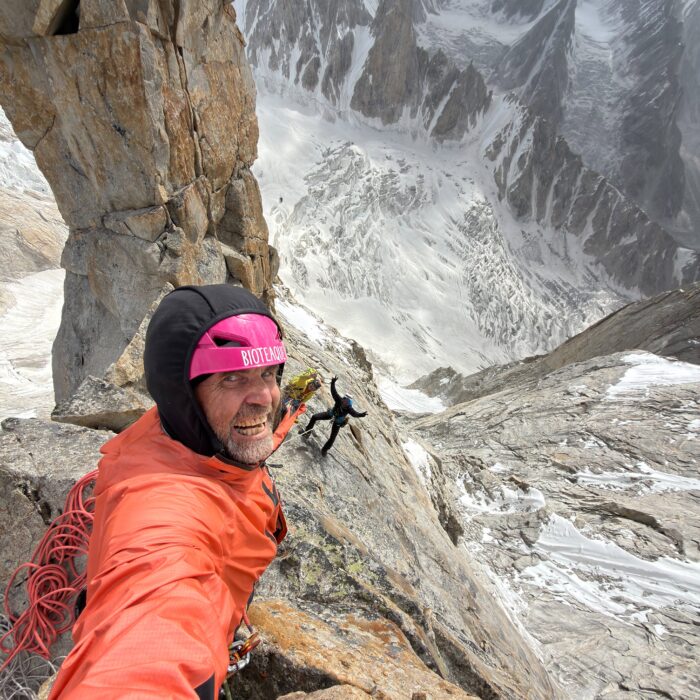
Huber during the climb on Biacherahi Central. Photo: Thomas Huber
In 2025, Thomas Huber opened a new route on the northern rocky tower of Suma Brakk, also in the area, with Americans Jon Griffin and Tad McCrea.
This time, he partnered with Victor Sans and Miquel Mas, who are also familiar with the area. Mas and Sans opened a new route on the southwest face of the nearby Latok II in 2023.
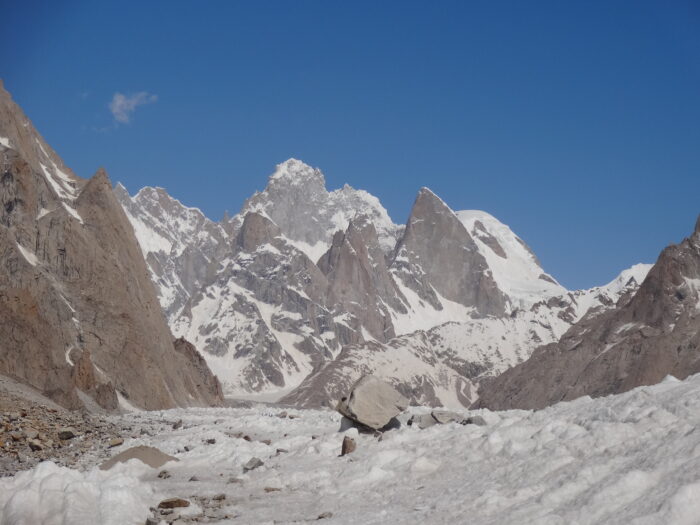
The Latoks, the Ogre, and the Biacherahi Towers from the Choktoi Glacier. Photo: Anton Karnoup