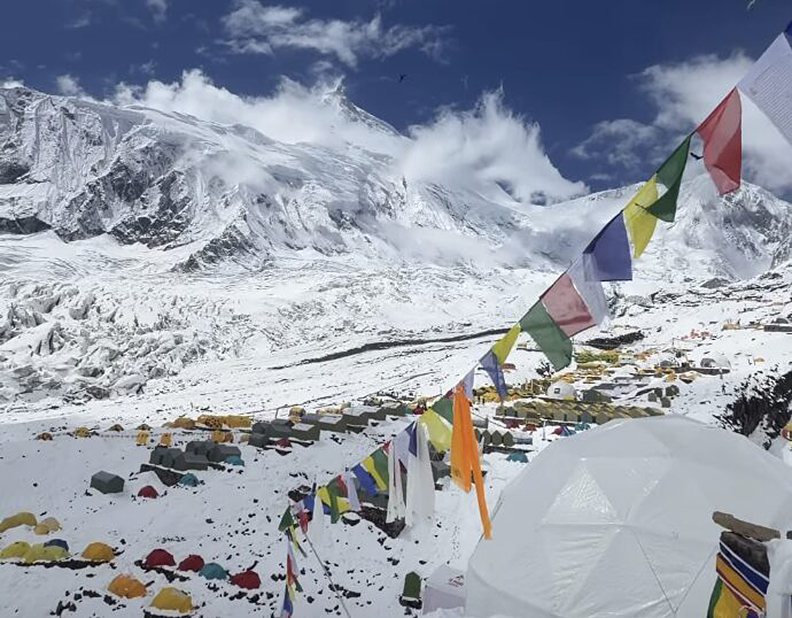
High avalanche risk on Manaslu has prompted outfitters to abruptly cancel the season. Everyone, including rope-fixers, returned to Base Camp today. The fall climbing season has just started, but it seems that expedition leaders have decided that Manaslu is over, despite the record number of climbers.
Today, the social media accounts of climbers and outfitters were filled with “the mountain decides” and “safety comes first,” although conditions are no different from Sunday, when two climbers died in a slab avalanche in their tent at Camp 3. As American guide Luke Smithwick quipped yesterday, “Large teams are taking their teams up to Camps 2 and 3 for sightseeing and fixed-rope travel on oxygen.”
His comment suggests the movement up the mountain yesterday was more of a stunt to show clients how dangerous the conditions were than a genuine intention to venture onto the upper slopes.
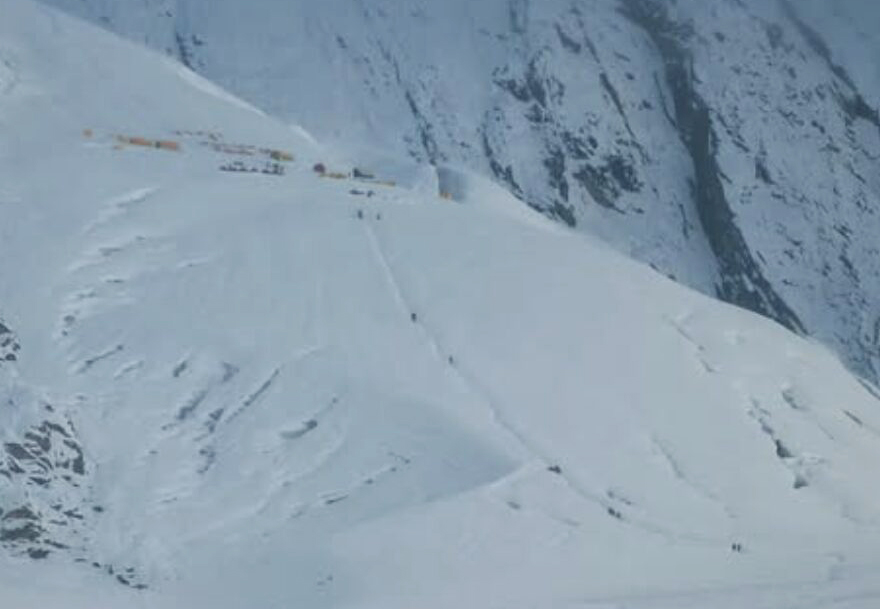
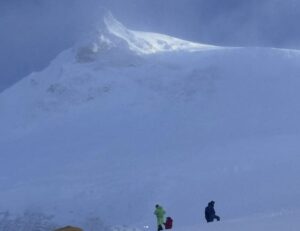
Climbers retreat from higher camps today. Photo: Sanu Sherpa/Summit Force
Too risky to try
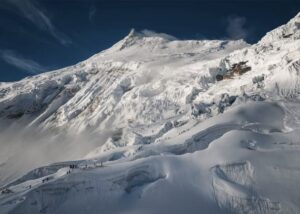
While the constant snowfall is supposed to decline today and tomorrow, the upper slopes of Manaslu are overloaded with snow slabs, ready to release at any moment. Even the rope-fixing team, which is supposed to unbury the ropes from under the fresh snow, refused to go and turned around.
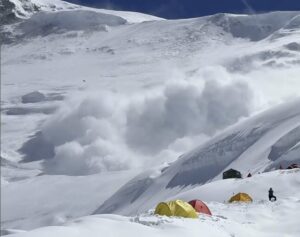
The shock wave from a powder avalanche dusted the tents of Camp 1 yesterday, as shown in the video below by Pastenji Sherpa of Altipro Adventures. It probably helped to reinforce the retreat call:
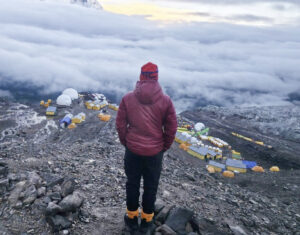
Helicopters have been flying regularly to and from the nearby village of Samagaon, or directly to Pokhara and Kathmandu, evacuating climbers. A major cyclone from the Bay of Bengal is expected to hit Nepal tomorrow evening or Thursday. Like last year when Cyclone Montha hit, loads of snow and high winds will make Base Camps uncomfortable, and high trails will be impassable for days or even weeks. Helicopters will also be grounded until conditions improve.
Why not postpone?
The question is how many of the over 500 Manaslu climbers (and the roughly 500 guides, who will not get their summit bonuses) are willing to wait for better weather and conditions — and how many of them were given that option.
Autumn climbing permits for Nepal’s 8,000’ers are usually valid for a month after they are issued, and there are options to extend them by one or two weeks, until the season closes on November 30.
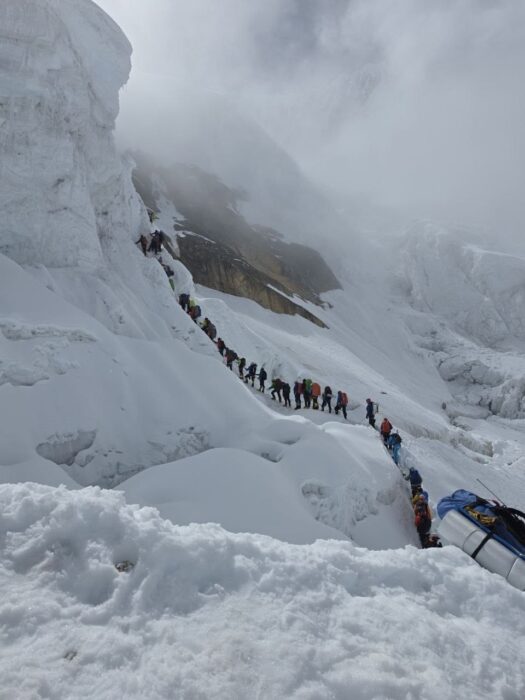
This was supposed to be a record season on Manaslu. Photo: Alexander Abramov
The cyclone will affect the mountain for weeks, and the route would probably need to be refixed, but that shouldn’t be an obstacle with enough staff.
Safety or business?
“For the safety of everyone on the mountain, we have made the decision to officially close the Manaslu 2026 season,” Chhang Dawa Sherpa, expedition leader of Seven Summit Treks, the biggest operator on the mountain, confirmed.
While safety is essential and retreating is the right call, it is not clear whether this justifies canceling the season entirely for the record 493 foreign climbers, each of whom has paid $3,000 for their Manaslu permits, plus expedition expenses. The average cost of a guided expedition to Manaslu, with a personal Sherpa and oxygen, is around $25,000. It is not clear whether any of this will be refunded for such an early cancellation.
For many of the climbers, leaving this soon is a real blow. Nick Schubert of Germany, who intended to become the youngest no-oxygen Manaslu climber at 19, shared his frustration today:
“This was my full time job…Giving up my private life, my youth, and dedicate all my energy to it. I put all my money in these two big expeditions this year…This type of failure feels so much worse, because there’s nothing you can do about it.”
In recent years, expedition operators try to shorten climbing periods to optimize resources. Thus, they keep Manaslu expeditions running just through September until the first days of October. In mid-October, Sherpa staff are reassigned to Ama Dablam and lesser peaks for the second half of the season.
This year, in particular, local outfitters are promoting climbs of 7,000m peaks, especially Himlung, in light of proposed government plans to make prior experience on a Nepalese 7,000’er mandatory for all Everest climbers.
Lesser peaks next
Rope-fixing teams on Ama Dablam and Himlung, assigned by the Expedition Operators Association of Nepal (EOAN), will leave for base camps later this week, regardless of the weather, according to The Tourism Times.
This means that Manaslu climbers willing to wait for better conditions may find their outfitters have left the mountain and dismantled Base Camp, and that no guides are available. But that does not necessarily mean the mountain cannot be climbed.
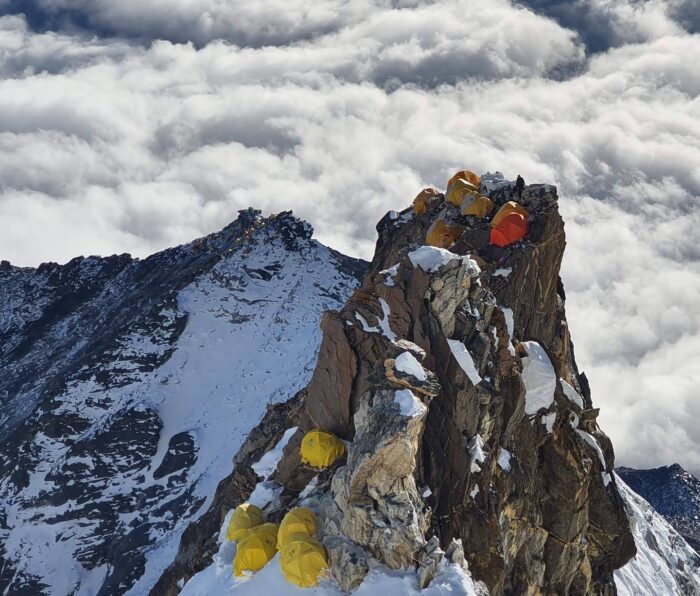
A crowded perch on Ama Dablam. Photo: Lakpa Sherpa/8K Expeditions
There’s climbing after cyclones
Cyclone Montha hit Nepal’s mountains hard at the end of last October, a month later than the one coming this week. Trails were cut, several teams had to abandon their goals, and others were caught in the storm. The resulting avalanches took nine lives.
Yet, expeditions continued afterward in November. Marek Holecek and Radoslaw Groh attempted the highly difficult South Face of Cho Oyu; Bennie Lieber and Alexander Hansen summited Changla Khang West on November 4, and a Korean team succeeded on Chhauma Peak III on November 3; a UK team made it to the top of Jugal 5 on November 14, and Leo Houlding led a team up Gyalzen Peak on November 21. Finally, the Himlung and Ama Dablam teams resumed their climbs on November 3 and 4, according to the Himalayan Database.
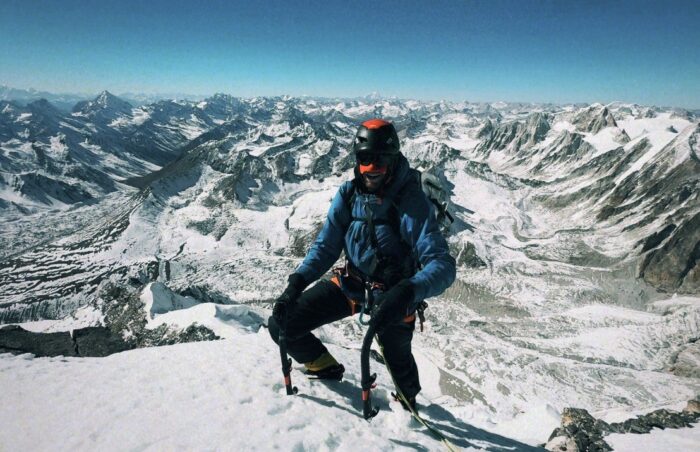
Benjamin Lieber on the summit of Changla Khang West. Photo: Alex Hansen
By comparison, the 659 people who summited Manaslu in 2025 did so in just nine days, between September 20 and Sep 29. One month later, a Russian team led by Andrey Vasiliev opened a new route on the Southwest Face.