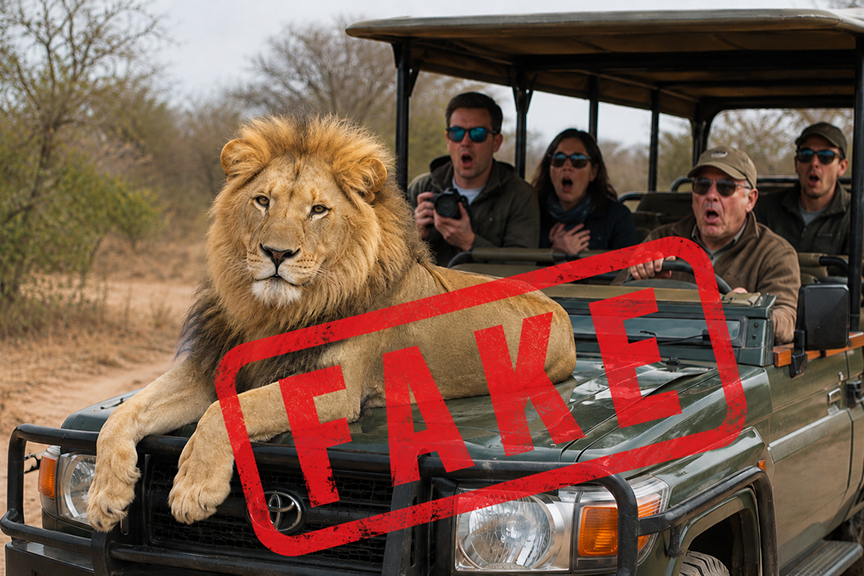
Social media views of fake animal footage are gaining millions of views online and affecting how some of us perceive wildlife, according to a new study.
AI can now generate emotion-packed clips of grateful polar bear cubs, sad puppies in animal shelters, and astonishingly colorful tropical birds that, unfortunately, do not exist. These heartwarming fakes take in millions of viewers who love the idea of animals behaving like humans. Sometimes, even those familiar with an animal aren’t sure.
The paper, published in Conservation Biology by researchers at the University of Cordoba in Spain, highlights videos that depict fabricated bonds between humans and animals. The authors warn that some of these may give people a false sense of security around wild animals.
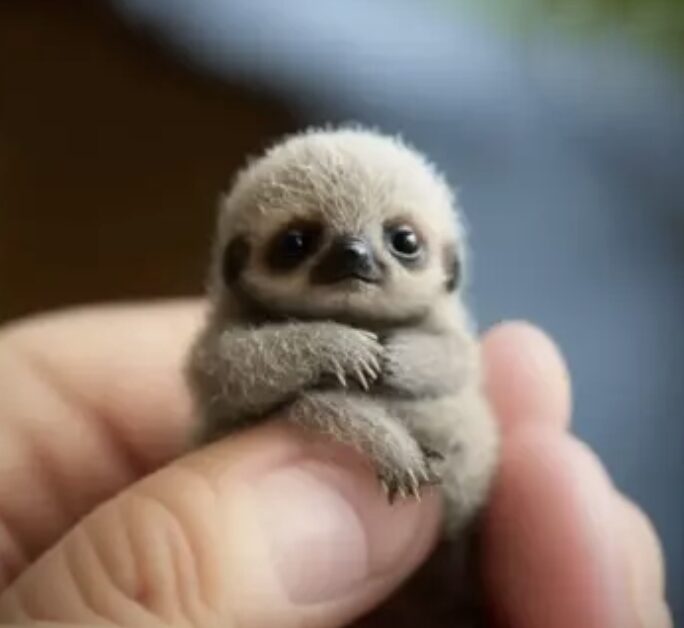
This AI-generated image of a baby sloth has had more than 265,000 views and was shared over 3,000 times on X.
Digital Disneyfication
The Disneyfication of the natural world has been going on for a long time. Old photos from Banff National Park show 1950s tourists trying to push black bears behind the steering wheel of their cars for a photo. Modern parents sometimes still try to put their toddlers on the backs of deer, as if they’re Bambi. But charming AI videos take anthropomorphizing to a different level, the authors point out.
A second paper, released this week in Nature Ecology and Evolution, argues that AI-enhanced imagery submitted to citizen-science platforms like iNaturalist could pollute the data researchers gather to determine the range and behavior of certain animals. They cite the example of an image that appeared to show a red-winged blackbird, submitted to iNaturalist as a potential first sighting of this species in Brazil.
In this case, the submitter “improved” his image with an AI algorithm. It made an epaulet oriole, common to Brazil, look like a red-winged blackbird. He wasn’t trying to be deliberately deceptive; he just wanted to pump up his image.
The team was able to duplicate his results using AI editing tools. They caution that there’s a risk of rendering these platforms useless if too many contributors enhance their images beyond recognition.