Every now and again, one unlucky soul at the Smithsonian Institution has the unfortunate task of addressing a wild idea that has been refuted since 1909. The claim that ancient Egyptians settled in America has yet to disappear. Rather, thanks to social media, it continues to gain momentum, particularly in conspiracy circles.
Online forums, fringe podcasts, and amateur explorers want to prove that somehow, the Egyptians managed to sail from North Africa to the New World. According to some, they may have even originated there. Their proof? The illustrious words of an anonymous writer, unusual government presence in the area, Egyptian landmark names, and obscure oral traditions.
Background
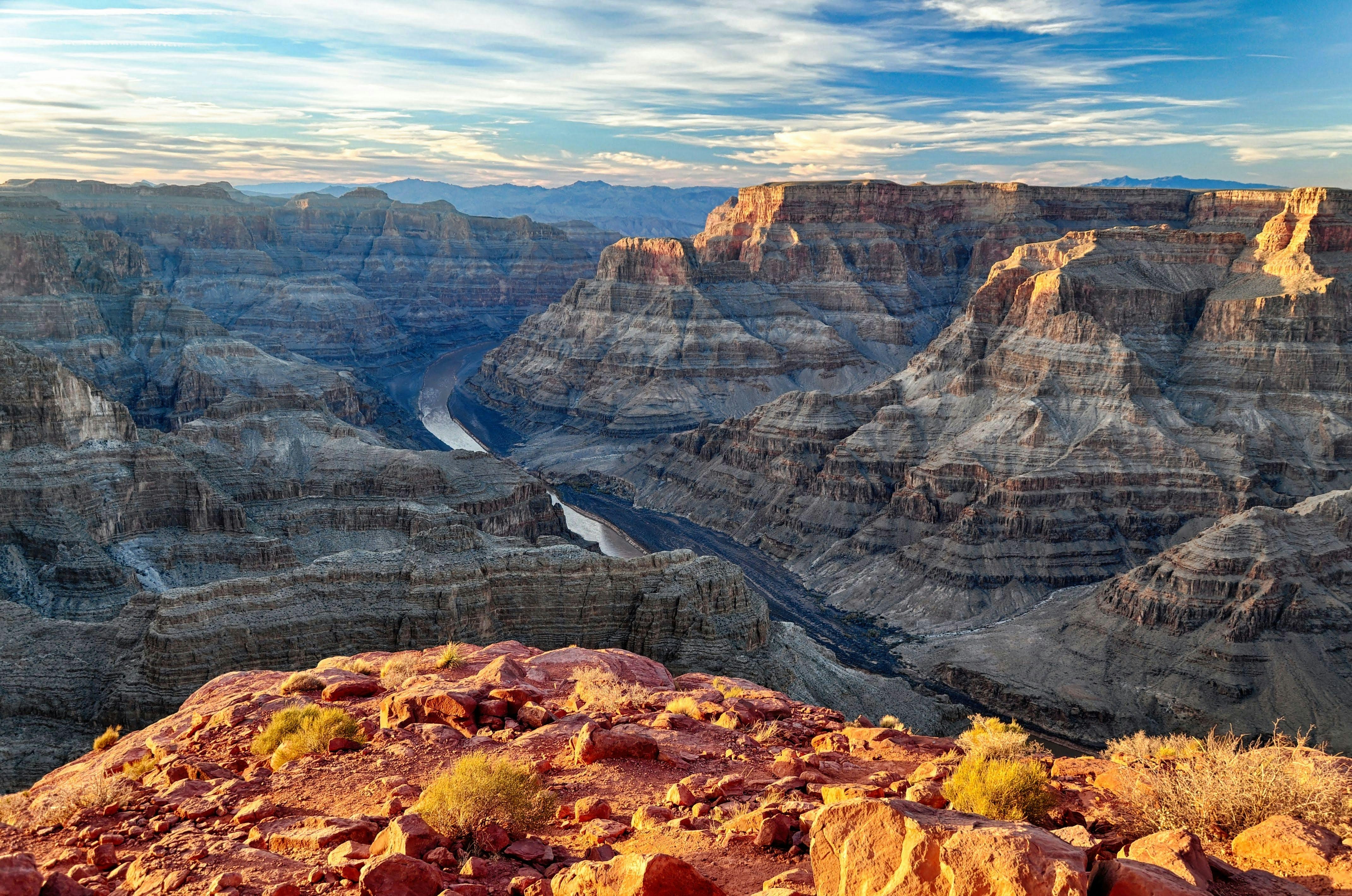
In April 1909, readers of the Arizona Gazette were treated to an unusual story. The anonymous author claimed he had the privilege of sitting down with a Smithsonian Institution explorer who had uncovered the greatest secret of our time: a subterranean city within the Grand Canyon. With great detail and enthusiasm, this explorer, named G.E Kinkaid, told how he and his colleague, Professor S. A. Jordan, stumbled on a mysterious passageway located 450m below the surface. As a seasoned explorer with 30 years of experience, Kinkaid recalled that this discovery occurred 68km from the El Tovar Canyon, during his boat trip down the Colorado River.
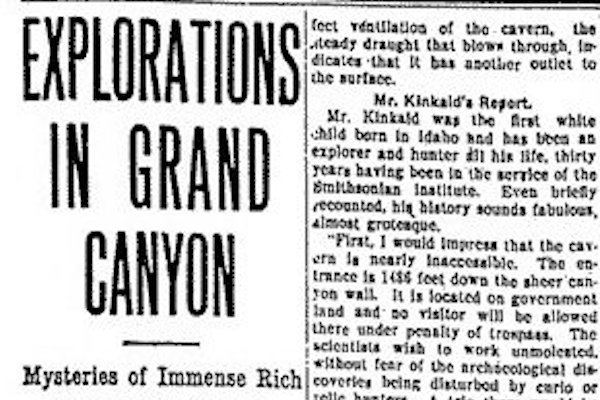
Clipping of the newspaper article from 1909. Photo: Shaka Guide
Supposedly, Kinkaid and Jordan entered this cave within a sheer rock cliff. The cave led to massive chambers, passageways, and rooms housing all kinds of artifacts, from metallurgy and weapons to pottery and idols to hieroglyphic tablets.
The idols appeared to be from Asia and closely resembled a Buddha seated in the lotus position, holding a flower. The most astounding discoveries were mummies, granaries, and a large dining hall capable of holding 50,000 people.
The author further states:
The archaeologists of the Smithsonian Institute, which is financing the expeditions, have made discoveries which almost conclusively prove that the race which inhabited this mysterious cavern, hewn in solid rock by human hands, was of oriental origin, possibly from Egypt, tracing back to Ramses.
The article ends:
There are two theories of the origin of the Egyptians. One is that they came from Asia; another that the racial cradle was in the upper Nile region. Heeren, an Egyptologist, believed in the Indian origin of the Egyptians. The discoveries in the Grand Canyon may throw further light on human evolution and prehistoric ages.
After the article was published, academia was quick to dismiss it. However, the seed was already planted. The story kept dying and resurrecting and was reprinted in books about America’s lost cities.
But of course, there was one problem. None of it was true.
The investigation
The Arizona Gazette did not publish any further coverage of the matter, leaving its readers with more questions than answers. The best people to answer these questions were Kinkaid and Jordan. But how can we track down men who do not exist?
Let’s start with the name G.E Kinkaid. The article calls him “the first white child born in Idaho [who] has been an explorer and hunter all his life, [including] 30 years in the service of the Smithsonian Institute.”
Unfortunately for Kinkaid’s Idaho preeminence, the first white child born in that state was a woman named Eliza Spalding. Google searches on Kinkaid’s name come up empty, and census records are bare. The search for S.A. Jordan ends as well. For explorers who made such a groundbreaking discovery, they sure liked their privacy. No photographs, artifacts, or reports back up any of their supposed claims.
The Smithsonian’s role
Over the decades, people have looked into Kinkaid and Jordan’s association with the Smithsonian and found no record of their employment there. The Smithsonian itself confirmed this. Not to mention, the Arizona Gazette never did a follow-up or revealed the author’s identity. Both men are pure fabrications. A Smithsonian Institution spokesperson stated:
The first thing I can tell you, before we go any further, is that no Egyptian artifacts of any kind have ever been found in North or South America. Therefore, I can tell you that the Smithsonian Institution has never been involved in any such excavations.
Officials at Grand Canyon National Park also deny that any such cave exists or that such an expedition took place. They further say that such a story erases the true history of the Grand Canyon and the many Native American tribes that inhabited it for thousands of years. But those who find the story “too good to be false” blame a major archaeological and governmental cover-up by the Grand Canyon National Park authorities and the Smithsonian for the lack of evidence.
The case for
Few of the conspiracists ever visited the Grand Canyon to try to get to the bottom of it. Instead, they claim that many parts are deliberately inaccessible to the public or guarded by military personnel. Forensic geologist Scott Wolter spoke with locals and elders who believe treasures are hidden in the Canyon, and that a possible cave entrance lies within a very dangerous section of a cliffside. One of the interviewees claimed that helicopters were following them to intimidate them during a personal expedition in 2002.
Let us suspend belief for a brief moment. Is there any way that ancient Egyptians could have ended up in North America? In 1992, a German scientist, Dr. Svetla Balabanova, found traces of nicotine, hashish, and cocaine in the mummified remains of an Egyptian princess named Henut Taui. Other mummies also contained traces of these substances. This could imply cross-cultural interaction between Egyptians and New World inhabitants. However, this was most likely contamination during transport.
Additionally, Egyptians may have obtained these substances in parts of Africa at the time through trade. Seafaring that distance, even for a comparatively advanced civilization like that of the Egyptians, is hard to imagine.

Relief of Hatshepsut’s expedition to Punt. Photo: Σταύρος/Flickr
Others believe that the rich kingdom with which Egypt traded since 2500 BC might be America. This so-called Land of Punt is said to have produced gold, ivory, spices, and other treasures. Ancient records show that the Egyptians undertook several trading expeditions to the Land of Punt, and their excursions are depicted on tombs and reliefs.
While most historians agree that the Land of Punt was in Ethiopia or Somalia, others argue it was much further west. They cite the use of Egyptian names as evidence. In the Grand Canyon, geological features bear names like Isis Temple, Horus Temple, Cheops Pyramid, and Temple of Ra. But Egyptian place names became very common in America and Europe during the Victorian era. It was fashionable!
Who was responsible for the hoax?
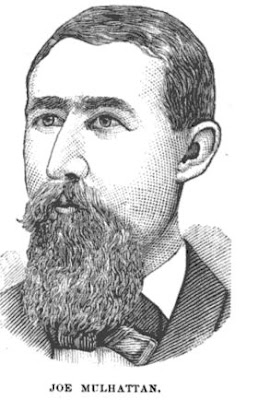
Joseph Mulhattan. Photo: https://strangeco.blogspot.com
Since the story is so improbable, let us look at the possible culprit. Historians point to one Joseph Mulhattan, a salesman by day and an illustrious hoaxer by night. Mulhattan was a pathological liar with a talent for creating the most elaborate fictions. Why? Because it was fun. He didn’t gain financially from any of his lies and didn’t seem to mind damaging his reputation.
He would go to newspapers and use his charisma to sell far-fetched tales, such as how Egyptian mummies turned up in a giant crystal cave in Kentucky, astronomers discovered the Star of Bethlehem, or how balloons carried away a little girl. The editors did not mind, since these tall tales gave the newspapers a huge circulation boost. The Arizona Gazette might have simply been one of these.
This may have been a joke gone too far, but there is no denying society’s current thirst for alternative history.