On Tuesday, a small group of explorers became the first to see Sir Ernest Shackleton’s last ship, the Quest, since it sank in the Labrador Sea in 1962.
Led by the Royal Canadian Geographical Society (RCGS), the expedition used a Remotely Operated Vehicle and a deep-sea submersible called the DSV Alvin to view and photograph the wreck. It lies 390m down at the bottom of the Labrador Sea, about 80km off the coast of eastern Canada.
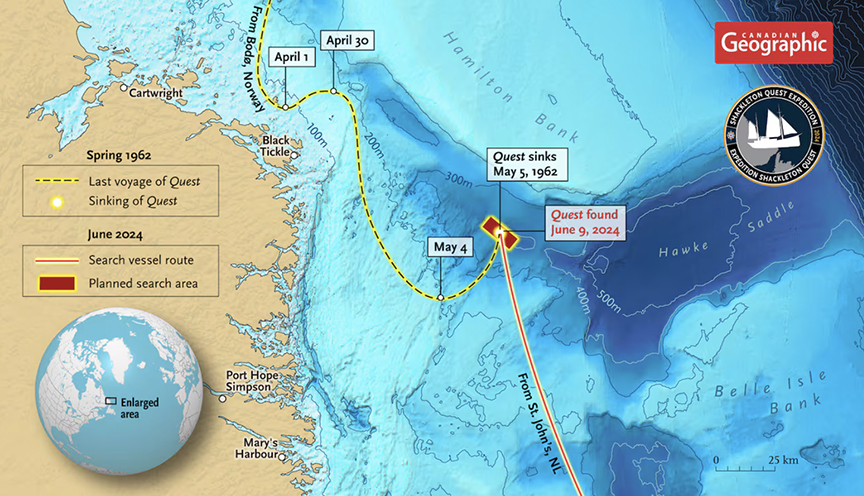
Map: Royal Canadian Geographical Society
Shackleton bought the Quest in 1921, seven years after his famous Antarctic ordeal aboard the Endurance. He intended an Arctic expedition, but when the Canadian government withdrew its support, he headed to the Antarctic again. There, in 1922, he died of a heart attack in his cabin on the Quest at the age of 47. The Quest later became a sealing vessel and sank when crushed by ice off the Labrador coast in 1962. All the crew escaped safely.
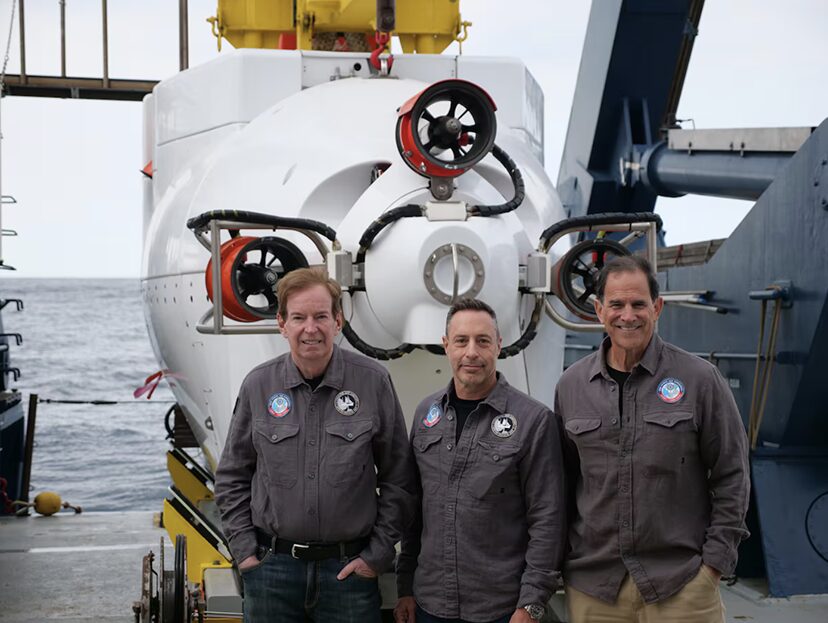
John Geiger, left, and other members of the team in front of the Alvin submersible. Photo: Royal Canadian Geographical Society
John Geiger, the head of the RCGS, helped locate the Quest in 2024 and was able to view the broken hulk this week from the Alvin. The Alvin was also the first submersible to view the Titanic off the coast of Newfoundland, not far south of the wreck of the Quest.
A biological island
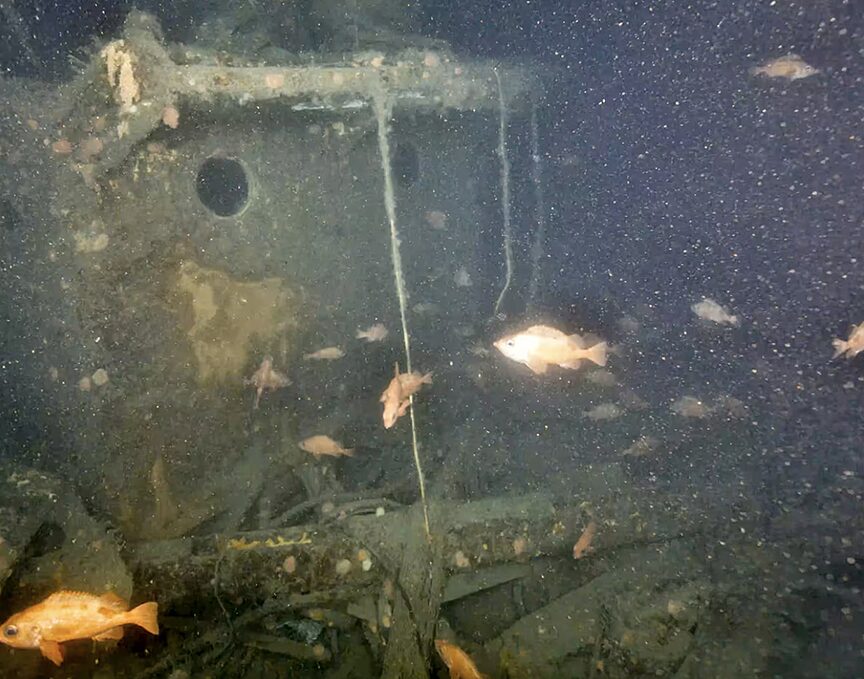
The Quest was heavily damaged when it slammed into the sea bottom, but it is still recognizable, and its prow is intact. Geiger says it has become a “biological island,” offering structure and concealment for fish and other marine life, including anemones and pink coral.
Geiger could see one of the ship’s masts lying on the deck. Through a hole in its deck, he thought he spotted an enamel washstand, according to The Globe and Mail. Some lost fishing nets had draped over part of the wreck, preventing a closer approach.
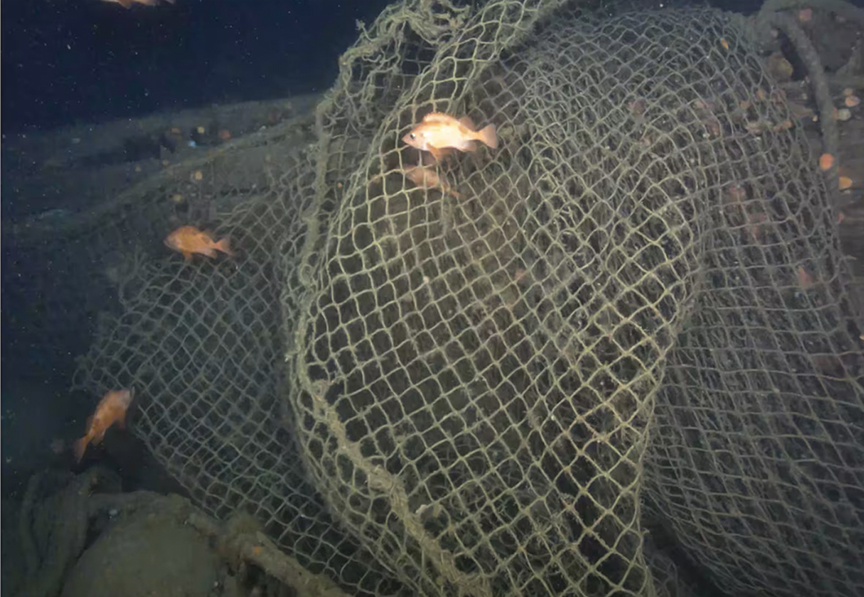
Fishing nets cover part of the Quest. Photo: Royal Canadian Geographical Society
The small team will continue its work in the area, making a digital three-dimensional model of the wreck. They then plan to sail to the Greenland coast to survey a second famous polar-vessel-turned-sealer from the Heroic Age of Exploration, Robert Scott’s Terra Nova. Long after Scott had perished with his men attempting to go to the South Pole in 1912, the Terra Nova was still at sea. Damaged in 1943, it was deliberately sunk after its crew found refuge on another vessel.