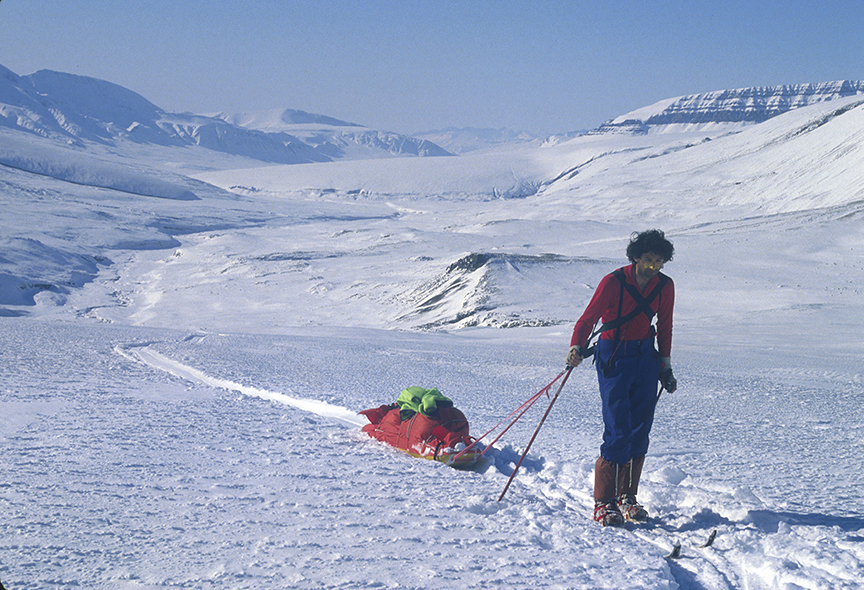
In my early 20s, I played in a ball hockey league. One game, I bumped my knee slightly. It took six months for the knee to feel normal again. Although I wasn’t doing Arctic expeditions yet, I had enough insight into the future to consider this a warning: Whatever I was going to do would somehow involve my body, which I had to safeguard. I never played ball hockey again.
When I fell in love with Arctic travel, the need for this caution became clear. Without dismissing those who do similar adventures while nursing old injuries or overcoming chronic ones, that path was not for me. I needed to rely on my body totally, partly since as a matter of style, I’ve almost never carried any communications in the wilderness. No SBX-11 radio in the early days, no satphone or InReach when those technologies became available. That means making more conservative decisions, but it also means that you can’t have a trick knee or a lurking illness that can flare up unpredictably. The confidence to venture off depends on having a body that is up to the task.
And in fact, despite being so active, I’ve dodged injury so far. Here, I think, is why:
1) Luck
This means both pretty good genetics and escaping injury when I was in my late teens and taking stupid risks, like free soloing without knowing how to climb. That period didn’t last long, but it could have led to lifelong injuries and limitations.
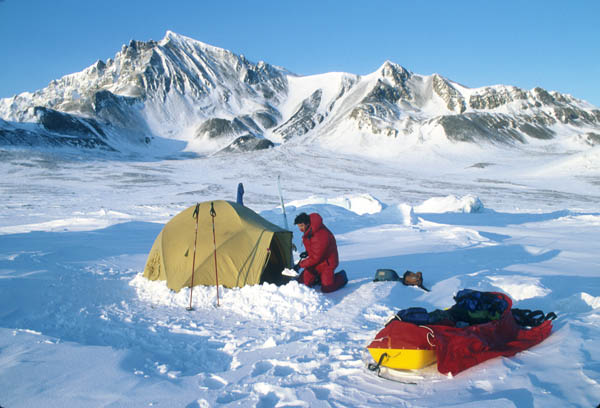
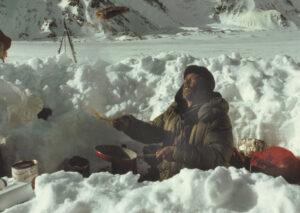
Setting up camp on a solo expedition from Eureka to Grise Fiord on Ellesmere Island. Photo: Jerry Kobalenko
2) Knowing how to fall
As one of my favorite travel writers, Richard Francis Burton, once wrote: “You can fall off a horse with as much damage as a sack of wheat would incur, if only you have the presence of mind not to catalepse your members.”
I’ve known people who injure themselves every time they fall. I’m afraid they may be catalepsing their members. On some expeditions, walking briskly on hard snow in slippery sealskin kamiks, I may fall several times a day.
3) Pursuing very boring sports
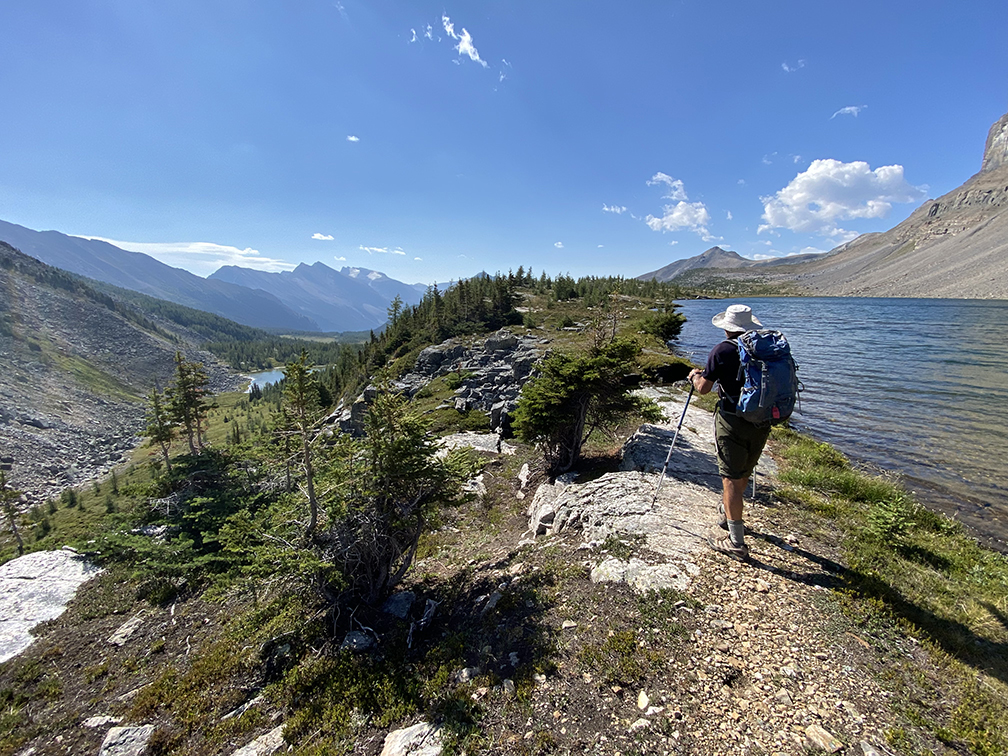
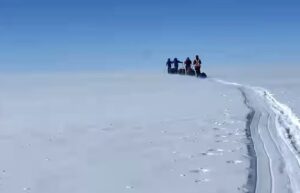
Photo: Jerry Kobalenko
Besides ball hockey, I avoid everything with speed and explosiveness — no fun stuff like climbing, mountain biking, or downhill skiing. Instead, I swim and do long hikes in the summer, skate-ski in winter, and walk quickly year-round. Apart from expeditions, that’s it. Dull, I admit, but Arctic types prefer endorphins to adrenaline.
4) Using the core for everything
Sea kayaking, for example, is 80% stomach crunches, but even tying shoelaces or lifting a glass of water should involve core muscles.
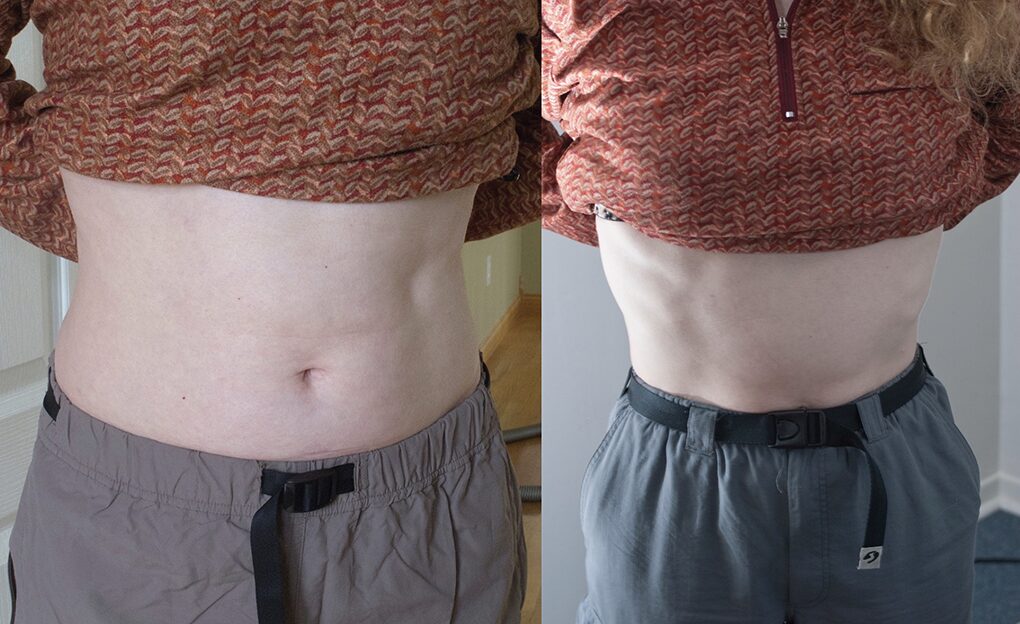
Core use: The author’s kayaking partner before and after a month-long expedition. Photo: Jerry Kobalenko
5) Learning to move precisely and carefully
Here in the mountains, so many people learn by going out for a day with friends, where the consequences of injury are often minor. As a result, they learn to run down mountains at speed, for example. I’ve always envied how fast they go. I lag way behind, not necessarily from lack of fitness but because I learned most of what I know about the outdoors on wilderness expeditions, where the consequences of injury are high.
Over the years, I internalized the need to move precisely, and this caution follows me not just in the wilderness but all the time. Even when I’m out for a day with friends, I move as if I’m 300km from the nearest person, with no means of communication.
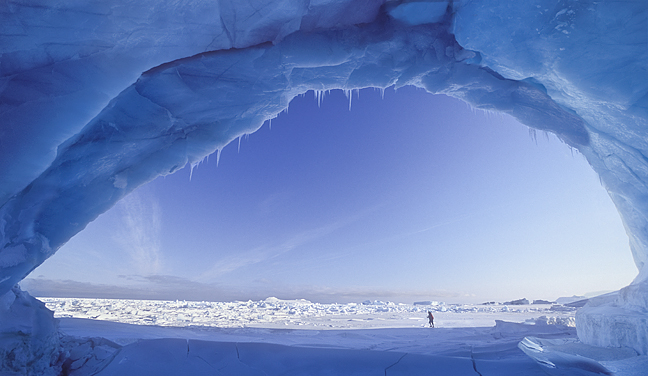
Hiking past an ice cave, Ellesmere Island. Photo: Jerry Kobalenko
6) Switching exercises when necessary
Because I like lots of (dull) forms of exercise, when I feel a twinge in one shoulder while swimming or a funny feeling in a knee while cross-country skiing, I’ll back off that activity for several days, do an alternative exercise, then return to it.
Those twinges are not injuries, they’re warnings of potential coming injuries. If you address them when they’re just warnings, they don’t evolve into injuries. If I feel such a twinge on expeditions, I monitor it constantly to see if it worsens or is just one of those random twinges that everyone has from time to time. So far, that’s all they’ve been.
7) Training to avoid repetitive stress injuries
On long-distance expeditions, the main peril is repetitive stress injuries. In this case, that’s what preparatory training addresses. It’s less about increasing fitness, because sufficient base fitness is always there.
Before sea kayaking for a month, for example, I’ll build up over two or three months from about 40 minutes paddling per day three times a week to 2-2.5 hours a day four times a week. Then when the expedition begins, the first few days are short ones, four to five hours.
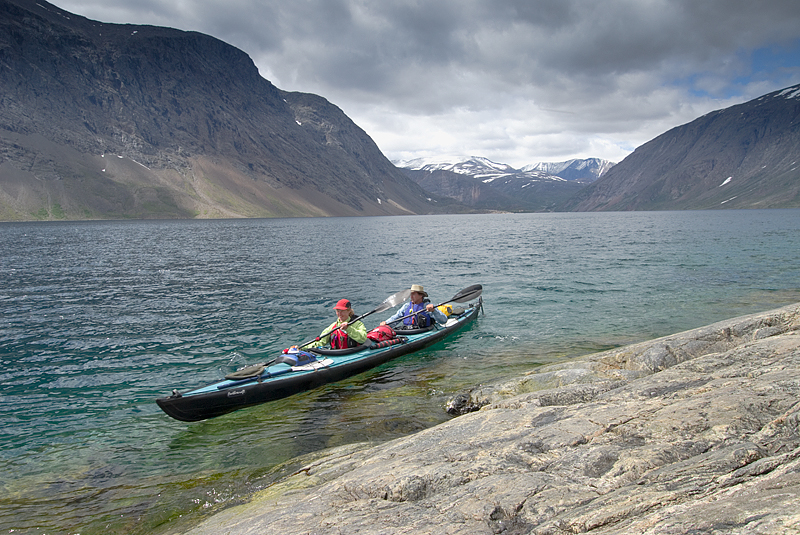
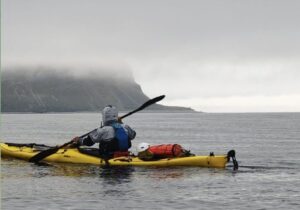
Kayaking in Labrador’s Torngat Mountains. Photo: Jerry Kobalenko
8) Residual effects of yearly expeditions
This is the hardest to pin down: For all my adult life, I’ve exercised 10-14 hours every day for six to eight weeks a year on expeditions. I’ve always felt that this is what has kept me fit and injury-free.
At home, the 15,000 steps a day of walking and 40 minutes or so of aerobic exercise six days a week just slow the deterioration between expeditions. It is those weeks of full-time activity every year that keep everything functioning properly. Some sledding expeditions involve about 60,000 steps per day. That’ll never win you an aerobic Olympic event, but it quietly toughens up many hidden body parts.
9) Avoiding sprained ankles
When I was about 17, I had an idea that I’ve followed ever since: You can “trick” yourself into exercising even more by doing ordinary daily things in a more difficult way. For example, put your socks and shoes on while standing up; tie your shoes standing up.
This is an exercise thing rather than injury prevention, but you can also stretch calves and Achilles tendons while a passenger in a car, or on a random stair. Especially helpful is bending your ankle so your foot is 90˚ to your leg. Then, if you turn an ankle in the field, it won’t result in injury, because it’s used to that position. I practice putting my full weight on my foot, briefly, when it’s bent like that. I’ve turned my ankle many times, and it’s never caused even a mild strain, thanks to this exercise.
10) No inactive phases
Finally, avoiding sickness and injury has also meant that I’ve never had to stop regular exercise for months just to heal, when it may become a struggle to regain fitness, flexibility, ligament strength, whatever. Since university, I’ve never had a break in activity longer than a week, and even that week is only after expeditions, when I’m tired.
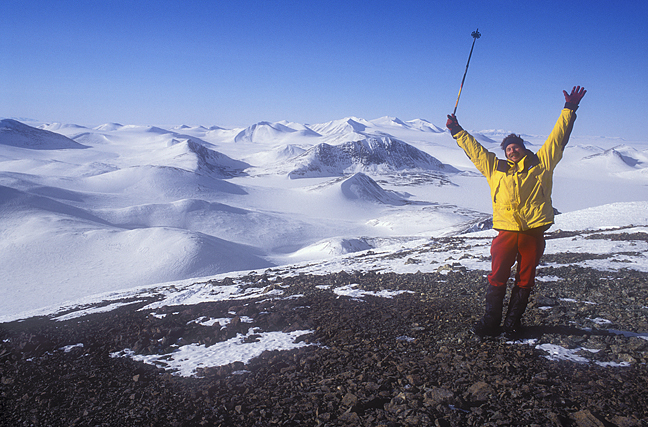
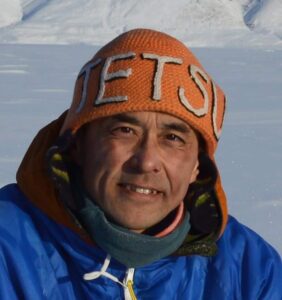
Photo: Jerry Kobalenko