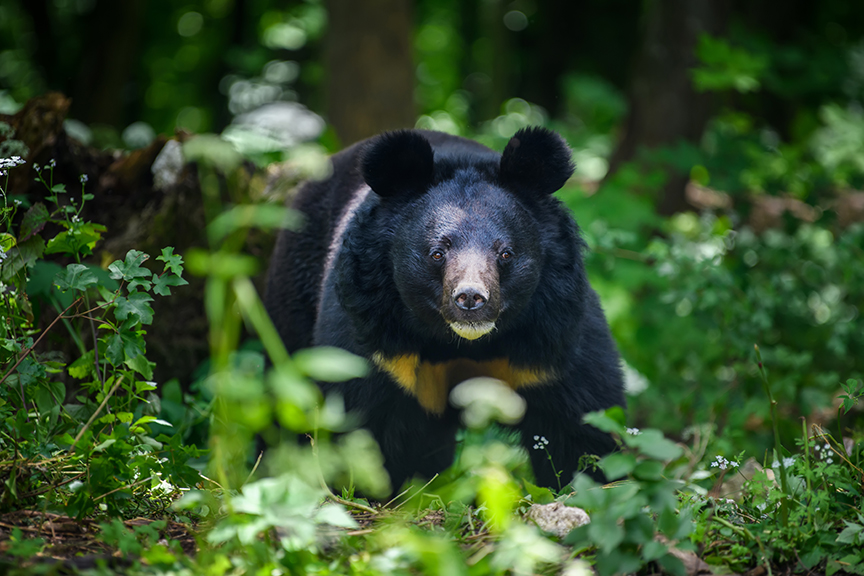
Between April 2025 and March 2026, Japan recorded 230 bear attacks and 13 deaths. This was a substantial rise from the previous year, when authorities recorded only three deaths and 82 injuries. In response, Japan has culled an astonishing 14,000 bears and counting.
A controversial cull
Of the 14,000 bears killed, 12,000 are Asian black bears (Ursus thibetanus), a species listed as vulnerable on the International Union for the Conservation of Nature Red List, and 2,000 brown bears (Ursus arctos). While Japan has a relatively large population of Asian black bears, it represents one of the last remaining strongholds for the species, which could number 60,000 or fewer globally. A 2024 research paper suggests that the population has decreased 30 to 40% over the past 30 years and that the species has disappeared from roughly half of its historic range.
“If this level of trapping continues, we believe regional extinctions are a real possibility. We feel a profound sense of crisis,” Yuko Muroya, chair of the Japan Bear and Forest Society, told The Guardian.
The Japanese government disagrees or doesn’t care. The government described bears as “a serious threat to public safety and peace” and has encouraged hunting. They aim to reduce the bear population in several prefectures by over 30% by 2030.
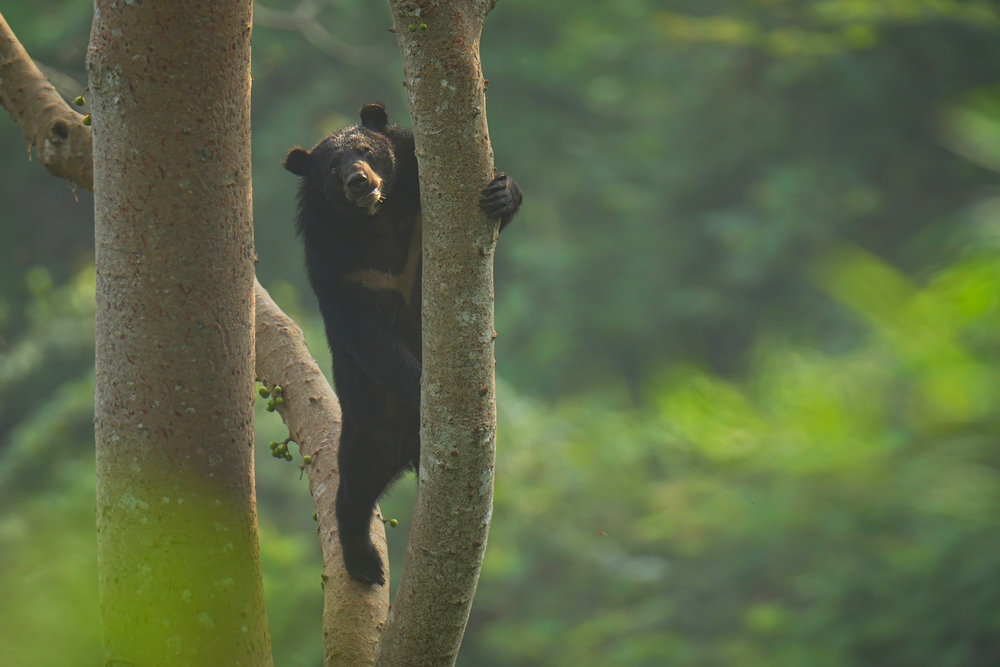
The IUCN classifies Asian black bears as vulnerable globally. Photo: Shutterstock
Yet, despite last year’s cull, attacks have continued. Since April 2026, bears have killed six people and attacked more than 35. This prompted the government to double down on its strategy. It announced a plan to cull a further 8,800 bears this year. These figures far outstrip previous bear culls in Japan, and are much higher than those carried out in places like the U.S. and Canada.
What is causing the rise in attacks?
Many attacks occur in late summer, when bears struggle to find as much food in the forest and so move closer to towns and villages. Berries, acorns, and nuts are becoming harder to find. These food sources are vital as bears fatten up to hibernate through winter. With food scarce, bears — which are omnivorous and voracious — increasingly target bins and dumps.
Other factors are also at play. The bears’ habitat has shrunk, and Japan’s heavily urban society has left much of rural Japan depopulated and farmland abandoned.
“With the loss of farmland that once buffered settlements from bears, the boundary between towns and forests became more blurred for them,” wildlife researcher Liam Adcock told CNN.
Other options
Nonlethal deterrents are available and in use. Some wildlife groups are planting nut-bearing trees in forests to shore up the bears’ main food source. In Hokkaido, drones are used to track bears and drive them away from populated areas. A stranger option is the mechanical wolves produced by Wolf Kamui Co. These solar-powered robots mimic the howl of (now-extinct) Japanese wolves to scare off bears. The company is even developing a small, portable 20cm version for hikers and fishermen.
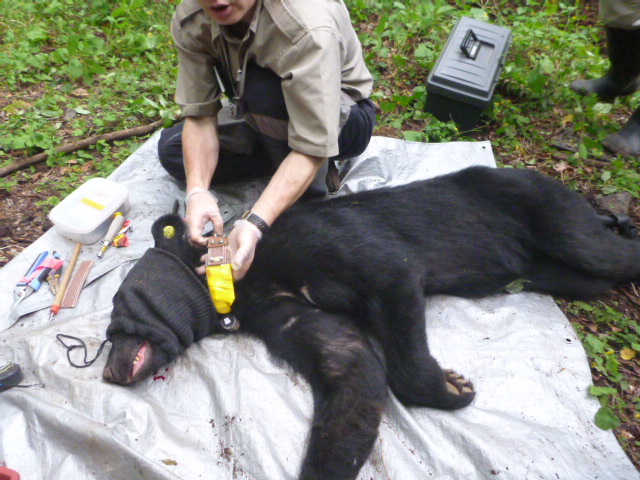
Collaring a sedated black bear. Photo: Picchio Wildlife Research Center
A more traditional option is man’s best friend. The Picchio Wildlife Research Center in Nagano Prefecture on Honshu uses a specialized breed called Karelian bear dogs to track and chase bears. If the dogs aren’t enough, they tranquilize and relocate the bear. However, Picchio’s methods have not been picked up nationwide.