It is a sad day in Siorapaluk, Greenland, the world’s northernmost village.
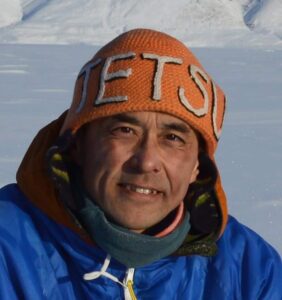
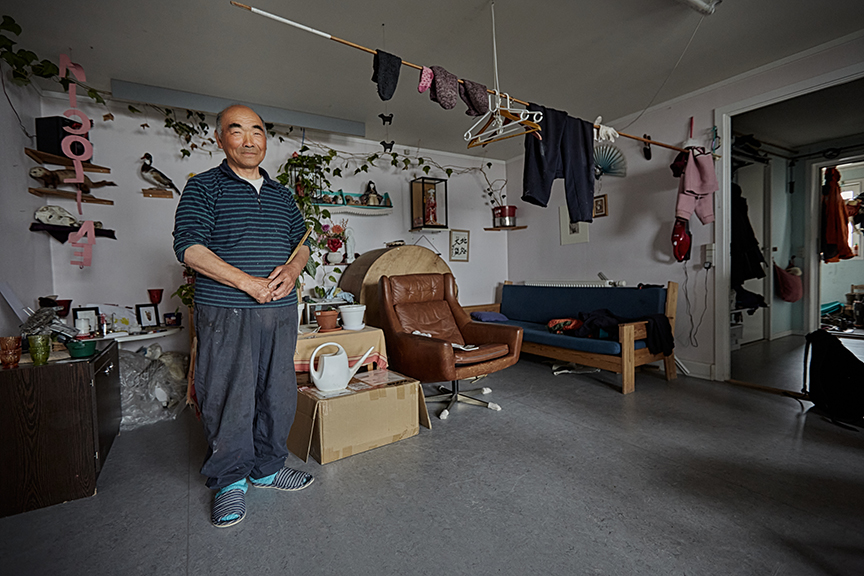
Early this morning, Ikuo Oshima died in nearby Qaanaaq. He was 79.
For more than half a century, Oshima-san was one of the faces of Siorapaluk, although he was born thousands of kilometers away, in Tokyo.
My late husband, Ole Jorgen Hammeken, once told me that foreigners stay in Greenland for two reasons: taxes and love. I don’t think taxes had anything to do with Ikuo.
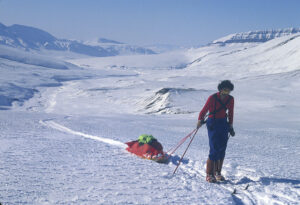
He came north in 1972, a young Japanese mountaineer. As the story goes, there were grand expedition plans involving the famous climber and polar explorer Naomi Uemura, dogs, and a great deal of Arctic geography. Then Ikuo saw a girl in Siorapaluk.
Geography suddenly became less important.
He stayed, married Anna, and began a rather more difficult expedition: becoming Inughuit.
At first, he had the worst dogs and hopeless clothing. He told us many times that his first 10 years were the hungriest of all. He had to learn the language and, more importantly, how not to die here.
Eventually he became piniartorsuaq, a great hunter, known far beyond Siorapaluk.
Ikuo had been born near the epicenter of modern capitalism and somehow ended up about as far away from it geographically and philosophically as possible. Here, he learned a very special economy in which almost nothing was wasted. Skin, sinew, bone, fur: Everything had a purpose. You took what you needed, used what you took, and were grateful to the animal.
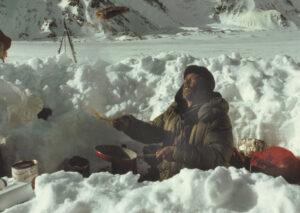
Years ago, Ole Jørgen Hammeken and I filmed Ikuo repairing the old huts at Etah, an abandoned hunting camp further north. Not his huts. Everybody’s huts. Whoever came next might need them.
He became something else too: a bridge between Japan and Avanersuaq — Northwest Greenland.
Japanese explorers, students, and scientists came through him. Some called him their master. He taught foreigners dogsledding, hunting, ice, weather, and the various techniques required not to perish during the polar night.
Today, there is an extraordinary Japanese scientific presence around Qaanaaq, particularly with Hokkaido University. Ikuo was part of how those two very distant worlds found each other.
Perhaps they were not so distant after all.
Sitting with Ikuo in Siorapaluk was always magic. Meeting him in Qaanaaq was different. There were too many people, too much traffic, too much pollution. By Siorapaluk standards, anyway. He usually seemed to be trying to escape back north.
I found my diary from 2012 today.
Ole Jorgen and I were planning to go to Anoritoq via Etah and doing what expedition people do: worrying about rain, pack ice, and schedules. We asked Ikuo when he thought the rain would stop and the ice would let us through.
“I never think,” he said. “It will be what it will be. This is how it is.”
Not particularly useful for expedition logistics.
Extremely useful for almost everything else.
Putdlaq Uvdloriaq, another Siorapaluk legend, told me this morning that he and Ikuo were born only about 30 days apart in 1947. They belonged to a generation that could read this country in ways the rest of us read Google Maps.
I visited Ikuo recently at Uttoqaat Illuat, the old people’s home in Qaanaaq, but he was sleeping. I had my last conversation with him five days ago, from Siorapaluk. He gave me a smile, like always. Afterward, I told everyone he would survive.
Of course, he would. This was Ikuo.
I was wrong.
His children and grandchildren live in Siorapaluk, Qaanaaq, and elsewhere. His daughter, Tuku, became a hunter herself. So in a way, the young man from Tokyo who came here more than half a century ago is not going anywhere.
Now everyone is waiting for Sila, the weather. When the sea calms down, Oshima-san will come home by boat. Then he will be carried up the hill and buried in Siorapaluk’s little cemetery.
Tokyo was where Ikuo Oshima happened to be born.
Siorapaluk was where he decided to belong.
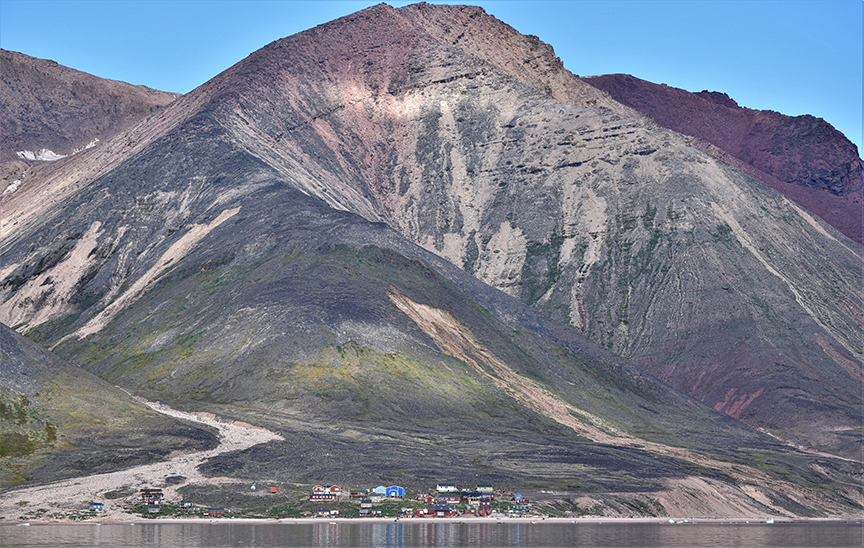
Siorapaluk, pop. 43, Northwest Greenland. Photo: Shutterstock