Until the early 18th century, the Western world had almost no information about Korea; it was practically mythical. Then, in a period of intense isolation, foreigners did not enter Korea. If they did enter, they didn’t leave. The first account of the region came from a Dutch sailor named Hendrick Hamel, who survived a shipwreck, lived in Korea in semi-captivity for over a decade, and eventually made a daring escape by sea.
Born in 1630 amid the prosperity and rapid development of the Dutch Golden Age, Hendrick Hamel went to work for the Dutch East India Company, or VOC, as a young man. Joining up as a common sailor, he was quickly promoted to assistant and then bookkeeper. This was his position aboard the Sparrowhawk (Dutch: Sperwer) in 1653.
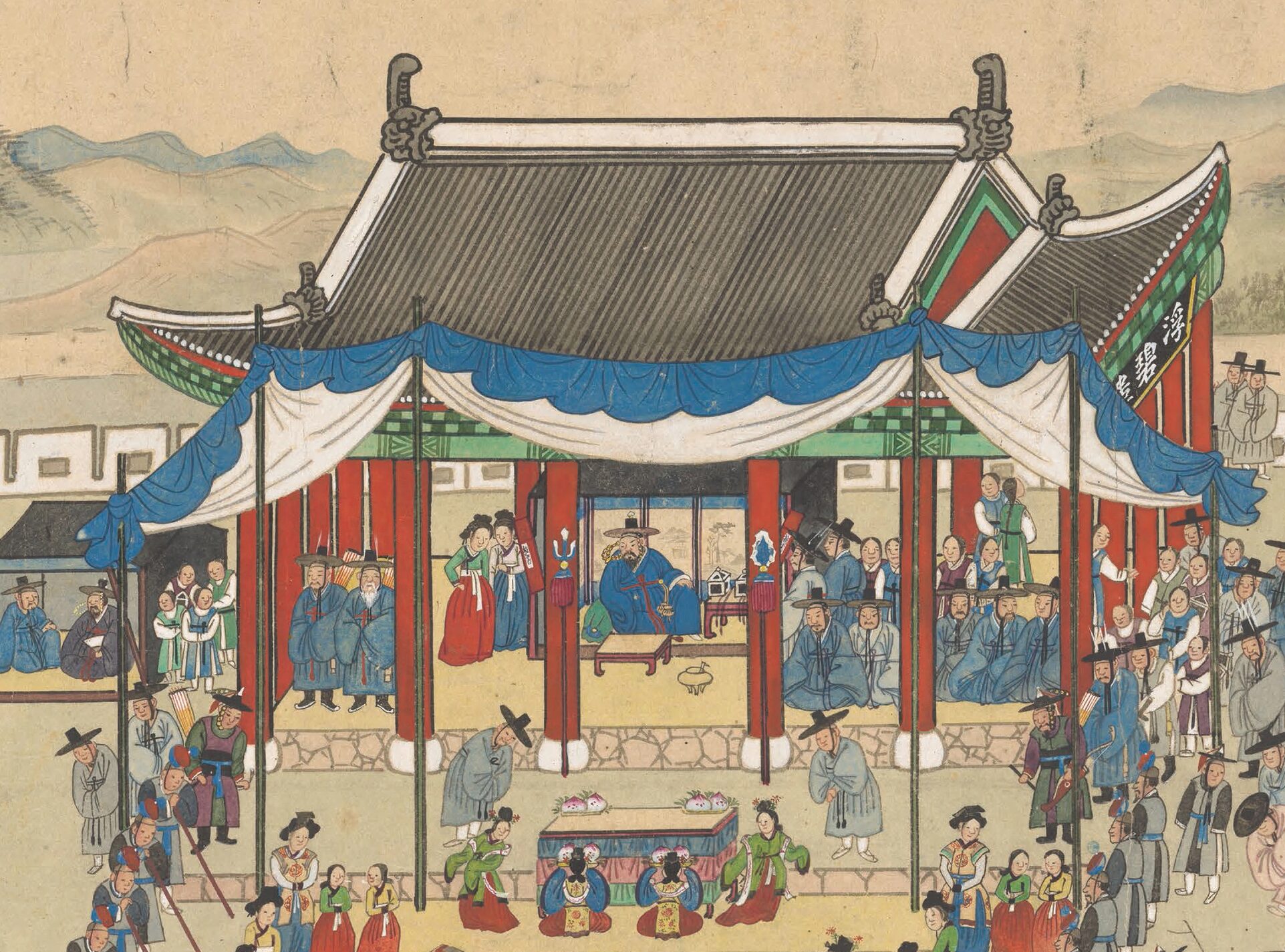
Hamel’s account brought glimpses of the Joseon dynasty to the West. Photo: Asian Art Museum, San Francisco
The shipwreck
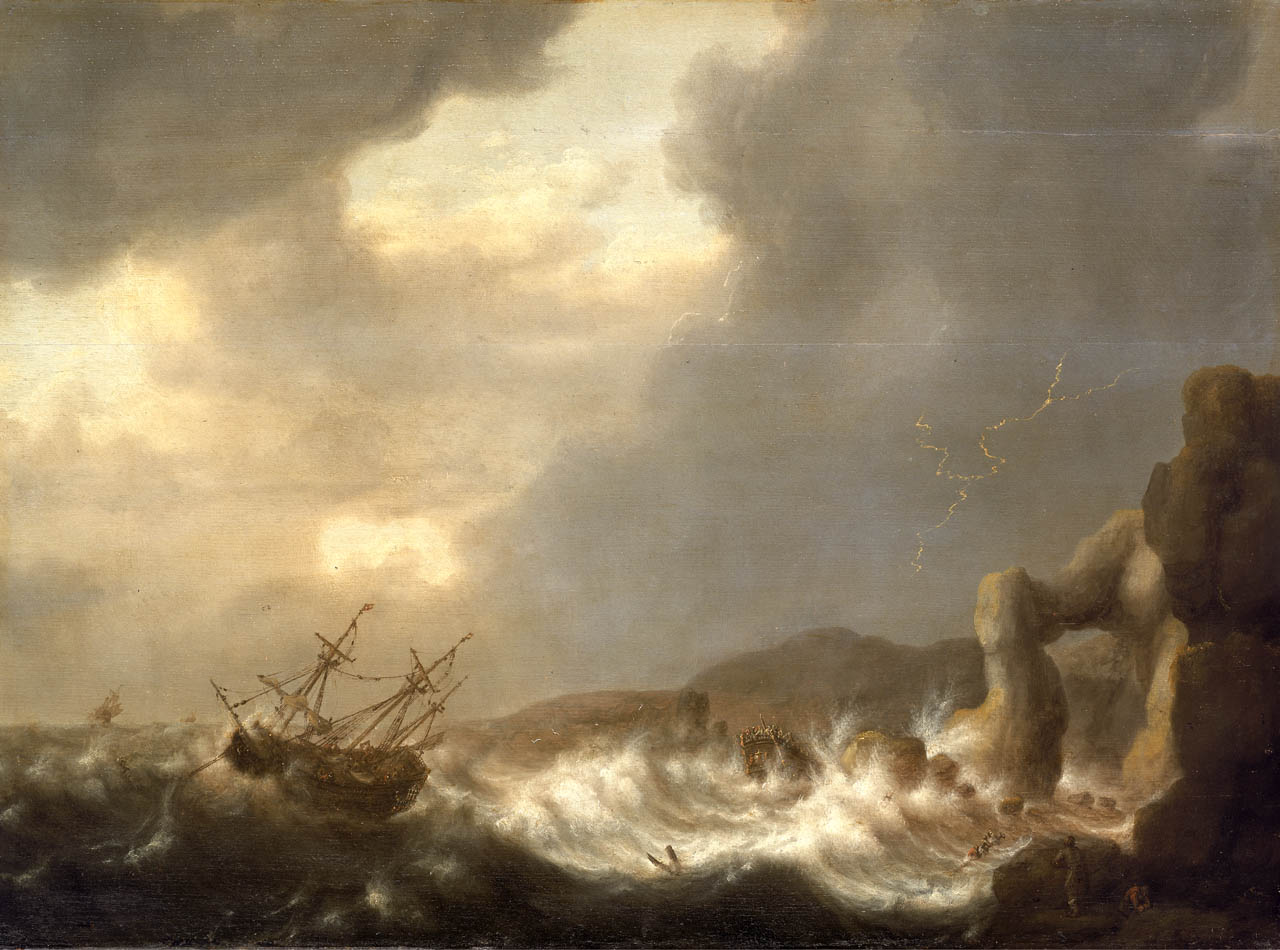
The Sparrowhawk left Taiwan in July, bound for Japan and the VOC trading post at Nagasaki. But alternating calms and storms battered their vessel, keeping them running back and forth along the coast of China. By August 15, the damaged ship was caught in a violent storm. The ship began to take on water, then lost one of its boats, the bowsprit, and a large part of the stern gallery.
They desperately tried to repair the ship, but were soon forced to cut the mast away, preventing their immediate wreck but leaving them essentially adrift. In that moment, the lookout cried out, “Land!”
The sea was either too deep or too wild to anchor, and the ship was falling apart around them. Some men jumped overboard, and the rest were swept into the sea.
The next morning, the survivors on shore found each other and took stock. Thirty-six of the 64 men had made it. The captain was dead, the ship destroyed, and they had no food except a few odd cases which had washed up with them.
Early the next day, they glimpsed a man a few hundred meters away, but he fled. At noon, a trio of men appeared in the distance and again ran before the survivors could ask for help. That evening, a hundred men armed with muskets and bows arrived and surrounded them, but again at a distance.
With, presumably, a shrug, the survivors went to bed.
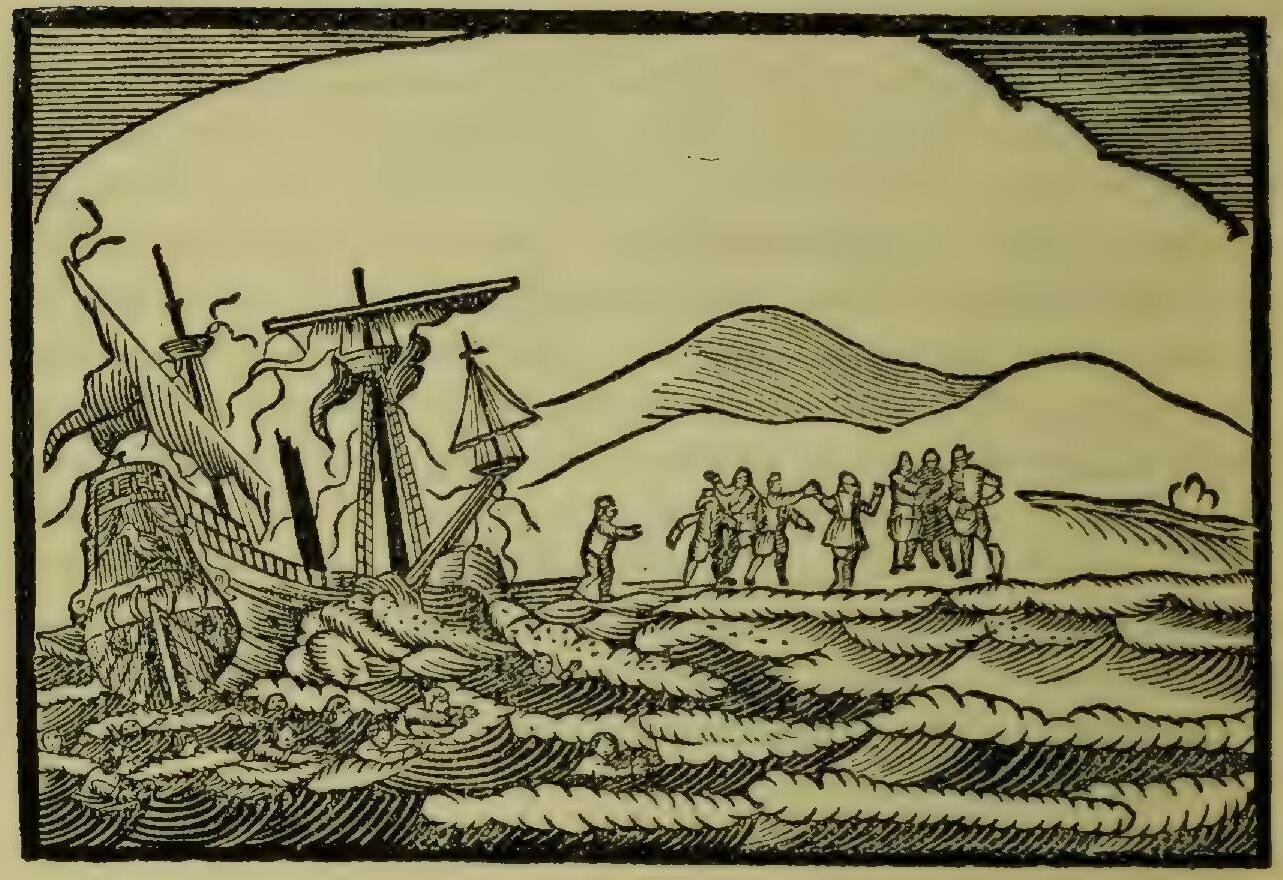
Hamel and the other survivors struggle onto land while their ship falls apart. Woodcut printed with Hamel’s account
Jeju Island
In the morning, they continued about their business, trying to enlarge their shelter. Finally, several thousand more men arrived, and the survivors sent some of the ship’s surviving leadership as delegates. Unsurprisingly, negotiations broke down when both parties found themselves unable to understand the other.
The leader of the native men eventually gave up on the interrogation. Taking stock of the survivor’s pitiful condition, he took charge, providing them with food and drink and organizing his men to bring the wreck ashore. The survivors watched from their tent as the strangers brought the ship in, stripped it of everything, made a detailed record of the contents, and burned the wooden wreck which remained.
The ship’s chief navigator ran some calculations and found they were on the island that the Dutch called Quelpaert, which is now known as Jeju. The island has been known by at least 12 names in half a dozen languages, but we’ll just be calling it Jeju.
The Korean commander, presumably unsure how to handle the administrative complications who’d washed up on the shore, shepherded the survivors inland. Hamel notes that they were well fed, and the injured were cared for, but they had very little idea what was going on. Eventually, they were in “Moggan” meeting the governor.
He wasn’t alone. Beside him sat an older white man with a bushy red beard.
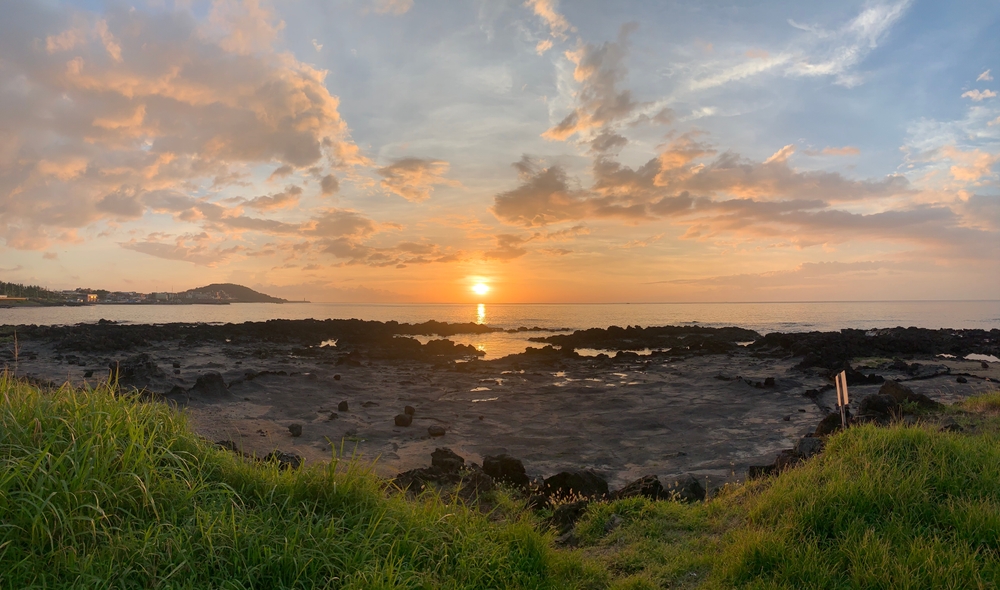
On a purely aesthetic level, there are much worse places to be shipwrecked than Jeju island. Photo: Shutterstock
The tale of Jan Janse de Weltevree
Speaking in their own language, the bearded man interviewed the survivors, and told his own story in turn.
He was Jan Janse de We Weltevree, and he was born in Holland in 1595. In 1626, he’d shipped as a sailor aboard the Hollandia, bound for the Dutch East Indies. After arriving in Batavia (modern day Jakarta), he transferred to the Ouwerkerck, which captured a Chinese junk. While on that captured boat, fierce winds pressed them against the coast of a Korean island. Weltevree and two shipmates went ashore to collect water.
Locals immediately spotted them and turned them over to the authorities. Korean documents from the time reveal that they had contacted Japanese officials, who were not interested in taking custody of these random Dutch people. So, they were shipped to Seoul. Once in Seoul, they went to work, perhaps voluntarily, perhaps not, in artillery manufacture.
When the Chinese Qing dynasty launched an invasion of Joseon in 1636, all three served in the Korean military. Both of his companions, Dirk Gijsbertsz and Jan Verbaest, died in battle. But Weltevree, by then going by the name Pak Yon, continued to live and integrate in Korea. He asked the governor many times to be allowed to leave, but was denied. However, within the country, he was free to live as he pleased. He served as a military commander, married, had children, and passed the civil service exam to become a government official.
By the time he met Hamel and the other survivors, he had given up on ever returning to the land of his birth. He didn’t seem too broken up about it.
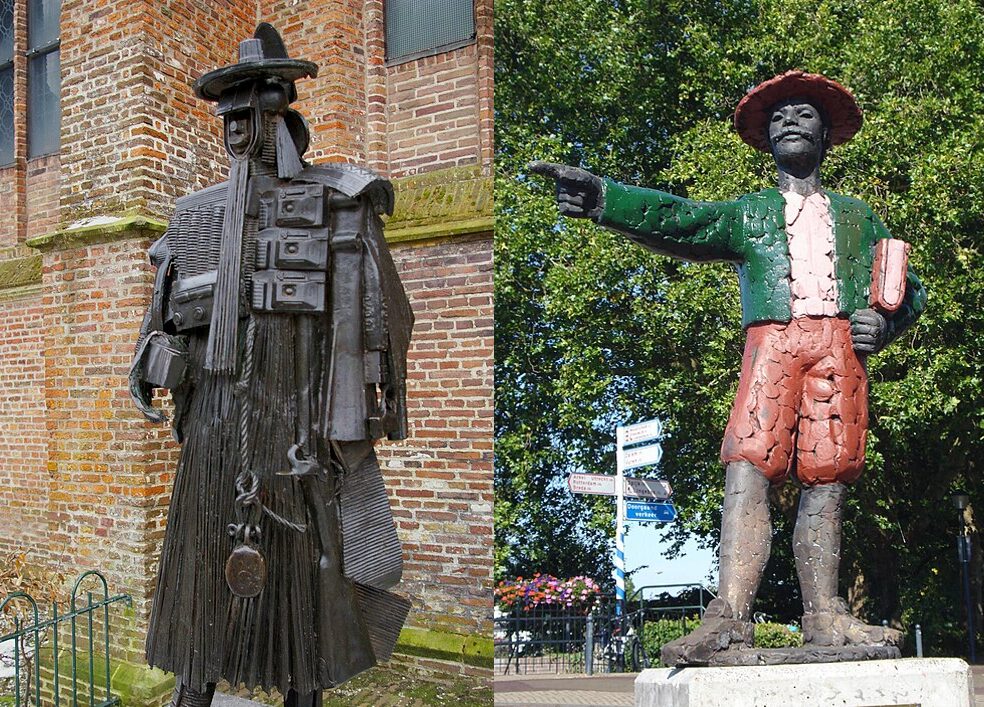
Modern Korean statues of Pak Yon/Weltevree, left, and Hamel, right. Photo: Wikimedia Commons
Dutch sailors in the Joseon court
Pak Yon warned them that they, too, would live the rest of their lives comfortably, cared for but unable to leave. They were not entirely reconciled to this, especially when a new governor of Jeju Island brought about a change in their living conditions. He reduced their rations to barley meal and water. They began plotting escape.
By May, they had located a nearby unattended boat. Five men sneaked out and took possession of it. The group was spotted, however, while they were trying to launch. The survivors and their stolen boat were recaptured, and the new governor had all five beaten.
While the beaten men were recovering, orders arrived summoning the castaways to court. A short sea journey took them to the mainland, where they were conducted inland to the imperial court.
Hamel and his companions found themselves before King Hyojong himself, with Pak Yon interpreting. They begged him to let them return to the Dutch trading post in Japan. Law and custom, Hyojong replied, did not allow foreigners to leave once they’d entered. He promised to provide for all of their needs, and then, serious business done I guess, had them dance and perform Dutch songs for his amusement. They must have done a pretty good job, because the king sent them off with gifts of cloth to make Korean-style clothing for themselves.
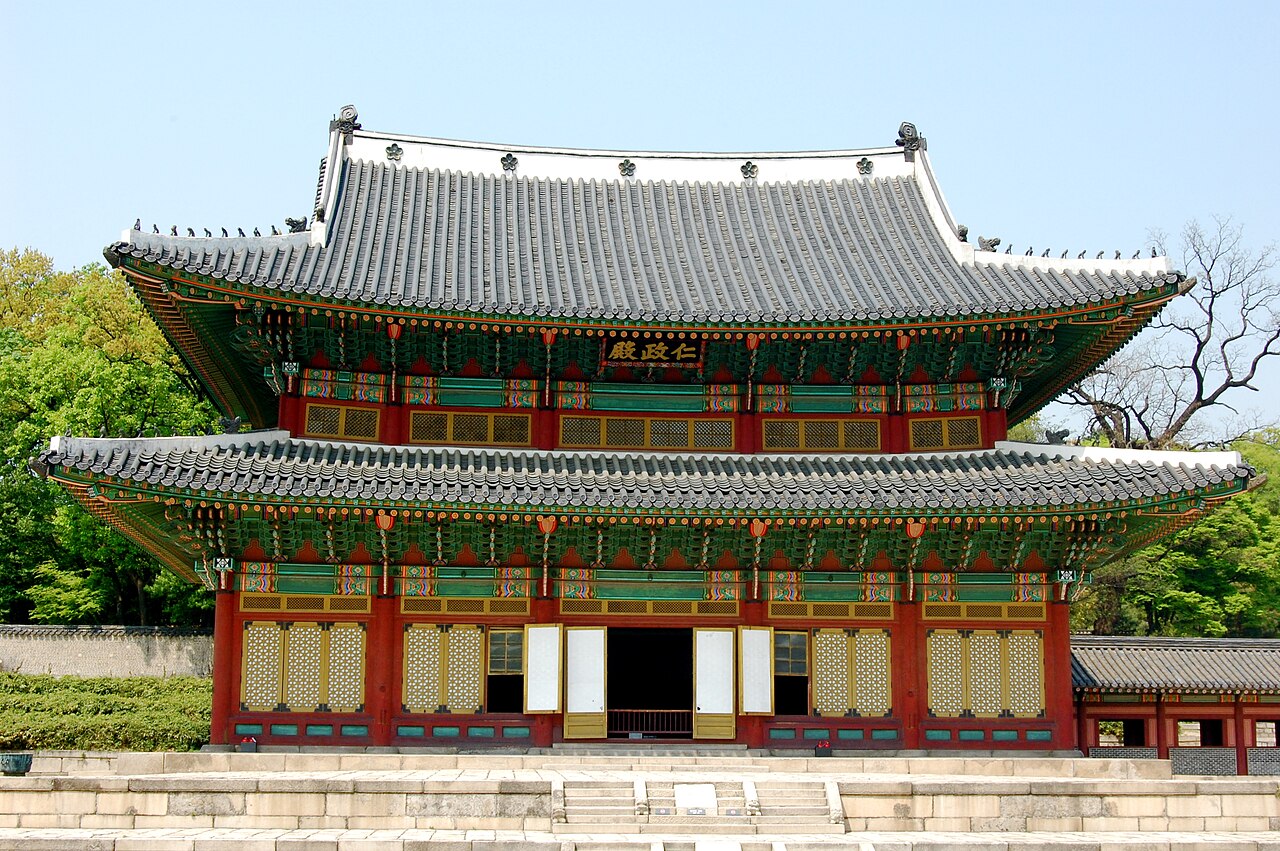
The throne hall of Changdeokgung, the main palace of the Joseon government during this period. Photo: Wikimedia Commons
Thirteen years in Korea
Hyojong enlisted the men in his personal guard, which accorded them a salary and official papers, and provided tutors to instruct them on the language and customs of their new homes. A focus of great curiosity, the humble sailors found themselves dining with prominent officials and dancing for the entertainment of great men’s children. Still, when the opportunity to escape came, two men took it.
Emissaries from China’s Qing dynasty arrived at court, and despite officials’ best attempts to keep the Westerners out of the way, Hendrick Janse and Hendrick Janse Bos (common name, I guess) managed to sneak out. The pair ambushed the Qing ambassador, and he took an interest in the situation. Unable to understand the strangers, he called for an interpreter — Pak Yon — who immediately told Hyojong.
Janse and Janse Bos were imprisoned and died there, leaving Hamel forever wondering if they had died of natural causes. Korean documents reveal that the two men perished after going on a hunger strike. Hoping to avoid similar international incidents, Hyojong sent the Dutchmen away to Jeolla province. The men spent years in military barracks under the care of various officials, some of whom were more generous than others.
In 1662, however, famine struck, and it was deemed too expensive to keep the 23 remaining survivors in any one place. They were divided into several groups. Hamel and eleven others ended up in the coastal city of Yeosu.
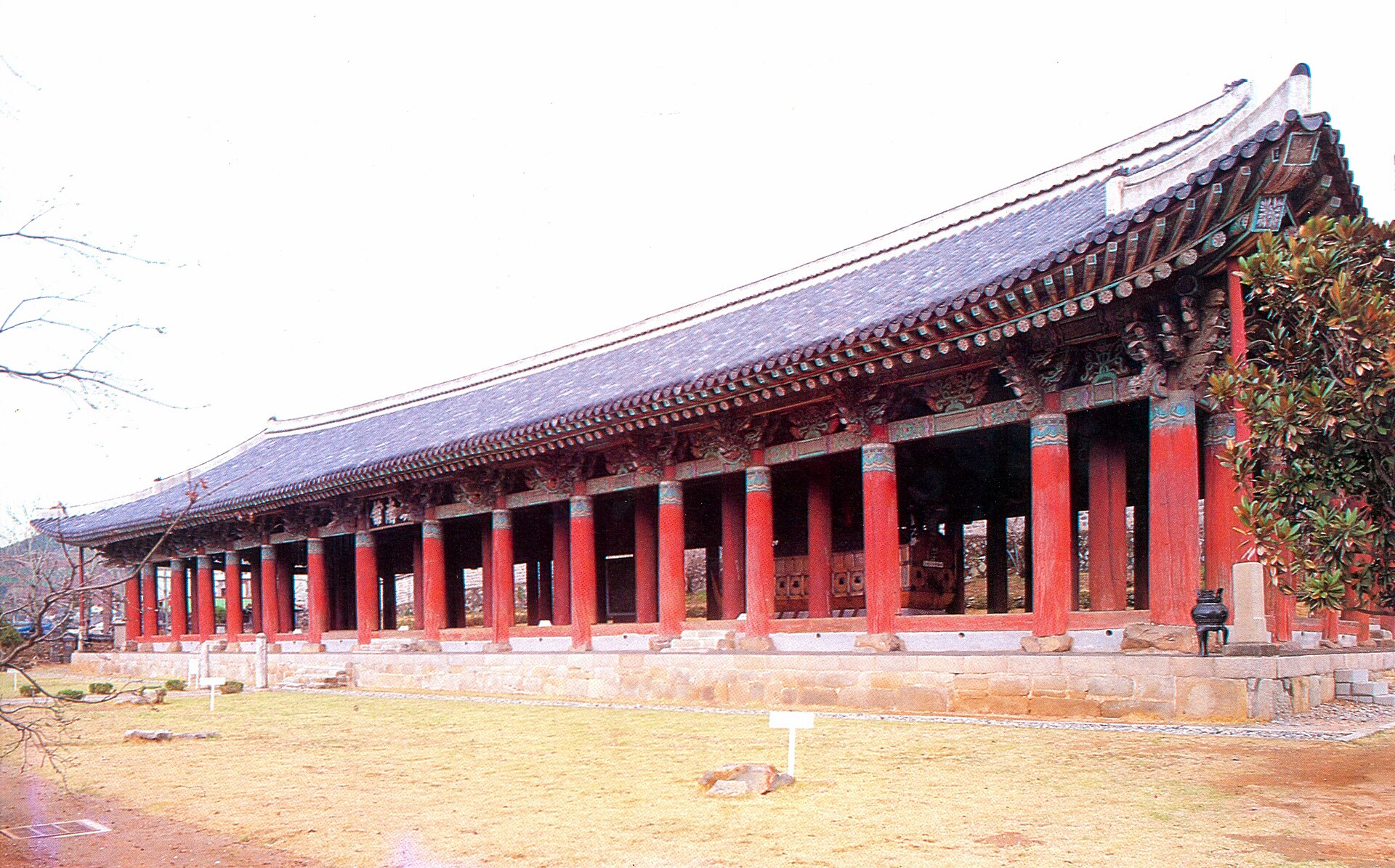
The 17th-century naval base in Yeosu, where Hamel and his compatriots ended up. Photo: Wikimedia Commons
Escape to Japan
Now that they were at a port, the eight remaining men in Yeosu plotted their escape. When the governor fell sick, they made their move. Approaching a friendly neighbor, they claimed that they had permission to buy a fishing boat to engage in a little trade with the nearby islands just off the coast. Somehow this worked, and the world’s most gullible man sold them a little boat.
In secrecy, they worked on fitting it out for a sea voyage, installing a mast and sails. One September night, the men sneaked out with as much rice as they could carry. They sailed under cover of the new moon for Nagasaki. This was the Dutch trading post, and the only place in Japan where Westerners were permitted.
After several days, strong winds forced them to take shelter amid the Goto Islands. There, a Japanese nobleman found them and took them aboard his ship. Hearing their astounding story, he gave them all the provisions and directions they needed to reach Nagasaki. With his help, they found themselves, finally, in Dutch custody, telling the whole story to VOC officials.
Two years of negotiations later, the remaining survivors were repatriated to the VOC in Japan, and all the surviving castaways of the Sperwer could go home.
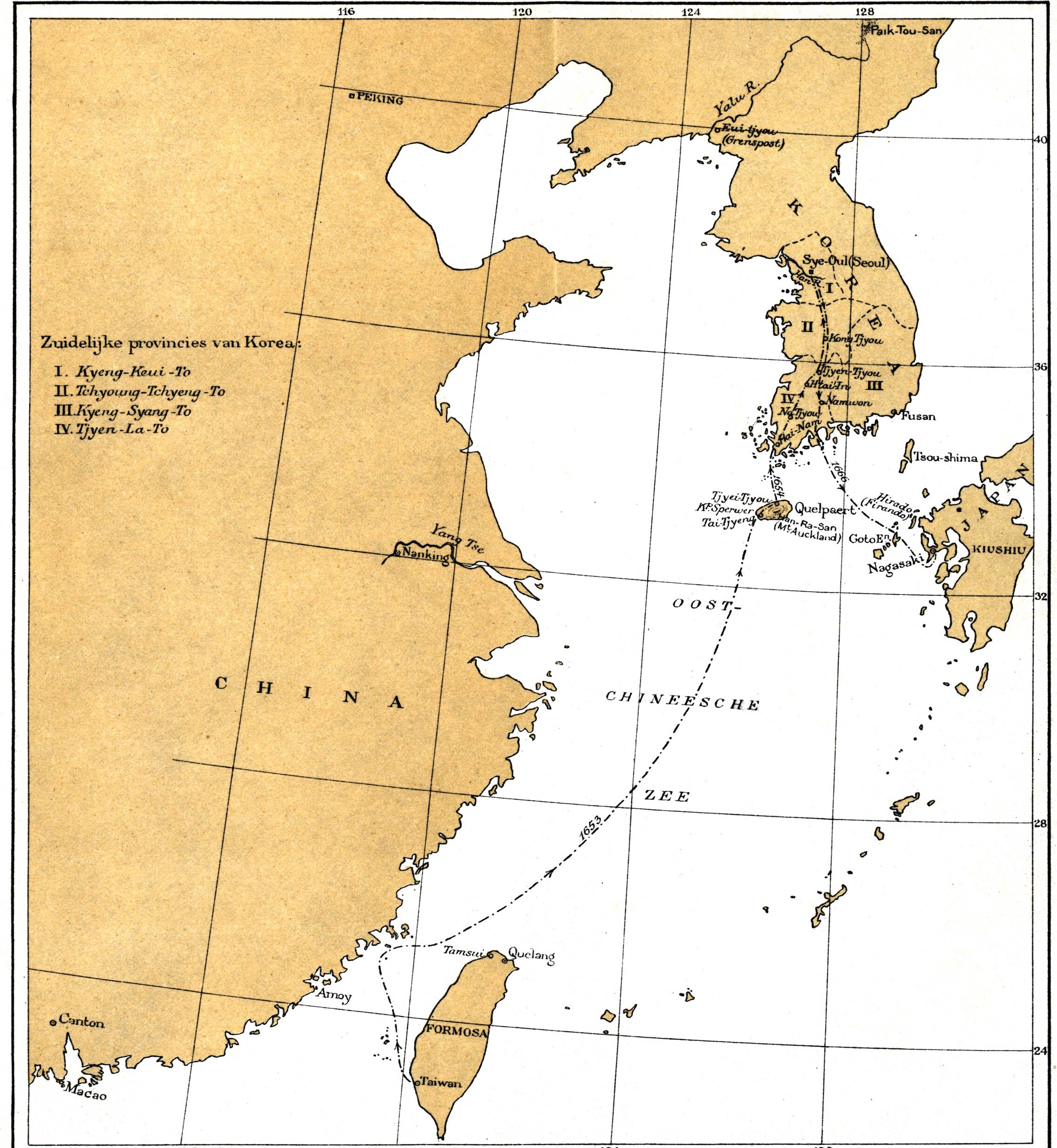
A map of Hendrick Hamel’s 13-year odyssey, printed with his account.
Accidental adventurer, accidental travel writer
Just as Hendrick Hamel did not set out to explore an unknown foreign land, he did not intend to publish a journal that would find mass readership and shape two centuries of Western understanding of Korea. His account, referenced throughout this article, was not meant for the public.
It was a report to his employers at the VOC. The VOC instructed all its employees to make detailed reports of any potential new trading partners. Hamel had followed company guidelines in structuring his report. His primary goal seems to have been to claim 13 years’ worth of back pay. He was not successful.
On top of that disappointment, he probably didn’t get any monetary benefit from the report’s publication. Three different Dutch publishers put out copies of his report while he was still in Japan, and without his involvement. One of these publishers even added outlandish action scenes to the narrative. Despite the complete lack of crocodiles in Korea, there is a crocodile fight scene.
Hamel’s tale reminds us, perhaps, that we don’t always get to choose what people make of our work once it exists. More alarmingly, it raises the possibility that one’s work emails may become important historical documents one day.