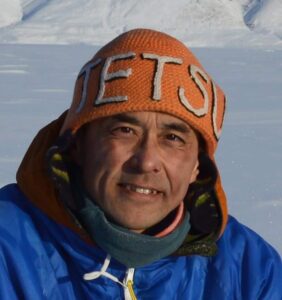
Arctic explorer John Dunn and his travel partner, Paul van Peenen, have completed a 300km ski-and-hike expedition across Victoria Island in the Canadian Arctic. Victoria Island, one of the largest islands in the Canadian Arctic Archipelago, lies north of mainland Canada and straddles the territories of Nunavut and the Northwest Territories.
The pair finished their month-long journey in Ulukhaktok, a small Inuit community on the island’s west coast, on June 24. Dunn, 72, and Van Peenen set out on May 24 and spent a month traversing the remote landscape.
The trip marks the latest Arctic journey for Dunn, who has explored the Canadian north for more than 30 years, including making the first north-to-south traverse of Ellesmere Island over 96 days in 1990.
A circular route
The experienced duo traveled unsupported and focused their efforts on the northwest of the island, which is the eighth-largest island in the world and Canada’s second-largest, after Baffin Island.
“The goal of our little jaunt was to get to know a small part of Victoria Island’s vast landscape,” said Dunn. “We were just sampling a very small fraction of it.”
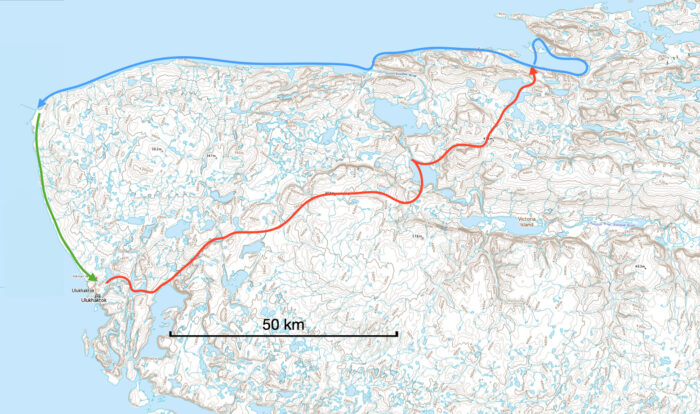
Dunn and Van Peenen’s route, taking the red line first. Map: John Dunn
“We chose [to start in] Ulukahtok since it is readily accessible, and the nearby terrain is considerably more interesting than much of Victoria’s topographically challenged vastness.”
“Our area of interest also included the final 100km or so of the sizeable Kuujjua River,” added Dunn.
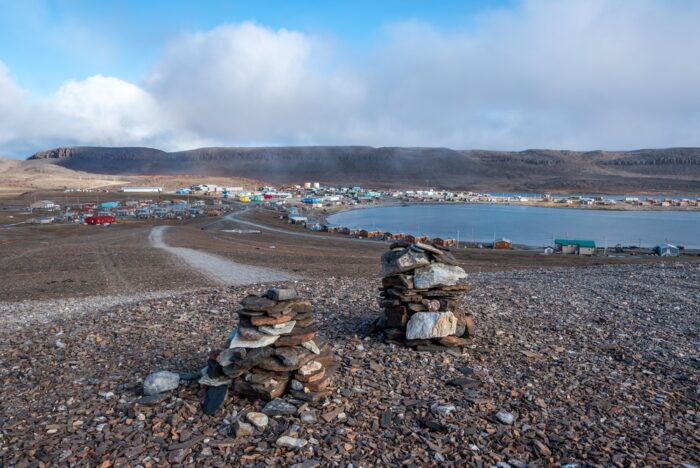
View of Ulukhaktok on the west coast of Victoria Island. Photo: Shutterstock
Skiing, hiking, and paddling
“The aim was to begin right at the start of the [ice] melt, so we could experience big changes to the landscape during our time on the island,” said Dunn.
“To this end, we started on skis, pulling sleds, and planned to transition to packrafting and/or hiking/wheeling, as nature dictated. Another key feature of the plan was to finish before the bugs came out.”
Dunn and Van Peenen had originally intended to packraft down the last 100km of the Kuujjua River, but the melt was not quite advanced enough. “We chose instead to explore the coast and use the sea ice as much as possible to aid our return to town.”
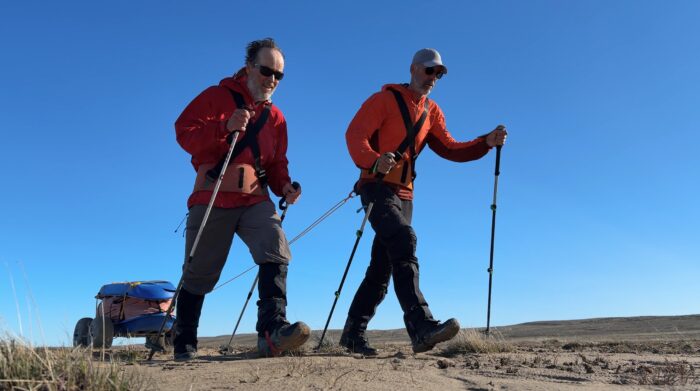
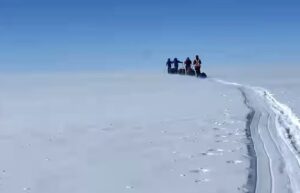
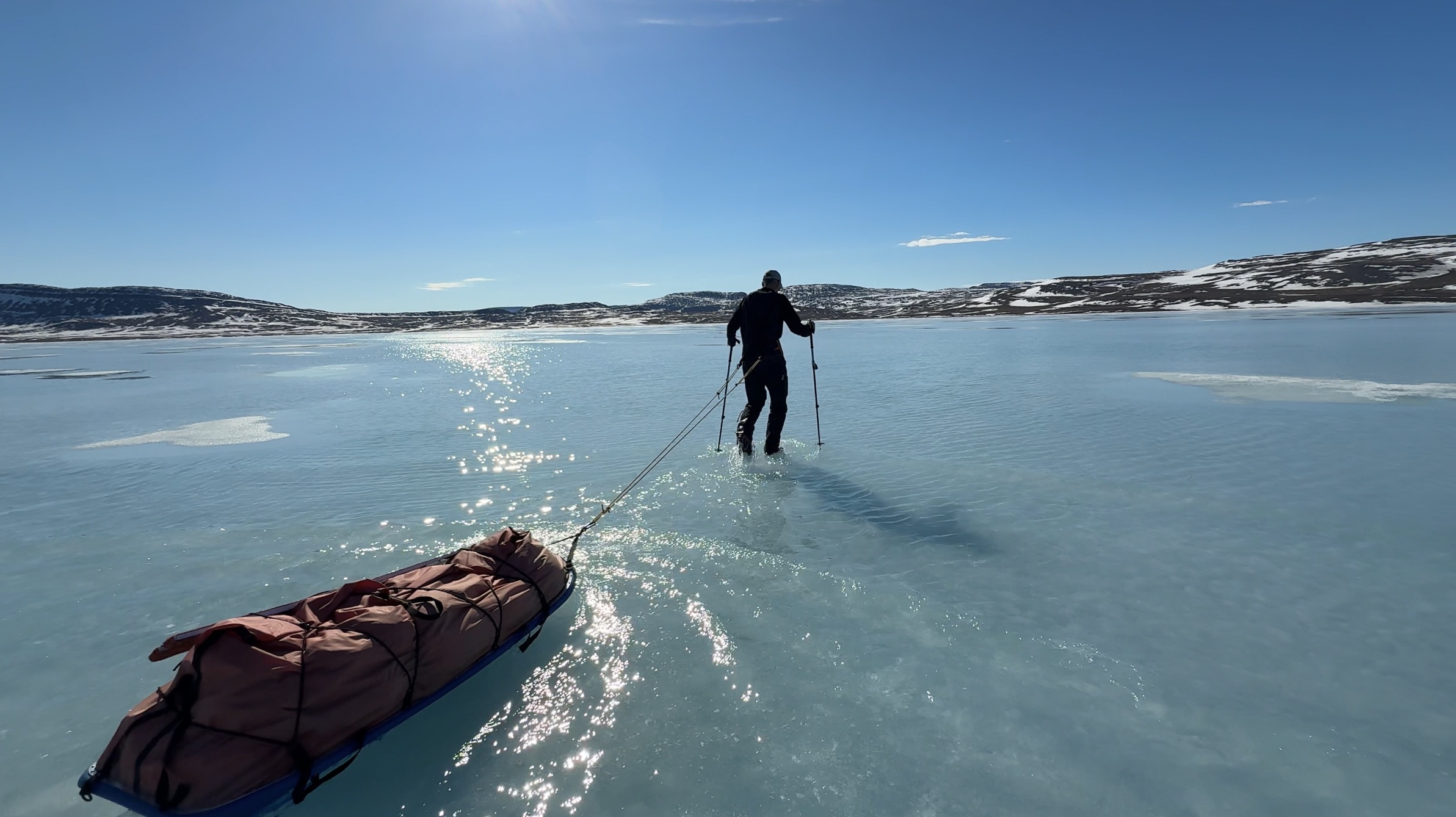
Dunn, left, and Van Peenen pull their sleds on portable balloon tires. Photo: John Dunn
The pair took the coast to minimize the time pulling their sleds using portable wheels, particularly on boggier terrain they had spotted on the way to the Kuujjua.
In the end, Dunn and Van Peenen skied around 125km, walked on sea ice for 135km, paddled 30m across a lead, and pulled their sleds on wheels for 40km.
A lack of wildlife
Dunn particularly enjoyed hiking along the sea ice into the midnight hours, thanks to the 24-hour sun in the Canadian Arctic at this time of year. Despite the endless hours of sun, they weren’t able to spot much wildlife. Victoria Island is a transition zone where both grizzlies and polar bears may be present. Grizzlies cross on sea ice from more southerly terrain.
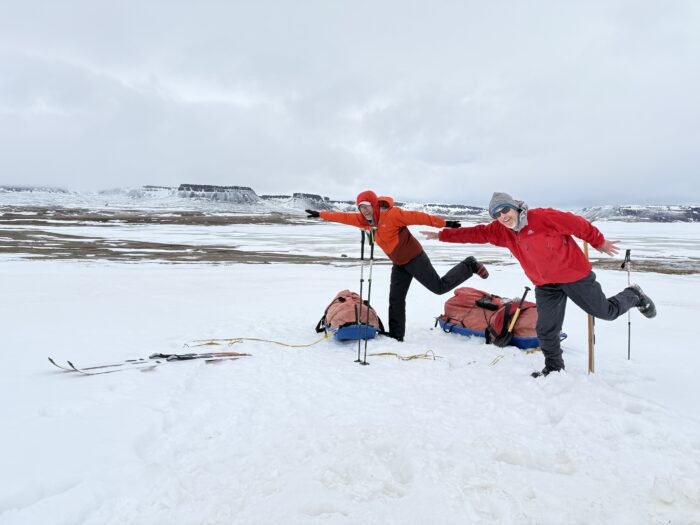
Striking a pose. Photo: John Dunn
“Our thirty-day mammal count was one fox, three hares, an ermine, and a few lemmings,” said Dunn. “Plenty of seals on the ice, though, and good bird life, [including] sandhill cranes.”