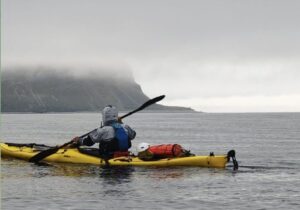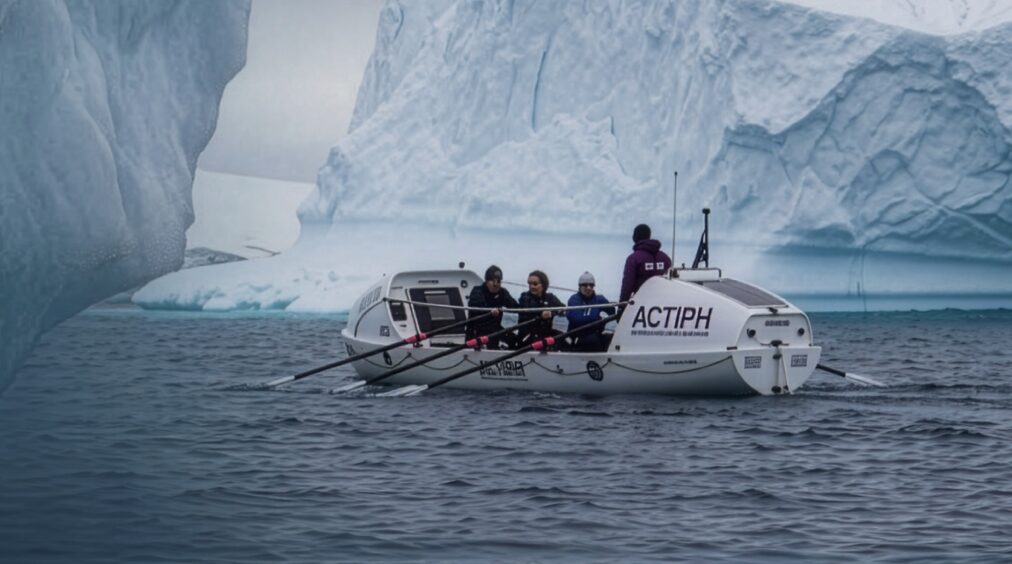
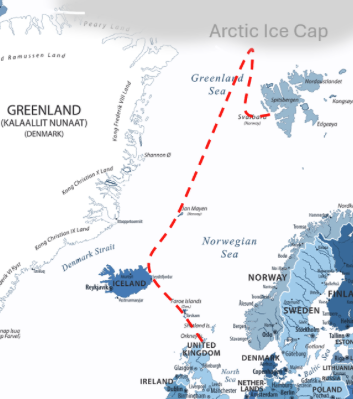
Next month, four Swiss rowers will attempt to row unsupported from Longyearbyen, Svalbard, to Scotland’s Orkney Islands. They estimate their 3,100km route will take 50 days.
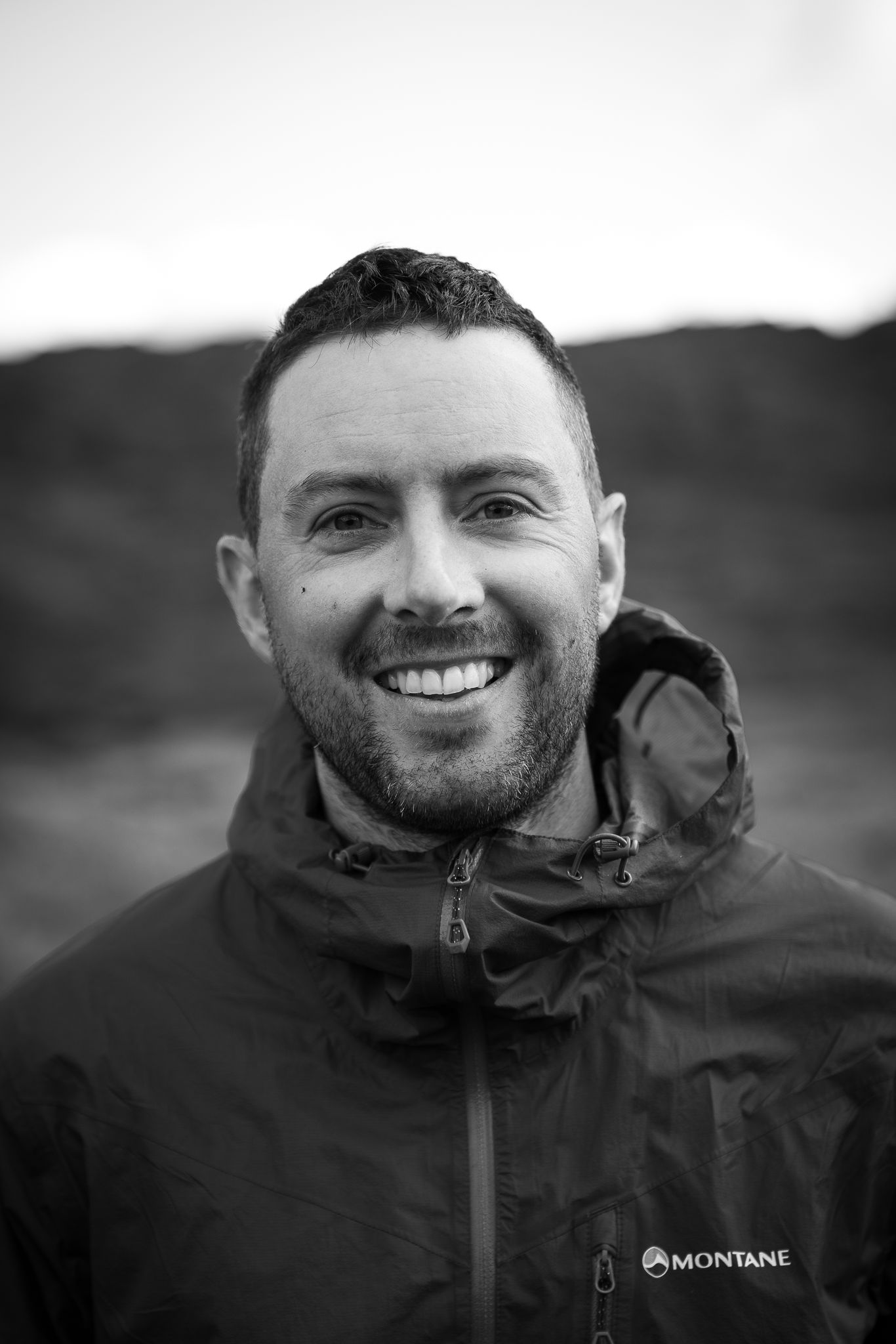
The team includes Florian Ramp, 48, Roman Mockli, 31, Ben von Mitzlaff, 29, and Frederik Jacobs, 47. Ramp and Mockli have previously rowed the Atlantic, and in 2021 Mockli was part of a team that won the Talisker Whisky Atlantic Challenge. However, none of them has any experience rowing in the Arctic.
“Our cold-weather preparation included regular winter training on Lake Lucerne in Switzerland at temperatures down to -5°C, and Ben and I completed military survival courses in Finland,” explained Mockli.
North to the ice
The four rowers will arrive in Longyearbyen, the most northerly town in the world, at the end of June. They will then wait for good weather before heading north into the Greenland Sea. They intend to row as far north as they can before hitting the Arctic ice pack, where they will turn around and head south.
“To the edge proper, if sea state and visibility allow. We’re not approaching to a fixed standoff distance, the intention is to reach it,” Mockli explains.
“We monitor Norwegian Ice Service charts continuously and will make a real-time decision on turnaround latitude once we’re north of Svalbard. We have a dedicated weather router monitoring ice charts on our behalf,” said Mockli. They will also use a drone.
They intend to follow the East Greenland Current, which runs down the eastern side of Greenland, toward the volcanic Jan Mayen Island, roughly halfway. The leg from the ice pack to Jan Mayen will cross a long stretch of open ocean.
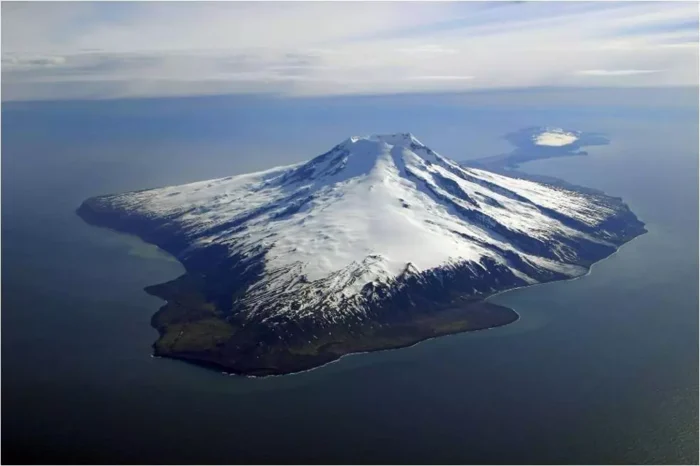
Jan Mayen from above. The Beereenberg volcano dominates the island. Photo: jan.mayen.no
Iceland to Scotland
The rowers will either pass near Jan Mayen or aim for the channel between the island and Greenland, then continue south to Iceland, turn east toward the Faroe Islands, and finish in the Orkneys.
“Going north to the ice edge before turning south via Jan Mayen and Iceland is what makes this a genuine Arctic row rather than a coastal traverse,” said Mockli. “It also commits us to the remotest section of the ocean before we’ve had a chance to tire. And by reaching the northernmost point possible, we row the full length of the Arctic Ocean, from the ice edge all the way south through the Arctic Circle.”
They will row unsupported with no resupply stops. “We’re provisioned for 60 days. Approximately 6,500 kcal per person per day, primarily freeze-dried meals.”
Expected air temperatures lie between -5 and +10°C, and the water temperature is 0–5°C. They plan to row in two-hour stints, with two rowing and two resting.
Remote waters
Over two legs in 2017, Icelander Fiann Paul led a team that rowed a total of 2,305km from the northern coast of Norway to Svalbard and then back down to Jan Mayen, with a switch in crew members in Svalbard. Paul and co. had originally intended to finish in Iceland.
“Our goal is to reach further north than the current record of 79°55’N, set by Polar Row in 2017. We plan to go as far north as conditions safely permit,” says Mockli. “This route has never been rowed before, and weather in the High Arctic can change within hours, leaving no margin for error.”
“The stretch north of Svalbard and around Jan Mayen is genuinely remote, with very little vessel traffic and SAR response times measured in days rather than hours,” he added.