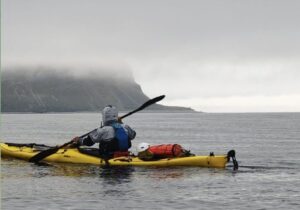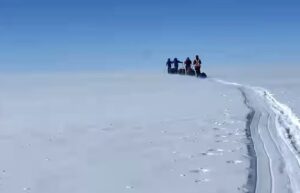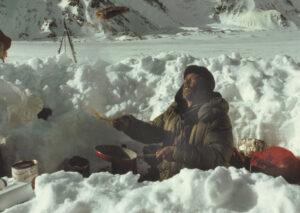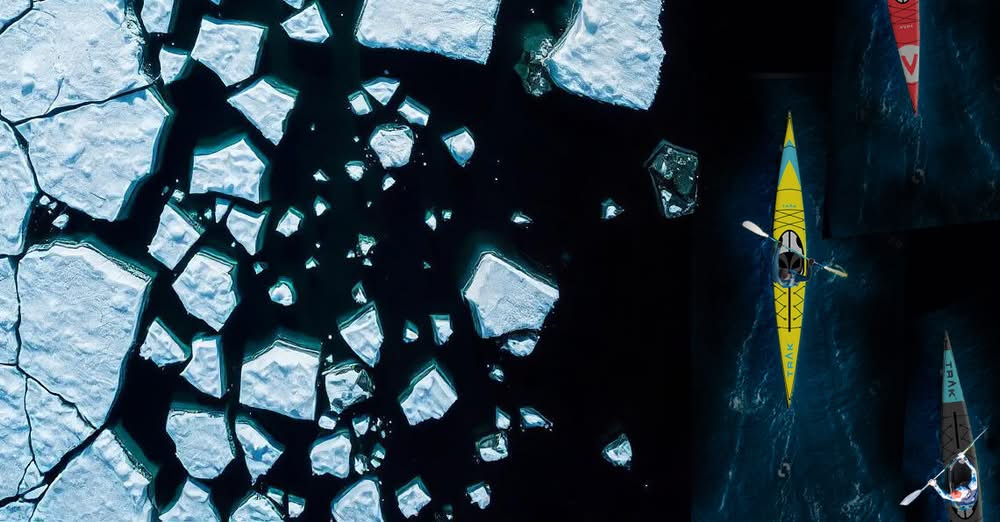
On Monday, August 3, four adventurers began a 700-800km clockwise paddle around King William Island in Canada’s central High Arctic. Veteran adventurer Kevin Vallely, 61, leads the group, which also includes Julie Van De Valk, Nicky Hastings, and Ken Stanick.
They began from KWI’s lone community, Gjoa Haven, in the southeast corner, pulling their kayaks on wheeled carts down the gravel road to the beach. They’ll use the carts, which can be dismantled and fit in the boats, later in the trip to hike a key historic part of the island.
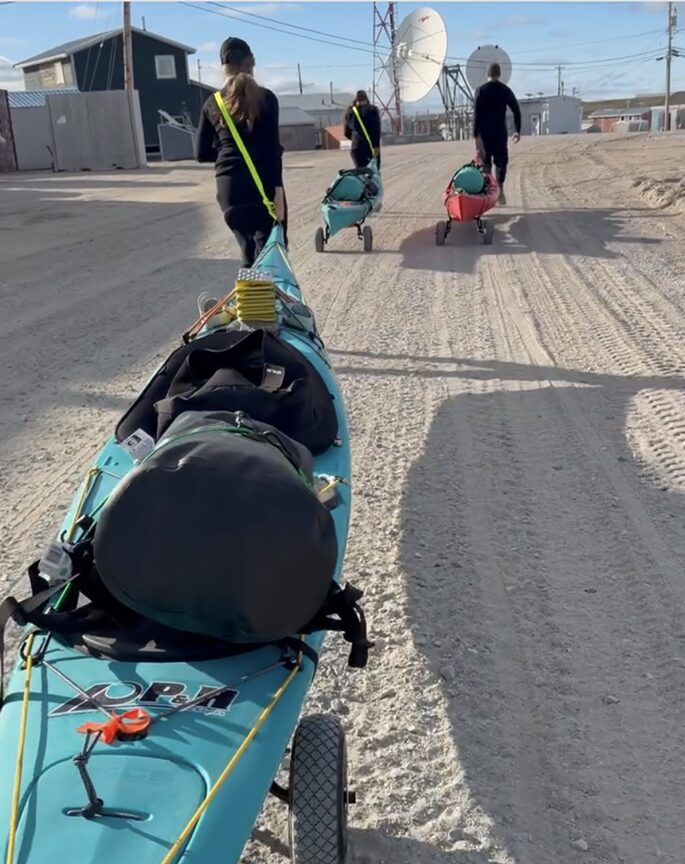
Towing the single kayaks to the beach at Gjoa Haven earlier this week. Photo: arctickayak.ca
Few adventurers visit King William Island, which lies in a comparatively dull part of the Arctic — no mountains, no icebergs or glaciers, a lot of grey weather. Those who do come here usually do so for one reason: because they are interested in John Franklin’s doomed Northwest Passage expedition. King William Island is at the heart of this mid-19th-century mystery.
Franklin almost succeeded
In 1846, Franklin came within a whisker of making it through the Northwest Passage from the east. But his two ships, HMS Erebus and HMS Terror, innocently tried to round the north end of the island rather than clairvoyantly sneak down the east side and curl around the bottom and upward through a narrow strait, which at the time was not discovered. That reliably ice-free detour has been the standard route through the Northwest Passage since Roald Amundsen first used it in the early 1900s.
Instead, the two ships became trapped in the heavy sea ice off Cape Felix. They stayed locked in that ice for two years. Everyone eventually tried to flee on foot but perished to a man. Franklin himself died on board ship in 1847, according to the one cairn note from the expedition that has turned up.
Although several skeletons from that famous disaster have been found and identified in recent years through DNA testing, the location of Franklin’s grave — if he was indeed buried on land — remains one of the Arctic’s enduring mysteries.
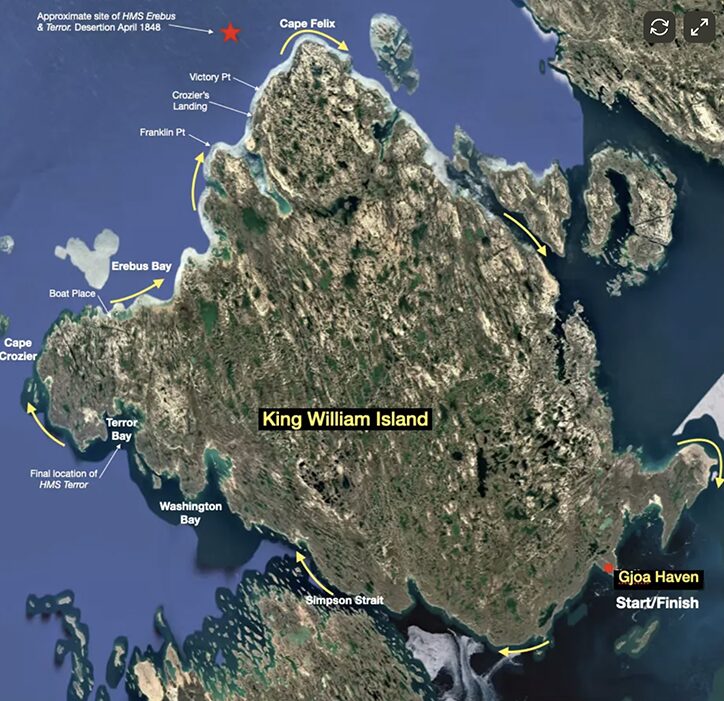
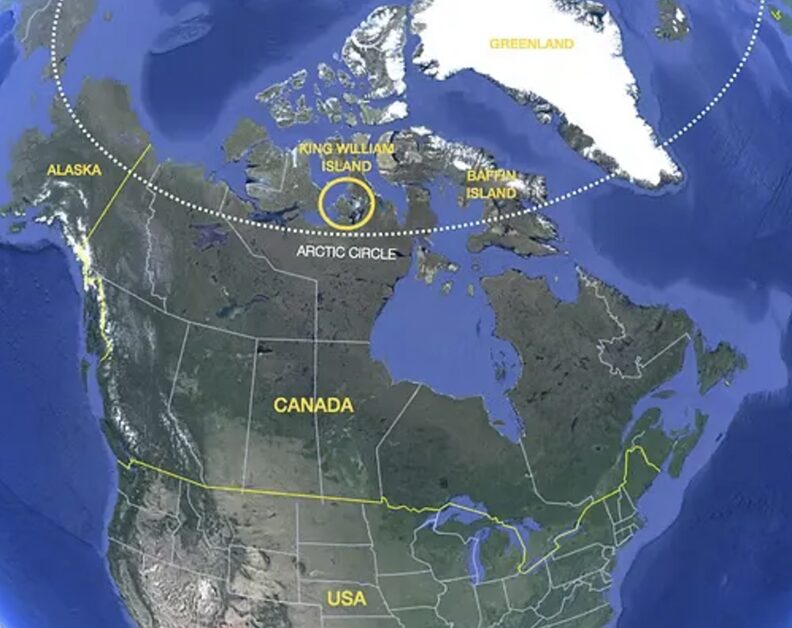
Maps: arctickayak.ca
Loosely affiliated with the kayak expedition, a second group led by amateur historian and long-time Franklinophile Tom Gross is going to cross the island on four-wheeled motorbikes, searching for that elusive grave and other undiscovered remains.
In 2022, Gross was involved in a similar search for Franklin’s tomb by quad bike, led by adventurer Mark Synnott and backed by National Geographic.
From an environmental point of view, it’s relevant to point out that the tires of quads leave tracks in the delicate tundra that last for decades.
Good chance of success
Unlike the recent SUP attempt through the Northwest Passage, Vallely’s effort to circumnavigate King William Island by kayak has a good chance of success, if the weather is not too contrary. The 700-800km is a reasonable month by sea kayak — back-to-back-to-back marathon paddling days not required.
They’re starting at the right time of year — late enough that most of the ice has disappeared, not so late that they will have to deal with gnarly autumn weather. And the ice off Cape Felix is no longer the death trap that it was in Franklin’s day. Both private sailboats and cruise ships typically round Cape Felix, sometimes without seeing an ice cube, rather than go the long way around via the east and south coasts.