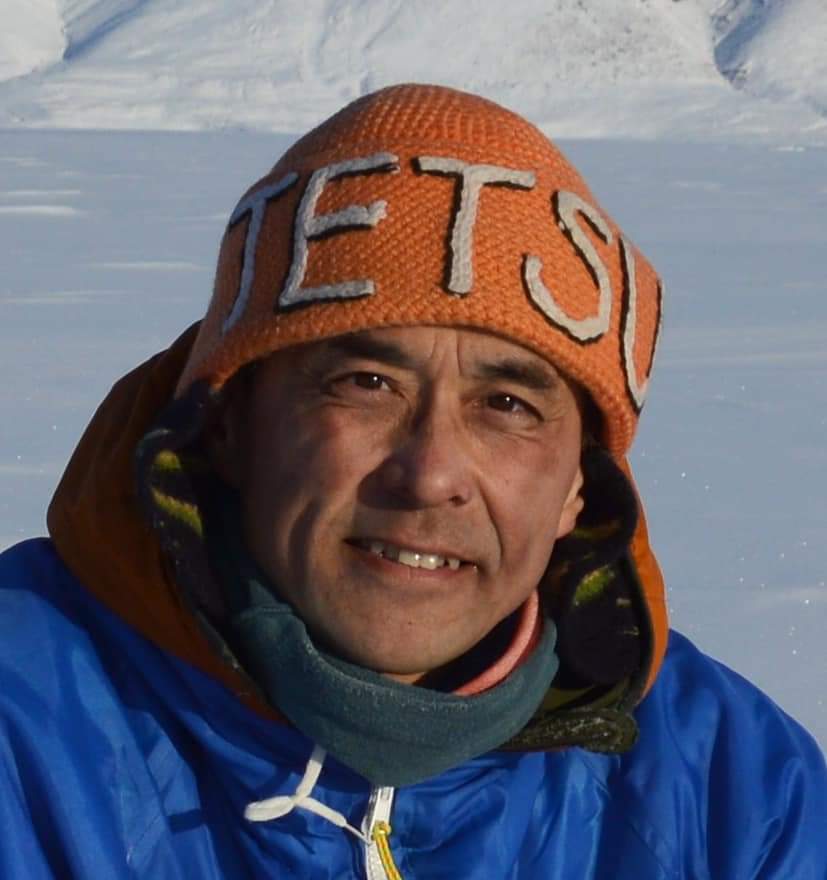
On November 29, 2023, Japanese scientist and explorer Tetsuhide Yamazaki walked out of Siorapaluk and disappeared.
It was the polar night. The sun had left this northernmost settlement in Greenland weeks earlier and would not return for months. Yamazaki went down toward the sea ice in the morning. By afternoon, when he had not returned, people began searching.
They found his tracks. They found his tooq – the ice-testing pole. They found a hole in the newly formed ice. But they never found Yamazaki.
The explanation seemed obvious. He had fallen through thin ice and drowned. I reported that explanation to ExplorersWeb a couple of days later. My information had come from conversations with hunters in Qaanaaq on the very night that Yamazaki was pronounced missing. They told me about dangerous early-season ice, fast currents, and warnings Yamazaki had received before going out.
It was a terrible story, but not a mysterious one. An experienced Arctic traveler had made one fatal mistake. Or so I thought.
A different story
When I returned to Siorapaluk later that year, the hunters told me a very different story. They did not think Yamazaki had simply fallen through the ice. They thought something had pulled him under. And they thought they knew what it was.
First, something about darkness. It is tempting to say that nobody saw what happened because Siorapaluk was deep in the polar night. But that is not quite how Siorapaluk works.
Here, everybody sees everything.
You simply can’t become invisible, even if you try. Hunters scan the frozen sea through binoculars 24/7. They notice a person leaving a house. They notice tracks. They know who went toward the ice and roughly where.
And people here see in the dark. They hunt in it. They travel in it. They live in it.
So although nobody witnessed Yamazaki’s final moments, pieces of his last morning remained.
Several pineartorsuit –- great hunters — who were in Siorapaluk that day reconstructed it for me.
Yamazaki’s last hours
Yamazaki left at around nine in the morning. He walked toward the garbage dump, left his little sled there, and continued down toward the sea. The ice was perhaps 15 to 20 centimeters thick, they told me — ample to support a person — but broken in places into small pieces. Someone met him and warned him not to go further. Yamazaki continued.
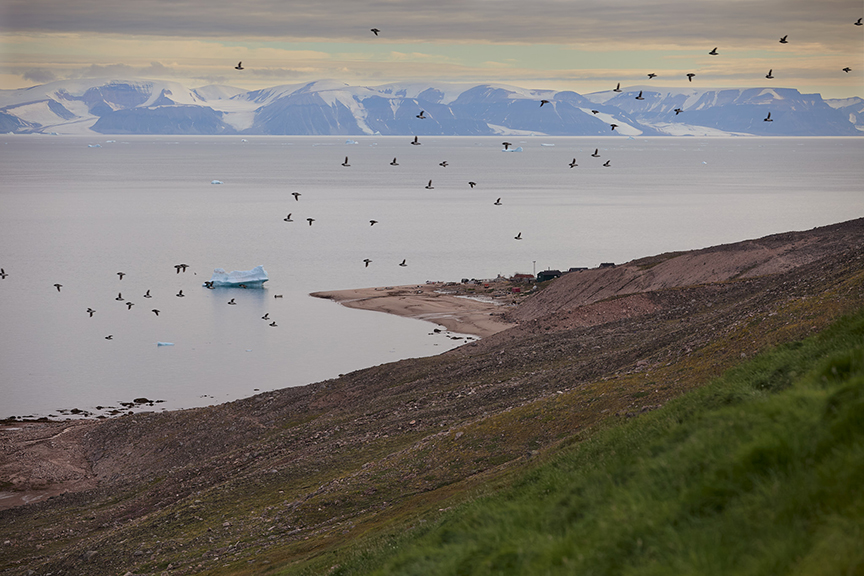
Yamazaki ventured out on the ice from the lower left of this picture. Photo: Galya Morrell
But Yamazaki wasn’t behaving recklessly. He had a tooq, the long pole used for testing sea ice. He was checking the ice continuously as he walked. He also carried a flashlight, but its beam was feeble. That would matter.
Tetsuhide Yamazaki was hardly a stranger to Arctic ice. He had first come to Northwest Greenland in 1989. Over the years, he returned again and again, traveling by dogsled and doing environmental observations and fieldwork. And behind the long Japanese presence in Siorapaluk stood another extraordinary man, whose obituary we posted last week: Ikuo Oshima. His presence drew Japanese explorers and scientists to Northwest Greenland.
Yamazaki became familiar with that world. He knew dogs. He knew ice. And on November 29, he was testing that ice with every step. So why did he disappear?
A clue appears
Hours after Yamazaki left, people went looking for him. The searchers found where his tracks ended. They searched underneath the ice with lights and mirrors. Nothing. But there was something else. Scratches.
They were along the edge of the ice he fell through. The hunters who examined them believed they had been made by Yamazaki’s hands. This was the first finding that changed their view of the story.
If a man simply steps onto weak ice and falls through, they told me, he doesn’t leave marks like these. These looked like the marks of someone holding on. Someone trying very hard not to go down. Someone fighting against something pulling from below.
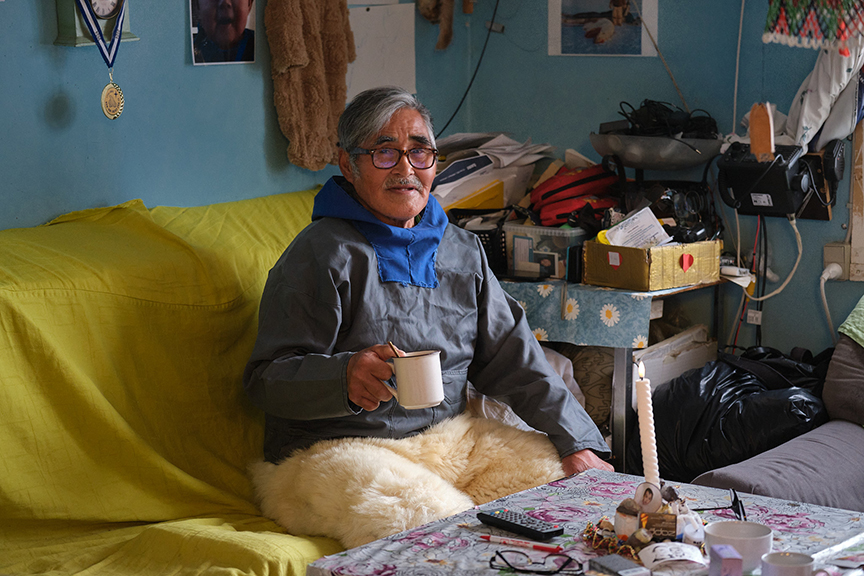
Pudtlaq Uvdloriaq tells the story of Yamazaki’s disappearance. Photo: Galya Morrell
“And he was not a weak man,” one hunter, Putdlaq Uvdloriaq, told me. So, Yamazaki had fought.
And then there was another detail. Nearby was a walrus breathing hole.
A walrus looks rather ridiculous to city dwellers, until you meet one on its own terms. A large Atlantic walrus can be enormous, immensely powerful and frighteningly agile in water. Hunters in Northwest Greenland have been living beside them for generations. They know how formidable these beasts are.
Reconstructing the scene
A few very experienced hunters in Avannaata [Northwest Greenland] have been killed by walruses while kayaking in recent years. Putdlaq Uvdloriaq drew the morning of Yamazaki’s disappearance for me on a piece of paper. The village. The garbage spot. Yamazaki’s route. The ice. The breathing hole some 500m from the shore.
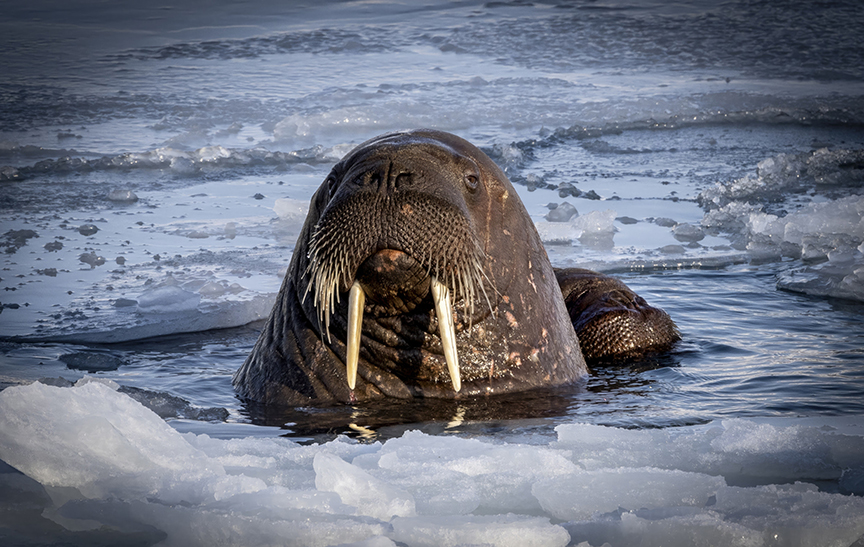
Atlantic walrus in broken ice. Photo: Shutterstock
Then Putdlaq stood up. He wanted to show me what a walrus could do. I had imagined an animal poking its head through a breathing hole. But Pullaq showed me something very different. A walrus can propel itself surprisingly high out of the water, high enough to reach a standing human. Then he showed me how he believes the attack happened.
Yamazaki was not far from the breathing hole. He had his flashlight. The hunters believe that at that very moment, the walrus was beneath the ice, hiding and waiting. Walruses can hear every single movement on the ice and follow a possible offender fast.
Yamazaki was checking the ice not far from the hole, shining his light that way. Things were good. And then he turned away. His back was exposed. That, the hunters believe, was the moment the walrus came up behind him. The ice was broken, so it was easy to attack. But in general, walruses can break 20cm of ice with their head if they have to.
Unlike polar bears, walruses don’t normally eat humans. They attack them if they see them as a threat. But theoretically, they may eat them, like they sometimes consume seals, which have been found in walruses’ stomachs here in Siorapaluk on a few occasions.
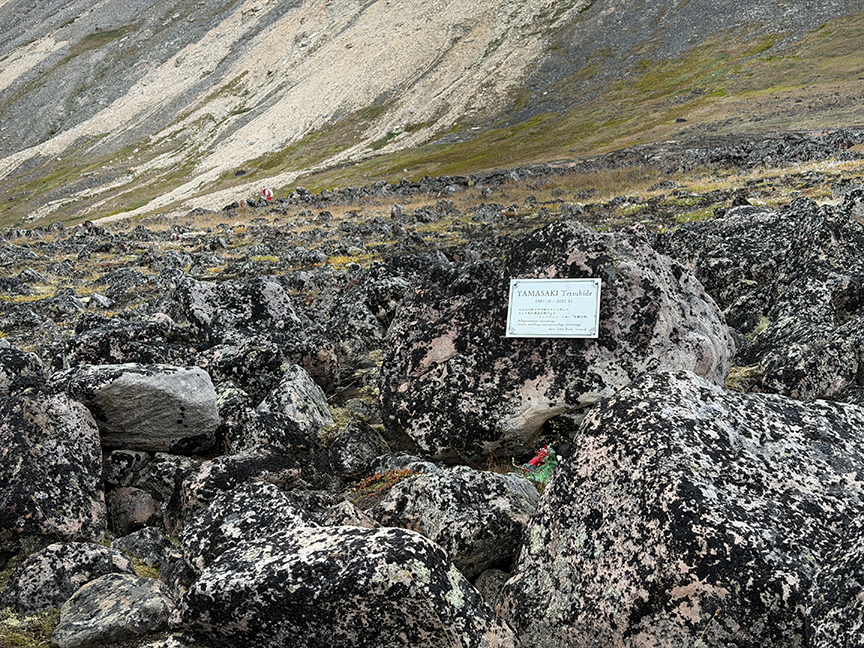
The plaque to Yamazaki. Photo: Galya Morrell
Remembering Yamazaki
There is now a plaque to Yamazaki among the rocks near the church and heliport in Siorapaluk. From there, you can look toward the place where he disappeared.
People here still remember him. His photographs remain in their houses. But his name survived in another, much stranger way.
My friend Louise Simigaq is married into a large family from Siorapaluk and divides her time between here and Qaanaaq. A few days after Yamazaki disappeared, Louise gave birth to a daughter. She named her Saki. Short for Yamazaki.
Last week, Saki came to Siorapaluk. She is two years old now, an adorable little girl who knows only a little about mysteries, thin ice, and what may be waiting beneath it. We climbed the rocks together to Yamazaki’s plaque. I looked at Saki standing there and thought about the strange Japanese history of this tiny place.
Ikuo Oshima came from Japan in 1972 to learn from the hunters of Siorapaluk. Yamazaki came in 1989 and spent decades studying this world. And now there was little Saki, the Inughuit girl. Her name carried a man she never knew.
There is another Saki in the history of Avanersuaq, too: Saki Daorana, the Japanese woman who married an Inughuit man, Panigpak Daorana, many years ago. Now they are one of the most respected couples here in the community.
Japan and Siorapaluk have been finding each other for a very long time. Little Saki cannot read Yamazaki’s plaque yet. But one day she will. Very soon, she will learn what happened here on November 29, 2023.
That is a great story of Siorapaluk. You can come here for years, study its ice, travel with its hunters, and learn its trails. But some of its mysteries take a lifetime to understand.
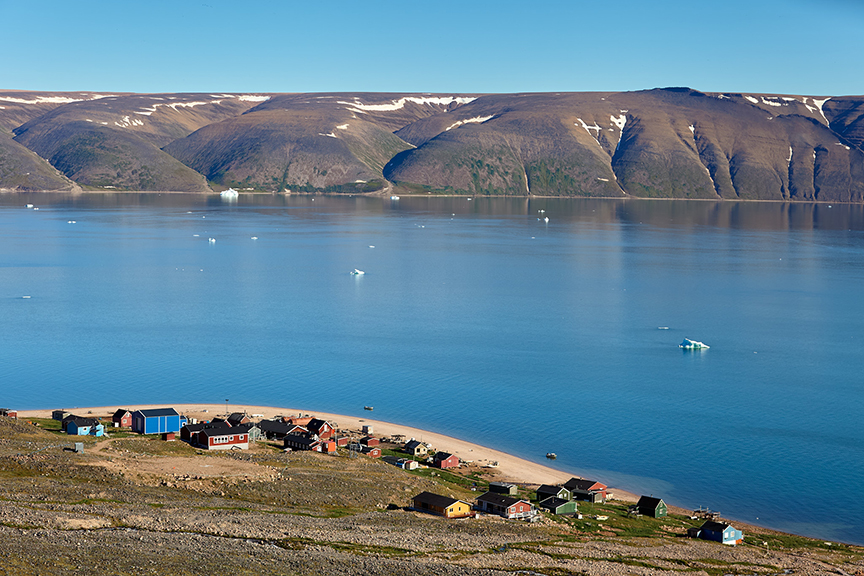
Siorapaluk, Greenland. Photo: Galya Morrell