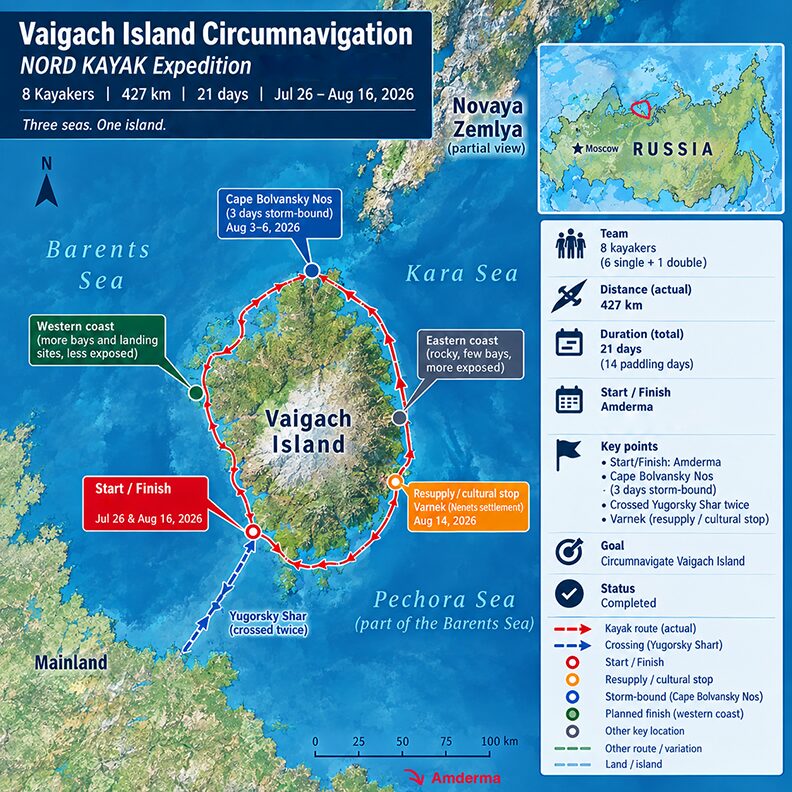
Last month, eight Russian kayakers paddled 427km around Vaigach Island, a rocky Arctic satellite just off mainland Russia and about 50km south of the big island of Novaya Zemlya.
Led by 41-year-old Sergei Moyseenko, founder of an outfitting company called Nord Kayak, it was an exploratory journey with experienced personnel, paddling six singles and a double, rather than a commercial tour, according to Moyseenko on VK, the Russian version of Facebook.
The group began on July 27 on the mainland, paddled half a dozen kilometers across the Yugorsky Strait to Vaigach Island, then paddled around the island in 21 days. They were stormbound for seven of those days. Finally, they crossed the Yugorsky Strait a second time and continued southeast to the town of Amderma (not shown on the map). They reached the town on August 20.
Other members included Evgeny Shmyrin, Ivan Fedorov, two women (Olga Stepanova and Elena Lokosova), and three unnamed paddlers. The eight came from Moscow, St. Petersburg, Murmansk, and Sortavala, near the Finnish border.
First kayak circumnavigation
On their Telegram channel, the group claims theirs was the first kayak circumnavigation of Vaigach Island, which is roughly 100km long by 45km wide. Why Vaigach? According to Shmyrin, who posted regular updates, the group had originally wanted to paddle Novaya Zemlya, but the logistics were prohibitive. Vaigach offered an Arctic expedition experience without needing to hire a helicopter or a yacht to get there. In addition, Vaigach has fewer polar bears and doesn’t require complicated military permission, as Novaya Zemlya does.
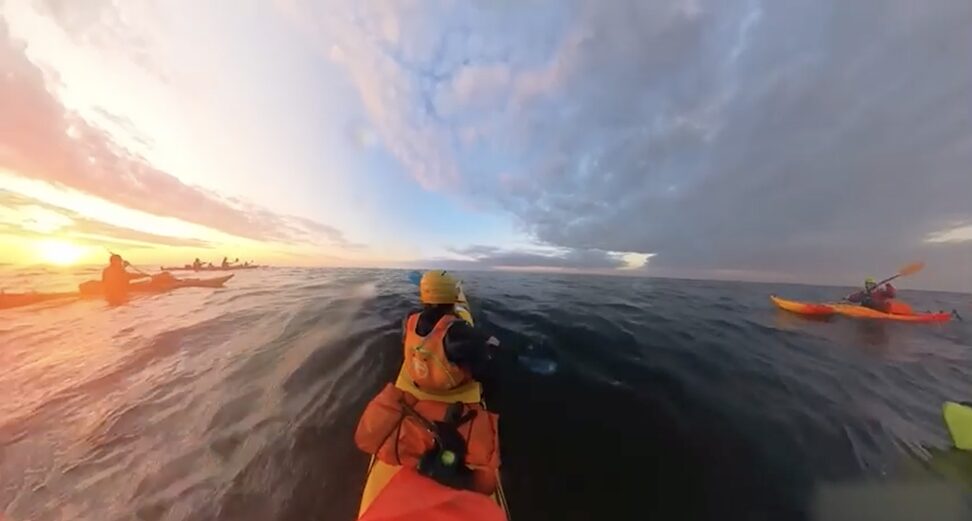
Photo: Vaigach Island Expedition
Still, they weren’t sure a circumnavigation would be possible. They had to paddle three seas — the Barents Sea, the Kara Sea, and what is locally known as the Pechora Sea. Even in summer, the Kara Sea, in particular, is only 6˚C, and northeasterly winds can push large amounts of drifting ice against the shore.
The rocky east coast was difficult for other reasons: there were few landing spots or bays to shelter in. The west coast was lower and more indented — more surf but also more places to escape the weather. They went counterclockwise around the island, tackling the harder east coast first.
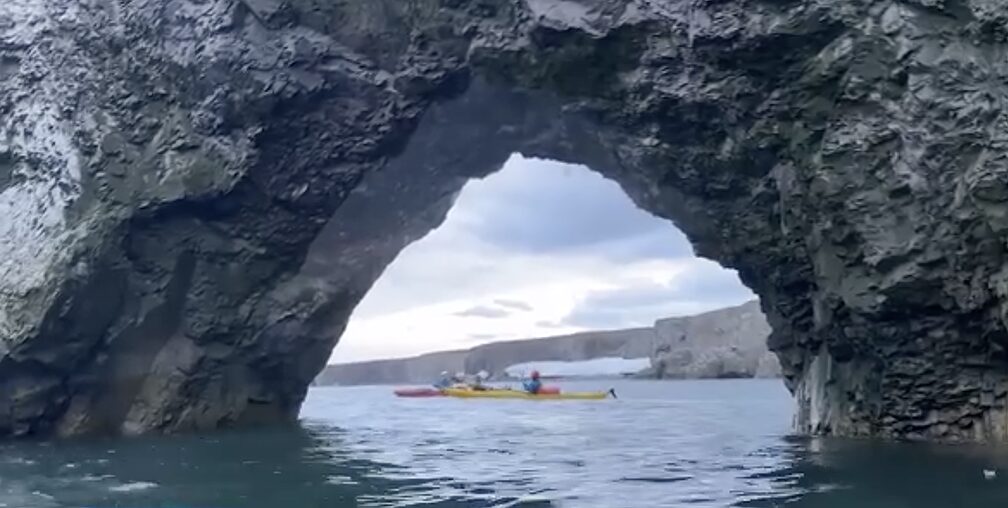
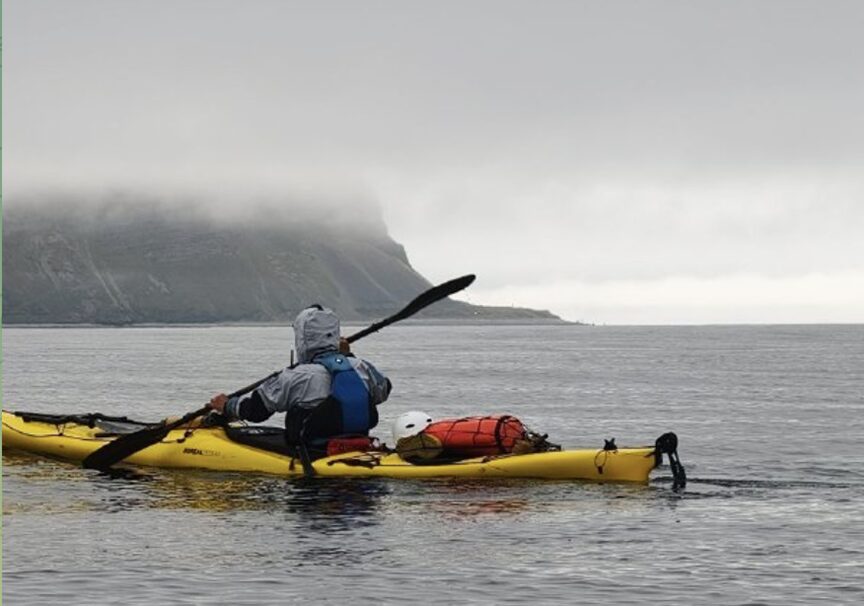
On the rugged east coast. Photo: Vaigach Island Expedition
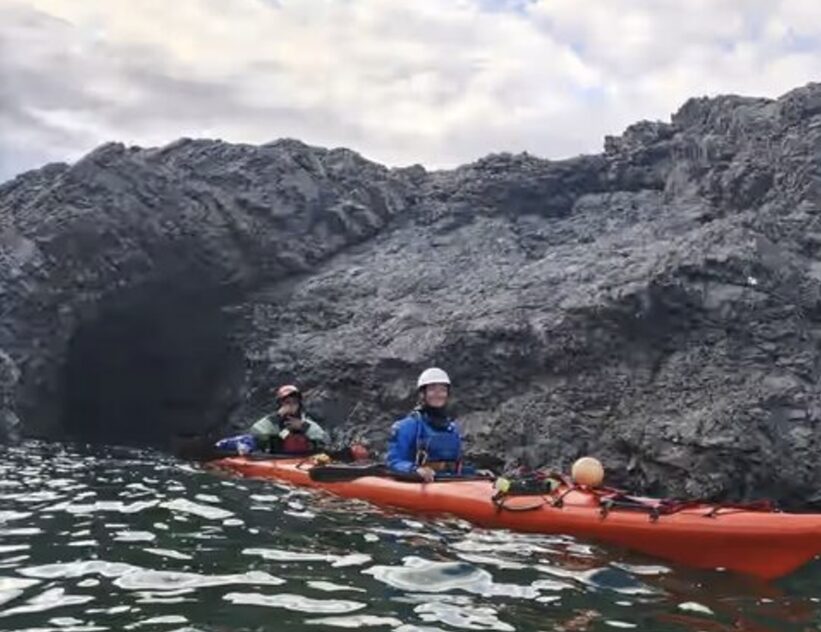
It was sometimes hard to find landing spots on the east coast. Photo: Vaigach Island Expedition
Night paddling
Like most sea kayakers, their schedule revolved around wind and tides. They found that the wind tended to ease in the late afternoon, then increase around 3 to 6 am. As a result, they regularly launched at 3 or even 4 pm, and paddled after dark to cover enough distance before camping.
Their biggest day was 54km, with several other 50+km days. They averaged about 10 hours paddling per day. At Cape Bolvansky Nos, the northern tip of Vaigach and location of a weather station, high winds pinned them down for three days. Here, they also saw their only set of polar bear tracks. They never encountered the animal itself, which had moved on two weeks before their arrival, according to the station personnel.
On the west coast, they met a local hermit named Vasily. He had lived on Vaigach Island his whole life, and had not seen anyone else since May, when he left Vaigach Island’s one town, Varnek, population 70 — mostly Nenets reindeer herders.

A brief stop in Varnek. Photo: Vaigach Island Expedition
By August 16, they’d completed their circumnavigation but still had a few more leisurely days to cross the Yugorsky Strait again and paddle southeast to Amderma. There, they loaded their kayaks on a barge and headed home.
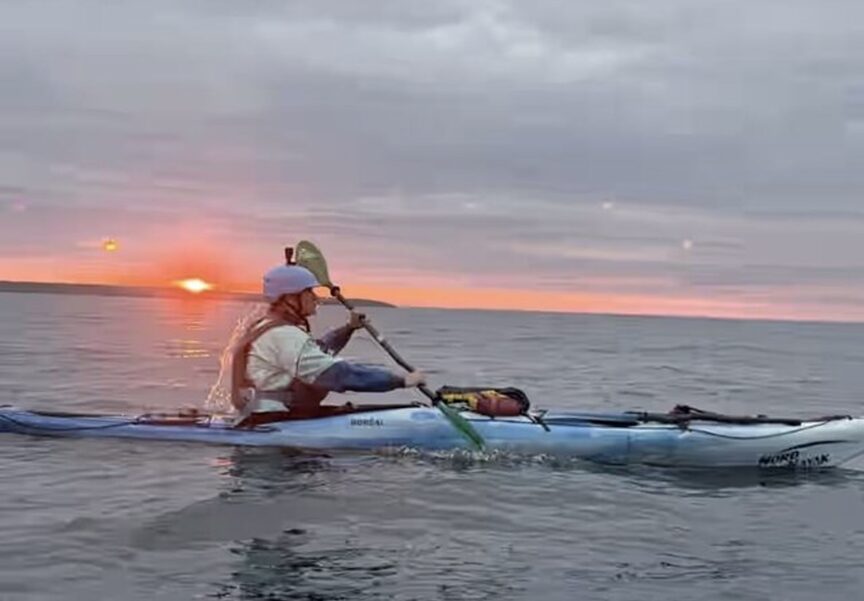
At first, days were long, but by late August they were often paddling in twilight or at night to avoid the morning winds. Photo: Vaigach Island Expedition